
Commercial HVAC · Facility and property managers · Condo boards · GCs
Commercial HVAC that keeps your building off the emergency list.
Maintenance agreements we actually manage, chiller plants to rooftop units, for Tampa Bay facilities that cannot lose cooling. Class A licensed Florida mechanical contractor, design-build through maintenance, since 2009.
Commercial dispatch (727) 330-9131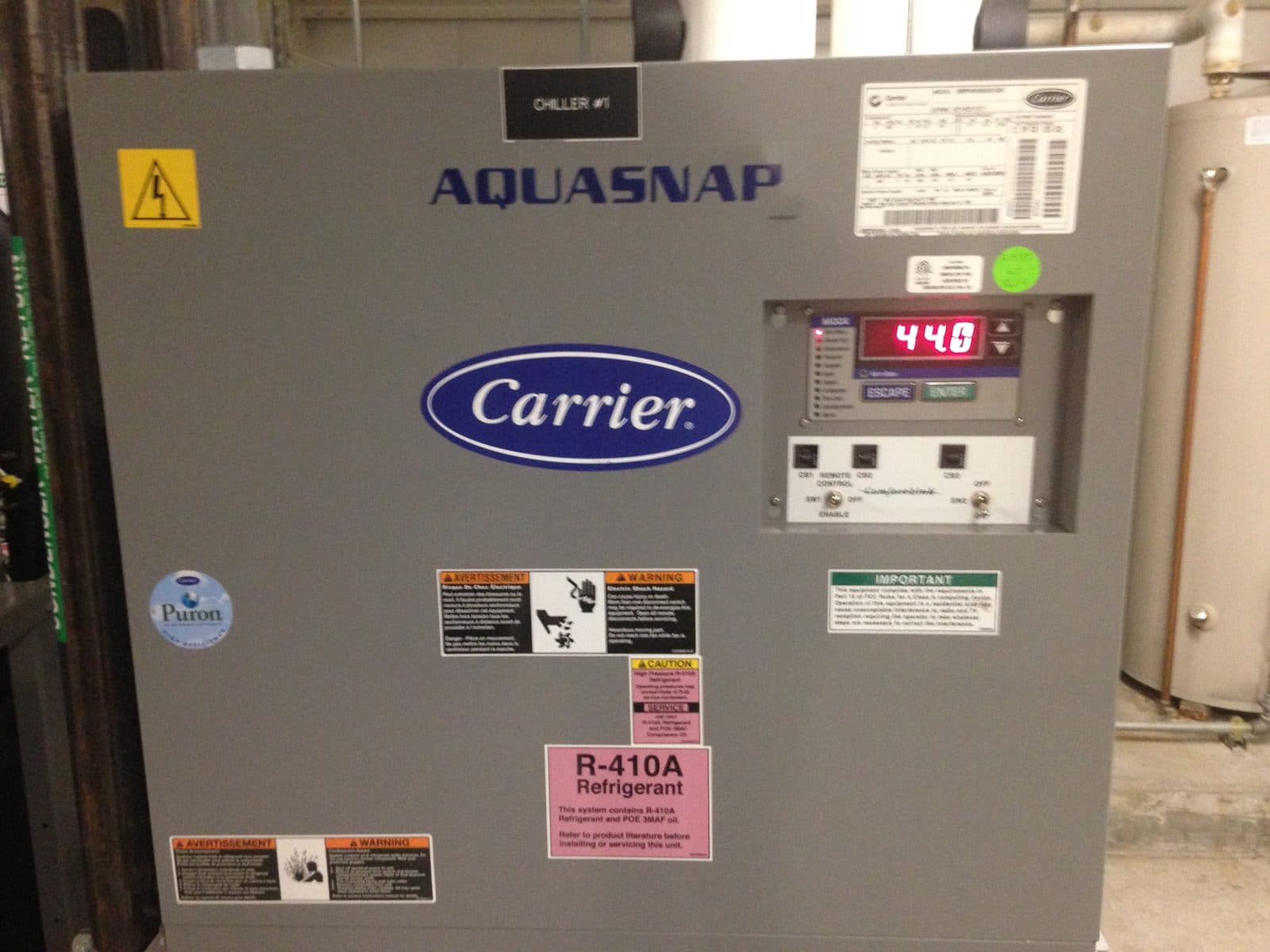 Chiller controls, live display
- Who calls us
- Property managers · Facility engineers · Condo and HOA boards · General contractors · Owners
- Equipment
- Chillers · Cooling towers · Rooftop units · VRF · Hydronic pumps and VFDs · Building automation
- Buildings
- High-rise condo · Office · Hotel · Restaurant · Retail · Warehouse · Data and server rooms · Municipal
- Coverage
- Pinellas · Hillsborough · Pasco · 24/7 emergency dispatch
Why buildings switch
Most buildings call us for one of three reasons.
The same problem keeps coming back.
The current vendor patches it every summer and the building pays for the same call twice. We diagnose with instruments, fix the cause, and put it in writing so it stays fixed.
There is no preventative maintenance schedule.
That is the problem, and it is the first thing we fix. We build a schedule around the actual equipment on the roof and the building's calendar, not a brochure.
The program got expensive and nobody manages it.
Send us the agreement. We match the scope line for line, price it competitively, and schedule the heavy work for the off-season so you are not calling in July.
Maintenance agreement takeover
Already under contract? Send it over.
Email your current preventative maintenance agreement. We match the scope line for line, sharpen the price, and project-manage it so the work gets done in the off-season and the calls stop in July. If the agreement has no schedule attached, that is the first thing we fix.
New buildings · New construction
Finished recently? A free commissioning inspection for buildings finished in the last 18 months, before the warranty runs out.
The contractor who installed the equipment is rarely the one maintaining it, and many new buildings never sign a maintenance contractor at all. We inventory what was installed, verify it runs the way it was designed, and flag warranty defects while they are still covered.
- Equipment inventory and nameplate record
- Airflow, static pressure, charge and controls vs. design
- Warranty issues documented while covered
- A maintenance schedule you can take to any vendor
Equipment
The plant, end to end.
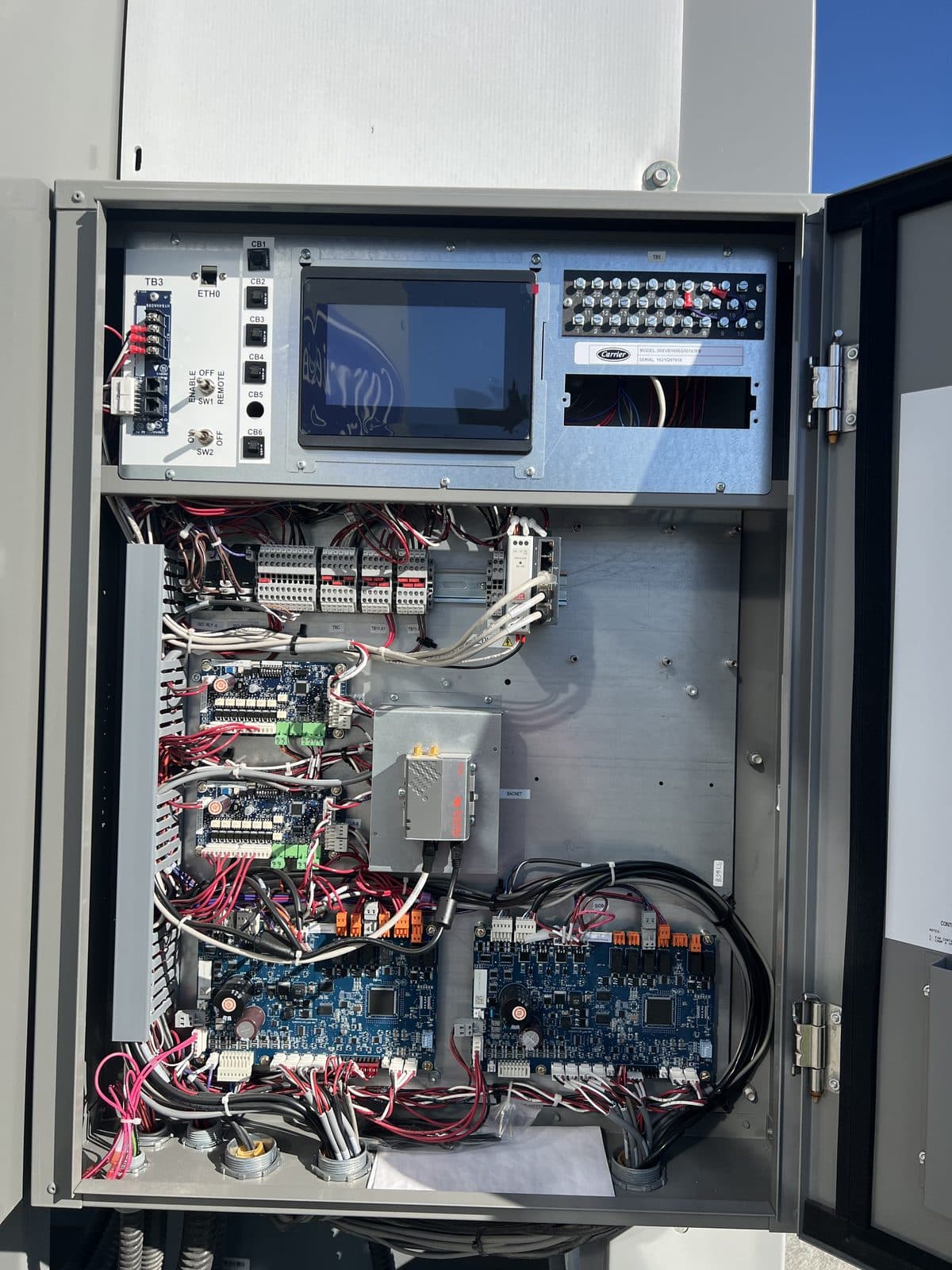 Air-cooled chiller, control panel
Chillers
Carrier, Trane, York, Daikin and other major manufacturers, serviced as a licensed contractor. Air- and water-cooled, chilled-water loops, plant sequencing.
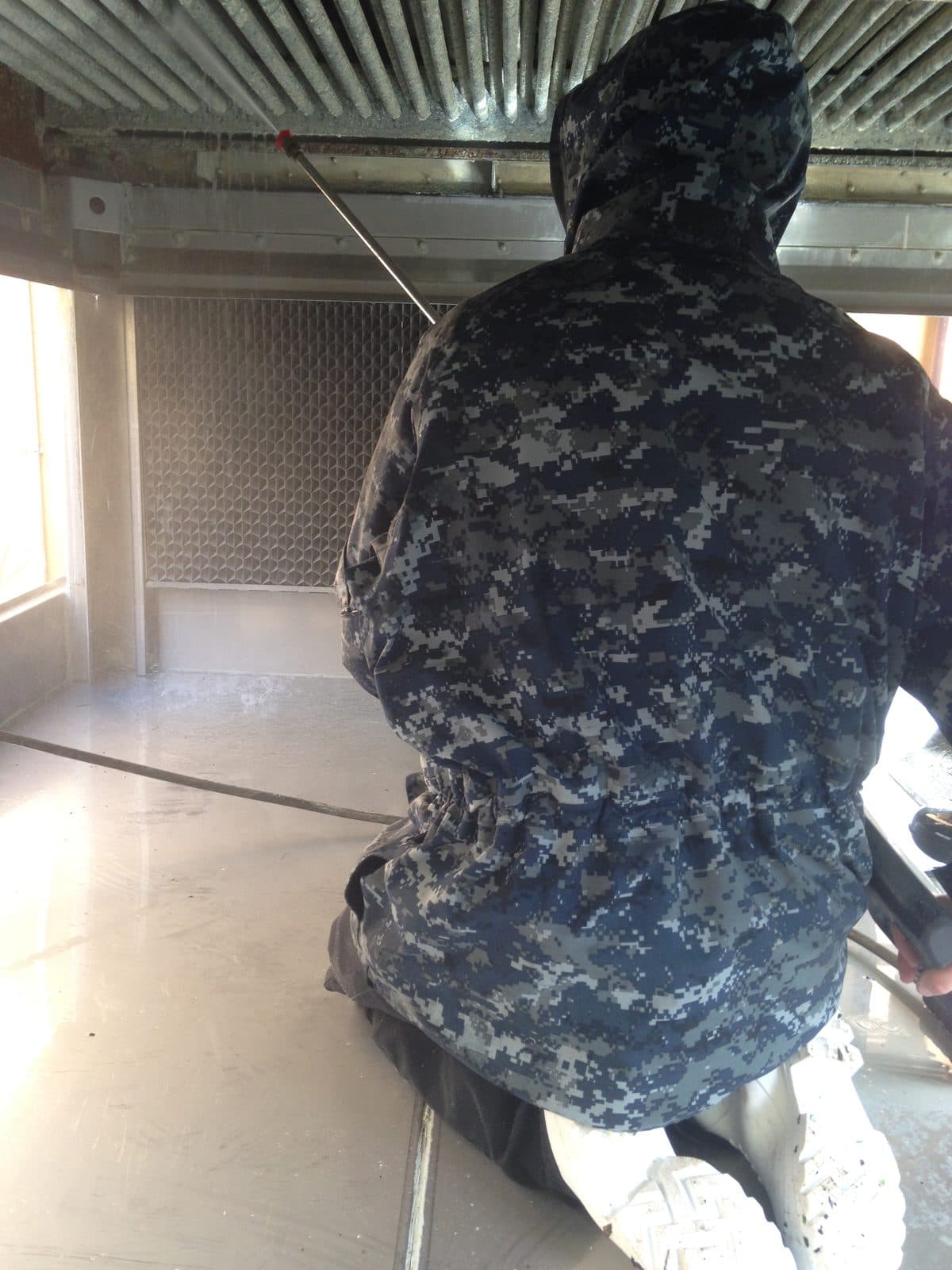 Cooling tower cleaning in progress
Cooling towers
Basin and fill cleaning, fan and motor service, condenser-water piping. The off-season job that decides your summer.
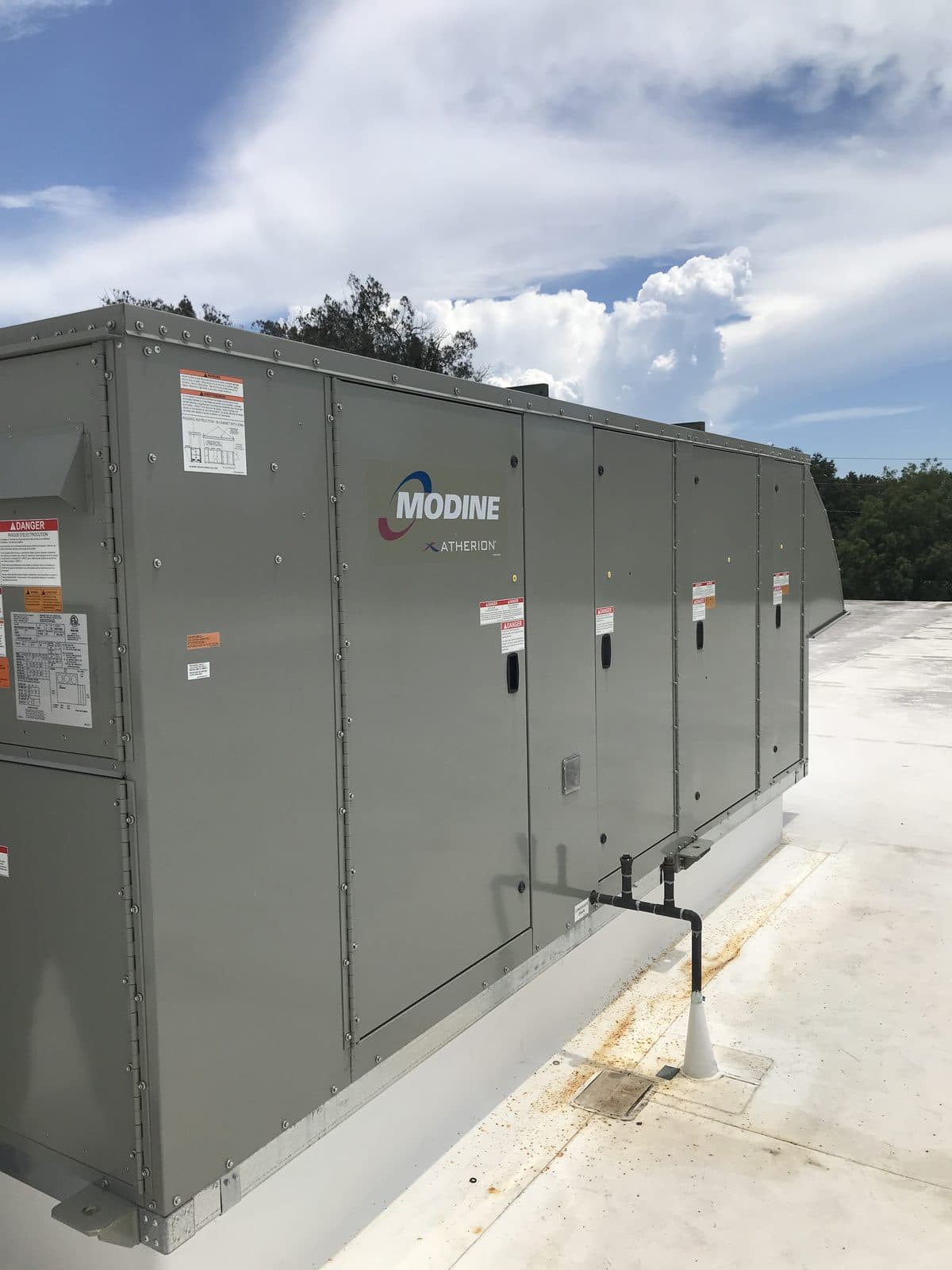 Packaged RTU, new installation
Rooftop units
Packaged RTUs and make-up air for restaurants, retail and office floors. Phased replacements that keep the business open.
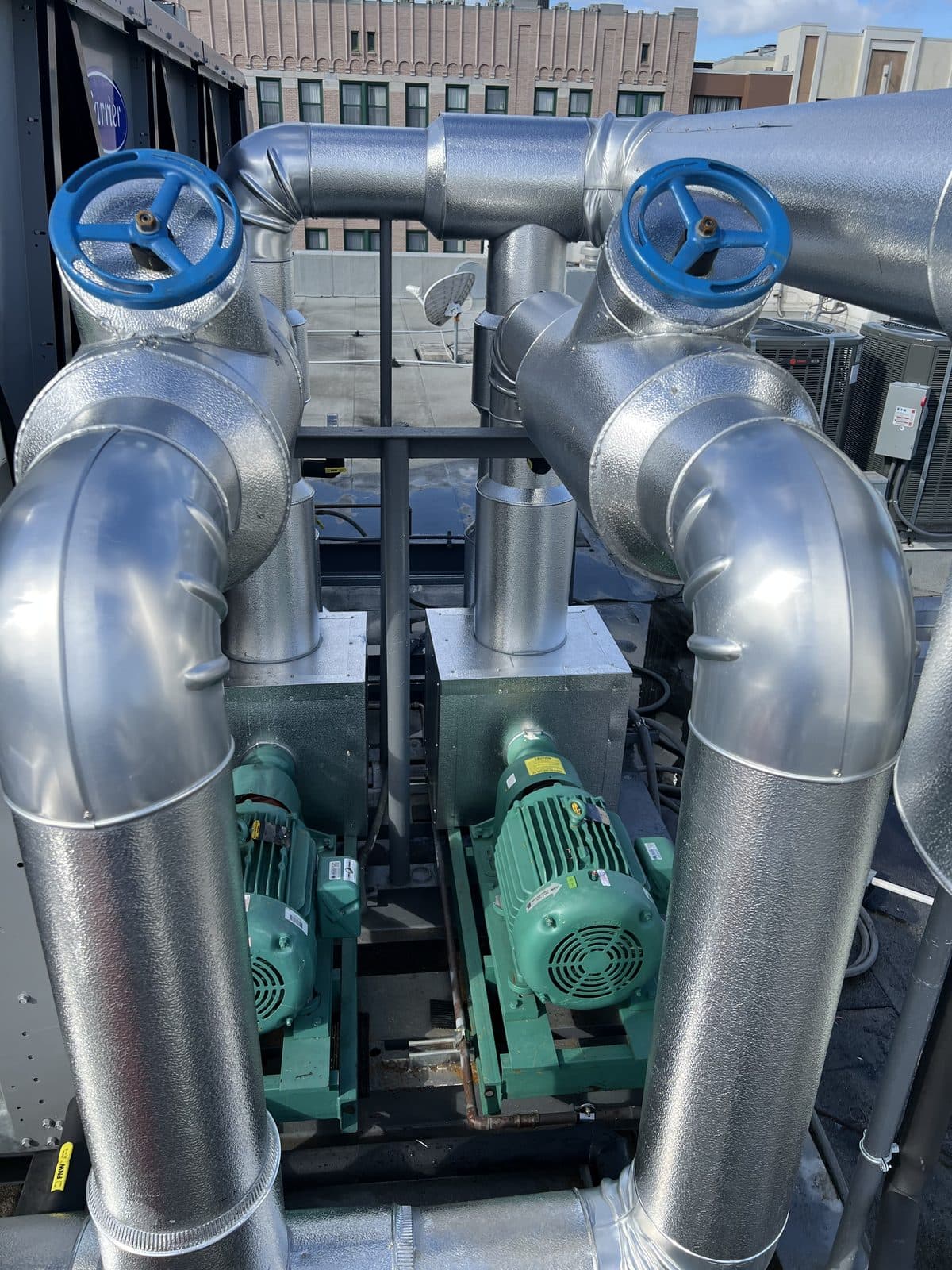 Dual pumps, insulated piping
Pumps and hydronics
Primary and secondary pumps, air separators, insulation and balancing.
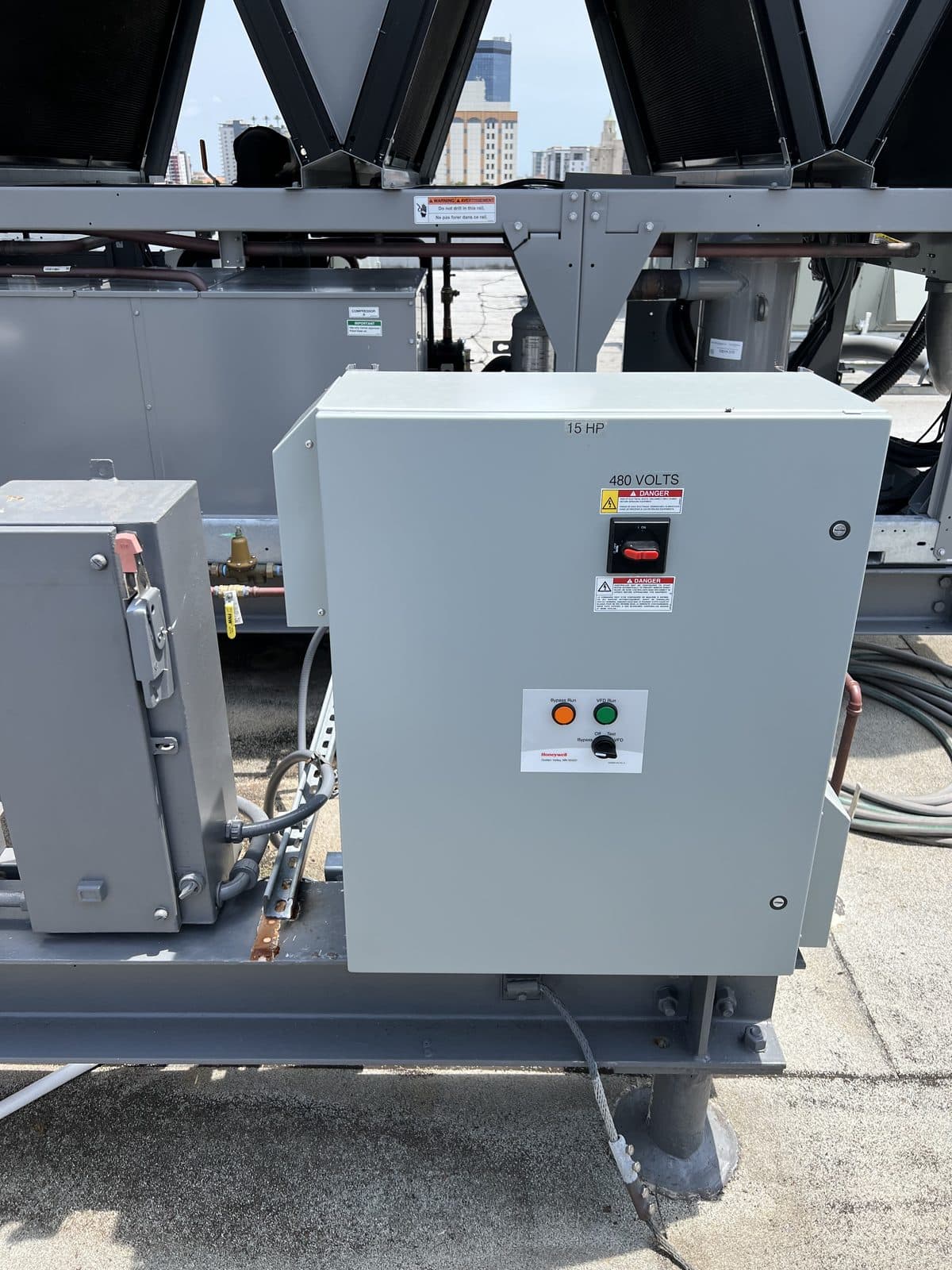 VFD with bypass panel
VFDs and motors
Variable-frequency drives, bypass panels, rebuilt and replacement motors.
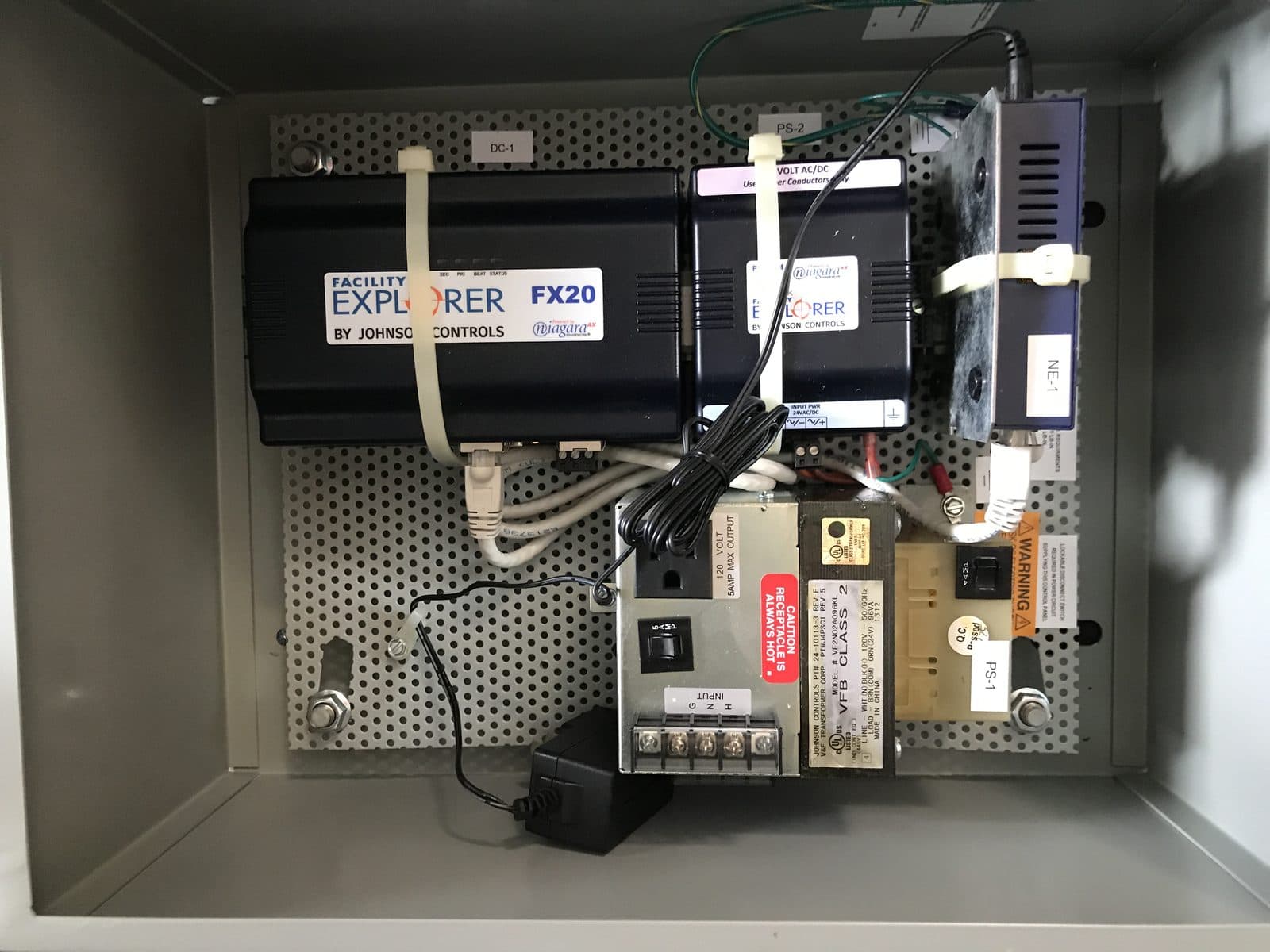 Building automation panel
Building automation
Controllers, sensors, sequencing and the trending that shows what the plant is actually doing.
Plant service · Tampa Bay
What to expect from chiller, cooling tower and rooftop unit service in Tampa Bay.
Put four things in writing with whoever services your plant: a service plan and schedule, logged readings and test results, a named owner for the cooling-tower water program, and a window for planned outages.
Apart from Blume's license number, the facts here come from the public sources named, and the outage window is our reading of them. Nothing here comes from a Blume job or customer site.
- 01
The chiller service plan and records
Require the contractor to submit a facility service plan and schedule as part of the contract. That is the advice of an EPA-funded guide, hosted on the ENERGY STAR site and dated December 1997. The plan should list the equipment, the tasks for each system or piece of equipment, and the schedule. Ask that the plan include an annual startup and shutdown plan for the cooling system. Give the contractor your list of the times when equipment must not be shut off.
Have measurements such as motor amps and volts, temperatures and pressures taken and documented for each piece of equipment. The purpose is to see how they change over time, which helps predict or reveal problems affecting efficiency and reliability. Have copies of test results, such as oil analysis and water treatment analysis, sent to the owner for review.
Ask which refrigerant each machine holds and which EPA rule applies to it, and have the refrigerant type and charge written on the equipment record. EPA's leak-repair page names chillers, commercial split systems and packaged rooftop units as comfort cooling appliances. The charge threshold and repair deadline are set out in our commercial maintenance FAQ.
- 02
The cooling tower
Ask in writing who owns your tower's water management program: the tower contractor, the water-treatment vendor or your own staff.
CDC's cooling-tower guidance says that if Legionella is present, the aerosolized water can spread the bacteria over miles. It tells owners to use a water management program to establish, track and improve operation and maintenance activities. The guidance for towers includes:
- An offline disinfection and cleaning at least annually.
- Automated anti-corrosion, anti-scale and disinfectant addition and monitoring.
- Site-specific log sheets, test procedures, service reports and test results kept on site.
ASHRAE Standard 188 sets minimum legionellosis risk management requirements for building water systems. Its public fact sheet says it is written with enforceable language to facilitate code and regulatory adoption, so whether it binds a particular building depends on who has adopted it. The FAQ below takes that up.
- 03
Rooftop units
Ask to see the service log for your rooftop units after each visit. Pacific Northwest National Laboratory's maintenance guidance for unitary HVAC equipment says it is important to keep a written log, preferably in electronic form in a computer maintenance management system.
Ask whether visits cover these checks from that guidance, which the Department of Energy's Federal Energy Management Program lists:
- Inspect the coil, straighten fins and clean as needed.
- Check filter condition against the system type and the manufacturer's recommendations.
- On belt-driven units, check for wear, tension and misalignment.
- Inspect refrigerant lines and address leakage issues.
Ask how your units are anchored. FEMA's Hurricane and Flood Mitigation Handbook for Public Facilities says wind and wind-borne debris can damage or destroy rooftop-mounted equipment. It says wind mitigation for non-enclosed rooftop equipment can be accomplished by making sure the equipment is well anchored to resist the design wind forces for the geographic location.
- 04
Tampa Bay's calendar
Plan outages that need the plant down for December through March. That is our reading of the figures below, not a standard, and your own no-shutdown list can narrow it further.
Tampa has no month without cooling load. In the National Weather Service's 1991-2020 daily normals for Tampa, every month carries cooling degree days. January, the lowest, carries 61. August, the peak, carries 589. Heating is the smaller job: the monthly normals add up to roughly 430 heating degree days a year against roughly 3,900 cooling degree days.
The four months with the lowest cooling load are December, January, February and March. NOAA's National Hurricane Center puts the Atlantic hurricane season at June 1 to November 30. Those four months fall after it.
- 05
Storm, flood and code
If your building is in a flood hazard area, ask whether your plant equipment sits at or above the elevation Florida's code requires. FEMA's handbook says HVAC components generally are not flood resistant, so they will be damaged or destroyed when exposed to flood water. It calls elevation the most effective overall solution for mitigating both primary and secondary components.
Florida's code points the same way. The 8th Edition (2023) Florida Building Code, Mechanical, requires mechanical systems, equipment and appliances in flood hazard areas to be located at or above the elevation required by Section 1612 of the Florida Building Code, Building. It permits lower placement only for equipment designed and installed to prevent water from entering or accumulating within the components and to resist flood loads. In a flood hazard area, the Florida Building Code, Existing Building, requires replacement of flood-damaged exterior equipment to meet the same Section 1612 requirements.
Ask the building department which Florida Building Code edition governs a permit filed near December 31, 2026. The citations above are to the 8th Edition. State materials on floridabuilding.org list the 9th Edition (2026) as effective December 31, 2026.
Check any contractor's Florida license before work starts. The state's DBPR records search lets you verify licenses by name or license number. Blume's is CAC-1822618.
Guides
Commercial HVAC guides.
- Chiller vs. VRF
- Commercial AC Blowing Warm Air
- Commercial AC Leaking Water
- Commercial AC Not Cooling
- Commercial AC Short Cycling
- Commercial Building Automation & Controls
- Commercial Chiller Maintenance
- Commercial Humidity Control
- Commercial HVAC Energy Savings
- Commercial HVAC installation
- Commercial HVAC maintenance
- Commercial HVAC Service Agreements
- Commercial HVAC Tripping Breaker
- Commercial Pump & Hydronic System Services
- Commercial Refrigerant Transition: R-410A to A2L
- Commercial Rooftop Unit Not Running
- Commercial VFD Integration & Service
- Cooling Tower Maintenance
- Facility Stewardship & Lifecycle Planning
- HVAC capital planning
- HVAC for Churches & Worship Facilities
- HVAC for facility managers
- HVAC for property managers
- HVAC Partnership for Property Managers
- rental air conditioners
- Rooftop Unit Replacement Planning
- warehouse HVAC
Buildings
Who calls us.
- 01Apartment complexes
- 02Condominiums and HOAs
- 03Office buildings
- 04Hotels
- 05Restaurants
- 06Retail and shopping centers
- 07Warehouses and industrial
- 08Data and server rooms
- 09Municipal and government
- 10High-end residential
Process
How an engagement runs.
- 01
Site assessment
A licensed technician walks the plant with you: equipment, age, condition, what is failing and what is about to. If you have a maintenance agreement, we review it before the visit.
- 02
Written scope and price
What we found, what we measured, and a written price for each option. Repair versus replace, side by side, before any work is approved. No-cost on new systems and retrofits.
- 03
Off-season scheduling
The heavy work gets scheduled when the building is not under load. Phased replacements keep tenants cool and the business open while equipment changes over.
- 04
Commissioning and record
Airflow, static pressure, charge and controls measured and documented. Every unit leaves with a service record the board, the owner or a buyer can read.
Request
Request a site assessment.
Call or email with the property and the equipment. A licensed technician, not a salesperson, follows up to schedule the walk-through. Have a maintenance agreement? Email it and we will review it before the visit.
What helps us scope the visit
- The property. Building type, address, and who we meet on site. Access notes for the roof or the mechanical room save a second trip.
- The equipment. Chiller, cooling tower, rooftop units, VRF or a mix. Make, model and nameplate photos if you have them; age if you know it.
- The current agreement. If another vendor maintains the building, send the agreement and the service history. We match the scope before we price it.
- What is going wrong. The symptom, when it started, and whether it is down now or something you are planning a budget around.
Down now? Call. It is faster than email.
Questions
Commercial FAQ.
- Do you take over existing maintenance agreements?
- Yes, and it is how most buildings come to us. Send the current agreement and we will match the scope, price it competitively and manage it properly. If there is no agreement, we will write one around the equipment you actually have.
- Do you work on chiller plants, or only packaged equipment?
- Both. Chillers, cooling towers, pumps, VFDs and building automation are core work, alongside rooftop units and VRF. That includes Carrier chiller service on AquaForce and AquaSnap units like the ones photographed on this site.
- Are you a dealer for a particular manufacturer?
- No. Blume is brand-agnostic: a licensed contractor that installs and services every major manufacturer and is tied to none of them. The recommendation is about your building.
- What happens when something fails at 2 a.m.?
- A person answers the 24/7 dispatch line, with same-day response available based on location and technician availability. Agreement customers get priority scheduling. If the maintenance is done right, those calls get rare.
- When should a chiller or cooling tower be taken out of service for planned work in Tampa Bay?
- December through March is the realistic window in our reading of the National Weather Service's Tampa normals. They are the four months with the lowest cooling load. NOAA's National Hurricane Center puts the Atlantic hurricane season at June 1 to November 30. All four fall after it. Your own no-shutdown list comes first, so ask that it be written into the service plan.
- Is a Legionella water management program required for my cooling tower in Florida?
- We found no Florida source that requires a Legionella water management program for a commercial cooling tower. If you manage a hospital, critical access hospital or long-term care facility, CMS's memo QSO-17-30 applies to you. The memo, issued in 2017, was revised on July 6, 2018. It says such facilities must have water management plans and documentation. ASHRAE's fact sheet for Standard 188 says the standard is written with enforceable language to facilitate code and regulatory adoption. It also says New York requires a maintenance program and plan for each cooling tower, developed in accordance with the 2015 edition. CDC's cooling-tower guidance tells owners to use a water management program. Ask your owner, insurer or accrediting body which of these applies to your building, and have the person who owns the program named in writing.