
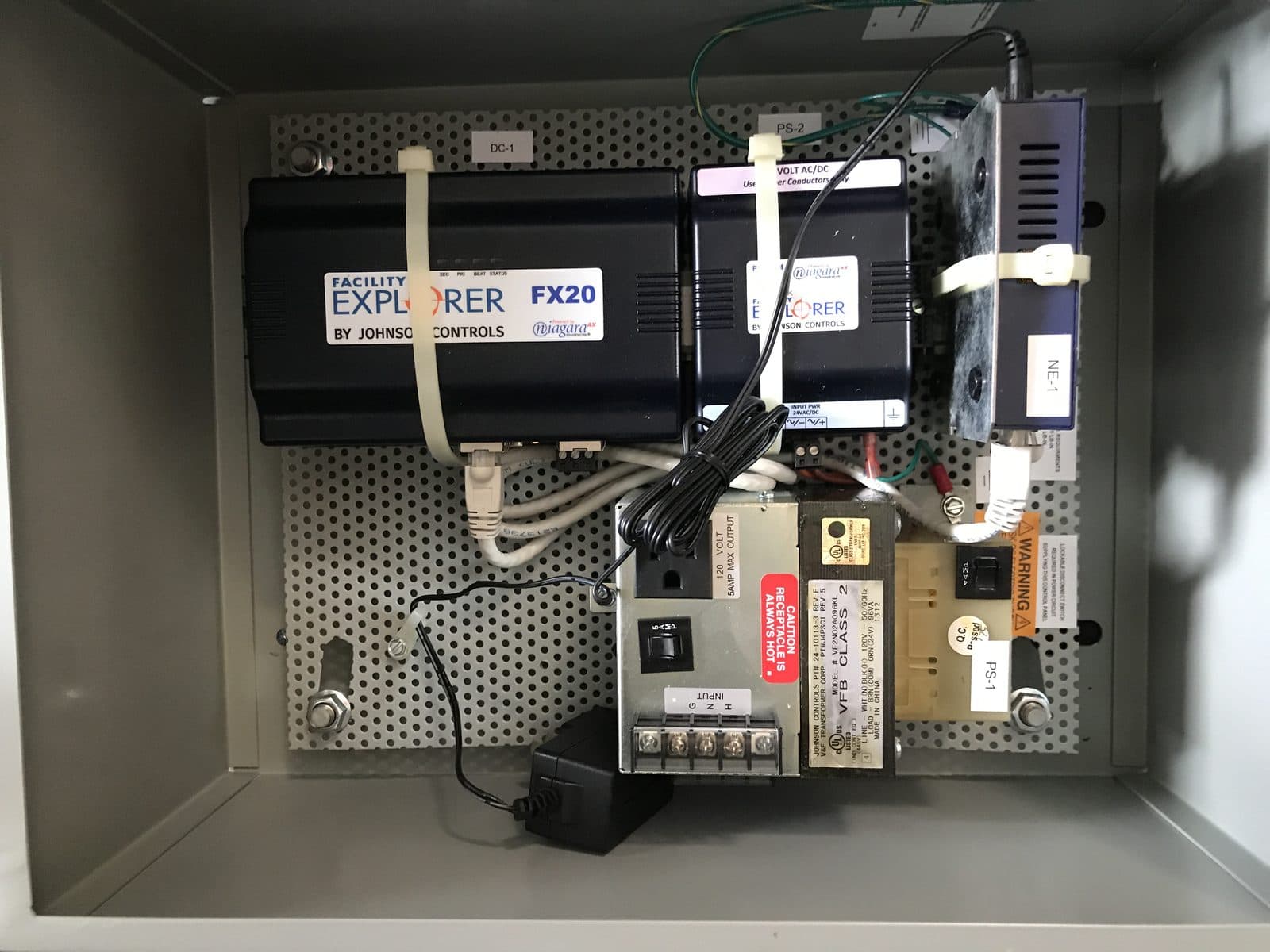
Hillsborough, Pinellas, Pasco, Manatee, Sarasota, Polk and Hernando Counties · Florida CAC-1822618
Commercial Building Automation & Controls in Tampa Bay, Florida
A building automation system is the set of sensors, controllers and software that operates a building's mechanical equipment and records what it has been doing. Blume services and maintains commercial controls across Tampa Bay — using the data to trend performance, generate meaningful alarms and find problems before occupants report them. Florida license CAC-1822618.
Commercial building controls are widely misunderstood as an expensive layer of thermostats. They are not. They are the building's eyes, memory and operating logic — and the more expensive and critical the mechanical equipment, the more it matters to know what that equipment is doing between service visits.
What a building automation system actually is
A building automation system, commonly abbreviated BAS, is the control layer that operates a building's mechanical equipment and records its behavior. In practice it consists of sensors that measure conditions, controllers that decide what equipment should do, drives and actuators that carry those decisions out, and a software layer that presents the whole thing to whoever is operating the building.
What separates it from a thermostat is memory and reach. A thermostat reports the temperature in one place at one moment. A building automation system can show supply and return air temperatures, condenser water temperatures, humidity, static pressure, drive speeds, valve and damper positions, motor current and equipment status — and it can show what all of those were doing last Tuesday at three in the morning.
That historical record is the part that changes how a building gets maintained. Without it, a comfort complaint is an anecdote and a technician arrives to diagnose a condition that may not be occurring at that moment. With it, the same complaint becomes a trend that can be examined: the humidity rose every night after the compressor staged off while the supply fan kept running. One of those is guesswork. The other is a diagnosis.
Controls are expensive because the equipment they protect is expensive
The most common objection to commercial controls is cost. Sensors, controllers, drives, programming, graphics, integration labor and commissioning all carry real expense, and the value they deliver is largely invisible — which is a difficult combination to sell.
But the framing is backwards. Controls are expensive because they are operating and protecting expensive mechanical systems. Nobody would put a ten-dollar gauge in charge of a million-dollar plant, and nobody should want a cheap thermostat controlling a large fresh-air unit, a cooling tower, a pump system or a commercial air handler.
What a properly applied control system prevents is also invisible until you list it: motors running at full speed when they do not need to, humidity drifting for weeks before anyone notices, pumps operating against closed valves, failed equipment sitting unnoticed, repeated comfort complaints with no trend data to resolve them, small failures becoming emergency calls, and operators depending on memory instead of recorded performance.
There is also a labor argument. Good controls keep us from sending a technician onto a roof simply to find out what is happening — and from depending on that technician to correctly interpret what they see. Supply temperature, return temperature, condenser water temperature, humidity, drive speed and equipment status can all be known before anyone arrives. The National Institute of Standards and Technology has described automated fault detection and diagnostics as providing the kind of continuous surveillance that a realistically sized maintenance staff could not perform manually. That is the honest case for controls.
Turning sensor data into energy that is not wasted
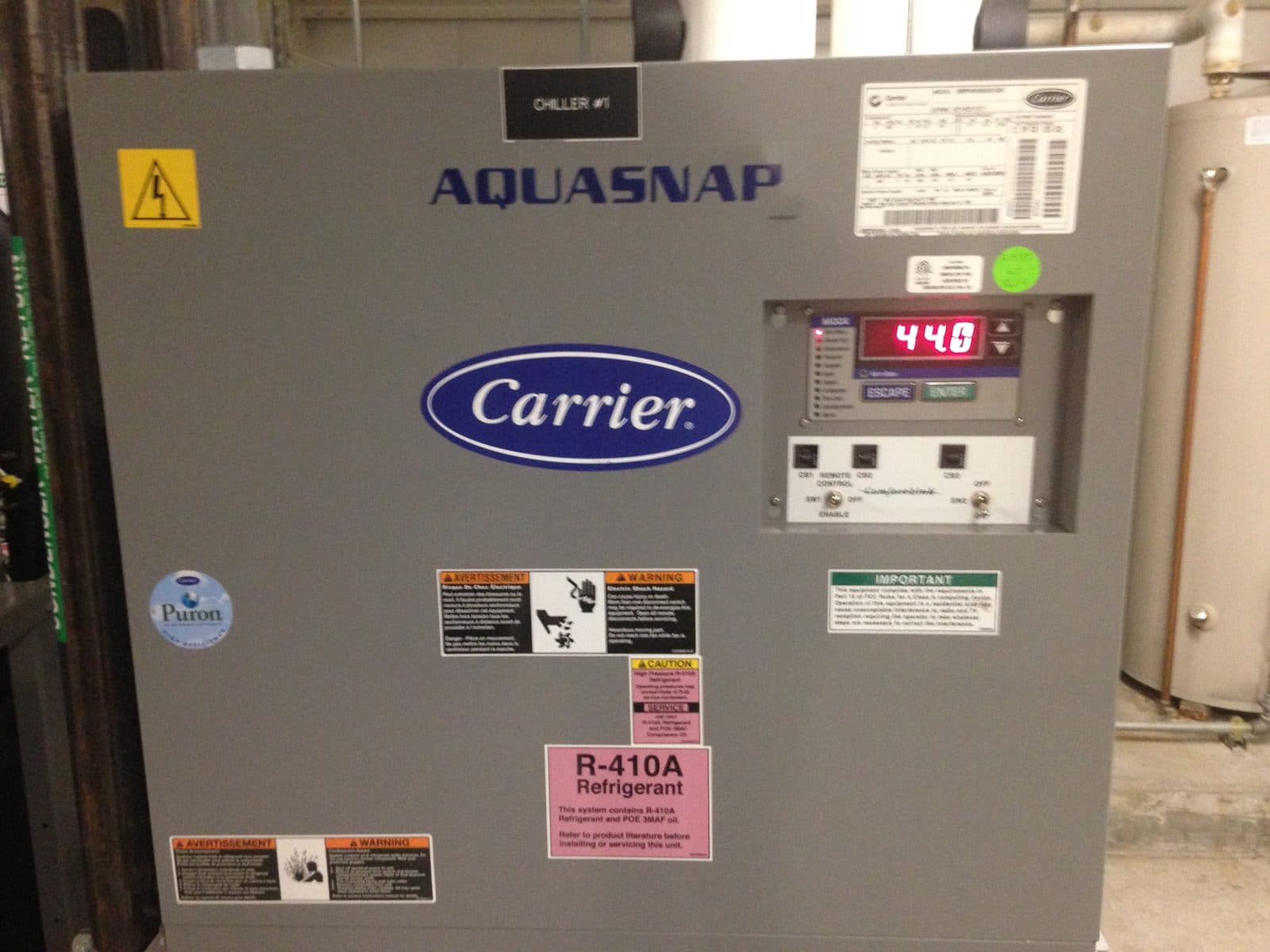
A condenser water system should not simply run its pump at full speed because the building is open. With sensors reporting condenser water supply and return temperature, the temperature differential, outdoor wet-bulb conditions, chiller demand, pump differential pressure, tower fan status, valve positions, drive speed and motor current, the plant can be modulated to deliver what it actually needs rather than operating every motor at full output.
The sensor tells us what the water is doing. The drive lets us respond without wasting full horsepower.
The reason variable-speed control produces outsized results on many centrifugal fans and pumps is a property of the equipment rather than a marketing claim: for variable-torque applications, power demand falls much faster than speed does. Reducing speed to eighty percent can bring power demand to roughly half, and to seventy percent closer to a third — under conditions where the affinity laws apply. The Department of Energy is explicit that they do not apply equally to every pump, fan or compressor, because static head, minimum-flow requirements, motor efficiency and system design all cause real installations to deviate.
Which is why we will not publish a savings figure here. Actual savings depend on motor load, existing control method, average speed after conversion, annual operating hours, motor and drive efficiency, utility rate, demand charges and whether the application is genuinely variable-torque. We calculate the opportunity from measured load, operating hours and your actual utility rate. Anyone who quotes you a fixed number before measuring any of that is selling, not engineering.
Humidity is where trending earns its keep
A thermostat gives an owner a temperature at one moment. A control system can show relative humidity across hours, days and weeks alongside space temperature, outdoor dew point, supply air temperature, cooling coil command, compressor staging, reheat status, fan operation and occupancy schedules — including whether humidity rises during unoccupied periods and whether a fresh-air unit is genuinely dehumidifying rather than merely cooling.
That is the difference between a facility manager saying the building feels muggy sometimes, and being able to say that humidity rises above target every night after the compressor stages off while the supply fan continues to run. The first is a complaint. The second tells you what to change.
It matters because poor dehumidification is not only a comfort issue. ASHRAE identifies inadequate moisture control as a potential cause of discomfort, microbial growth, material damage and broader indoor environmental quality problems. Temperature tells you whether the room is hot. Trending tells you why it keeps becoming humid.
Alarms that mean something
A properly configured system can alarm on high space temperature, high humidity, supply air temperature outside range, return water temperature, pump or fan proof failure, drive faults, loss of communication, excessive runtime, simultaneous heating and cooling, temperature that fails to respond to a command, and sensor readings that are physically inconsistent with one another.
The qualification matters as much as the capability. Alarms have to be configured intelligently, because too many nuisance alarms cause operators to ignore all of them — the building equivalent of a smoke detector that chirps every hour. NIST has specifically warned that overly narrow alarm limits generate false alarms and eventual alarm fatigue.
So the goal is not more alarms. The goal is an alarm that tells the right person something actionable before the building suffers. A system that emails forty notifications a night has not made a building better managed; it has trained its operators to delete emails.
What controls cannot do, and why a technician still has to look
This is the part that most controls marketing leaves out, and it is the part that keeps the rest honest.
A control system can tell you what a sensor reports, what a controller commanded, what a drive says it is doing, and what changed over time. It cannot automatically prove that the sensor is accurate, that a valve physically moved, that a damper linkage is still connected, that a pump is actually producing flow, that a coil is clean, or that the equipment is mechanically sound.
The gap between commanded and actual is where real problems live. A damper actuator can report a position it never physically reached. Pacific Northwest National Laboratory has documented sensor faults, humidity sensor faults, damper faults and persistent manual overrides that quietly waste energy for as long as they go uncorrected — precisely because the system reports that everything is fine.
So the correct position is straightforward: controls give us visibility, and a qualified mechanical team still has to verify reality. Controls are not there to make a building complicated. They are there to make a complicated building understandable — and a building automation system should save energy, preserve comfort, document performance and call for help before the occupants do.
What we see in the field
The most common controls call we take turns out not to be the controller at all. It is a dirty or failed sensor. A discharge air temperature sensor reading high will have an air handler hunting all day while occupants sit there cold — and the log shows the controller commanding correctly the entire time, because it is. The controller is doing exactly what it was told. The input is wrong.
Second most common is a setpoint that somebody changed and nobody changed back. It gets adjusted for a special event, a renovation, a complaint, and it never gets reset. The system spends months fighting itself, and nobody connects the energy bill to what is on the controls screen.
Then there is the situation this whole page exists for: the trend data says everything is normal and the occupants disagree. Almost always the trend is measuring the wrong point, or measuring the right point in the wrong place. Supply air temperature at the air handler looks fine. What that reading cannot show you is a VAV box stuck closed, a zone sensor sitting in a dead corner, or a diffuser that got relocated during a renovation and now blows straight onto the thermostat. The system reports one number and the person sitting six feet from the stuck box reports another, and both of them are right.
The move that resolves it is unglamorous: walk the space with a handheld instrument and compare what you measure against what the system is reporting. The gap between the two is where the problem lives.
Frequently asked
What is a building automation system?
It is the control layer that operates a building's mechanical equipment and records what it has been doing — sensors that measure conditions, controllers that decide what equipment should do, drives and actuators that carry it out, and software that presents it to whoever runs the building. What separates it from a thermostat is memory and reach: it shows not just what the temperature is now, but what every major system has been doing over time.
Are building controls worth the cost for a mid-sized commercial building?
The honest answer is that it depends on what the controls are protecting and how the building is currently operated. Controls are expensive because the mechanical systems they operate are expensive, and their value shows up as things that do not happen — motors not running at full speed unnecessarily, humidity not drifting for weeks, failures not going unnoticed. The way to evaluate it is to measure the building's actual load and operating hours rather than to accept a savings figure from anyone, including us.
My BAS says everything is normal but the building is uncomfortable. How is that possible?
Very easily, and it is one of the most common situations we are called about. A control system reports what a sensor reads and what a controller commanded — not whether a valve physically moved, a damper linkage is still connected, a pump is producing flow or a coil is clean. A damper actuator can report a position it never reached. That gap between commanded and actual is exactly why controls do not replace field verification.
Who maintains a building automation system?
In practice it needs a mechanical contractor who understands both the controls and the equipment they operate. Controls specialists who do not work on the mechanical side can tell you what the system reports; mechanical contractors who ignore the controls miss the trend data that explains recurring problems. The useful combination is a team that reads the trends and then goes and verifies what the equipment is actually doing.
Will a variable frequency drive cut my energy costs?
Often substantially, on genuinely variable-torque pump and fan applications, because power demand falls much faster than speed. But the Department of Energy is clear that this does not apply equally to every application — static head, minimum flow requirements and motor efficiency all cause real systems to deviate. The opportunity should be calculated from measured motor load, operating hours and your actual utility rate, not quoted as a fixed figure in advance.
Unit converter
Showing 1 therm in 4 other units
| Unit | Value |
|---|---|
| Btu | 100,000 |
| kWh | 29.31 |
| MMBtu | 0.1000 |
| Ccf (natural gas) | 0.9653 |
Used only for Ccf and therm conversions. Source: EIA, Heat Content of Natural Gas Consumed (U.S., 2025).
Sources: 1 therm = 100,000 Btu and 1 kWh = 3,412 Btu, from EIA. MMBtu from EIA. MBH from Wikipedia. 1 ton of refrigeration = 12,000 Btu/h from NIST. Ccf = 100 cubic feet from Wikipedia. — means no result for the current input.
Want to know what your building has actually been doing? Talk to a licensed mechanical contractor.
References: NIST — automated fault detection and diagnostics in commercial buildings; alarm limit and false-alarm research · US Department of Energy — variable frequency drive evaluation guidance and affinity law caveats · PNNL — sensor, humidity sensor, damper and override faults in air handling units · ASHRAE — humidity control and indoor environmental quality