Start With the Symptom: What Your AC Is Telling You Right Now
When your air conditioning fails in the middle of a Tampa Bay summer, the fastest route to a fix starts with the symptom, not the brand on the unit. What the system is doing right now, or refusing to do, narrows the diagnosis before a technician ever opens a panel. When you call Blume at (727) 330-9131, a person answers the 24/7 dispatch line and will ask exactly what you are experiencing, because those details shape what parts and tools should be on the truck. Here are the no-cool symptoms we hear most often, and what each one usually means.
The system runs, but the air from the vents is warm
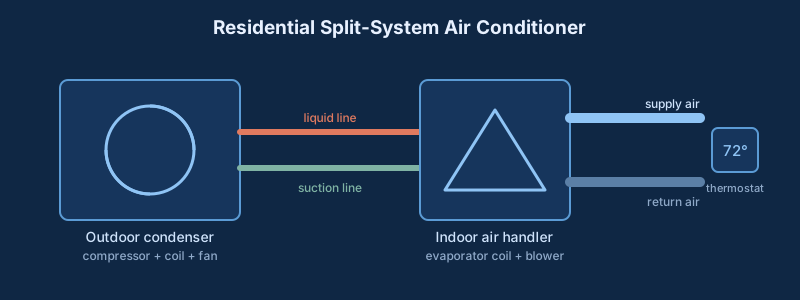
If the indoor blower is moving air but none of it is cold, the refrigeration side of the system has quit while the air-handling side keeps going. Common causes include a failed compressor or condenser fan motor, a refrigerant leak that has slowly starved the system, or a contactor that no longer sends power to the outdoor unit. Step outside and listen: if the outdoor unit sits silent while the indoor fan runs, say so on the phone. That single observation is a genuinely useful diagnostic clue.
Nothing turns on at all
A completely dead system is usually electrical. The suspects are a tripped breaker, a blown low-voltage fuse, dead thermostat batteries, or a float switch that shut things down because the condensate drain backed up, which is a common event in Florida's humid months. Check your breaker panel once. If the breaker trips again after a reset, leave it off and tell the dispatcher. Repeated tripping means something downstream is drawing too much current, and forcing it can turn a modest repair into a major one.
Ice on the copper lines or the indoor coil
Ice on an air conditioner sounds backwards, but it usually points to restricted airflow, often a clogged filter or a weakening blower, or to low refrigerant. Either way, shut off the cooling and, if your thermostat allows it, run the fan alone so the ice melts before the technician arrives. A frozen coil cannot be diagnosed accurately, and running the system iced over can overflow the drain pan and strain the compressor.
Sounds, Smells, and Water: Trouble You Notice Before the House Gets Warm
Some air conditioning emergencies announce themselves before the temperature ever climbs. Strange noises, strange odors, and water in the wrong place are early warnings, and what you do in the first few minutes makes a real difference.
Grinding, screeching, or rapid clicking
Grinding or screeching from either unit usually means a motor bearing is failing, and rapid clicking at the outdoor unit often points to a relay or capacitor that can no longer start the compressor. These are shut-it-down symptoms. A motor allowed to seize, or a compressor that keeps straining against a failed capacitor, can take other components with it, turning a straightforward emergency AC repair into a much larger job.
A burning or electrical smell
A hot, acrid, or electrical odor from the vents is the one symptom where we tell every caller the same thing: switch the system off at the thermostat and the breaker, then call. Overheated wiring, a failing blower motor, or a scorched contactor should not keep running while you wait. The smell alone does not identify the failed part, but it does mean the system stays off until a technician has looked at it.
Water around the air handler or a stain on the ceiling below it
In our climate the condensate drain works nearly year-round, and algae growing inside the line is a frequent cause of clogs. When the drain backs up, water overflows the pan, onto a garage floor if you are fortunate, into a ceiling if the air handler lives in the attic. If you see water, shut the system down. Every minute of runtime manufactures more condensate, and drywall repair costs far more than clearing a drain.
When a Dead AC in Tampa Bay Is a Genuine Emergency
In milder climates, a system that quits at night can often wait until morning. Along the Gulf Coast, it frequently cannot. Heat is only half the problem: once cooling stops, indoor humidity climbs steadily, and a warm, damp house gets uncomfortable fast and is hard on everything from wood furniture to the people trying to sleep in it. For households with infants, elderly family members, or anyone managing a health condition, and for businesses with staff, customers, or temperature-sensitive inventory, a no-cool situation deserves urgency. That is why a person answers the 24/7 dispatch line, holidays included, and why same-day response is available for no-cool calls, based on location and technician availability. Describe the symptoms plainly and let the dispatcher help you weigh how urgent your situation really is.
What to Do While You Wait for Emergency Air Conditioning Repair
A few sensible steps protect your equipment and keep the house livable. If you noticed ice, a burning smell, or standing water, leave the system off entirely. Otherwise, resist the urge to keep restarting it, because repeated hard starts are rough on compressors. Close blinds on sun-facing windows, run ceiling fans, and skip the oven. Keep windows shut; in Florida, opening them trades a little heat relief for a lot of added humidity. Finally, make the technician's path easy: unlock the side gate, bring pets inside, and clear the area around the indoor air handler and the outdoor unit so the diagnosis can start the moment help arrives.
What Happens When You Call Blume
Blume Mechanical Service has been in the climate business since 2009, and the emergency process is deliberately simple. Call (727) 330-9131 and a person answers the 24/7 dispatch line, whether it is a weeknight, a weekend, or a holiday. Tell them what the system is doing, using any of the symptoms described above, and know that same-day response is available based on location and technician availability when a system is not cooling at all.
A diagnosis first, then a written price you approve
Once the technician has found the actual fault, you receive written upfront pricing, and no work begins until you have approved it. There is no guessing at what the visit will cost and no discovering charges after the fact. That policy holds in the middle of the afternoon and in the middle of the night alike.
Technicians equipped for whatever brand you own
Our technicians are experienced and service all major brands, including Carrier, Trane, Lennox, Rheem, Goodman, Daikin, York, and Bryant. Blume holds Florida license #CAC-1822618, verifiable through the Florida DBPR, and is fully insured. When someone unfamiliar is about to open your electrical disconnect at night, those credentials are worth checking, for any company you call, not just ours.
Repair or Replace: Honest Math Under Pressure
The hardest emergency calls involve an older system with an expensive failure, because you are being asked to make a long-term decision on a hot afternoon. Our rule of thumb is plain arithmetic: when a repair on aging equipment runs more than half the cost of a new system, replacement usually wins. Two Florida realities push the math further. Older units that run on R-22 refrigerant depend on a product that has been phased out, which makes refrigerant-related repairs on those systems increasingly impractical. And because our cooling season stretches across most of the year, a Tampa Bay system accumulates run-hours far faster than the calendar suggests, so equipment here ages ahead of its years. Either way, you will see the numbers in writing, and the decision stays yours.
After the Fix: Keeping the Next Emergency Off Your Calendar
Most emergency air conditioning repair calls trace back to wear that a routine tune-up would have caught: a weakening capacitor, a dirty coil, a drain line already half-clogged with algae. Florida's humidity, salt air, and long run season are relentless on this equipment, which is why maintenance matters more here than in most places. Blume's maintenance plans include two tune-ups a year, priority scheduling when you do need service, discounted repairs, and a documented service history for each unit, a record that pays off when the repair-or-replace question eventually arrives. It is the cheapest insurance an air conditioner can get.
Local Emergency AC Help Across Pinellas and Hillsborough
Blume is headquartered in Belleair Bluffs and serves Pinellas and Hillsborough counties, including Tampa, Clearwater, St. Petersburg, Largo, Brandon, Dunedin, Palm Harbor, Seminole, and the surrounding communities. Whatever your system is doing right now, blowing warm, leaking, screeching, or nothing at all, call (727) 330-9131 and describe the symptom. A person will answer, whatever the hour, and we will get you on the schedule.