
Hillsborough, Pinellas, Pasco, Manatee, Sarasota, Polk and Hernando Counties · Florida CAC-1822618
Commercial AC Leaking Water in Tampa Bay, Florida
Water from commercial rooftop equipment is frequently not a clogged drain. Rusted or cracked pans, incorrect drain pitch, economizer condensation and undersized pans after a capacity change are all more common on a roof than in an attic. Blume documents the source before assuming the unit. Florida license CAC-1822618.
What is actually happening
Residential water leaks are almost always a clogged condensate drain or a failed condensate pump. Commercial rooftop equipment has a longer and more complex condensate path, and the residential assumption sends people to clear a drain that was never blocked.
The diagnostic order
Determine whether the pan itself has failed. Drain pans rust through and crack, and this is common on older rooftop units. It is not a clog and clearing the line will not help.
Check the drain line pitch. A line pitched incorrectly at installation pools water and overflows regardless of how clean it is.
Check the economizer section. It collects condensation, and if it drains into the unit rather than to the outside the water shows up somewhere unexpected.
Check whether the pan is sized for the current load. When a unit is replaced with higher capacity and the drain pan is not upsized, it can be overwhelmed at the latent load the new equipment produces — a leak created by an installation decision rather than by a fault.
Document where the water is actually coming from before assuming it is the unit. Water on a roof is a roofing warranty issue as well as a mechanical one, and establishing the source protects the building owner in both directions.
Where an untrained person has to stop
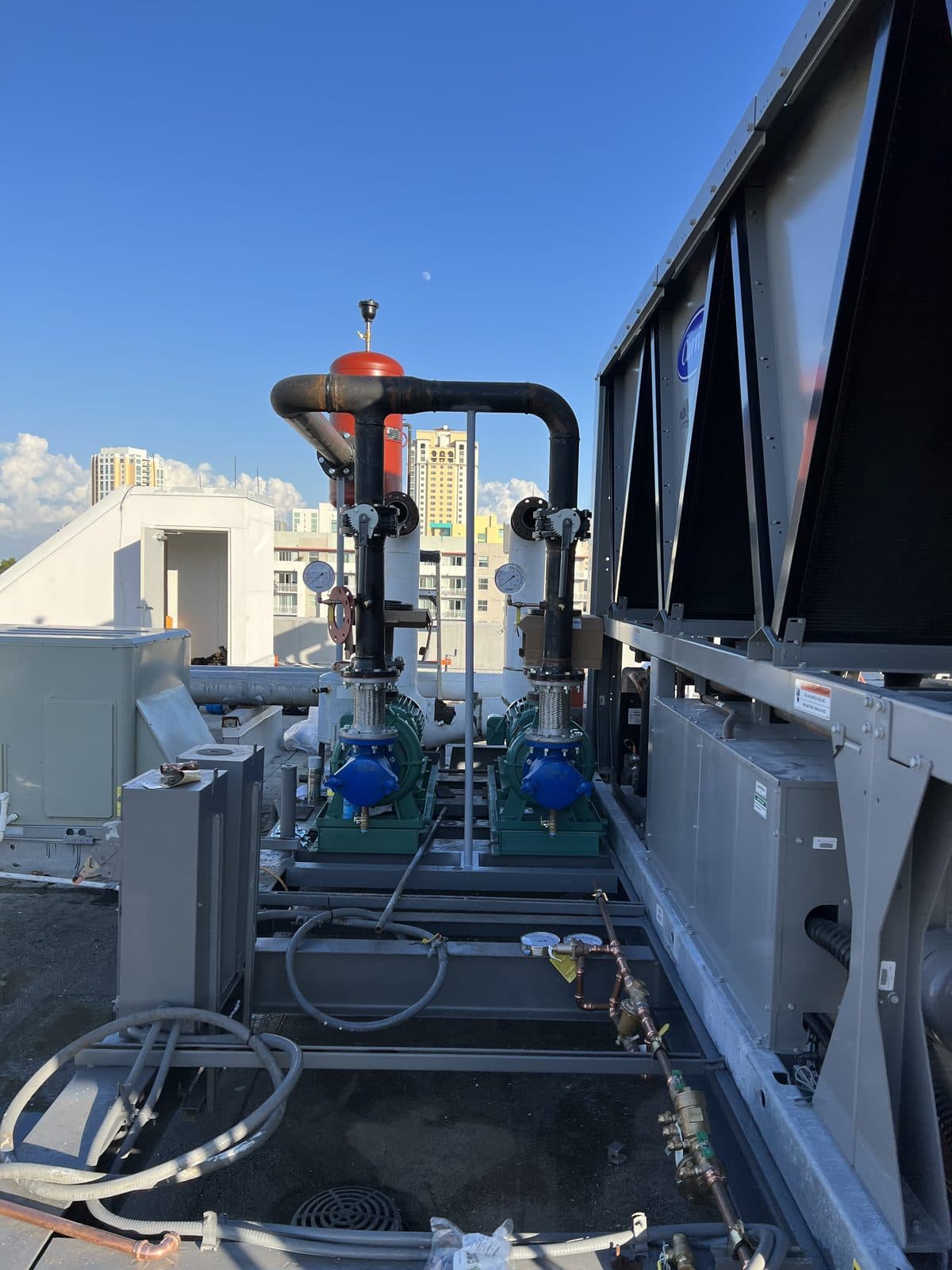
If water is entering the building through the roof deck, that is a structural and roofing issue rather than a mechanical service call, and it needs the roofing contractor involved before anyone signs off on a repair.
The reason this matters beyond scope: a mechanical contractor who repairs the equipment and leaves a compromised roof deck has fixed the visible half of the problem, and the building owner discovers the rest later — usually along with a warranty dispute about who caused it.
Why condensate volume is a Florida-specific problem
The reason drainage faults do more damage here than in most of the country is simply how much water commercial equipment produces. A cooling coil pulling moisture out of humid air generates condensate continuously through most of the year, so a compromised pan or a badly pitched line does not release a small amount once — it releases a steady flow for as long as the equipment runs.
That volume is also why the secondary pan and float switch matter more here than they might elsewhere. In a climate with a short cooling season, a drainage fault might be discovered during the next service visit. In this one it is discovered by the ceiling.
Florida's mechanical code carries provisions on condensate discharge, and local requirements can add conditions on where water may terminate — which is worth confirming for a specific jurisdiction, because a drain that simply discharges onto roofing components is both a code question and the beginning of a roofing problem.
Water on a roof is two problems, not one
The distinction that protects a building owner here is between the mechanical fault and the building consequence. A cracked drain pan is a mechanical repair. Water that has been running across a roof membrane, pooling at a curb, or entering through the deck is a building envelope issue that outlives the mechanical fix.
Both need documenting, and they need documenting before the repair rather than after — because once the pan is replaced, the evidence of where the water was going is gone. That matters for a roofing warranty claim, and it matters for establishing whether the mechanical failure caused the envelope damage or simply happened alongside it.
In this climate the volume involved is easy to underestimate. Commercial cooling equipment running through a Florida summer produces condensate more or less continuously, so a drainage fault does not release a small amount of water once. It releases a steady flow for as long as the equipment runs, which is why an unnoticed pan failure can do serious damage before anyone reports a leak.
The secondary drain pan and float switch: the last line of defense
Most commercial cooling equipment is built with a second layer of protection behind the primary drain. Beneath or alongside the primary pan sits a secondary pan, and wired into the condensate path is a float or condensate switch. The design intent is simple: if the primary drain clogs and water begins to back up, the rising level is supposed to trip the switch and shut the system down before the secondary pan overflows and water ever reaches the building. It is a safety, and like any safety it is meant to fail loud rather than fail silent.
This is why a system that shut itself off on the hottest afternoon of the year is often not broken in the way the call describes. Frequently it is the float switch doing exactly its job — sensing a backing-up drain and stopping the equipment before the ceiling paid for it. The uncomfortable part of the visit is explaining that the nuisance shutdown was the good outcome, and the real fault is the clog it caught.
The failure mode that does the damage is the switch that was never there, was bypassed at a past service, or has never been tested. When there is no working float switch, a routine drain clog has nothing to stop it. Water backs up, the primary pan overflows, the secondary pan fills and spills, and the first anyone hears of it is a stain spreading across the ceiling tile below.
How to stop the leak before it starts: what maintenance actually prevents
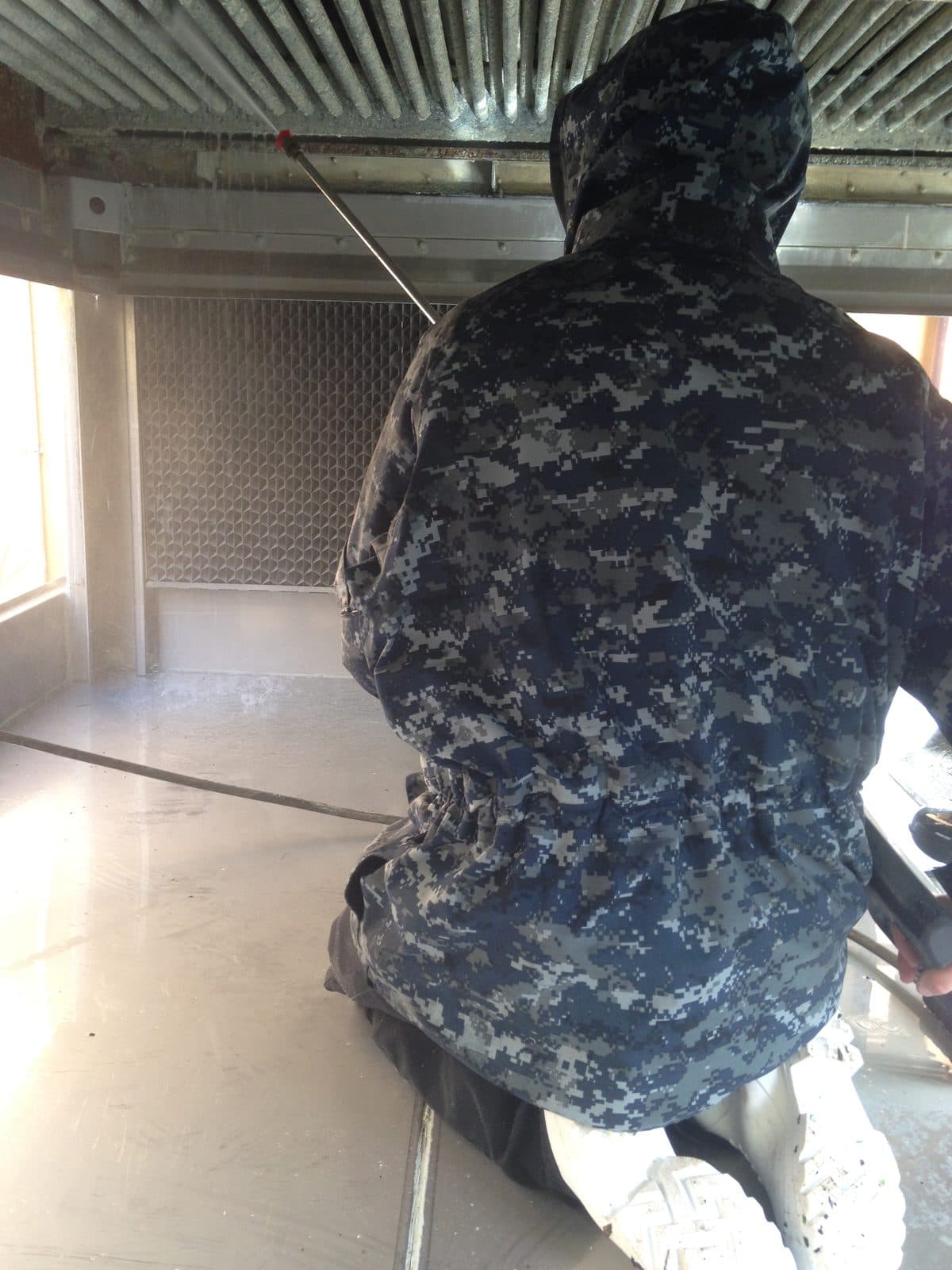
Almost everything described on this page is preventable, and the prevention is unglamorous. Before the cooling season carries its full load, the condensate line should be cleared and treated — physically confirmed to flow, not just glanced at — so the season's continuous condensate has somewhere to go. Treating the line to discourage the biological growth that reforms clogs is part of that, and it is the step a rushed visit skips.
A real maintenance visit also confirms the things that only get checked when someone is actually looking. Is the drain line still pitched to carry water away, or has it sagged since installation? Does it terminate where it is supposed to, rather than discharging onto roofing components? Is the pan showing the early corrosion that turns into the crack that floods the ceiling next summer? None of these announce themselves; they are found by inspection or not at all.
And the safety itself has to be tested, not assumed. A float switch that has never been triggered is an unknown, not a protection — the only way to know it will shut the system down when a drain backs up is to verify it does. That is the difference between a maintenance visit and a rinse-and-go: one leaves the equipment clean and the outcome unverified, the other confirms the drain flows, the pan is sound, and the last line of defense will actually hold.
Frequently asked
Water is coming from the ceiling below a rooftop unit. Is the drain clogged?
On a roof, often not. Rusted or cracked drain pans, drain lines pitched incorrectly at installation, economizer sections draining into the unit, and pans undersized after a capacity upgrade are all common — and clearing a line that was never blocked wastes the visit.
Does a leaking rooftop unit affect my roof warranty?
It can, which is why the source should be documented before repairs begin. Water on a roof is a roofing matter as well as a mechanical one, and a mechanical repair that leaves a compromised deck unaddressed tends to surface later as a dispute about who caused what.
How much water are we actually talking about?
More than most people expect. Commercial cooling equipment in this climate produces condensate more or less continuously through most of the year, so a compromised pan or a badly pitched line does not release water once — it releases a steady flow for as long as the equipment runs. That is why an unnoticed drainage fault can do serious damage before anyone reports a leak.
My rooftop unit shut itself off on a hot day. Is it broken?
Often the opposite — that can be the safety working. Commercial units typically have a float or condensate switch that trips and shuts the equipment down when a drain begins to back up, before water overflows into the building. A nuisance shutdown on the hottest afternoon is frequently the switch catching a drain clog exactly as designed. The equipment stopping is the good outcome; the clog it caught is the fault to clear.
Can regular maintenance actually prevent these water leaks?
Most of them, yes. Clearing and treating the condensate line before the season, confirming the line still pitches and terminates correctly, inspecting the pan for early corrosion, and testing the float switch to confirm it will shut the system down all head off the failures that flood a ceiling. The difference is a visit that verifies the drain flows and the safety holds versus a rinse-and-go that leaves both unconfirmed.
Do I need a contractor for this?
Maybe, and this is one where in-house work often finds the answer. Look at the condensate pan and the drain line for standing water or an obvious blockage, and check the filters, because a starved coil ices and then overruns the pan when it melts. Clearing a blocked line, replacing a float switch or anything on the coil is a licensed contractor's. Treat water above an occupied space or a server room as urgent rather than scheduled.
Unit converter
Showing 1 therm in 4 other units
| Unit | Value |
|---|---|
| Btu | 100,000 |
| kWh | 29.31 |
| MMBtu | 0.1000 |
| Ccf (natural gas) | 0.9653 |
Used only for Ccf and therm conversions. Source: EIA, Heat Content of Natural Gas Consumed (U.S., 2025).
Sources: 1 therm = 100,000 Btu and 1 kWh = 3,412 Btu, from EIA. MMBtu from EIA. MBH from Wikipedia. 1 ton of refrigeration = 12,000 Btu/h from NIST. Ccf = 100 cubic feet from Wikipedia. — means no result for the current input.
Commercial equipment down in Tampa Bay? Talk to a licensed technician.
References: Blume field practice (Tye, via Leverage, 2026-07-24) · US EPA — Section 608 refrigerant handling certification · NFPA 70E / OSHA — electrical safe work practices, lockout/tagout · ASHRAE/ACCA Standard 180 — commercial HVAC inspection and maintenance