
Hillsborough, Pinellas, Pasco, Manatee, Sarasota, Polk and Hernando Counties · Florida CAC-1822618
HVAC Partnership for Property Managers in Tampa Bay, Florida
Property managers do not need another HVAC vendor — they need one mechanical partner who knows every unit across the portfolio, triages tenant comfort calls intelligently, documents everything per unit, and helps budget across the fleet instead of surprising it. That is the relationship Blume builds with Tampa Bay property managers. Florida license CAC-1822618, fully insured, serving the region since 2009, with a line that answers around the clock at (727) 330-9131.
A property manager's HVAC problem is rarely one broken unit. It is thirty units across eight roofs, tenants who measure their landlord by the temperature of their suite, owners who want a defensible budget, and a vendor list that treats every call as a fresh introduction. The fix is not more vendors. It is one partner who carries the whole picture.
A portfolio is not a pile of service calls
The standard way property portfolios consume HVAC service is one reactive call at a time: a tenant complains, a technician is dispatched to a unit he may never have seen, he fixes the immediate symptom, and the invoice joins a stack that nobody can read a pattern from. Every call starts from zero. The portfolio has no memory.
Treated as a fleet, the same buildings become manageable. Every piece of equipment gets identified, tagged and recorded — location, age, condition, refrigerant type, service history. Repairs land in a per-unit record instead of a pile. Patterns surface: the unit that has eaten three repairs in eighteen months, the roof where every unit is aging in step because the building was built in one project, the property whose problems are really one problem with airflow.
That shift changes the questions a manager can answer. Instead of what did we spend on HVAC last year, the fleet view answers where did we spend it, which units are consuming the budget, what is likely to fail next, and what should be replaced on our schedule rather than on the equipment's. The first is bookkeeping. The rest is management — and it is only possible when one organization holds the whole record.
Tenant comfort calls: triage instead of dispatch roulette
Comfort complaints are where property managers live, because tenants experience their lease through the temperature of their space. The naive process — every complaint becomes a truck roll — is expensive in three currencies at once: service cost, tenant patience, and the manager's time relaying messages between the two.
Triage is the discipline that fixes it. A comfort call gets a few structured questions before a truck moves: is the whole suite affected or one room, is it constant or certain hours, did anything change, is equipment audibly running. The answers sort calls into what they actually are. Some are genuine equipment failures that need a technician promptly. Some are thermostat settings, tripped breakers or blocked diffusers that can be resolved or narrowed in minutes. Some are chronic building conditions — an under-conditioned corner office, a space whose use changed since the system was designed — that no number of identical repair visits will fix and that deserve an honest engineering conversation instead.
With a partner who knows the portfolio, triage gets sharper over time, because history informs it: this building's complaints cluster on hot afternoons on the west side; that unit was flagged marginal at the last maintenance visit. The manager's role shrinks from dispatcher to informed decision-maker, which is where a manager's time belongs.
Documentation per unit is the product
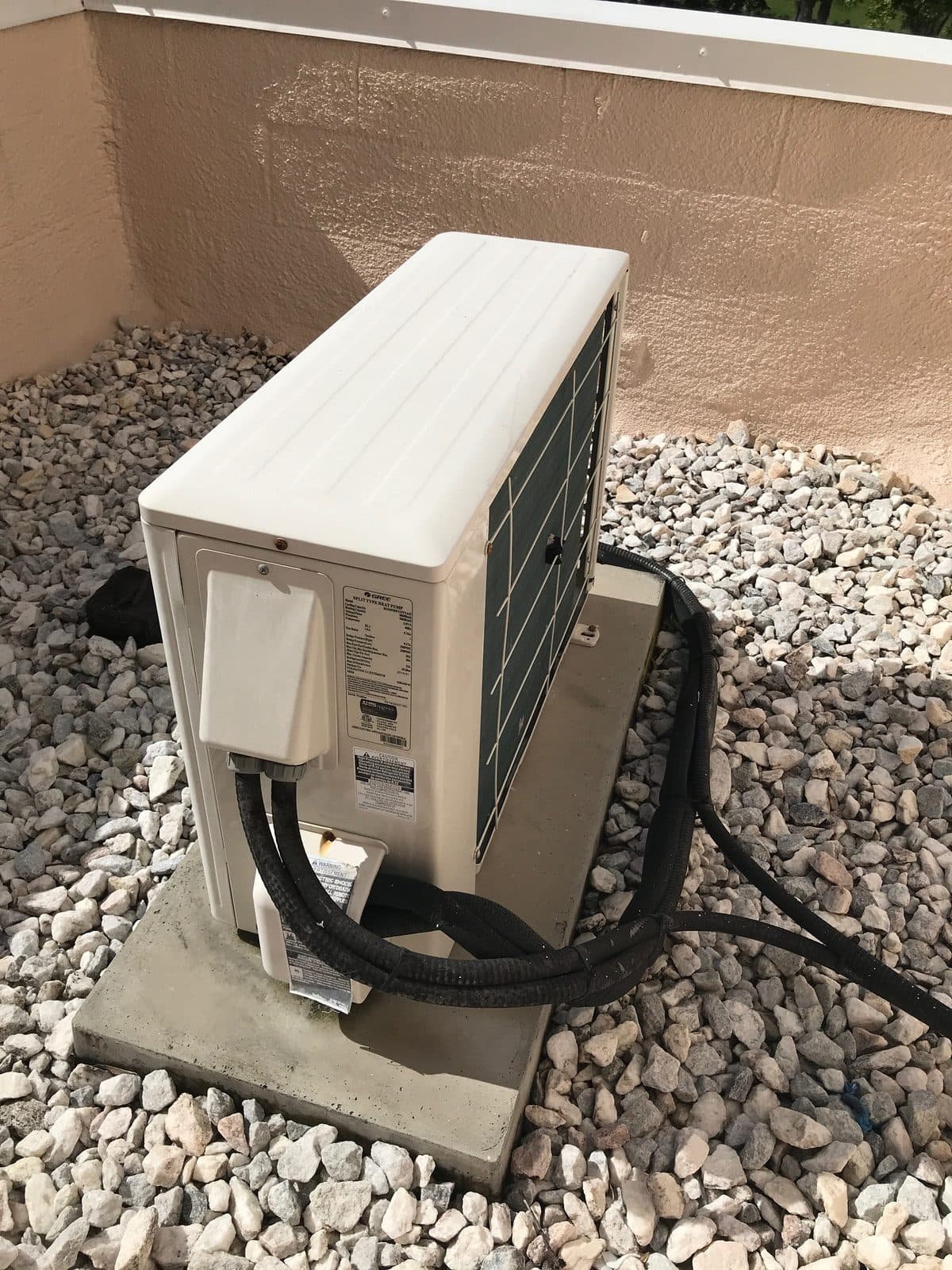
The deliverable that outlasts any single repair is the record. For each piece of equipment across the portfolio, the file should hold: identification and location, nameplate data, age, refrigerant type, condition assessment, every service visit with what was found and done, photos where they tell the story, and open recommendations with their reasoning.
Managers need this record for four different audiences. For themselves, it is operational memory that survives staff turnover — the building engineer who knew everything retires, and the knowledge stays. For owners, it is the evidence behind budget requests: a replacement recommendation carried by a unit's documented repair history is a decision, while the same recommendation without history is a quote to be shopped. For tenants and lease administration, it is proof of maintenance where leases require it. And at transaction time, a documented mechanical fleet answers a buyer's diligence questions in an afternoon, while an undocumented one becomes a negotiating discount.
Our position is simple: the documentation belongs to the property, not to us. Managers get the records in usable form, updated as work happens, portable if the relationship ever ends. A contractor who keeps the equipment history hostage has confused leverage with service — and a manager should never have to call their vendor to find out what they own.
Budgeting across a fleet instead of flinching at failures
HVAC is one of the larger recurring lines in a property budget, and the difference between portfolios that control it and portfolios that suffer it is almost entirely about planning posture.
The reactive posture budgets a lump for repairs, hopes, and then explains variances after equipment fails at the worst time — because unplanned failures cluster in the hardest weather, when the equipment works hardest. Every failure is a surprise, every replacement is an emergency purchase made without leverage or lead time, and the owner conversation is always an apology.
The fleet posture uses the documented equipment record to plan in layers. A maintenance layer that is steady and predictable per property. A repair allowance informed by each building's actual history rather than a portfolio-blind guess. And a capital sequence: which units are in their final years, roughly when each should be replaced, and which failures would be tolerable versus which would be urgent — so that when a marginal unit does die, the event was on a list, not out of nowhere.
No plan eliminates surprises, and we do not pretend otherwise. Compressors fail on Fridays in August anyway. But a portfolio where most replacements happen on schedule, in mild months, with time to choose equipment properly, spends its money deliberately — and gives its manager a budget narrative that owners can trust year after year.
One contact, and what that actually means
Property managers juggle enough vendors to know that one throat to choke is usually a slogan. Here is what we mean by it concretely.
One relationship covers the portfolio: the same organization maintains the equipment, answers the comfort calls, performs the repairs and plans the replacements, so nothing is lost in handoffs between a maintenance vendor, a repair vendor and an installing contractor who have never spoken. One point of contact knows your properties, your tenants' patterns and your owners' preferences, and does not need the history re-explained on every call. One phone number reaches us at any hour — (727) 330-9131 — and after-hours calls get the same triage discipline as daytime ones, because a manager standing in a lobby at night deserves a decision, not a voicemail.
Coordination is part of the job, not an extra. Work in occupied buildings gets scheduled with tenants through whatever channel the manager prefers, roof access and key protocols are handled per property, and the manager hears about completed work without having to ask. Where a project genuinely needs another trade — electrical service upgrades, structural work for rooftop replacements — we coordinate rather than disappear behind the phrase not our scope.
And one commitment underneath all of it: recommendations come with reasoning, distinguish urgent from eventual, and stand up to being shopped. A portfolio relationship only works if the manager never has to wonder whose interest a recommendation serves.
What we see in the field
The most common state we find a new portfolio in is undocumented: nobody can say how many units there are, let alone their ages or histories. The first engagement is an inventory — walking every roof and mechanical room, tagging and recording what exists. Managers are routinely surprised by what turns up: units nobody knew about, units running that serve nothing, two buildings sharing a unit that both tenants think is theirs alone.
The second pattern is the repeat-repair unit that a rotating cast of vendors has each fixed once. Each visit resolved a symptom; nobody owned the pattern. A per-unit history makes these units impossible to miss, and the honest conversation — this machine has consumed enough repairs that continuing to fix it is a decision, not a default — tends to save real money precisely because it is visible for the first time.
The third is the chronic-complaint suite, where the file shows years of visits and no resolution because the problem was never a repair problem: the space's use changed, or the original design under-served that zone from day one. Naming that honestly — this needs an assessment and possibly modification, and here is why the repair visits will never end otherwise — is the moment managers tend to decide the relationship is different from the vendor list it replaced. The pattern across all three is the same: the value is not the wrench, it is the memory.
Frequently asked
What does an HVAC partnership for a property portfolio actually include?
Four things working together: a documented inventory and per-unit service history across every property; scheduled maintenance planned per building; triaged response to tenant comfort calls at any hour; and fleet-level planning — repair-versus-replace reasoning and a capital sequence — so budgets are built from the portfolio's actual condition. The difference from a vendor list is memory: one organization holds the whole record and answers for the whole picture.
How do you handle tenant comfort complaints?
With triage before trucks. Structured questions sort the call: whole suite or one room, constant or time-of-day, anything changed, equipment running. Genuine failures get a technician promptly; settings and simple issues get resolved without a full visit; chronic conditions get named as what they are — design or building problems that repeat repair visits will never fix — with an honest path proposed. Portfolio history sharpens the triage over time, and after-hours calls get the same discipline.
Who owns the equipment documentation if we change contractors?
You do, and any answer other than that is a warning sign. The per-unit records — inventory, nameplate data, condition, service history, recommendations — belong to the property. We provide them in usable form, keep them updated as work happens, and they leave with you if the relationship ever ends. Equipment history held hostage by a vendor is leverage, not service, and it is the manager who pays for the missing memory later.
How does fleet documentation help with budgeting?
It converts the HVAC budget from a guess into a plan with evidence. Maintenance is priced per property, repair allowances reflect each building's real history, and a capital sequence identifies which units are in their final years so replacements happen on your schedule in mild months, not as emergency purchases in peak season. When a replacement request reaches an owner carried by a documented repair history, it reads as a decision rather than a quote to be shopped.
Can one contractor realistically cover properties across all of Tampa Bay?
For the counties we work — Hillsborough, Pinellas, Pasco, Manatee, Sarasota, Polk and Hernando — yes, and portfolios spread across them are our normal case. Scheduled maintenance is routed per property, comfort calls are triaged before dispatch so trucks go where trucks are needed, and one contact and one record system covers the whole footprint. What we will not do is promise a response-time number; we commit to the triage discipline and honest scheduling instead.
Unit converter
Showing 1 therm in 4 other units
| Unit | Value |
|---|---|
| Btu | 100,000 |
| kWh | 29.31 |
| MMBtu | 0.1000 |
| Ccf (natural gas) | 0.9653 |
Used only for Ccf and therm conversions. Source: EIA, Heat Content of Natural Gas Consumed (U.S., 2025).
Sources: 1 therm = 100,000 Btu and 1 kWh = 3,412 Btu, from EIA. MMBtu from EIA. MBH from Wikipedia. 1 ton of refrigeration = 12,000 Btu/h from NIST. Ccf = 100 cubic feet from Wikipedia. — means no result for the current input.
Managing more roofs than records? Talk to a licensed mechanical contractor who treats your portfolio as a fleet.
References: US Department of Energy — operations and maintenance guidance for building portfolios · ASHRAE — HVAC maintenance and equipment service life fundamentals · US EPA — refrigerant management requirements relevant to multi-building fleets