
Hillsborough, Pinellas, Pasco, Manatee, Sarasota, Polk and Hernando Counties · Florida CAC-1822618
Facility Stewardship & Lifecycle Planning in Tampa Bay, Florida
Facility stewardship planning replaces run-to-failure with a documented plan: a complete equipment inventory, a condition assessment of every unit, a phased replacement roadmap, and a capital forecast a board or budget committee can act on. Blume builds these plans for campuses and multi-building facilities across Tampa Bay. Florida license CAC-1822618.
Most facilities do not choose reactive maintenance. They inherit it — one repair at a time, each decision reasonable on its own, until the building is carrying a roster of aging equipment nobody has looked at as a whole. A stewardship plan is the act of looking at it as a whole. It is less a service than a change in posture: from responding to whatever failed this week to knowing what is likely to fail over the next several years and deciding, on purpose, what to do about it.
What reactive maintenance actually costs a facility
The visible cost of run-to-failure is the repair invoice. The invisible cost is everything the repair-by-repair posture hides.
A facility running reactively has no ranked picture of its equipment. Units get attention in the order they complain, which is not the order of their actual condition. A compressor limping through its final season gets a hard-start kit and another chance, because nobody is holding the record that shows this is its third such intervention. Money flows toward whatever failed most recently rather than toward whatever failure would hurt most.
Meanwhile the deferred capital accumulates silently. Every year a facility runs equipment past its expected service life without a replacement plan, the eventual bill grows — not because the equipment gets more expensive, but because the replacements concentrate. Units installed in the same construction phase age together and tend to fail together. A campus that built or renovated in one push will one day face a cluster of failures in a similar push, except now they arrive as emergencies: no time to bid the work, no ability to schedule around services or the school calendar, no option to group the work efficiently.
The honest way to describe reactive maintenance is this: it is a plan whose terms you discover only when equipment enforces them.
What a stewardship plan contains
A stewardship plan is a document, and it has specific parts.
First, an equipment inventory. Every piece of mechanical equipment on the property — rooftop units, split systems, chillers, air handlers, exhaust fans, controls — with model, serial, age, refrigerant type, and location. Most multi-building facilities have never had this list in one place. It is the foundation for everything else.
Second, a condition assessment. Not age alone — measured condition. Compressor amp draw against nameplate, coil condition, refrigerant circuit integrity, heat exchanger state, drainage, controls function. Age tells you when a unit was installed; measurement tells you how it was treated since. A twelve-year-old unit that was maintained can outrank a seven-year-old unit that was not.
Third, a phased replacement roadmap. The inventory ranked by condition and consequence, then divided into phases: what should be replaced soon, what should be planned within the budget horizon, what can honestly wait. Consequence matters as much as condition — the unit serving a sanctuary or a server room ranks differently than the identical unit serving a storage wing.
Fourth, a capital reserve forecast. The roadmap translated into budgeting language: what class of expenditure to expect in which phase, so that a finance committee can build reserves ahead of need instead of financing an emergency behind it. Blume does not publish or predict prices — the forecast is structured around your own bids and budget process — but the sequencing and grouping logic is the engineering deliverable that makes the numbers plannable at all.
The grouping economics: cranes, mobilization, and phasing
One of the strongest arguments for planning is purely logistical, and it is invisible until someone looks at the roster as a whole.
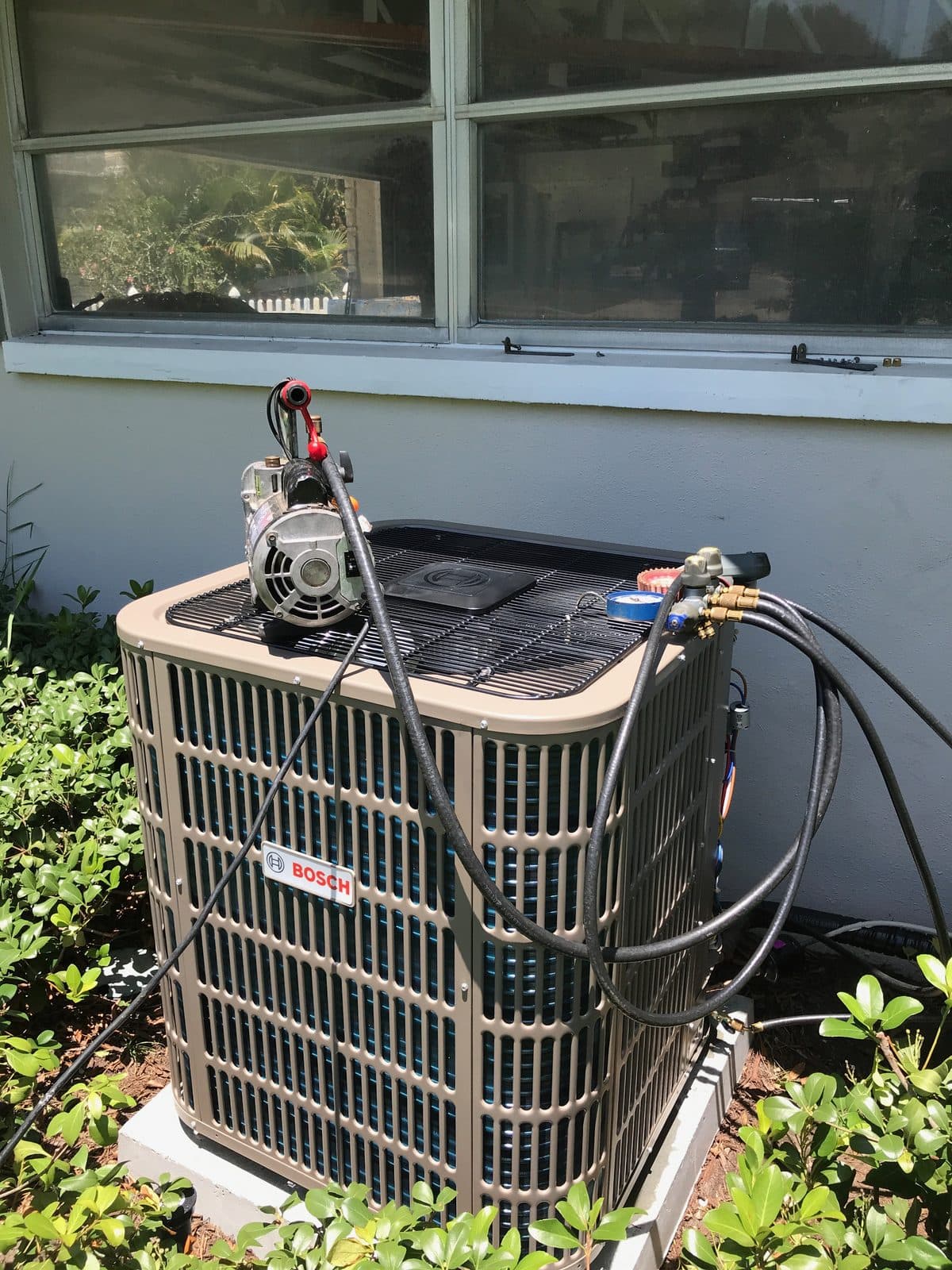
Replacing a rooftop unit involves more than the unit. There is a crane, street or parking closure, rigging crew, disposal, curb work, electrical, controls reconnection, startup and commissioning. A meaningful share of that effort is mobilization — the cost of getting the operation to the roof at all — and it is largely the same whether the crane lifts one unit that day or several.
A facility replacing units reactively pays full mobilization every time, because each replacement arrives as its own emergency. A facility with a roadmap can see that three units on the same building are all approaching end of life, group them into a single planned project, and set one crane day instead of three. The same logic applies to lift rentals, after-hours labor windows, and permit cycles.
Grouping is only possible with foresight. By the time a unit has failed in August, the option to wait for its siblings has expired. The roadmap is what keeps the option alive.
Who this fits
Stewardship planning earns its keep wherever three conditions overlap: multiple pieces of equipment, a governance process that has to approve spending, and a building whose downtime carries real consequence.
Churches and ministries are the archetype. Equipment purchased across decades of building programs, a finance committee or board that meets on a schedule, volunteer or part-time facility oversight, and spaces — sanctuaries, fellowship halls, classrooms — where a failure lands on a specific service or event. A plan converts the mechanical conversation from crisis appeals into an agenda item the board can govern.
Private schools and academies share the shape: seasonal calendars that replacement work must respect, board-approved budgets, and buildings added in phases whose equipment now ages in phases.
Multi-building campuses and property portfolios get an additional benefit: comparability. When every unit across every building is assessed the same way, capital can flow to the worst equipment in the portfolio rather than to the loudest building in it.
A single small building with two or three units generally does not need a formal stewardship engagement — a good maintenance agreement with honest condition reporting covers it. We say so when that is the case.
What an engagement looks like
The work runs in stages, and each stage produces something you keep.
It begins with a walk-through and records review: existing equipment lists if any, service history if it exists, and a conversation about how the facility is actually used — which spaces are critical, what the calendar looks like, how decisions get made and on what cycle.
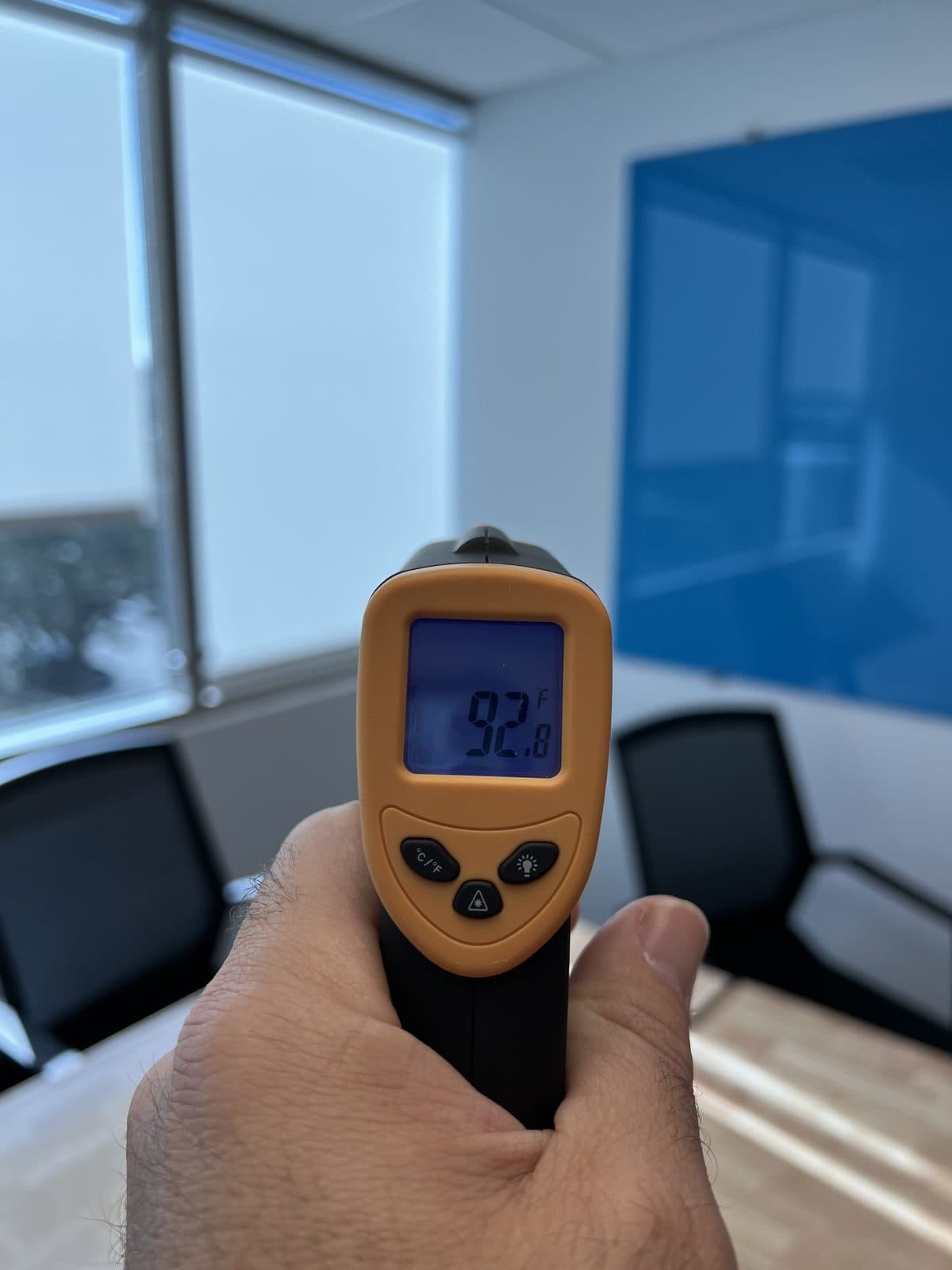
Then the field assessment. Technicians survey and measure every unit in scope. This is instrument work, not clipboard work: electrical measurements, refrigerant circuit performance, temperature splits, drainage and safety-device condition, photographs of each unit and its nameplate.
Then the plan itself: the inventory, the condition ranking, the phased roadmap, and the grouping recommendations, written for the audience that has to approve it. A board does not need superheat readings; it needs to know which phase carries which projects and why the sequence is what it is. The measurement detail sits behind the summary for anyone who wants to audit it.
Finally, review and revision. A stewardship plan is not a one-time document. Equipment condition changes, priorities shift, and phases complete. The plan gets revisited on a cycle — typically alongside ongoing maintenance, so each visit's measurements keep the condition rankings current instead of letting the document go stale on a shelf.
How the plan and the maintenance agreement reinforce each other
A stewardship plan and a preventive maintenance agreement are different instruments, and they are strongest together.
The plan is the map: what you own, what condition it is in, what happens next. The maintenance agreement is the ongoing measurement that keeps the map accurate. Every maintenance visit that records real measurements — amp draws, pressures, temperature splits — is also updating the condition assessment. A unit trending toward failure moves up the roadmap before it fails; a unit holding steady stays where it is. Without ongoing measurement, a condition assessment is a photograph that ages; with it, the plan is a live document.
The traffic runs the other way too. The roadmap tells the maintenance program where to concentrate. Equipment in its final planned years may warrant run-to-plan maintenance — keep it safe and functional, but stop investing in major components scheduled for replacement. Equipment early in its life warrants the opposite: full protection of the warranty and the asset.
This is also why the equipment history should belong to the facility, not the vendor. The plan, the measurements, and the service records are assets of the building. If you ever change contractors, they should transfer with you.
What we see in the field
The pattern that prompts most stewardship conversations is the same one: a facility calls about one failed unit, and the site visit reveals a roster of equipment in similar condition that nobody has been watching.
It is nobody's fault in any individual year. Facility oversight at churches and smaller campuses is often part-time or volunteer, and the mechanical system only becomes visible when it fails. Each failure gets fixed. What never happens is the step back — the question of what the whole roster looks like and what the next several years will demand of the budget.
The other pattern is the well-intentioned partial plan: a spreadsheet someone started, listing units and install years, used to guess at replacement timing. Age-based guessing is better than nothing, but it misranks equipment in both directions — condemning maintained units that have years left, and trusting neglected units that do not. Measurement is what separates a plan from a guess.
What we commit to: an assessment that measures rather than assumes, a roadmap ranked by condition and consequence rather than age alone, a document written for the people who have to approve it, and the honesty to say when a facility is small enough that a full engagement is not worth it.
Frequently asked
What is facility stewardship planning for HVAC?
It is the transition from reactive repair to a documented lifecycle plan: a complete equipment inventory, a measured condition assessment of every unit, a phased replacement roadmap ranked by condition and consequence, and a capital forecast structured so a board or finance committee can budget ahead of failures instead of reacting to them.
How is this different from a regular maintenance contract?
A maintenance agreement is the ongoing care and measurement of equipment; a stewardship plan is the map of where the whole roster is headed. They reinforce each other — maintenance visits supply the measurements that keep the plan's condition rankings current, and the plan tells the maintenance program where to invest and where to run equipment to a planned retirement.
Why does grouping replacements matter?
Rooftop replacement carries large fixed logistics — crane, rigging, closures, permits, startup — that are much the same whether one unit or several are lifted that day. Grouping units that are approaching end of life into one planned mobilization spreads that fixed effort across multiple units. The option only exists before failure forces each replacement individually.
Who actually needs this? We are a single church with one building.
It depends on the equipment count and how decisions get made. A campus or building with many units, a board that approves spending on a schedule, and spaces where downtime lands on services or events benefits clearly. A small building with two or three units usually does not need a formal engagement — a maintenance agreement with honest condition reporting covers it, and we will say so.
Does the plan include prices for the replacements?
No. Published price predictions go stale and mislead. The plan delivers the engineering side of budgeting — which units, in what sequence, grouped how, and why — so that the numbers your budget process attaches to each phase come from real, current bids rather than a stale estimate baked into a document.
Unit converter
Showing 1 therm in 4 other units
| Unit | Value |
|---|---|
| Btu | 100,000 |
| kWh | 29.31 |
| MMBtu | 0.1000 |
| Ccf (natural gas) | 0.9653 |
Used only for Ccf and therm conversions. Source: EIA, Heat Content of Natural Gas Consumed (U.S., 2025).
Sources: 1 therm = 100,000 Btu and 1 kWh = 3,412 Btu, from EIA. MMBtu from EIA. MBH from Wikipedia. 1 ton of refrigeration = 12,000 Btu/h from NIST. Ccf = 100 cubic feet from Wikipedia. — means no result for the current input.
Running a campus on repair-by-repair? Ask what your equipment roster looks like as a whole.
References: ASHRAE / ACCA Standard 180 — standard practice for inspection and maintenance of commercial HVAC systems · ASHRAE Equipment Life Expectancy reference data (ASHRAE Handbook — HVAC Applications, owning and operating costs chapter) · US DOE Federal Energy Management Program — operations and maintenance program guidance