

Hillsborough, Pinellas, Pasco, Manatee, Sarasota, Polk and Hernando Counties · Florida CAC-1822618
HVAC for Churches & Worship Facilities in Tampa Bay, Florida
Worship facilities are one of the hardest commercial HVAC problems there is: a sanctuary that sits nearly empty all week and then fills with hundreds of people for two hours, event spaces with wild humidity swings, and campuses that grew one building at a time across decades of different equipment. Blume services churches and worship facilities across Tampa Bay — Florida license CAC-1822618, fully insured, serving the region since 2009.
A church building is asked to do something almost no office ever faces: go from empty to packed in twenty minutes, feel right the entire service, and do it on a budget answered for to a board of volunteers. That takes a contractor who understands intermittent loads, respects stewardship, and schedules work around the life of the congregation rather than through it.
The sanctuary load problem: empty all week, full on Sunday
Most commercial buildings carry a load that ramps up in the morning and down in the evening, five days a week. A sanctuary does the opposite of everything equipment likes: it sits nearly unoccupied for days, then takes on hundreds of people at once — each one adding heat and moisture to the space — holds that load for a couple of hours, and empties as fast as it filled.
Sizing equipment for that profile is a genuine engineering problem. Cooling sized for the packed room is enormously oversized for the empty one, and oversized cooling running at a fraction of its capacity short-cycles: it knocks the temperature down quickly and shuts off before it has run long enough to wring moisture out of the air. The room hits the setpoint number and still feels clammy. Cooling sized for the empty room, meanwhile, simply cannot keep up when the pews fill.
The practical answers involve staging — multiple smaller units instead of one large one, so capacity can step up as the room fills — along with equipment that can modulate rather than only start and stop, ventilation control that responds to how many people are actually present, and pre-cooling schedules that put the building ahead of the crowd instead of chasing it. Which combination fits a given sanctuary depends on the equipment already there, the building itself, and the budget. What does not work is pretending a sanctuary is an office with pews.
Humidity is the real enemy in Florida worship spaces
In Tampa Bay, the sanctuary that sits lightly used between services is not resting — it is absorbing moisture. Humid air finds its way into every building, and a space that is only cooled hard for a few hours a week spends the rest of the week warm and damp unless something is managing humidity the whole time.
The stakes are higher in a sanctuary than in an office. Organs, pianos and orchestral instruments react badly to humidity swings — wood moves, tuning drifts, felt and glue suffer. Hymnals, paraments, wood furnishings and finishes take the same slow damage. And ASHRAE identifies sustained excess indoor moisture as a driver of microbial growth and material damage generally, which in a church means the musty smell in the fellowship wing that everyone has learned to ignore is actually a building telling on itself.
The answer is rarely to run full cooling all week, which nobody's budget wants. It is humidity-aware operation between occupancies: setback strategies that hold moisture in check rather than only temperature, equipment that can dehumidify without deep cooling where the building justifies it, and trend data so that decisions rest on what the space actually does overnight and midweek rather than on how it feels on Sunday morning. Event-space humidity has its own rhythm — a fellowship hall that hosts a dinner for two hundred sees a moisture surge no office lunchroom ever does, and the building has to recover from it before the next use, not just cool through it.
The mixed-era campus: five decades of equipment on one meter
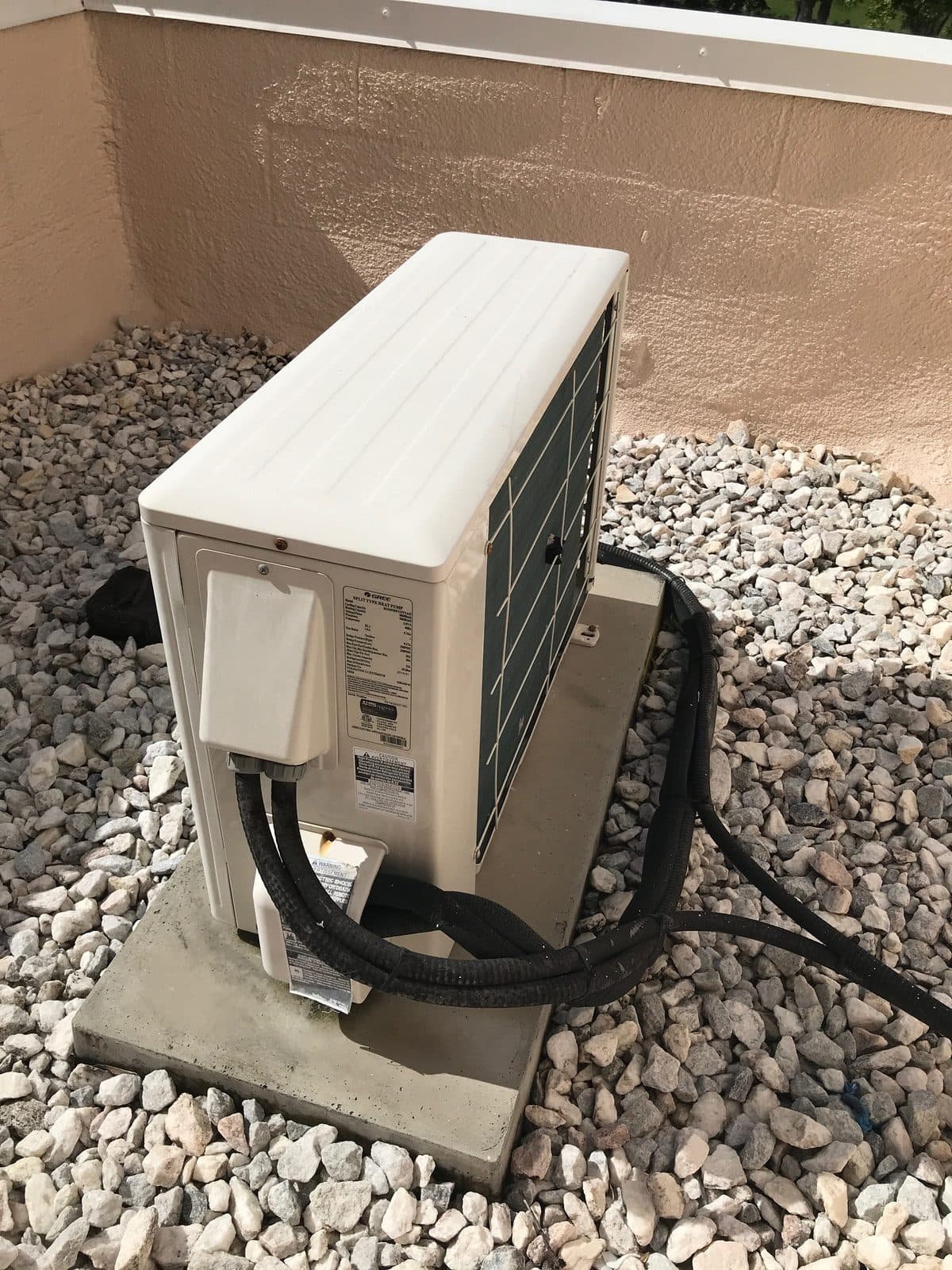
Very few worship campuses were built in one project. The common story is a sanctuary from one era, an education wing added a couple of decades later, a fellowship hall from a different building program, and a portable or an office suite somewhere in between. Every addition brought the equipment of its day, and the campus now runs a museum of HVAC generations — different refrigerants, different control types, different maintenance needs, different remaining lifespans.
That mix is normal, and it is manageable — but only if somebody is looking at it as one portfolio instead of as isolated repair calls. Documented as a fleet, the picture changes: which units are healthy, which are near end of life, which are on refrigerants that complicate future service, and which will need attention in a way that can be predicted and planned rather than discovered on a holiday weekend.
This is also where honest advice earns its keep. Not every old unit needs replacing — plenty of older equipment is worth maintaining well until a planned retirement. The point of assessing a mixed-era campus is not to generate a replacement list; it is to give the people responsible for the budget an accurate picture of what they own, so that the money goes where the risk actually is.
Stewardship is a budget philosophy we take seriously
Church facility decisions are not made by a facilities department with a capital budget. They are made by boards, committees and trustees answering for money a congregation gave — and that changes what a contractor owes them.
It means recommendations come with reasoning attached: what we found, what happens if it waits, what the repair path and the replacement path each involve, and which we would choose if it were our building and our budget. It means distinguishing clearly between what is urgent, what is coming, and what is merely nice to have — because a board that trusts the distinction can plan, and a board that has been oversold once will rightly distrust everything after that.
It also means favoring the maintenance schedule over the emergency call as a matter of philosophy. Planned work on a mixed-era campus is almost always better stewardship than reactive work: it happens on ordinary dates instead of holiday weekends, it catches small problems while they are small, and it turns the campus's HVAC spending from a series of unwelcome surprises into a line item a board can actually budget. We would rather help a committee plan three years ahead than sell them a crisis.
Scheduling around the life of the congregation
A worship facility is not closed on weekends — the weekend is the point. Services, weddings, funerals, rehearsals, school programs, midweek groups: the calendar is full precisely when most commercial buildings are empty, and a funeral cannot be rescheduled around a compressor swap.
So the work schedules around the building's life, not the contractor's convenience. Planned maintenance lands on the quiet days of the week for that campus. Disruptive work — crane picks, duct work, anything loud or long — gets planned against the facility calendar, coordinated with the people who actually run the building, and finished before the building is needed. When something fails close to a service, the honest conversation is about what can be done safely before the doors open and what has to wait until after.
This is also why we push worship facilities toward pre-season readiness checks harder than almost any other client. A Florida sanctuary's cooling gets its hardest test on the year's most attended services, and finding a weak compressor in a scheduled spring check is a calm, planned repair. Finding it when the building is at its fullest is the one outcome everyone was paying to avoid. Our line answers around the clock at (727) 330-9131, and the goal of everything above is to make that call rare.
What we see in the field
The most common worship-facility call we take is the Sunday-morning discovery: the sanctuary was set deep back all week to save money, the system was turned on an hour before service, and the building never caught up — because hours of stored heat and moisture in pews, walls and air do not leave in sixty minutes. The fix is usually not bigger equipment; it is smarter scheduling that starts recovery early enough, which costs far less than the oversizing it prevents.
Second most common is the campus where every unit has a different service history and none of it is written down — repairs done by whoever answered the phone that year, refrigerant types unknown, no record of what is under warranty. The first visit is as much archaeology as maintenance, and the documented equipment list we leave behind is often the most valuable thing on the invoice.
And we regularly meet the deferred-maintenance spiral: a tight budget year skips the maintenance visit, the skipped visit becomes an emergency repair, the emergency repair eats the budget that would have covered two years of maintenance, and the cycle tightens. The way out is not spending more — it is spending predictably, which is exactly the conversation a stewardship board is well equipped to have when someone gives them the real picture.
Frequently asked
Why does our sanctuary feel cold but clammy during services?
That is the classic signature of oversized or short-cycling cooling. Equipment sized for a packed room knocks the temperature down fast when the room is only partly loaded, then shuts off before it has run long enough to remove moisture. The thermometer reads the setpoint while the air stays humid. The answers involve staging, equipment that can modulate, and run patterns that dehumidify — not simply lowering the thermostat further, which makes the clammy feeling worse.
Should we run the air conditioning all week to protect the building and instruments?
Usually not at full occupancy settings — that is paying to cool an empty room. But full shutdown is also wrong in Florida, because an unconditioned space absorbs moisture all week, and humidity swings are what damage organs, pianos, wood furnishings and finishes. The middle path is humidity-aware setback: operation between occupancies aimed at keeping moisture in bounds rather than holding a deep temperature, tuned to what your building actually does overnight.
Our campus has equipment from several different decades. Do we need to replace it all?
Almost certainly not, and be wary of anyone whose assessment of a mixed-era campus is a full replacement list. Plenty of older equipment is worth maintaining well until a planned retirement. What a mixed fleet does need is documentation — condition, age, refrigerant type, service history per unit — so the board can see where the real risk sits and plan replacements deliberately instead of reacting to failures one holiday weekend at a time.
Can HVAC work be done without disrupting services and events?
Yes, with planning. Routine maintenance schedules onto the quiet days of your specific campus calendar, and disruptive work is planned against the facility schedule and completed before the building is needed. The honest exception is a failure close to a service, where the conversation becomes what can safely be done before doors open and what waits until after. A contractor who does not ask for your calendar before scheduling work is planning around theirs.
How should a church budget for HVAC?
Predictably, in two layers: a maintenance layer that is steady and planned, and a capital layer informed by a documented equipment list showing what is aging and roughly when it will need attention. The pattern to escape is the deferred-maintenance spiral, where a skipped maintenance year becomes an emergency repair that costs more than the maintenance would have. A board with an accurate fleet picture can plan years ahead — which is what stewardship of a building looks like in practice.
Unit converter
Showing 1 therm in 4 other units
| Unit | Value |
|---|---|
| Btu | 100,000 |
| kWh | 29.31 |
| MMBtu | 0.1000 |
| Ccf (natural gas) | 0.9653 |
Used only for Ccf and therm conversions. Source: EIA, Heat Content of Natural Gas Consumed (U.S., 2025).
Sources: 1 therm = 100,000 Btu and 1 kWh = 3,412 Btu, from EIA. MMBtu from EIA. MBH from Wikipedia. 1 ton of refrigeration = 12,000 Btu/h from NIST. Ccf = 100 cubic feet from Wikipedia. — means no result for the current input.
Responsible for a sanctuary, a fellowship hall, or a whole campus? Talk to a licensed mechanical contractor who plans around your congregation.
References: ASHRAE — humidity control, moisture-related material damage and indoor environmental quality · ASHRAE — ventilation for acceptable indoor air quality and occupancy-based ventilation · US Department of Energy — building scheduling, setback and pre-cooling operation guidance