
Hillsborough, Pinellas, Pasco, Manatee, Sarasota, Polk and Hernando Counties · Florida CAC-1822618
Commercial Rooftop Unit Not Running in Tampa Bay, Florida
A rooftop unit that will not start is usually being stopped by something deliberately — a safety that tripped, a control that is not calling, or an economizer holding mechanical cooling off. Blume checks what is preventing operation before assuming a failure. Florida license CAC-1822618.
What is actually happening
A unit that will not run is often assumed to be broken when it is in fact being prevented from running. Commercial rooftop equipment contains multiple devices whose entire purpose is to stop the compressor under conditions that would damage it, and any one of them will produce a unit that appears dead. Working out which is the difference between a control adjustment and a compressor replacement.
The diagnostic order
Confirm power at the disconnect. Before anything else, and before assuming an equipment fault.
Confirm there is actually a call for cooling at the thermostat or the building automation system. A unit correctly doing nothing because nothing asked it to run is not a failure.
Read the control board for fault codes. Most modern rooftop units log the last fault, and that log frequently names the problem outright.
Check the safeties — high-pressure, low-pressure, freeze stat, and the smoke detector if equipped. A tripped safety is information about a different underlying condition, not the condition itself.
Check the economizer. Some units will not run mechanical cooling while the economizer is in control, which looks exactly like a unit that will not start.
Where an untrained person has to stop
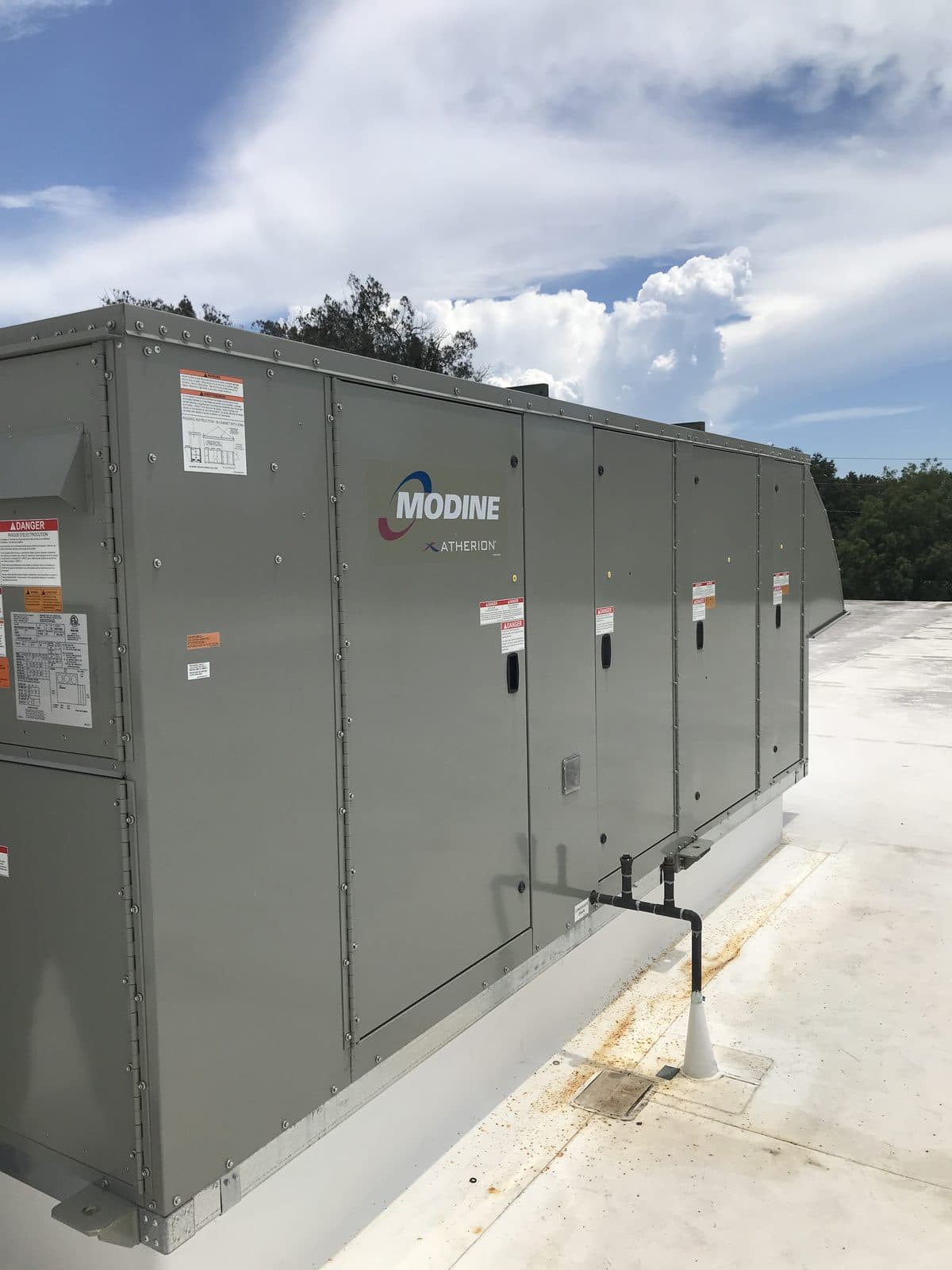
Electrical is the hard stop here, and it is not a close call. If the disconnect is energized and the unit is not running, do not open the electrical panel without proper lockout/tagout and electrical training.
Fault diagnosis inside a live commercial panel is not a do-it-yourself task. Commercial equipment operates at voltages and available fault currents that residential experience does not prepare anyone for, and the failure mode is not a blown fuse.
Rooftop equipment in a coastal storm region
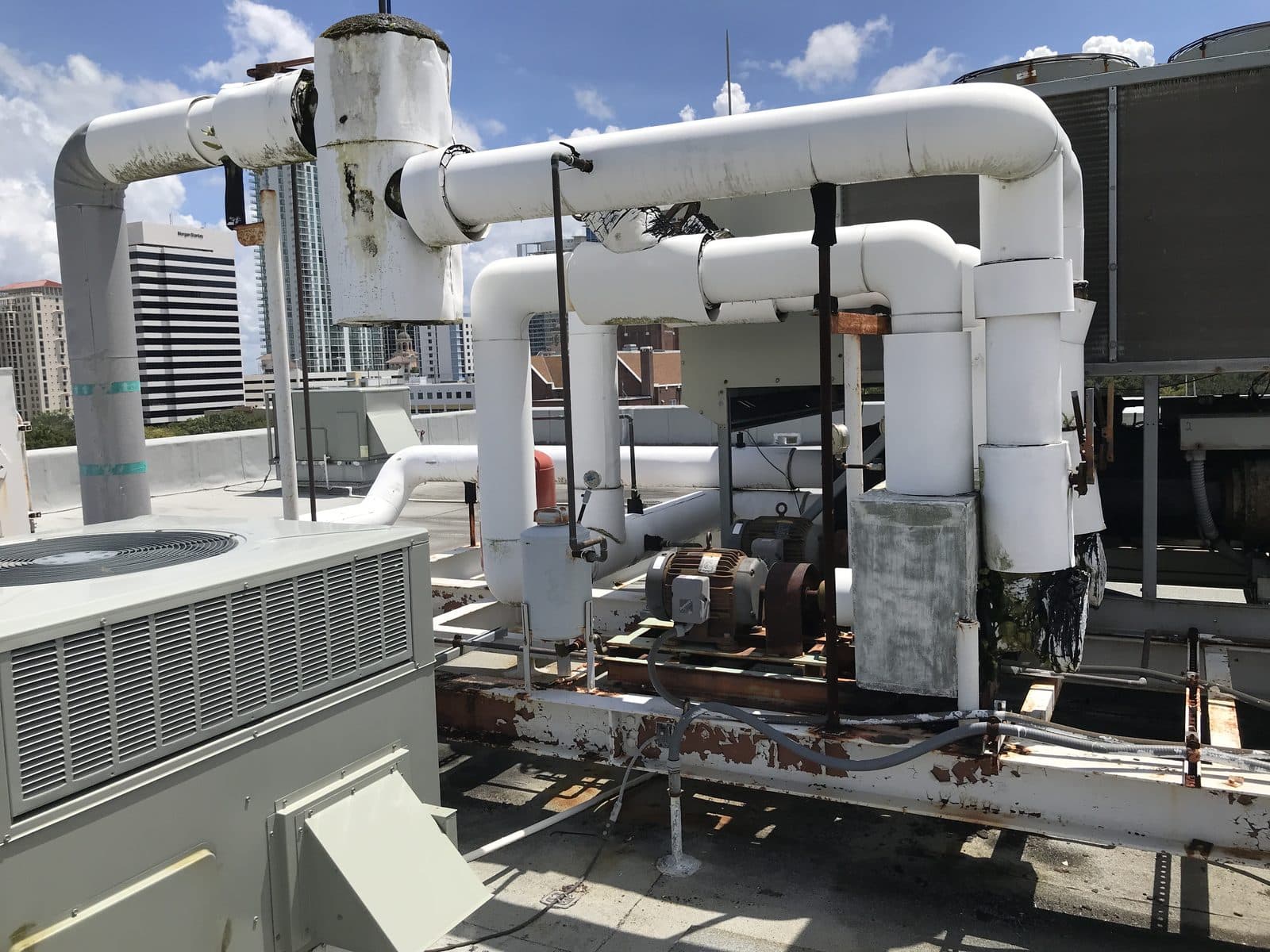
Rooftop units in this region carry two conditions that make a will-not-start call worth approaching carefully. The first is exposure: outdoor electrical connections, disconnects and whips on a Gulf-coast roof degrade faster than the same components inland, and corroded connections produce intermittent faults — a unit that runs perfectly for a technician on a mild morning and refuses again that afternoon.
The second is storm history. Equipment that has been through wind loading or water intrusion may run afterward and still carry damage that presents weeks later. Under the Florida Building Code, rooftop equipment and its supports must be designed and installed to resist applicable wind pressures and be secured to the building structure — so a unit that has shifted, or whose attachment is questionable, is a structural question alongside a mechanical one.
Neither of those changes the diagnostic order. They change how much weight to give an intermittent fault before dismissing it as a fluke.
Why a dead unit is usually a protected unit
There is a mental shift that makes this diagnosis faster: assume the equipment is being stopped rather than assume it is broken. Commercial rooftop equipment contains several devices whose entire job is to prevent operation under conditions that would cause damage, and every one of them produces the same outward symptom — a unit that does nothing.
That reframing changes the first question from what failed to what is preventing operation. A high-pressure switch that opened is not the fault; it is the report of a fault, usually somewhere in heat rejection. A freeze stat that opened is reporting an airflow or charge condition. Reading the safety as a message rather than as a broken part is what separates a repair that holds from one where the same unit is down again the following week.
It is also why bypassing a safety to restore cooling is never the shortcut it appears to be. The condition that opened it is still there, and the next component to absorb it is usually the compressor.
The safety switches, one by one, and what each is protecting
It helps to see each safety as a guard posted against one specific way the equipment can hurt itself. The high-pressure switch watches the discharge side of the compressor. When it opens, it is reporting that refrigerant is not rejecting heat the way it should — a dirty or blocked condenser coil, a condenser fan that is not turning, or airflow choked by debris on a rooftop. Left unprotected, that pressure would drive the compressor past what its motor windings and valves can survive.
The low-pressure switch guards the opposite end. It opens when suction pressure falls too far, which points to low refrigerant charge, a leak, a starved metering device, or airflow so poor across the evaporator that the coil is being pulled toward a freeze. The freeze stat is the more direct version of that same concern: it stops the unit when the evaporator coil approaches the temperature where condensate turns to ice, because a frozen coil chokes airflow further and can slug liquid back to the compressor.
The condensate safety — a float switch in the drain pan or line — is protecting the building rather than the compressor. When the drain backs up, it shuts cooling off before water overflows onto the roof structure or the ceiling below. On units equipped with a duct smoke detector, that device is a life-safety interlock that drops the unit on products of combustion in the airstream. Every one of these produces the same dead-unit symptom, and in every case the tripped switch is a message about a different underlying problem rather than the problem itself. That is exactly why the fix is to find and correct what opened the switch, never to defeat the switch to keep air moving.
Why rooftop units so often fail to start after a storm or power event
A rooftop unit sits directly in the path of everything a Florida storm brings, and a will-not-start call in the day or two after weather deserves more scrutiny than the same call on a calm week. Surges and brownouts are the quiet culprit. A voltage spike can damage a control board without leaving a visible mark, and a brownout — the sagging, low-voltage condition common as a storm moves through — is harder on motors and contactors than a clean outage, because a contactor chattering at marginal voltage burns and pits its contacts until it no longer pulls in reliably.
Wind-driven rain is the second factor. Rooftop equipment is built to shed vertical rain, not the horizontal, wind-loaded rain of a Gulf-coast storm, which finds its way past panels and into control compartments that are supposed to stay dry. Water sitting on a board, a terminal strip, or inside a disconnect produces faults that behave strangely: a unit that runs once things dry, then quits, or refuses entirely while a connection stays damp. There is also the simplest case — a unit that lost power during the event and did not restart cleanly, hung in a lockout or waiting on a control that never re-sequenced.
The reason equipment that ran fine before a storm still deserves a real inspection is that storm damage often presents on a delay. A board stressed by a surge, a contactor degraded by a brownout, or moisture that has started corroding a connection may carry the unit for days before it fails outright. A reset that brings the unit back is not evidence that nothing happened — it is the moment to look, before the underlying damage takes the compressor with it. As with any live-panel work, that inspection belongs to a licensed technician, not a reset at the disconnect.
Frequently asked
The rooftop unit is completely dead. Is the compressor gone?
Usually not. A dead-appearing unit is more often a tripped safety, an absent call for cooling, or an economizer holding mechanical cooling off. The control board's fault log frequently identifies it directly, and that check costs nothing before anyone assumes a major component failed.
A safety keeps tripping. Can I bypass it to keep the building cool?
No. A safety that trips is reporting a condition that would damage the equipment — bypassing it removes the protection without removing the condition, and the next failure is typically the compressor. Find what is causing the trip.
The unit works some days and not others. Is that a control problem?
It can be, but on Gulf-coast rooftops intermittent operation is often electrical. Salt exposure corrodes outdoor connections, disconnects and whips, and a corroded connection produces a fault that appears and disappears with temperature and load — a unit that runs fine for a technician in the morning and refuses that afternoon. Intermittent faults here deserve more suspicion, not less.
Which safety is the most important one to protect against — should I just disable the ones that trip?
None of them should be disabled, because each one guards against a different failure. The high-pressure switch protects the compressor from a heat-rejection problem, the low-pressure switch and freeze stat protect against low charge and a freezing coil, and the condensate float protects the building from water damage. A switch that keeps tripping is telling you where the real fault is. Defeating it removes the protection while the damaging condition stays, and the compressor is usually what pays for it.
The unit ran fine before the storm and now won't start. Can't I just reset it at the disconnect?
A reset may bring it back, but that is not proof the storm left it undamaged. Surges can hurt a control board, a brownout can pit a contactor, and wind-driven rain can leave moisture in a control compartment — any of which may run for days before failing outright. Because storm damage often presents on a delay, equipment that went through weather deserves a real inspection by a licensed technician rather than only a reset. Opening the live panel to diagnose is not a do-it-yourself task.
Do I need a contractor for this?
Maybe, and check the cheapest cause first because it is the commonest one: a rooftop unit that appears dead is often in an unoccupied period on the schedule, or holding a setback setpoint, and reading the front end settles that in a minute. Read and report any alarm at the same time. If the schedule is calling and the unit still does nothing, the fault is electrical, controls or mechanical, and a licensed contractor takes it from there.
Unit converter
Showing 1 therm in 4 other units
| Unit | Value |
|---|---|
| Btu | 100,000 |
| kWh | 29.31 |
| MMBtu | 0.1000 |
| Ccf (natural gas) | 0.9653 |
Used only for Ccf and therm conversions. Source: EIA, Heat Content of Natural Gas Consumed (U.S., 2025).
Sources: 1 therm = 100,000 Btu and 1 kWh = 3,412 Btu, from EIA. MMBtu from EIA. MBH from Wikipedia. 1 ton of refrigeration = 12,000 Btu/h from NIST. Ccf = 100 cubic feet from Wikipedia. — means no result for the current input.
Commercial equipment down in Tampa Bay? Talk to a licensed technician.
References: Blume field practice (Tye, via Leverage, 2026-07-24) · US EPA — Section 608 refrigerant handling certification · NFPA 70E / OSHA — electrical safe work practices, lockout/tagout · ASHRAE/ACCA Standard 180 — commercial HVAC inspection and maintenance