
Commercial HVAC in Tampa
Tampa is really several commercial markets stacked into one city. The Westshore office district alone is the largest office submarket in Florida, and a mile away sit the historic masonry of Ybor City, the new high-performance towers of Water Street, and the industrial acreage of Port Tampa Bay — four building types that ask four different things of a mechanical system. Blume Mechanical Service has worked across Tampa Bay since 2009 as a Class A licensed Florida mechanical contractor, CAC-1822618, fully insured.
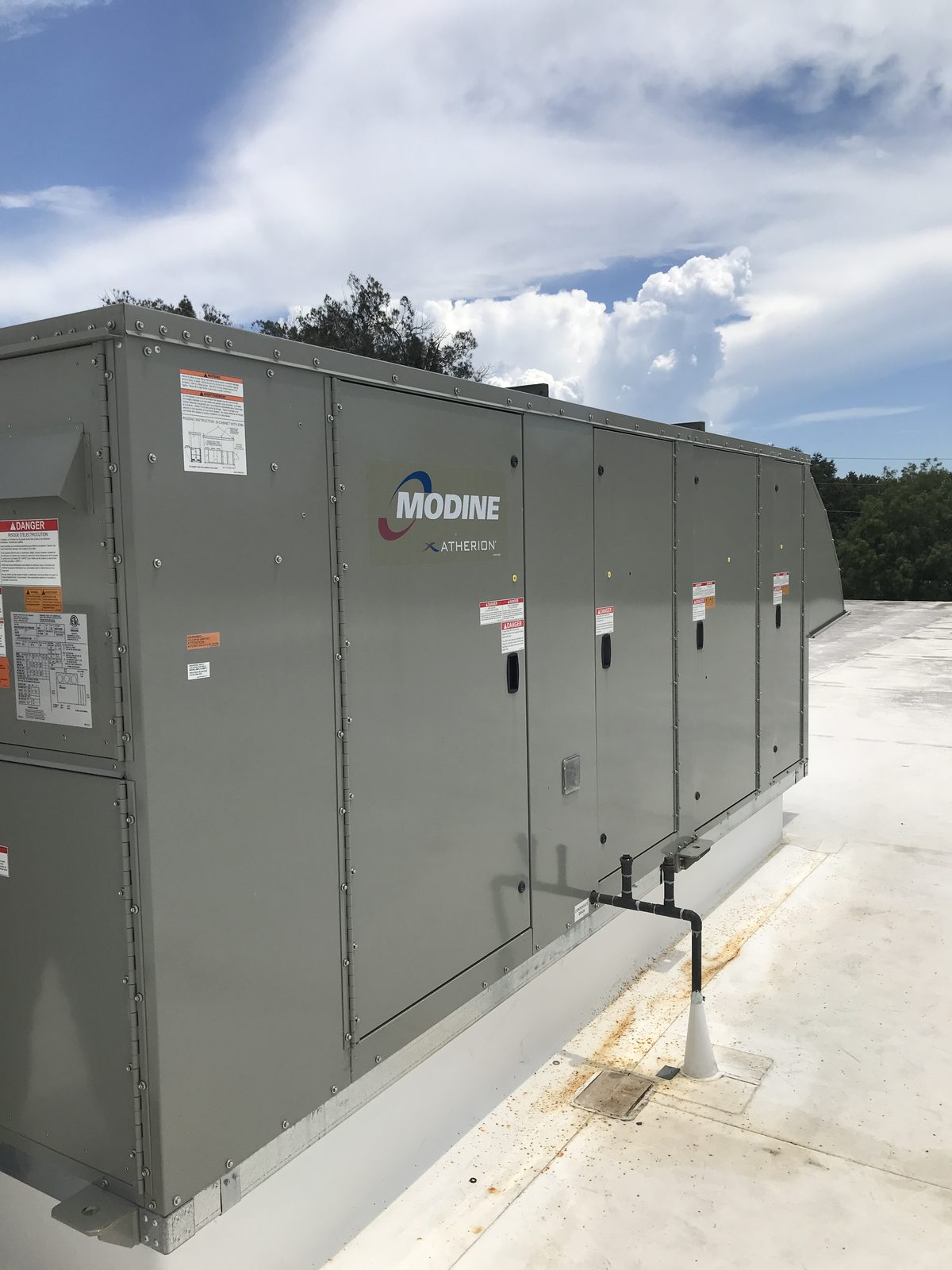
Commercial HVAC in Tampa, specifically
Districts and what they run
Westshore Business District
The Governor's office called it the largest employment center in Tampa Bay in 2019; it is home to Tampa International Airport.
Water Street Tampa
A downtown waterfront neighborhood with retail, hotel, and residential development.
Ybor City Historic District
A National Historic Landmark district with more than 950 historic buildings and structures, including surviving cigar factories that are mostly brick or stone two-to-four-story buildings.
Channel District
A former warehouse district that the City says is becoming an urban residential and arts and entertainment magnet.
Port Tampa Bay
Florida's largest port by tonnage and by land, at 5,000 acres, with warehouse space, bulk and breakbulk cargo, refrigerated cold storage, and cruise terminals.
The kind of building stock here
Tampa is anchored by large, mission-critical buildings — the sort whose systems cannot simply be shut off for a repair. Naming a few well-known local landmarks is the clearest way to describe the commercial building stock a contractor works around in this market; it is not a claim that Blume services any specific building below.
- Tampa General Hospital — hospital, main campus on Davis Islands, licensed for 982 beds
- Water Street Tampa — downtown waterfront neighborhood
- Port Tampa Bay — seaport, industrial and cruise, 5,000 acres
- Benchmark International Arena — arena on Channelside Drive
Climate and coastal load
The National Weather Service's Tampa Bay office places West Central Florida in the subtropics and defines the rainy season for most of the region as May 25 to October 10, with warm, humid conditions and frequent showers and thunderstorms.[1] Its 1991–2020 normals for Tampa put the annual average temperature at 74.5°F and annual rainfall at 49.48 inches.[2] Normal cooling degree days (3,611 a year) outnumber heating degree days (433) by more than eight to one.[2]
Sources
Local conditions that change the engineering
Equipment does not fail the same way everywhere. These are the conditions specific to Tampa that change how a commercial system is sized, sited, and serviced — each verified against a public source rather than assumed from the region.
The Florida Building Code, Energy Conservation places Hillsborough County in climate zone 2A, a moist, warm-humid location.
May through October brings about 35 of Tampa's 49.48 inches of normal annual rainfall, more than two-thirds of the year's total.
The official Atlantic hurricane season, which includes the Gulf, runs from June 1 through November 30.
Ybor City is one of the City of Tampa's historic districts with its own design guidelines.
Alterations in the City's locally designated historic districts can require approval from its Architectural Review Commission or Barrio Latino Commission, and the site plan for a hearing application must show heating, ventilation and air conditioning equipment.
Water Street Tampa's district cooling facility, located in downtown Tampa, provides chilled water service to residential and commercial building customers such as The Tampa Edition Hotel, Publix, and the University of South Florida College of Medicine, in lieu of each building installing its own cooling equipment.
Its operator, DCO Energy, describes a central chilled water plant with 6,550 tons of electric and glycol chillers and a Calmac ice storage system of 98 tanks, which normally melts ice to produce chilled water and reduce monthly peak kW demand.
Tampa Electric says it serves about 870,000 customers, including 92,000 businesses, across 2,000 square miles of Hillsborough County and parts of Pasco, Pinellas and Polk counties.
In Hurricane Helene (September 25–27, 2024), the National Weather Service Tampa Bay office's storm report lists a water level of 6.83 feet above mean higher high water (MHHW) at the Old Port Tampa NOAA tide gauge and a 58-knot gust at Tampa International Airport.
Permits
Commercial mechanical permits for work in Tampa are issued through the City of Tampa Construction Services Division for properties inside city limits, and Hillsborough County for unincorporated areas. The City reviews construction plans, issues permits, and performs inspections to Florida Building Code (including its Mechanical and Energy volumes). A commercial building's jurisdiction depends on whether it sits inside the city or in the unincorporated county. The City's commercial permits apply to condominiums, triplexes, multi-family apartments, businesses of all types, and mixed-use structures, plus categories such as fire, sprinklers, alarms, kitchen hoods, and dumpster enclosures.[1] Under the City's Trade Permit (BTR) guidelines, updated November 14, 2025, HVAC replacement is allowed under a mechanical trade permit, and trade permits do not go through a formal application review or plan review process.[2] The mechanical trade permit list also covers rooftop A/C stands, curbs, and RTU placement associated with roof replacements, and any work beyond the listed limits requires a Building (BLD) permit with both application review and plans review before issuance.[2] Work that meets those limits is eligible for virtual inspections through the City's VuSpex system, and disconnect replacement or upgrade of circuits for HVAC falls under the electric trade permit list.[2]
What the work covers
Across those different buildings the scope is consistent even when the equipment is not: load calculation and system design for new fit-outs and replacements; scheduled preventive maintenance that keeps a rooftop unit or a chilled-water plant out of the emergency column; diagnostic repair when something fails mid-season; and planned equipment change-outs staged to keep a business open while the work happens. Deferred maintenance does not stay deferred — it resurfaces as an emergency call, and a maintenance agreement moves that spend from unplanned to planned.
Why Tampa buildings call
The failures we see track that variety. Westshore’s long-occupied office towers punish a plant that was undersized for real occupancy; Ybor’s protected brick envelopes fight every duct run; the port’s industrial and cold-storage loads are their own animal; and the whole metro’s humid, storm-prone climate stresses dehumidification and rooftop anchoring on all of them.
Serving Tampa
Blume takes commercial calls throughout Tampa and the surrounding area. The line is (727) 330-9131, with a 24/7 answer for genuine emergencies and standard weekday scheduling for planned work, maintenance agreements, and system evaluations.
Commercial HVAC in Tampa
Blume Mechanical Service · Class A licensed · CAC-1822618
Call (727) 330-9131