
Pinellas County · Florida CAC-1822618
AC Maintenance and Air Conditioning Tune-Ups in St. Pete Beach, FL
AC maintenance in St. Pete Beach means caring for a system on a barrier island with the Gulf of Mexico on one side and the Intracoastal Waterway on the other. The city's emergency plan describes it exactly that way. Your air conditioner works through a long, humid cooling season in salt air, and a home closed for the summer adds its own risks. This page covers what a tune-up should check here, when to book it, and how to leave a seasonal home's system in good shape.
Why an island air conditioner needs regular care
The City of St. Pete Beach's Comprehensive Emergency Management Plan, dated June 2011, calls St. Pete Beach a barrier island city in southern Pinellas County. It places the city between the Gulf of Mexico and the Intracoastal Waterway. The same plan describes the housing as divided between single-family, multi-family and hotel or motel dwellings.
Salt air reaches every outdoor unit
Carrier, an air conditioning manufacturer, notes that salt water can be carried as far as two miles inland from the coast. It says the severity of corrosion depends on wind direction, relative humidity and coil temperatures. Carrier also says there is no single distance from the coast that decides whether a home needs coastal equipment. Carrier says coastal HVAC equipment benefits from regular maintenance and cleaning because salt and other airborne contaminants can accumulate on outdoor components.
Carrier puts it plainly: regular maintenance cannot eliminate corrosion. It can help keep the system operating properly and allow problems to be found earlier. That is the honest case for a maintenance visit on the island. Our guide to coastal coil protection explains how salt attacks an outdoor coil, the set of thin metal fins and tubes that releases heat outside.
A long cooling season
A cooling degree day is a measure of how warm a day was. The U.S. Energy Information Administration says it measures how much air conditioning is needed to keep a building cool. A NOAA climate normals station sits at St. Petersburg's airport, on the mainland rather than the island. Its 1991 to 2020 normals list 3,912.4 cooling degree days a year against 356.9 heating degree days. In plain terms, cooling is the main job your system does here.
The same station averages 70.9 days a year with a high of 90°F or more. Its cooling degree days climb from 448.0 in May to 589.0 in August. They are still at 396.7 in October. Duke Energy says August is historically when temperatures peak in Florida, and that AC systems work harder as humidity rises.
What a St. Pete Beach tune-up should check
ENERGY STAR, the U.S. EPA program, lists what a typical maintenance check-up should include. Here is what each item means for a home on the island.
Electrical connections and motors
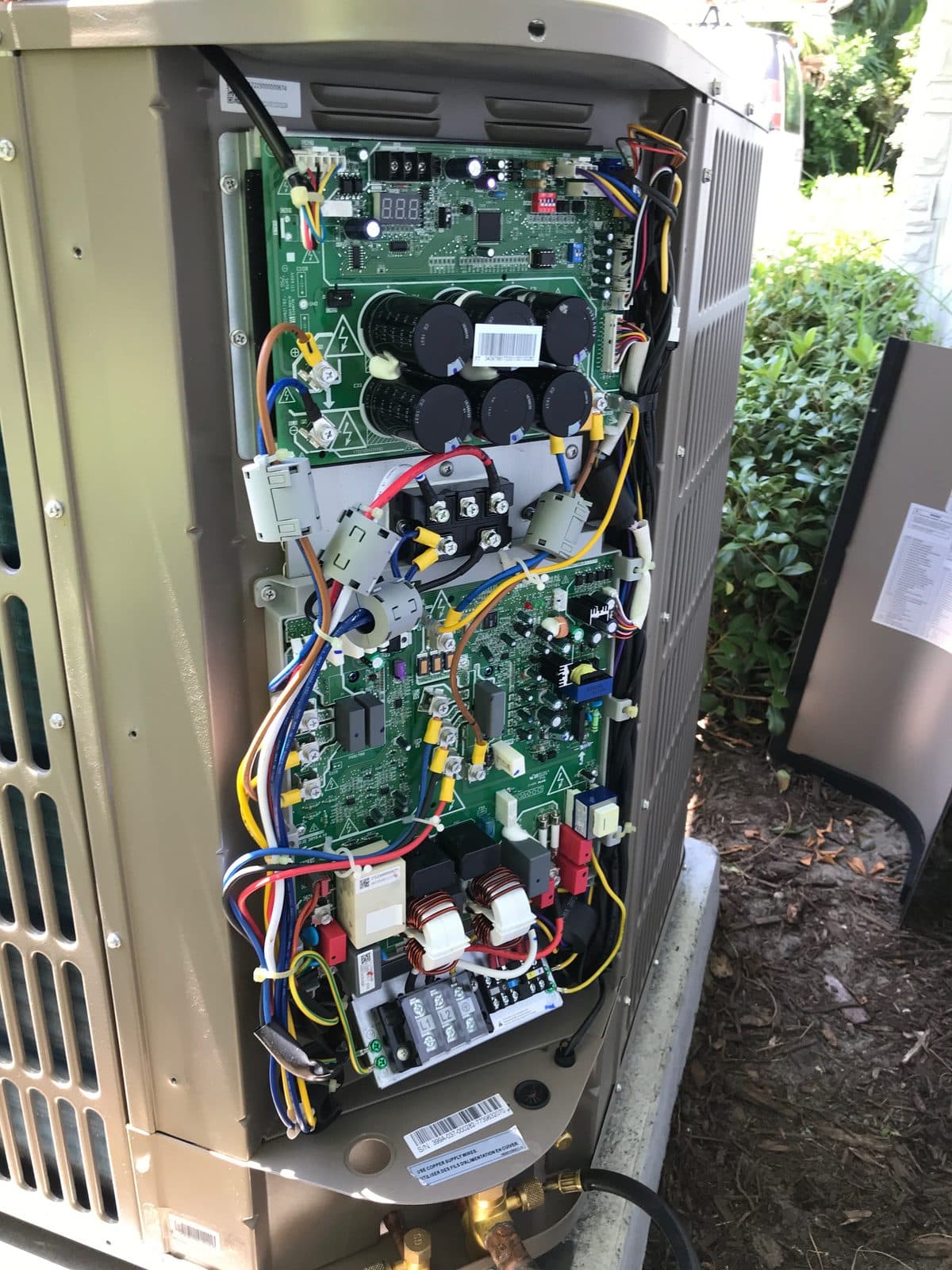
ENERGY STAR says to tighten all electrical connections and measure voltage and current on motors. It warns that faulty connections can cause unsafe operation and shorten the life of major components. This is work for a licensed technician, never a homeowner.
The condensate drain
Condensate is the water an air conditioner pulls out of humid air. ENERGY STAR says a plugged condensate drain can cause water damage in the house and affect indoor humidity levels. See what to do about a clogged AC drain line.
Both coils
ENERGY STAR says dirty evaporator and condenser coils reduce the system's ability to cool and make it run longer. The evaporator coil is the indoor coil that absorbs heat. The condenser coil is the outdoor one that releases it. Carrier advises periodically inspecting the outdoor coil and cabinet for visible buildup or corrosion, and having a qualified professional service the system.
Refrigerant, controls and airflow
Refrigerant is the fluid that carries heat from inside your home to the outdoor unit. ENERGY STAR says too much or too little refrigerant makes a system less efficient. A UF/IFAS Extension guide lists checking the temperature drop across the cooling coil as part of a professional's visit. ENERGY STAR also lists checking the system's controls and its starting cycle, and adjusting blower components for proper airflow. Blume's refrigerant work is done by EPA Section 608 certified technicians, who hold the federal refrigerant-handling credential.
Readings, not just a rinse
Blume's approach to equipment is built on measurement. New systems are sized by ACCA Manual J load calculation with Manual S selection. They are commissioned with measured static pressure, airflow and refrigerant charge, and the results are documented. Static pressure is the resistance the blower pushes against as air moves through the filter, coil and ducts. On a maintenance visit, ask for the readings so the next visit has something to compare against.
When to book maintenance on the island
ENERGY STAR recommends annual pre-season check-ups. It says contractors get busy once summer comes, so it is best to check the cooling system in spring. On St. Pete Beach that timing has a second reason. The cooling season builds through May and runs well into fall, so a spring visit sets the system up for its hardest months.
Carrier suggests asking whether additional cleaning or maintenance is appropriate for your home's level of coastal exposure.
If you are deciding between single visits and a plan, our AC maintenance plan page explains how scheduled maintenance works.
Closing up a seasonal home
If your St. Pete Beach home or condo is closed for part of the year, plan for it. A University of Florida IFAS Extension guide, Closing Your Seasonal Home, says Florida's environment creates the possibility for mildew growth, storm damage and pests. It adds that unoccupied homes are more susceptible to these types of damage. Its two key words are clean and dry.
For the air conditioner, the guide makes these points:
- Filter. Change the air conditioning filter, or wash it if it is washable, before you leave.
- Run time. Run the air conditioner two hours a day while the house is closed, to reduce mildew. A programmable thermostat can do this in the cool early morning hours.
- No timer. If you do not have a timer, the guide suggests setting the thermostat between 80°F and 85°F.
- Humidistat. A humidistat is a control that runs the system by humidity. The guide suggests having it professionally calibrated, because a wrong setting makes the system run inefficiently.
The same guide lists what an air conditioning professional does before you go. That includes cleaning the blower wheel and coil, checking wiring and connections, and cleaning the condensate pan and pipe. A visit before you close the house lets a professional do this work while you are still there to act on it.
Storm season and the outdoor unit
The 2011 emergency plan says all areas of the city were in a Level A evacuation zone. It also notes that the bridges serving as main evacuation routes could close. The plan lists the Corey Causeway and the Pinellas Bayway among the city's priority thoroughfares. Before a storm, have a plan that does not depend on getting back to the island quickly.
The plan's evacuation guidance urges those evacuating their homes, if there is time, to unplug appliances and turn off natural gas, propane, water and electricity. The UF/IFAS guide likewise suggests leaving appliances unplugged while you are away, to protect them from surges during storms.
The city lists Duke Energy as its power provider, and Duke's outage line is 800-228-8485. If the whole house is dark, report the outage to Duke before calling about the air conditioner. For the full checklist before a storm, see our hurricane-season HVAC prep guide.
What you can do between visits
Three things are yours to handle, and each makes the next visit more useful.
- Filter. ENERGY STAR says to inspect, clean or change central air filters once a month. It warns that a dirty filter can damage equipment and lead to early failure. Our AC filter change page covers what to look for.
- Thermostat settings. Duke Energy suggests the highest comfortable setting in summer, and 80 degrees while you are away. Check that the system is set to Cool and is not stuck on a hold or vacation mode.
- Vents, returns and the outdoor unit. Keep supply vents and return grilles open and free of furniture. Carrier says to keep leaves, grass and other debris away from the outdoor unit. Clear palm fronds and blown sand by hand, and leave coil cleaning to a technician.
Do not open panels, touch electrical parts or try to clear the drain line yourself. For the full seasonal list, see our AC maintenance checklist for Florida homes.
When to call before the next visit
Do not wait for the scheduled visit if you notice any of these:
- Weak cooling, or warm air from the vents while the system runs.
- Ice on the indoor coil or the copper refrigerant lines.
- Water in the pan under the air handler, or a system that shuts off on its own.
- A tripped breaker for the system. Leave it off and call a licensed contractor.
- Rust or flaking on the outdoor cabinet, or new noises when the unit starts.
- A musty smell or clammy air in a home that has been closed up.
For a system that stops entirely, Blume offers 24/7 emergency HVAC service, with same-day response available based on location and technician availability. A person answers the 24/7 dispatch line.
AC maintenance with Blume Mechanical Service
Blume Mechanical Service is a Class A licensed Florida air conditioning contractor, license CAC-1822618, and is fully insured. Our office is at 2840 West Bay Drive #114 in Belleair Bluffs. Our core service area is Pinellas, Hillsborough and Pasco counties, which includes St. Pete Beach. We are brand-agnostic and service all major manufacturers' equipment as a licensed contractor.
You get a written, upfront price before any work starts. If a visit turns up a problem that maintenance will not fix, repair and replacement options are laid out side by side, and Blume does not sell equipment a building does not need. Paid priority scheduling is also available.
The city runs its own building department, so permit questions for a replacement go to St. Pete Beach. Our St. Pete Beach HVAC page has more about the city. Across the bridge, we also have a page on AC maintenance in St. Petersburg.
Frequently asked
How often should I have my AC maintained in St. Pete Beach?
At least once a year, in spring, as ENERGY STAR recommends for cooling systems. Ask whether additional cleaning or maintenance is appropriate for your home's level of coastal exposure, as Carrier suggests. Check the filter monthly between visits.
Do I need to call a pro for this?
Yes, for the maintenance visit itself. Checking the filter, setting the thermostat and clearing debris from vents, returns and the outdoor unit are yours to do. Coil cleaning, electrical checks, the condensate drain and refrigerant work belong with a licensed contractor.
My St. Pete Beach home sits empty for months. When should the AC be serviced?
Before you close the house. The UF/IFAS Extension guide on closing a seasonal home lists the work an air conditioning professional will do at that point. It says unoccupied homes are more susceptible to mildew and storm damage. It suggests running the AC two hours a day, or setting the thermostat between 80°F and 85°F.
Can maintenance stop salt from corroding my outdoor unit?
No. Carrier says regular maintenance cannot eliminate corrosion. It can help keep the system operating properly and let problems be found earlier. Inspecting the outdoor coil and cabinet for buildup is part of that.
Do you only service certain brands?
No. Blume is brand-agnostic and services all major manufacturers as a licensed contractor.
Drain line care and maintenance plans
If the drain line is why you are here, these pages cover what we offer for it:
- DrainGuard condensate drain protection plan
- AC maintenance plans
- Clogged AC drain line: causes and what to do
- AC capacitor replacement, installed by a licensed technician
Homeowner guides
To schedule AC maintenance in St. Pete Beach, call Blume Mechanical Service at 727-330-9131.
References: City of St. Pete Beach, Comprehensive Emergency Management Plan & Disaster Preparedness Guide (June 2011) · City of St. Pete Beach, Other Utilities Providers (no date printed) · Pinellas County, Building Departments in Pinellas County (no date printed) · NOAA National Centers for Environmental Information, 1991-2020 U.S. Climate Normals, station USW00092806 St. Petersburg AP (read November 13, 2026) · U.S. Energy Information Administration, Degree-days (no date printed) · ENERGY STAR (U.S. EPA), Maintenance Checklist (no date printed) · Carrier, Coastal Heating and Air: Corrosion-Resistant HVAC Systems (no date printed) · UF/IFAS Extension, Closing Your Seasonal Home, FCS3154 (revised June 2014) · Duke Energy, What Duke Energy Florida customers need to know as summer heat peaks in August (August 5, 2026) · Duke Energy, Manage Seasonal Energy Shifts (no date printed)
Also in St. Pete Beach: AC repair in St Pete Beach · Heat pump repair in St. Pete Beach · Heating repair in St. Pete Beach
Residential AC Maintenance nearby: AC maintenance in Tampa · AC maintenance in St. Petersburg · AC maintenance in New Port Richey · AC maintenance in Clearwater