
Pinellas County · Florida CAC-1822618
Clearwater AC Maintenance and Air Conditioning Tune-Ups
Clearwater AC maintenance is shaped by two things the city has plenty of: salt and humidity. Your system runs against heavy, humid heat for most of the year, and the salt-laden air that crosses Clearwater Beach and the barrier islands keeps drifting inland. This page explains what an air conditioning tune-up in Clearwater should measure, why each reading matters on this coast, and how often to schedule the visit.
Why maintenance matters more on the Clearwater coast
Clearwater sits directly on the Gulf. Clearwater Beach and its barrier-island neighbors take the full force of the onshore wind, and the neighborhoods inland get a milder but constant dose of the same salt-laden air. Add a humid cooling season that runs from spring well into fall, and an air conditioner here gets far less rest than it would in a milder climate. It runs for much of the year, in moist, salty air, and that is hard on it.
That combination produces a short, predictable list of problems: corroded outdoor coils, clogged condensate drains, worn electrical parts and airflow restrictions. Many develop quietly until the system stops on a hot afternoon, and a maintenance visit is the chance to find them first.
What salt air does to an air conditioner
The outdoor unit takes the worst of it. Salt settles on the condenser coil and the cabinet, holds moisture against the metal, and over time corrodes thin coil fins, fasteners, panels and electrical terminals. A coil coated in salt and dirt cannot shed heat as well, so the compressor works harder to do the same job. That is why rinsing salt off a coastal unit belongs in a real maintenance visit rather than being treated as a cosmetic extra.
Indoors, the problem is moisture. Humid air pulled across the indoor coil leaves a lot of condensate behind, and the drain that carries it away can clog with algae and debris, which is a common route to water damage inside the home.
Your building changes the visit
Clearwater's housing stock is varied: high-rise and low-rise condos on the barrier island, mid-century block homes in the neighborhoods between downtown and US-19, and newer construction farther inland. Each type ages its air conditioning differently, so a good visit starts with learning what you actually have. Where does the air handler sit? How does the condensate drain leave the building? How exposed is the outdoor unit to wind off the water? The answers shape what the technician checks first.
What an AC maintenance visit measures
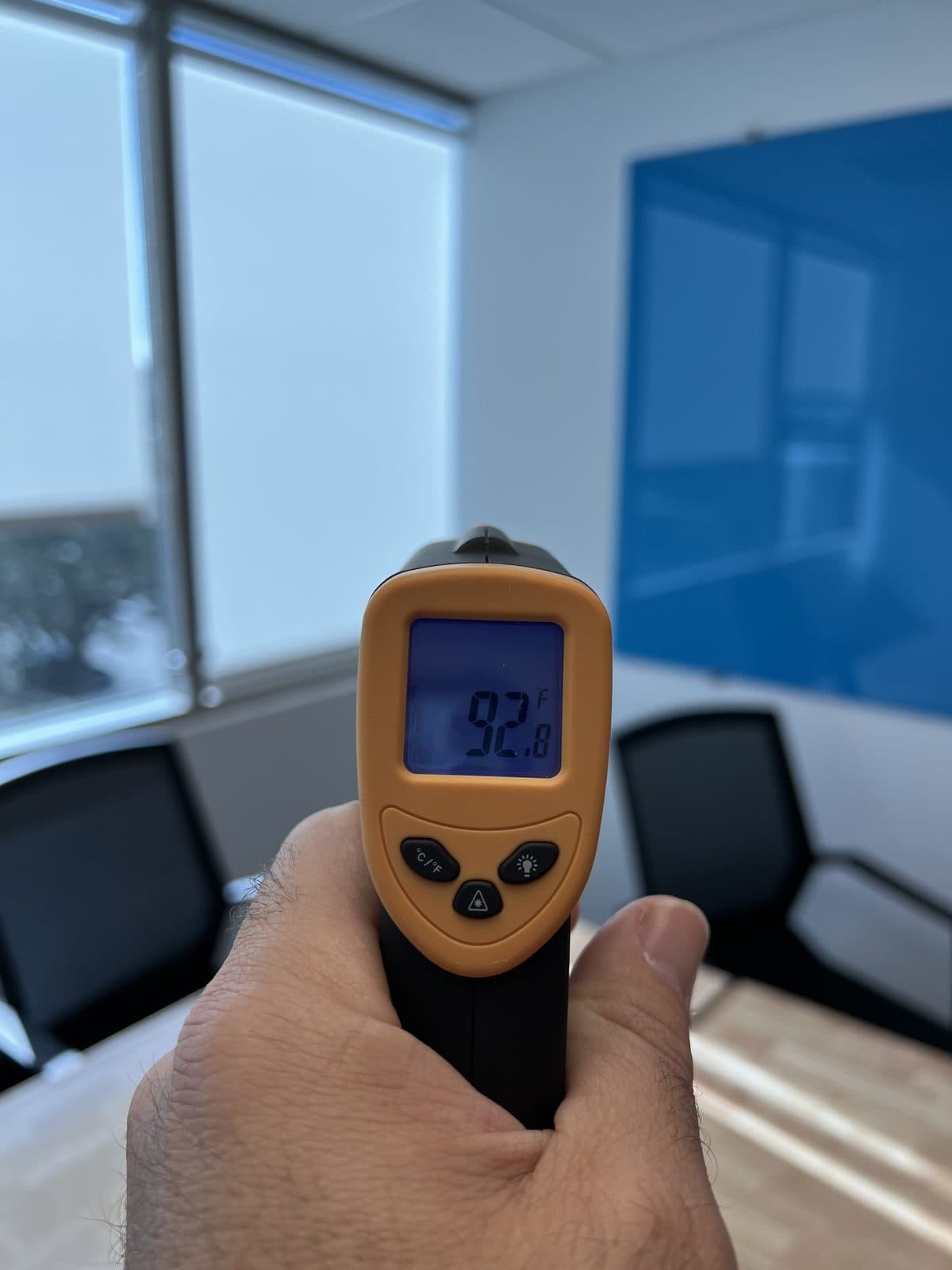
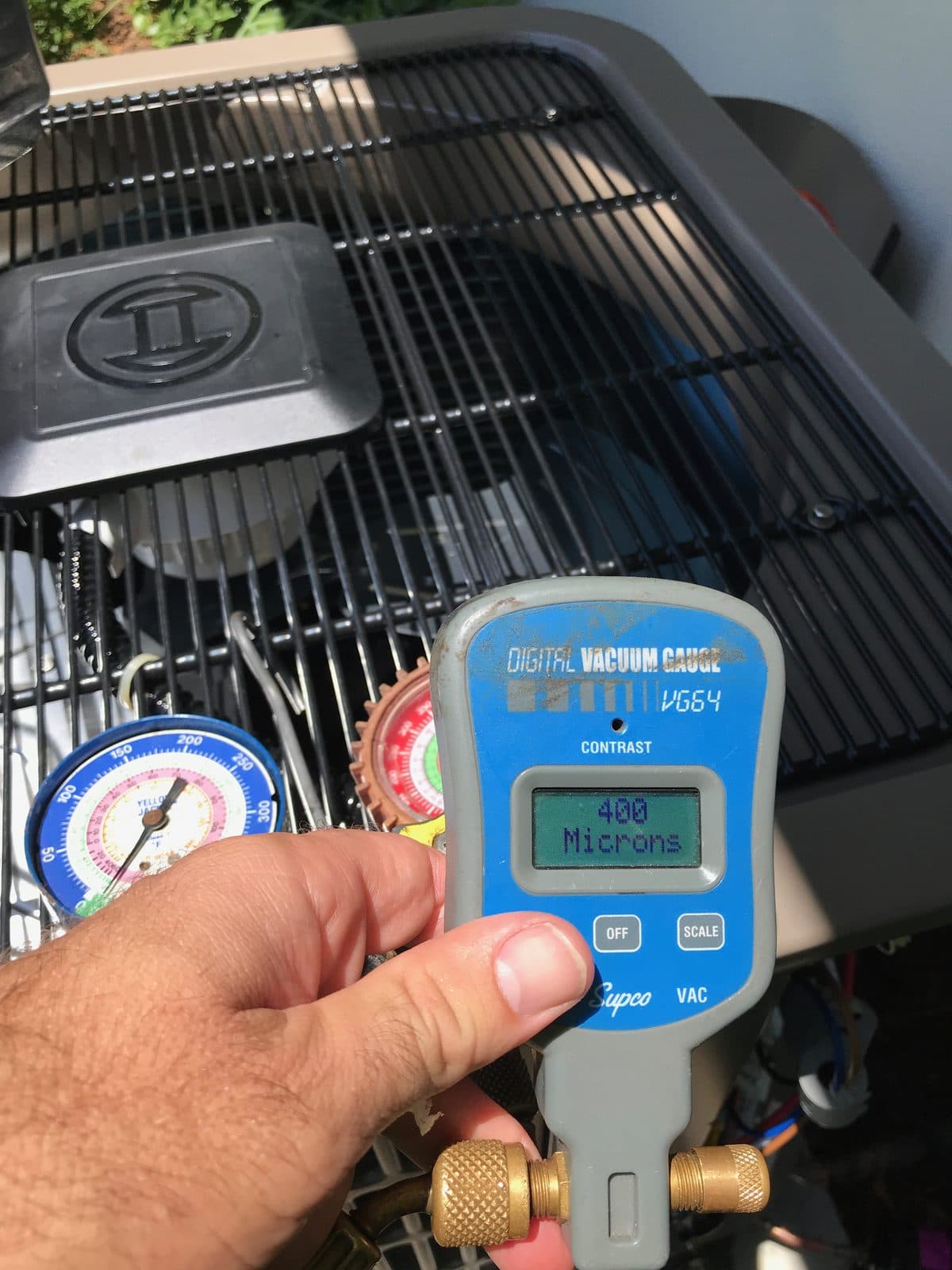
A visit that amounts to a glance and a spray-down is not maintenance. The useful part is the readings: they show how the system is actually performing and give the next visit something to compare against. Blume's approach to equipment is built on measurement rather than rule of thumb, from sizing by ACCA Manual J load calculation with Manual S selection to commissioning with measured static pressure, airflow and refrigerant charge, documented.
Static pressure
Static pressure is the resistance the blower pushes against as it moves air through the filter, the indoor coil and the ductwork. A technician reads it with a manometer, typically on both the return and supply sides of the air handler. A high reading points to a restriction somewhere: a loaded filter, a dirty indoor coil, undersized or damaged ducts, or blocked returns. When airflow drops, the system cools less effectively, and in humid conditions the indoor coil can get cold enough to freeze. The reading does not name the cause by itself, but it tells the technician where to start looking.
Amp draw
Amp draw is how much current the compressor, the outdoor fan motor and the indoor blower motor are pulling, read with a clamp meter and compared with the rating on each component's nameplate. A motor that pulls more than it should is working too hard. Worn bearings, a weak capacitor, a dirty coil or a restriction in airflow can all cause it. The technician also checks the capacitor, the contactor and the wiring connections, because loose or corroded electrical connections are a predictable casualty of salt and moisture.
Float switch and condensate drain
An air conditioner removes moisture from your indoor air, and in Florida there is a great deal of it. That water leaves through the condensate drain. A float switch, mounted in the drain pan or on the drain line, shuts the system down if water backs up, so a clogged drain stops the air conditioner instead of overflowing into a ceiling, a closet or a garage. A maintenance visit clears the drain line, inspects the pan and tests the float switch to confirm that it actually trips. A float switch nobody has tested is a safety device you are only assuming works.
Coils
An air conditioner has two coils, and both only work if air can pass through them. The indoor evaporator coil absorbs heat and moisture from your home's air. The outdoor condenser coil releases that heat outside. Dirt on the indoor coil restricts airflow and can contribute to freezing. Salt, dirt and yard debris on the outdoor coil make it harder for the system to reject heat. The visit inspects both, cleans them where needed, and on a coastal unit looks closely at the fins and cabinet for corrosion that is advancing.
Refrigerant charge and temperatures
The technician also measures refrigerant pressures and line temperatures to judge the charge, and the temperature difference between the air entering and leaving the indoor coil to confirm the system is actually cooling the air. Refrigerant is not consumed like fuel. A system that is low on charge has either a leak or a charging problem, so adding refrigerant without finding the cause only postpones the repair. Blume's refrigerant work is done by EPA Section 608 certified technicians, who hold the federal refrigerant-handling credential.
Ductless systems
If your home has a ductless mini-split, the visit changes with the layout. There are no ducts and so no duct static pressure to read, but each indoor head has its own coil, blower, filter and condensate drain, and the outdoor unit faces the same salt air. Clogged drains and dirty coils matter just as much, and they are easy to overlook because a ductless head looks clean from across the room.
How often to schedule AC maintenance in Clearwater
A reasonable baseline in this climate is one full maintenance visit a year, scheduled before the heavy cooling season begins in spring, so the drain, coils, electrical parts and airflow are checked before the system starts running nearly every day.
Some homes justify more attention. If the outdoor unit is close to the water, exposed to onshore wind, or mounted on a balcony or roof, salt builds up faster, and it is worth asking about a mid-season check and coil rinse. The same goes for a drain that has clogged before, for a home with pets or heavy dust, which loads filters faster, and for any system that runs close to constantly through the humid months. The cooling season runs well into fall, so a spring check still leaves a long run ahead.
Between professional visits, the filter is the part you control, and in Florida the right cadence is more frequent than the packaging often suggests. Waiting for a failure instead lets the system pick the timing.
What you can do between visits
A few things are yours to handle, and they make each visit more useful.
- Filter. Check it regularly and replace it once it looks loaded, rather than following a fixed calendar blindly. Do not assume a thicker filter is better: one that is too restrictive for your system can choke airflow just as a dirty one does.
- Returns and vents. Keep return vents open and unblocked, avoid closing off rooms, and keep furniture off the grilles. A starved system works harder and cools less.
- Outdoor unit. Keep plants, leaves and stored items clear around the unit so air can move through it. Leave deep coil cleaning to the technician, because high-pressure water can bend the thin fins.
When to call before the next visit
Do not wait for the scheduled visit if you notice any of these:
- Weak cooling, or warm air from the vents while the system runs.
- Ice on the indoor coil or the refrigerant lines.
- Water around the air handler, or a system that shuts off on its own.
- A breaker that trips, or a unit that struggles to start.
- New noises, or a musty smell when the system starts.
For a system that stops entirely, Blume offers 24/7 emergency HVAC service, with same-day response available based on location and technician availability.
AC maintenance with Blume Mechanical Service
Blume Mechanical Service is a Class A licensed Florida mechanical contractor, license CAC-1822618, and is fully insured. We work on residential and commercial systems from our base in Belleair Bluffs and serve Pinellas, Hillsborough and Pasco counties, which includes Clearwater. We are brand-agnostic: we sell, install and service all major manufacturers as a licensed contractor.
If a visit turns up a problem that adjustment will not fix, you get the repair-versus-replace comparison laid out side by side, and Blume does not sell equipment a building does not need. Paid priority scheduling is also available.
For the full seasonal list of what belongs to you and what belongs to a professional, see our AC maintenance checklist for Florida homes. Details on maintenance plans are on the AC maintenance plan page.
Frequently asked
How often should I have my AC maintained in Clearwater?
At least once a year, ahead of the long cooling season. If your outdoor unit is close to the water or exposed to onshore wind, ask about a mid-season check as well. Change the filter between visits as soon as it looks loaded.
Is an air conditioning tune-up the same as AC maintenance?
The terms are used interchangeably, so what matters is what happens on the visit. A glance and a spray-down is not much. Static pressure and amp draw readings, a tested float switch and drain, inspected and cleaned coils, and a refrigerant charge check are real maintenance.
Does salt air affect an AC that is not right on the beach?
Yes, to a lesser degree. Clearwater sits on the Gulf, and neighborhoods inland still get a milder but constant dose of the same salt-laden air. Distance from the water changes how fast corrosion advances, but the humidity, the long cooling season and the condensate drain matter to every Clearwater home.
Do you only service certain brands?
No. Blume is brand-agnostic and services all major manufacturers as a licensed contractor.
Is maintenance worth doing if my AC seems to be running fine?
A system that runs is not necessarily healthy. A partly clogged drain, a dirty coil, a weakening capacitor or restricted airflow can exist before there is any obvious symptom, and maintenance finds them while you still choose the timing.
Homeowner guides
To schedule AC maintenance in Clearwater, call Blume Mechanical Service at 727-330-9131.
References:
Also in Clearwater: AC repair in Clearwater · AC replacement in Clearwater · Mini-split installation in Clearwater · Heat pump repair in Clearwater
Residential AC Maintenance nearby: AC maintenance in Tampa · AC maintenance in St. Petersburg · AC maintenance in New Port Richey