
Pinellas County · Florida CAC-1822618
Ductless Mini-Split Installation in Clearwater, Florida
Blume Mechanical Service designs and installs ductless mini-split systems for homes across Clearwater and Pinellas County — beach condos, enclosed porches, Florida rooms and additions that never had ductwork. We size each system to the actual room, place the condenser to survive coastal air, and pull the permit Clearwater requires. Florida license CAC-1822618.
Clearwater is a barrier-island and coastal-mainland city where much of the housing was never built for ducted central air: beachfront condos with tight mechanical space, concrete-block homes with enclosed porches and Florida rooms added on later, and additions tucked onto older cottages. Ductwork is awkward to route through block walls and low-slope roofs, and salt air is hard on outdoor equipment. A ductless mini-split needs only a small penetration for a refrigerant line set, which is why it fits so much of Clearwater's stock.
Why ductless fits so many Clearwater homes
A large share of Clearwater's housing was not built around ductwork. Beachfront and near-beach condos were laid out to maximize living space, so there is often no room for a conventional air handler and trunk-and-branch duct system. Mainland neighborhoods are heavy on concrete-block construction, where running new supply ducts through solid walls means furring out chases and losing ceiling height. And a great deal of the comfort demand comes from spaces that were added to a house after it was built — an enclosed porch, a converted garage, a bonus room over a carport — which a central system was never sized to serve.
A ductless mini-split answers all three situations the same way. Instead of moving conditioned air through ducts, it moves refrigerant through a small line set between an outdoor condenser and one or more indoor heads mounted on a wall or ceiling. The only building penetration is a hole roughly the size of a coffee mug for the line set, condensate line and control wiring. That means no chases cut into block, no ceiling dropped to hide a trunk line, and no attempt to tie an addition into a duct system that cannot spare the airflow. For a condo, a cottage or an added-on room, the ductless approach is usually less invasive and better matched to how the space is actually used than extending central air would be.
Enclosed porches and Florida rooms — the classic Clearwater single-zone job
The most common ductless request we field in Clearwater is a single head for an enclosed porch or Florida room. These rooms are wonderful and thermally hostile: large glass area, often a low-slope or single-pane roof, walls that were built as exterior walls and never insulated to interior standards, and frequently a slab that soaks up afternoon heat. Homeowners try to serve them by leaving a door open to the main house or by dropping in a window unit, and neither works well — the central system fights a losing battle against the glass, and the window unit is loud, drips, and blocks the view that the room exists for.
A ductless head sized for that specific room is the honest fix. Because the room's load is dominated by solar gain through glass rather than by floor area, sizing it off square footage alone tends to overshoot, and an oversized head short-cycles: it cools the air quickly, shuts off before it has pulled much moisture out, and leaves the porch cool but clammy. We size to the load the glass and construction actually impose, which usually means a smaller, longer-running head that dehumidifies properly. We also talk plainly about the room's envelope. A mini-split will condition a leaky, single-glazed porch, but it will run hard doing it; where the budget allows, sealing gaps and addressing the worst of the glazing lets a smaller system keep the room comfortable with far less strain.
How a ductless mini-split actually works
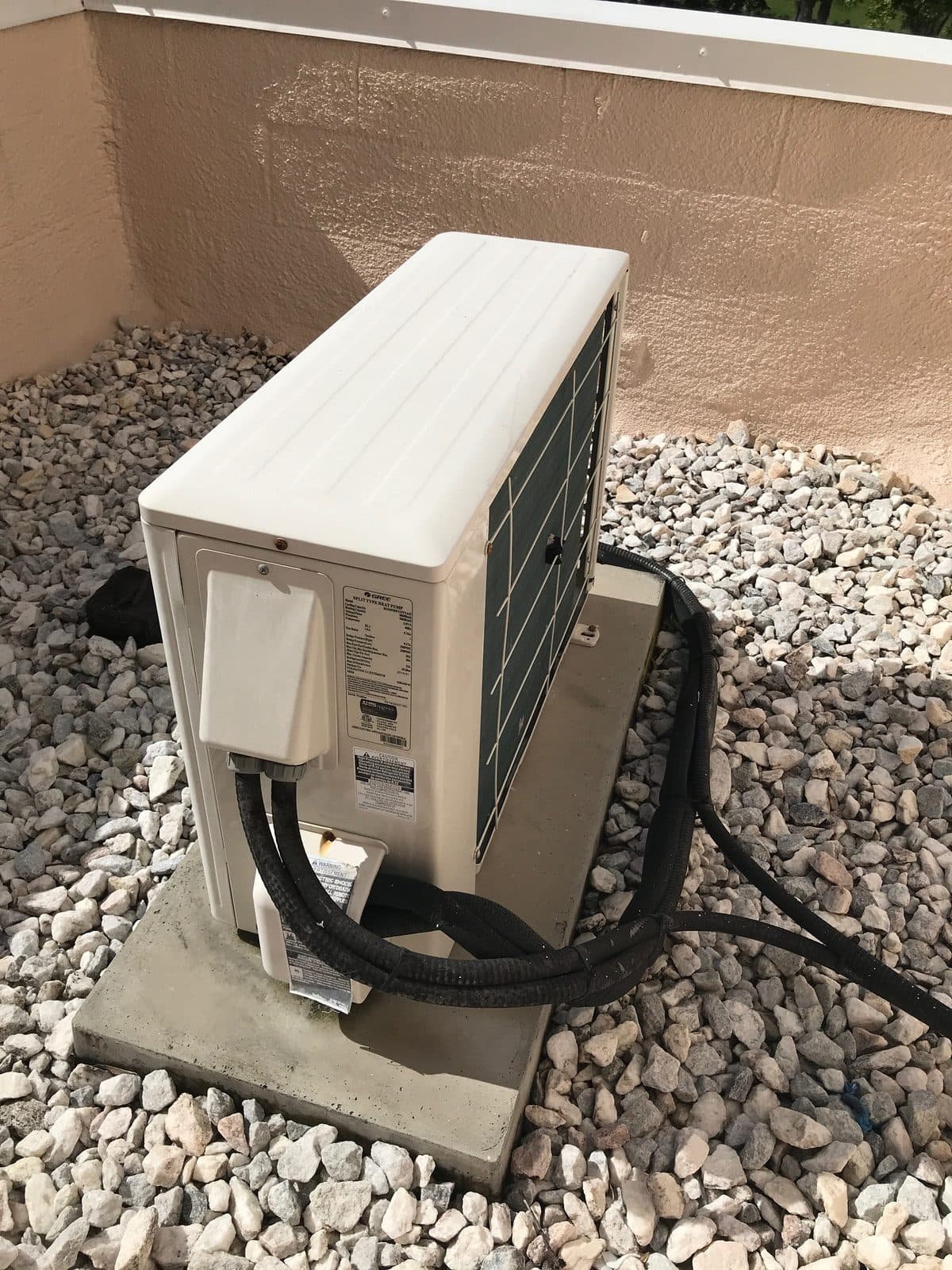
A ductless system has two main parts joined by a refrigerant line set. Outside sits a compact condensing unit. Inside, one or more heads — wall-mounted cassettes are most common in homes — contain the evaporator coil and a quiet fan. The line set carrying refrigerant, along with a condensate drain and low-voltage control wiring, runs between them through a single small wall penetration, sleeved and sealed. There are no air ducts anywhere in the system.
Most residential mini-splits use inverter-driven compressors, which is the feature that makes them well suited to Florida. Instead of switching fully on and off like an older single-stage condenser, an inverter compressor ramps its output up and down to match the room's actual load. On a mild, humid day it can idle along at low output, running for long stretches rather than short bursts — and long runtime is exactly what pulls moisture out of the air. Each indoor head is its own zone with its own thermostat, so a porch, a bedroom and a home office can each hold their own temperature instead of averaging out through a shared duct. A single outdoor unit can serve one head or several, depending on how the home is laid out. The refrigerant transition matters here too: newer equipment is moving from R-410A to lower-GWP refrigerants such as R-454B, and any work that opens the sealed refrigerant circuit must be done by an EPA Section 608-certified technician.
Salt air and where the condenser goes
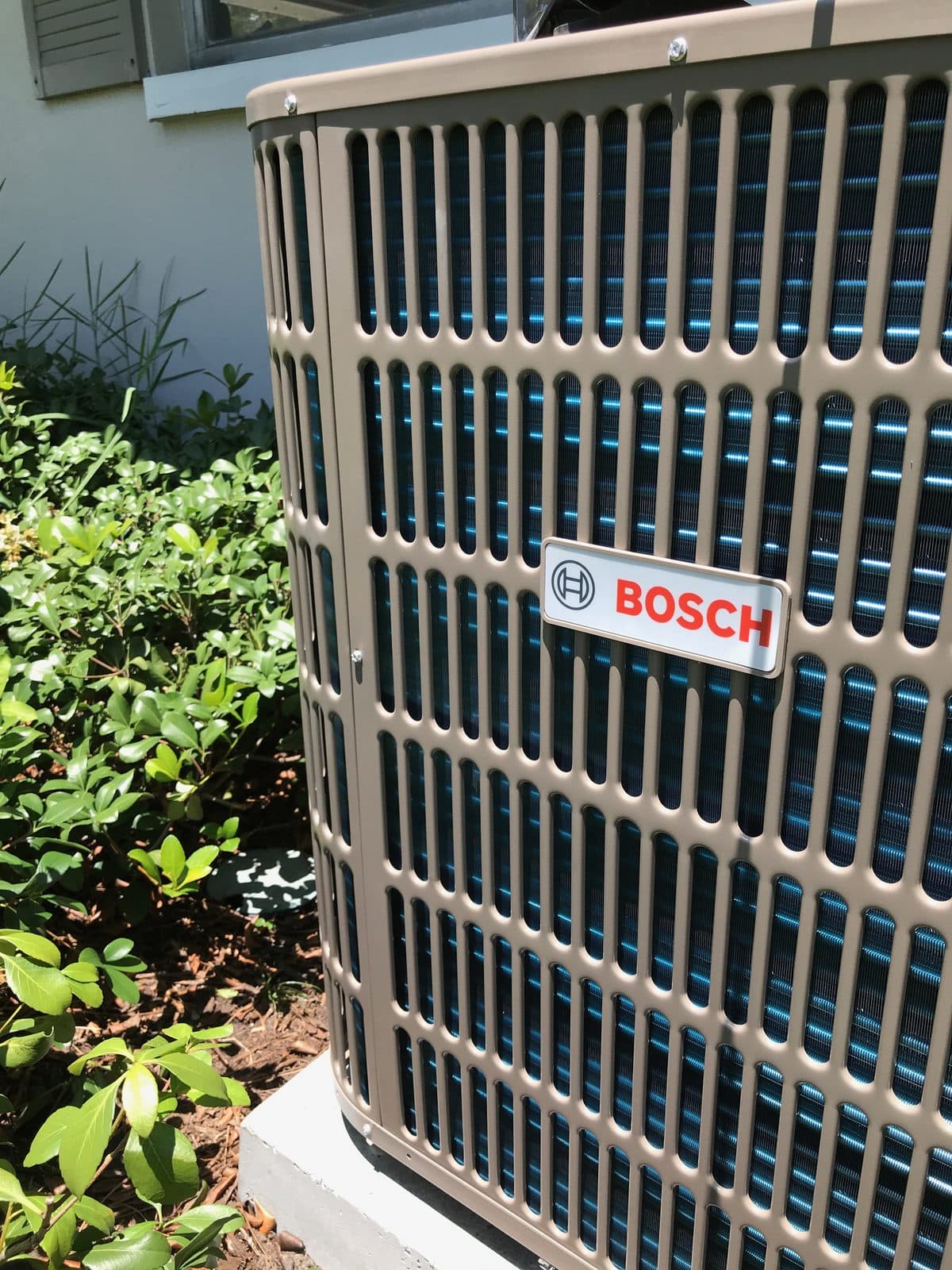
Clearwater's coastal setting is the single biggest reason a mini-split installation here deserves more thought than the same job a few miles inland. Salt-laden air is corrosive to the aluminum fins and copper of an outdoor coil, and a condenser mounted where it takes direct onshore wind and salt spray ages faster than an identical unit sheltered on the lee side of a building. Two things follow from that, and we treat both as part of the design rather than afterthoughts.
First, siting. Where the layout allows, we place the outdoor unit out of the most direct salt exposure — on a protected side of the house, away from the prevailing onshore wind, and never directly beneath a roof edge that dumps rainwater onto the coil. We keep it up off the ground on a proper pad or stand so ground splash and standing water do not attack the base, and we leave the clearances the manufacturer requires so it can actually reject heat.
Second, specification. On genuinely coastal sites it is worth choosing equipment built for the environment — coils with factory-applied protective coatings or inherently more corrosion-resistant coil designs. These do not make salt disappear, but they meaningfully extend service life on the coast, and they are worth discussing before the equipment is ordered rather than after the fins start to go. We will also tell you the honest maintenance truth: a coastal condenser benefits from periodic rinsing to clear salt off the coil, and that simple habit does more for its lifespan than most homeowners expect.
Sizing a mini-split for a Clearwater room, not a spec sheet
The most common way a ductless job goes wrong is sizing by floor area and a rule of thumb. In a Clearwater porch or a west-facing condo room, floor area is a poor predictor of load, because the heat is coming through glass and thin construction, not through the footprint. Size off square footage and you routinely land a head that is too big for the room, and an oversized mini-split behaves badly in exactly the way Florida punishes: it satisfies the thermostat in a few minutes, shuts down, and never runs long enough to dehumidify. The room ends up cool and damp, which is the complaint we are most often called to fix on somebody else's installation.
We size to the load the room actually imposes — a Manual J-style calculation that accounts for the glass, its orientation, the insulation that is really there, and the way the space is used — and then we select the head to match that load rather than to a round number. Undersizing is a mistake too: a head that is too small will run continuously on the hottest afternoons and never quite reach setpoint. The goal is the capacity that lets that specific room hold temperature while running long enough to stay dry. For a multi-zone system feeding several heads off one condenser, we also check that the combined load and the individual zones both make sense, because a big outdoor unit feeding one small head that rarely calls is its own kind of oversizing.
Permits and licensing in Clearwater
Ductless installations are permitted work. In Clearwater the mechanical permit is issued by the City of Clearwater's building department, not by the county at large — Pinellas County contains many separate permitting jurisdictions, and the office that handles your job follows the municipal boundary your address sits in. A property inside the Clearwater city limits goes through the city; an unincorporated Pinellas address a short drive away goes through the county. A contractor who is fuzzy about which office a job belongs to is a contractor who has not pulled many permits here.
The work must be performed under a properly licensed contractor, and refrigerant work specifically requires EPA Section 608-certified technicians. Permitting is not bureaucratic box-checking; the inspection confirms the things that actually cause problems later — the electrical disconnect and breaker sized to the equipment nameplate, the line set supported and insulated, the condensate handled with a real drainage path, and the wall penetration sealed against the weather and against pests. Unpermitted equipment work tends to surface at the worst moment: Florida insurers commonly require a four-point inspection on older homes, and installation work with no matching permit record can complicate a policy or a sale. When we install a mini-split in Clearwater, we pull the permit and leave a clean record that the system was installed correctly.
How a ductless installation visit goes
We start by looking at the actual space and the problem you are trying to solve, not by quoting a unit off a photo. That means walking the room, noting glass and orientation, checking the wall the head will sit on and the path the line set will take to the outdoor unit, and finding a condenser location that respects both the coastal exposure and the manufacturer's clearances. From there we size the system to the room's real load and recommend a single-zone or multi-zone configuration that fits how you use the space.
When you approve the work, we pull the required permit, mount the indoor head and outdoor unit, run and seal the line set, pull a proper vacuum on the refrigerant circuit before commissioning, verify the charge, and confirm the condensate drains cleanly. We label what we installed and leave you the paperwork. If during the walk-through we conclude that extending your existing central system would genuinely serve you better than a ductless head, we will say so — the goal is the right fix for the room, not a mini-split for its own sake.
Frequently asked
Can a ductless mini-split cool my enclosed porch or Florida room in Clearwater?
Yes, and it is the most common ductless job we do here. A single wall-mounted head sized to the room is far better than leaving a door open to the house or running a window unit. The key is sizing to the room's real load — glass area and orientation drive it, not floor space — so the head runs long enough to remove humidity instead of short-cycling. If the porch has a lot of single-pane glass or unsealed gaps, we will also tell you honestly how much that raises the load, because a tighter envelope lets a smaller, quieter system keep up.
Does salt air off the Gulf shorten the life of the outdoor unit?
It can, which is why we treat coastal siting as part of the design. Salt-laden air corrodes the aluminum and copper in an outdoor coil, and a unit taking direct onshore wind ages faster than one sheltered on a protected side of the house. We place the condenser out of the most direct salt exposure, keep it up off the ground, and on genuinely coastal sites recommend coils with protective coatings or corrosion-resistant designs. Periodically rinsing salt off the coil also helps more than most homeowners expect.
Do I need a permit to install a mini-split in Clearwater?
Yes. Ductless installation is permitted mechanical work, and inside the city limits the permit is issued by the City of Clearwater's building department rather than the county. The inspection confirms the electrical, the line set, the condensate drainage and the sealed penetration are all done correctly. Unpermitted equipment work tends to cause trouble later, especially at resale or during a Florida four-point insurance inspection. We pull the permit and leave a clean record.
Can one outdoor unit run more than one room?
Often, yes. A multi-zone system uses a single outdoor condenser to feed several indoor heads, each with its own thermostat and its own zone. That is a good fit for a home where you want to condition, say, a Florida room, a primary bedroom and a home office independently. We check that both the combined load and each individual zone make sense before recommending it, since a large outdoor unit feeding one small head that rarely calls is its own kind of oversizing.
Is a mini-split more efficient than adding central air to a condo?
For many Clearwater condos and added-on spaces, yes, largely because it avoids duct losses and conditions only the zones you are using. Inverter-driven mini-splits also modulate their output to match the load, which suits mild, humid days where a single-stage system would short-cycle. That said, efficiency depends on the specific home and how it is used. Where extending an existing central system would genuinely serve you better, we will say so rather than default to ductless.
Homeowner guides
- How ductless mini-splits work
- What size mini-split you need
- Mini-split installation: what drives the job
Considering a ductless mini-split in Clearwater? Talk to a licensed technician.
References: Pinellas County and City of Clearwater permitting and contractor licensing (primary) · US Department of Energy — ductless heating and cooling · ACCA Manual J (residential load calculation) and Manual S (equipment selection) · General HVAC engineering principles
Also in Clearwater: AC repair in Clearwater · AC replacement in Clearwater · Heat pump repair in Clearwater · AC maintenance in Clearwater
Ductless Mini-Split Installation nearby: Mini-split installation in Largo · Mini-split installation in Pinellas Park · Mini-split installation in Seminole · Mini-split installation in St. Petersburg