
Pinellas County · Florida CAC-1822618
Ductless Mini-Split Installation in Seminole, Florida
Blume Mechanical Service designs and installs ductless mini-split systems throughout Seminole and Pinellas County — suburban homes with a single room that runs hot, and enclosed lanais and Florida rooms that central air was never meant to reach. We size each system to the space it serves and pull the permit the City of Seminole requires. Florida license CAC-1822618.
Seminole is a settled suburban Pinellas community of single-family homes, many of them one-story block houses with attached lanais and Florida rooms. The recurring comfort problems here are local, not whole-house: one bedroom that bakes in the afternoon, a converted den, and above all an enclosed lanai the central system was never sized to cool. Those single-room problems are exactly what a ductless mini-split solves cleanly, conditioning the space directly with a small line-set penetration instead of a whole-house duct project.
Seminole's single-room comfort problems
Seminole's housing is largely settled suburban single-family homes — one-story block and frame houses on slabs, built and expanded from the mid-century onward, most with functioning central air. The comfort complaints we hear in Seminole are usually not whole-house failures. They are local: one bedroom on the west side that is unbearable by late afternoon, a converted den or bonus room that the central system barely reaches, a home office that sits at the far end of a duct run and never quite keeps up. In a house whose central system is otherwise fine, re-ducting to solve one stubborn room is expensive, disruptive, and often overkill.
A ductless head is the targeted answer to a single-room problem. It conditions that specific space directly, with its own thermostat, running refrigerant through a small line set rather than trying to force more air down a duct that cannot carry it. Because it is a separate zone, you can set the problem room to the temperature it needs without overcooling the rest of the house or fighting the central thermostat. We are also honest about when ductless is not the right call: if the whole house is struggling, or the central ductwork is leaking badly enough that many rooms suffer, adding a head is treating a symptom. In that case we will point you at the central system. But for the classic Seminole complaint — one room that will not cooperate — a mini-split is usually the cleanest fix.
Enclosed lanais and Florida rooms
The most common ductless request we get in Seminole is a single head for an enclosed lanai or Florida room. These spaces are a Seminole staple and a thermal challenge: large glass or screen-turned-glass walls, often a low-slope or single-layer roof, walls that began as exterior walls and were never insulated to interior standards, and a slab that absorbs the day's heat and releases it into the evening. Homeowners usually try to serve the lanai by leaving a door open to the house — which just drags the whole home's temperature and humidity around — or by dropping in a window unit that is loud, drips, and blocks the view the room was built for.
A ductless head sized for that specific lanai is the honest solution. The room's load is dominated by solar gain through glass, not by floor area, so sizing off square footage tends to overshoot, and an oversized head short-cycles: it cools the air quickly, shuts off before it has removed much moisture, and leaves the lanai cool but clammy. We size to the load the glass and construction actually impose, which usually means a smaller, longer-running head that dehumidifies properly. We will also talk plainly about the envelope. A mini-split will condition a leaky, single-glazed lanai, but it will work hard doing it; where it fits the budget, sealing the worst gaps and addressing the glazing lets a smaller, quieter system hold the room comfortably.
How a ductless mini-split works
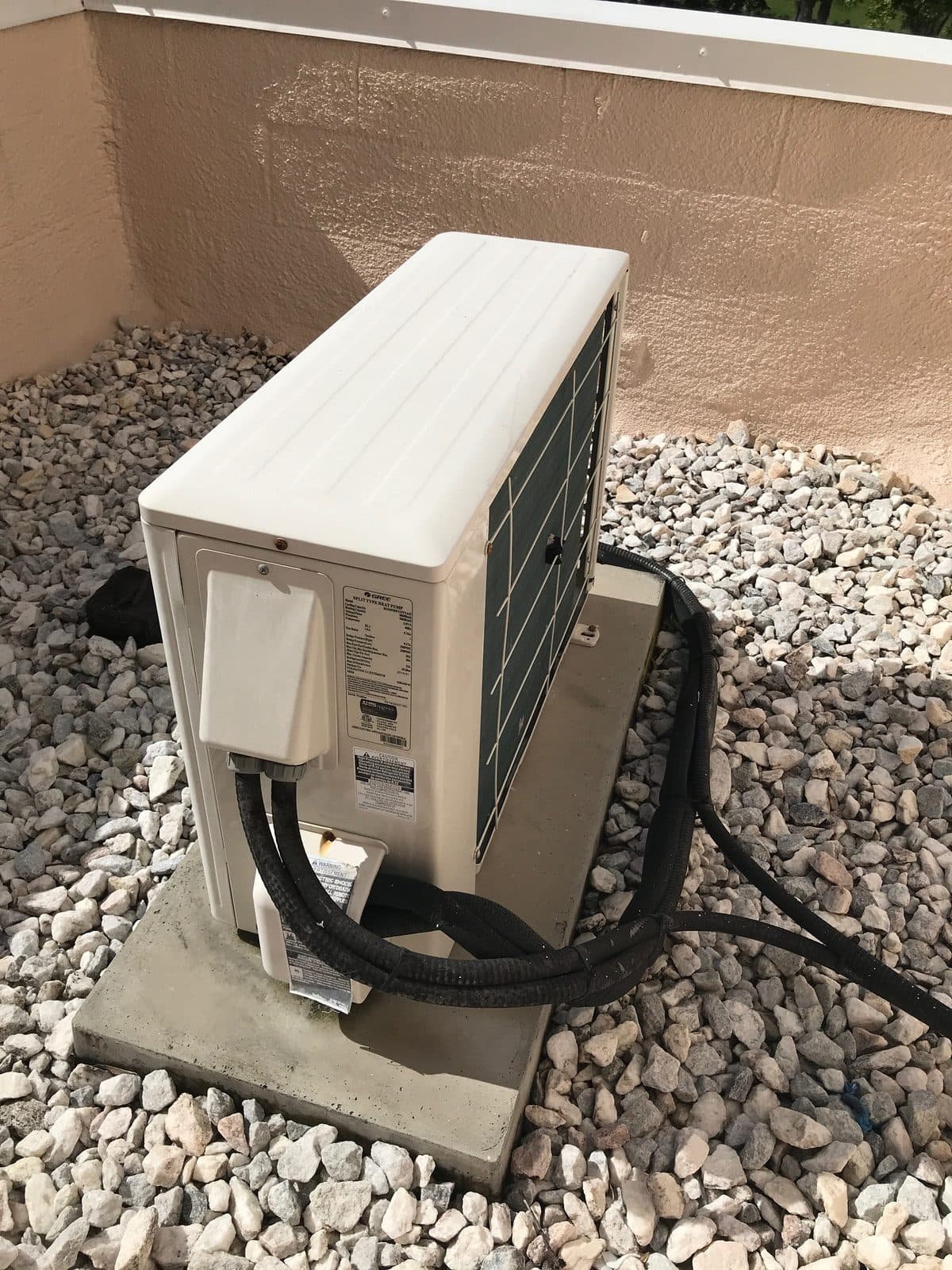
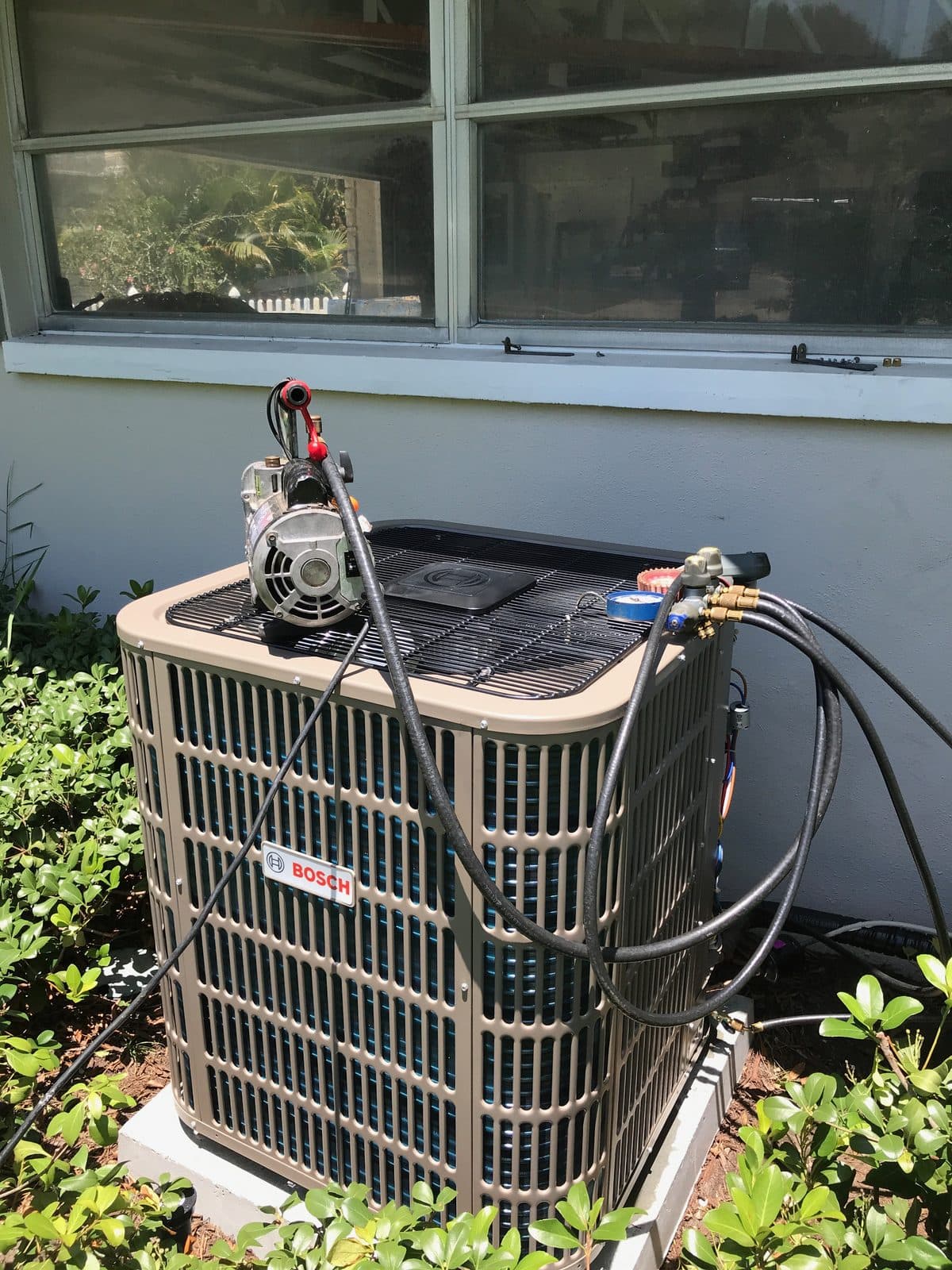
A ductless system has two main parts joined by a refrigerant line set. Outside sits a compact condensing unit. Inside, one or more heads — wall-mounted cassettes are most common in homes — hold the evaporator coil and a quiet fan. The line set, a condensate drain and low-voltage control wiring run between them through a single small wall penetration, sleeved and sealed. There are no air ducts anywhere in the system, which is exactly why it works for a room the central system cannot reach.
Most residential mini-splits use inverter-driven compressors, and that is the feature that suits Seminole's climate. Instead of switching fully on and off like an older single-stage condenser, an inverter compressor ramps its output up and down to match the room's load. On a humid but mild day it can idle at low output, running for long stretches rather than short bursts — and long runtime is what pulls moisture out of the air. Each head is its own zone with its own thermostat, so a hot bedroom, a lanai and a home office can each hold their own temperature. A single outdoor unit can serve one head or several depending on the layout. Newer equipment is transitioning from R-410A to lower-GWP refrigerants such as R-454B, and any work that opens the sealed refrigerant circuit must be performed by an EPA Section 608-certified technician; existing R-410A systems remain legal to operate and service.
Single-zone or multi-zone — matching the system to the home
Many Seminole jobs are genuinely single-zone: one head for one problem room, off one small outdoor unit. That is the simplest and often the best answer when there is a single trouble spot. But some homes have two or three spaces that all want independent control — a lanai, a west bedroom and a converted den — and there the question becomes whether to install separate single-zone systems or one multi-zone system feeding several heads from a single outdoor unit.
There is no universal right answer, and we work it through with the specific house. A multi-zone system uses only one outdoor unit and one set of clearances, which can be cleaner in a tight side yard, and it lets each head hold its own zone. But multi-zone systems have their own sizing discipline: if one large outdoor unit is feeding several small heads that rarely call at the same time, it can behave like an oversized system and dehumidify poorly. Separate single-zone systems, on the other hand, each modulate independently and can be very well matched to their rooms, at the cost of more than one outdoor unit and more than one set of penetrations. We size each zone honestly, look at where the outdoor equipment can actually go, and recommend the configuration that fits the home rather than the one that is easiest to sell.
Sizing to the room, not a rule of thumb
The most common way a ductless job goes wrong is sizing by floor area alone. In a Seminole lanai or a west-facing bedroom, floor area is a weak predictor of load, because the heat gain is driven by glass and construction — how much glazing there is and which way it faces, how well the walls and roof are insulated, whether the space sits over a heat-soaked slab. Size off square footage and you tend to land a head that is too big, and an oversized mini-split short-cycles: it cools the air fast, shuts off before pulling out much humidity, and leaves the room cool and clammy. That damp result is the single most common thing we are called to fix on somebody else's installation.
We size to the load the room actually imposes — a Manual J-style calculation reflecting the real construction, glass and orientation — and select the head to match that load rather than a round number. Undersizing is a mistake in the other direction: a head that is too small runs flat-out on the hottest afternoons and never quite reaches setpoint. The goal is the capacity that lets that specific room hold temperature while running long enough to stay dry. Getting this right is the difference between a lanai you actually use in July and one that is merely less miserable.
Permits and licensing in Seminole
Ductless installations are permitted mechanical work. Inside the city, the permit is issued by the City of Seminole's building department, not by Pinellas County at large — Pinellas contains many separate permitting jurisdictions, and the office that handles your job follows the municipal boundary your address sits in. A property inside the Seminole city limits goes through the city; an unincorporated Pinellas address nearby goes through the county. Because Seminole borders both incorporated and unincorporated areas, confirming the right jurisdiction for a specific address matters, and a contractor who is unsure has not pulled many permits here.
The work must be performed under a properly licensed contractor, and refrigerant work specifically requires EPA Section 608-certified technicians. The inspection confirms the things that actually cause failures later: the electrical disconnect and breaker sized to the equipment nameplate, the line set supported and insulated, the condensate given a real drainage path — which matters when a head is serving a lanai over a slab — and the penetration sealed against weather and pests. Unpermitted equipment work surfaces at the worst time, since Florida insurers commonly require a four-point inspection on older homes and an installation with no matching permit record can complicate a policy or a sale. When we install a mini-split in Seminole, we pull the permit and leave a clean record.
How a ductless installation visit goes
We start at the space and the problem — a hot bedroom, a converted den, or the enclosed lanai you would like to actually use in summer — rather than quoting a unit off a description. We walk the room, note the glass and orientation, check the wall for the head and the route for the line set, confirm the electrical panel can support the equipment, and find an outdoor location that meets the manufacturer's clearances. Then we size to the real load and recommend a single-zone or multi-zone layout that fits how you use the home.
When you approve the work, we pull the required permit, mount the indoor and outdoor units, run and seal the line set, pull a proper vacuum on the refrigerant circuit before commissioning, verify the charge, and confirm the condensate drains cleanly — particularly important on a lanai head where a blocked drain has nowhere good to go. We document what we installed and leave you the paperwork. If the walk-through shows that repairing or adjusting your existing central system would genuinely serve you better than adding a head, we will say so — the goal is the right fix for the room, not a mini-split by default.
Frequently asked
One room in my Seminole home is always hot. Is a mini-split the answer?
Usually it is the cleanest one. When a single room runs hot in an otherwise fine house — a west bedroom, a converted den, a far-end office — re-ducting the whole house to fix it is expensive and disruptive. A ductless head conditions that specific room directly, with its own thermostat, so you can cool it properly without overcooling the rest of the house. If instead the whole house is struggling or your central ducts are leaking badly, we will point you at the central system rather than sell you a head that just treats the symptom.
Can a ductless mini-split cool my enclosed lanai or Florida room?
Yes, and it is the most common ductless job we do in Seminole. A single head sized to the lanai beats leaving a door open to the house or running a noisy window unit. The key is sizing to the room's real load — glass area and orientation drive it, not floor space — so the head runs long enough to remove humidity instead of short-cycling. If the lanai has a lot of single-pane glass or unsealed gaps, we will tell you honestly how much that raises the load, because a tighter envelope lets a smaller, quieter system keep up.
Should I install one multi-zone system or several single-zone units?
It depends on the home. If you have one problem room, a single-zone system is simplest and often best. If you have two or three spaces that each want independent control, a multi-zone system feeds several heads from one outdoor unit and one set of clearances — cleaner in a tight side yard. But multi-zone systems need careful sizing, because one big outdoor unit feeding small heads that rarely call together can dehumidify poorly. We size each zone honestly and recommend the configuration that fits your house, not the one that is easiest to sell.
Do I need a permit for a mini-split in Seminole?
Yes. Ductless installation is permitted mechanical work, and inside the city the permit is issued by the City of Seminole, not the county. Because Seminole borders both incorporated and unincorporated areas, confirming the right jurisdiction for your address matters. The inspection verifies the electrical, line set, condensate drainage and sealed penetration are correct — the condensate detail especially matters for a lanai head. Unpermitted work tends to surface at resale or during a Florida four-point insurance inspection, so we pull the permit and leave a clean record.
Will a mini-split keep my lanai dry, or just cool?
A correctly sized one keeps it dry. Humidity removal depends on runtime — the coil has to run long enough to pull water out of the air — and inverter-driven mini-splits modulate their output to run steadily rather than short-cycling. The failure mode is an oversized head that cools the lanai in a few minutes and shuts off before it dehumidifies, leaving it cool and clammy. Since a lanai's load is dominated by glass rather than floor area, we size to that real load so the head runs long enough to stay ahead of the humidity.
Homeowner guides
- How ductless mini-splits work
- What size mini-split you need
- Mini-split installation: what drives the job
Want to finally cool that room or lanai in Seminole? Talk to a licensed technician.
References: Pinellas County and City of Seminole permitting and contractor licensing (primary) · US Department of Energy — ductless heating and cooling · ACCA Manual J (residential load calculation) and Manual S (equipment selection) · General HVAC engineering principles
Also in Seminole: Heat pump repair in Seminole
Ductless Mini-Split Installation nearby: Mini-split installation in Clearwater · Mini-split installation in Largo · Mini-split installation in Pinellas Park · Mini-split installation in St. Petersburg