
Pinellas County · Florida CAC-1822618
Ductless Mini-Split Installation in St. Petersburg, Florida
Blume Mechanical Service designs and installs ductless mini-split systems across St. Petersburg and Pinellas County — historic bungalows that never had ductwork, converted garages and ADUs, and downtown lofts. We size each system to the space, protect the character of older homes, and pull the permit the City of St. Petersburg requires. Florida license CAC-1822618.
St. Petersburg is one of the older housing markets on the Gulf coast, and much of its charm is exactly what makes ducted central air difficult: 1920s and mid-century bungalows built before central cooling, plaster walls and finished ceilings with nowhere to hide a trunk line, and neighborhoods full of detached garages and back structures being converted into ADUs and studios. Downtown adds condos and lofts with tight mechanical space. Ductless mini-splits condition these spaces with a small line-set penetration instead of demolition, which is why they fit so much of St. Pete.
Why so many St. Pete homes never had ductwork
A great deal of St. Petersburg's housing predates central air conditioning entirely. Bungalows from the 1920s through the 1950s were built for cross-ventilation, high ceilings and shade, not for a ducted system, and when central air arrived it was retrofitted — sometimes well, often awkwardly. In a house with plaster walls, narrow chases and finished ceilings, there is frequently no clean path for supply and return ducts, and the retrofits that were forced in tend to be undersized, leaky, or run through a hot attic where they lose capacity before the air reaches the room.
That history is the reason ductless fits St. Pete so naturally. A mini-split conditions a room without any ductwork at all. It moves refrigerant, not air, through a small line set between an outdoor unit and an indoor head, so the only penetration is a hole about the size of a coffee mug. For an older bungalow that has never had a good answer to a hot back bedroom, or a house where the existing ducts simply cannot serve an addition, a ductless head sidesteps the whole problem. There is no plaster to open, no ceiling to drop, and no trunk line to thread through a house that was never designed to hold one. It is the least invasive way to bring reliable, dehumidifying cooling to a space the original builder never planned to cool.
Conditioning a historic home without tearing it up
The best thing about a mini-split in a historic St. Pete home is also what makes it worth doing carefully: it can be installed with almost no damage to the fabric of the house, but only if the installer respects that fabric. We plan the indoor head placement and the line-set route to minimize what shows and what gets touched. Often the outdoor unit and the line set can be kept to a less visible side of the house, and the penetration placed where it disappears behind trim or landscaping rather than across a prominent facade.
We are also honest about the trade-offs. A wall-mounted head is a modern object on the wall of an old room, and for some homeowners in a period house that matters. There are lower-profile options — ceiling cassettes, or slim heads placed high where the eye passes over them — and we will walk through them with you rather than mounting the most convenient box in the most conspicuous spot. In neighborhoods with historic-district oversight, exterior changes can carry additional review, and we will flag that so it is handled before installation rather than discovered after. None of this is about upselling a fancier unit; it is about installing the system in a way that leaves a hundred-year-old house looking like itself.
Garage conversions, ADUs and backyard studios
St. Petersburg has a lot of detached garages and back buildings, and a lot of them are being turned into accessory dwelling units, home offices, guest suites and studios. These conversions are one of the strongest cases for ductless anywhere in the city. The original structure was never tied into the main house's cooling, running new ducts from the house across a yard is impractical, and the converted space usually has its own distinct load and its own schedule of use — reasons a shared central system serves it poorly.
A dedicated ductless system gives a converted garage or ADU its own comfort and its own thermostat, independent of the main house. A single outdoor unit and one or two heads can cover a studio or a one-bedroom conversion cleanly. The parts of these jobs that go wrong are usually the envelope, not the equipment: a converted garage often has an uninsulated slab, a big uninsulated door opening that was filled in, and walls that were built as exterior walls. We size the system to the load that construction actually imposes, and we will tell you where a modest amount of insulation or air-sealing lets a smaller, quieter system keep the space comfortable. If the conversion is a permitted, separately metered dwelling, the mechanical work is permitted like any other installation, and we handle that.
Downtown condos and lofts
Downtown St. Petersburg's growth has added condos, lofts and infill units where mechanical space is genuinely scarce. Loft conversions in particular are hostile to conventional ductwork: open plans, exposed ceilings that are part of the aesthetic, concrete or masonry structure, and no chase to run a trunk line through. Dropping a soffit to hide ducts defeats the reason people want a loft in the first place.
Ductless is often the cleanest answer in these spaces. Slim heads or ceiling cassettes condition the zones you use, the line set runs discreetly to a code-compliant outdoor location, and the open volume is served without carving up the ceiling. The wrinkles downtown are rarely technical and usually procedural: in a condo or an association-governed building, the location of the outdoor unit, penetrations through shared walls or the roof, and exterior appearance are typically governed by the association and sometimes by the building's own rules, on top of the city permit. We work within those constraints rather than around them, and we will tell you early if a proposed condenser location is going to be a problem with the building before any equipment is ordered.
How a ductless mini-split works, and why it suits Florida
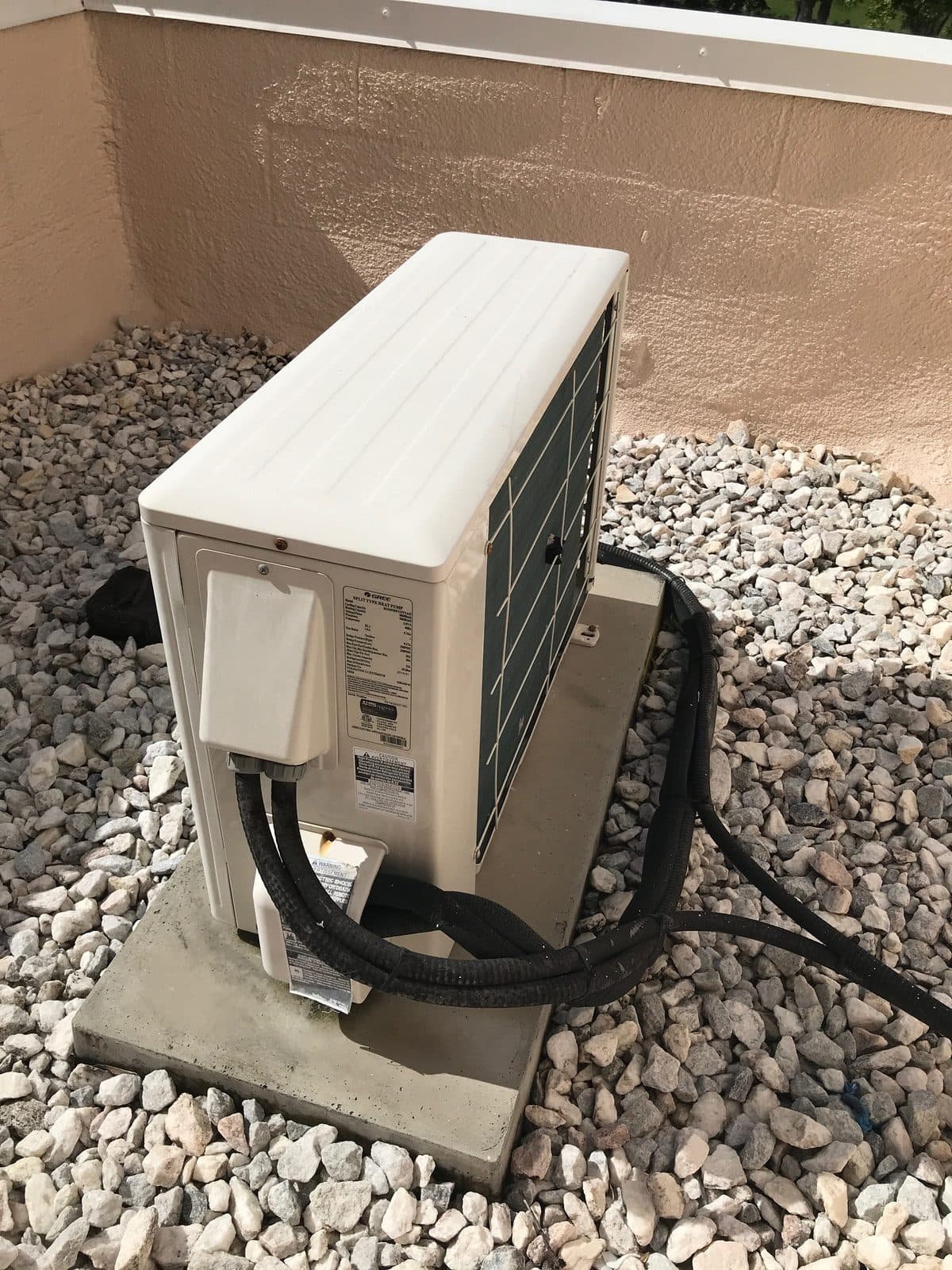
A ductless system pairs an outdoor condensing unit with one or more indoor heads, joined by a refrigerant line set that runs through a single small wall penetration alongside a condensate drain and control wiring. No ducts are involved. Each head is its own zone with its own thermostat, so different rooms hold different temperatures instead of averaging through shared ducts.
Most residential mini-splits use inverter-driven compressors, and that is the feature that makes them a good match for St. Pete's climate. Rather than cycling fully on and off like an older single-stage system, an inverter compressor modulates its output to track the room's actual load. On a humid but mild day it can run steadily at low output, and steady runtime is what removes moisture from the air — the opposite of the short-cycling that leaves a house cool and clammy. A single outdoor unit can serve one head or several depending on the home. As with all modern cooling equipment, new mini-splits are transitioning from R-410A toward lower-GWP refrigerants such as R-454B, and any work that opens the sealed refrigerant circuit — installation, charging, repair — must be performed by an EPA Section 608-certified technician. Existing R-410A systems remain legal to operate and service.
Permits and licensing in St. Petersburg
Ductless installations are permitted mechanical work, and inside the city the permit is issued by the City of St. Petersburg's building department, not by Pinellas County at large. Pinellas contains many separate permitting jurisdictions, and the office that handles your job follows the municipal boundary your address sits in — a property inside St. Pete goes through the city, while an unincorporated Pinellas address is handled by the county. On top of the building permit, homes in a designated historic district or a condo governed by an association can carry additional review of exterior changes, and the smart move is to identify that before the work rather than after.
The work must be done under a properly licensed contractor, and refrigerant work specifically requires EPA Section 608-certified technicians. The inspection is not a formality; it confirms the electrical disconnect and breaker are sized to the equipment nameplate, the line set is supported and insulated, the condensate has a real drainage path, and the wall penetration is sealed against weather and pests. Unpermitted equipment work is a problem that surfaces later — Florida insurers commonly require a four-point inspection on older homes, and St. Pete has a lot of older homes, so an installation with no matching permit record can complicate a policy or a sale. We pull the permit and leave the record clean.
How a ductless installation visit goes
We start at the space and the problem, not at a unit price. That means walking the room, understanding whether it is a bungalow bedroom, a garage conversion or a downtown loft, checking the wall for the head and the route for the line set, and finding an outdoor location that satisfies the manufacturer's clearances and any association or historic rules. From there we size to the room's real load and recommend a single-zone or multi-zone layout that matches how you live in the space.
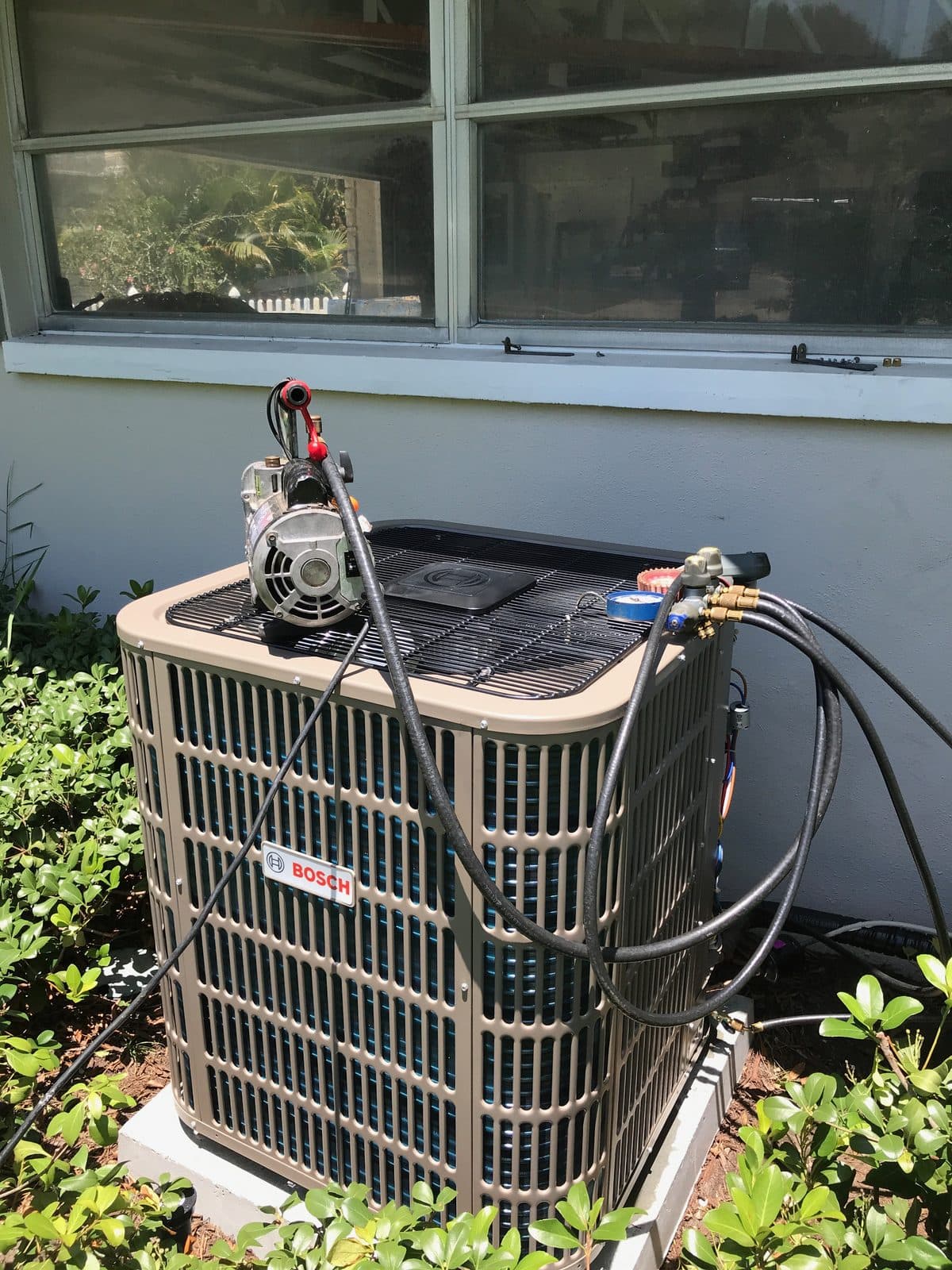
Once you approve the work, we pull the required permit, mount the indoor and outdoor units, run and seal the line set with attention to how it looks on an older house, pull a proper vacuum on the refrigerant circuit before commissioning, verify the charge, and confirm the condensate drains cleanly. We document what we installed and hand you the paperwork. If a walk-through shows that repairing or extending your existing central system would genuinely serve you better than adding a ductless head, we will tell you — the objective is the right fix for the space and the house, not a mini-split by default.
Frequently asked
My old St. Pete bungalow has no ductwork. Is a mini-split my best option?
Very often, yes. Homes built before central air frequently have no clean path for ducts through plaster walls and finished ceilings, and the retrofits that were forced in tend to be leaky and undersized. A ductless mini-split conditions a room with only a small line-set penetration, so there is no plaster to open and no ceiling to drop. It is usually the least invasive way to bring dehumidifying cooling to a hot bedroom or an addition the original builder never planned to cool. We will still tell you honestly if fixing your existing system is the better path.
Can you install a mini-split without damaging a historic home?
That is exactly how we approach it. A mini-split needs only a small penetration, and we plan head placement and the line-set route to minimize what shows and what gets touched, often keeping the outdoor unit and line set to a less visible side. Lower-profile options like ceiling cassettes exist where a wall head would stand out in a period room. If your home is in a designated historic district, exterior changes may carry extra review, and we flag that up front so it is handled before installation.
I'm converting my detached garage into an ADU. Will ductless work?
It is one of the strongest cases for ductless in St. Pete. The garage was never tied into the main house's cooling, running ducts across the yard is impractical, and the converted space has its own load and schedule. A dedicated system gives it independent comfort and its own thermostat. The catch is usually the envelope — an uninsulated slab, a filled-in door opening, exterior-grade walls — so we size to that real load and tell you where a little insulation lets a smaller, quieter system keep up.
Do I need a permit for a mini-split in St. Petersburg?
Yes. Ductless installation is permitted mechanical work, and inside the city the permit is issued by the City of St. Petersburg, not the county. If your home is in a historic district or a condo governed by an association, exterior changes may need additional review on top of the building permit. The inspection confirms the electrical, line set, condensate drainage and sealed penetration are correct. We handle the permit and leave a clean record, which matters at resale and during a four-point insurance inspection.
Will a mini-split actually keep my home dry, not just cool?
A correctly sized one will. Humidity removal depends on runtime — the equipment has to run long enough for the coil to pull water out of the air — and inverter-driven mini-splits are good at this because they modulate output and run steadily instead of short-cycling. The failure mode is an oversized head that cools the room in a few minutes and shuts off before it dehumidifies, leaving it cool and clammy. That is why we size to the room's real load rather than to floor area or a round number.
Homeowner guides
- How ductless mini-splits work
- What size mini-split you need
- Mini-split installation: what drives the job
Planning a ductless mini-split in St. Petersburg? Talk to a licensed technician.
References: Pinellas County and City of St. Petersburg permitting and contractor licensing (primary) · US Department of Energy — ductless heating and cooling · ACCA Manual J (residential load calculation) and Manual S (equipment selection) · General HVAC engineering principles
Also in St. Petersburg: AC repair in St. Petersburg · AC maintenance in St. Petersburg · AC installation in St. Petersburg · AC replacement in St. Petersburg · Heat pump repair in St. Petersburg
Ductless Mini-Split Installation nearby: Mini-split installation in Clearwater · Mini-split installation in Largo · Mini-split installation in Pinellas Park · Mini-split installation in Seminole