
Pinellas County · Florida CAC-1822618
Residential AC Repair in St. Petersburg, Florida
Blume Mechanical Service repairs residential air conditioning systems in St. Petersburg and across Pinellas County. Two things shape almost every repair here that would not shape one inland: the age of the housing stock and the salt in the air. Florida license CAC-1822618.
Pinellas County has water on three sides — Tampa Bay to the east, Old Tampa Bay to the north, the Gulf to the west — across roughly 280 square miles and eleven barrier islands. Onshore Gulf breezes carry salt particulate across most of that land area, so there is not really an 'inland' part of this county the way there is in Hillsborough. Combine that with a median home construction year of 1977, reported as the oldest housing stock among Florida's large counties, and you get a specific pattern of failures that a contractor working mostly in newer suburbs does not see.
The oldest housing stock in a large Florida county changes the repair list
When the typical house in a service area was built in the late 1970s, the equipment is rarely the oldest thing in the system. The duct system usually is. We regularly open up St. Petersburg homes where the air conditioner has been replaced two or three times while the ductwork, the return sizing and the air handler platform are original to the house.
That matters because a change-out inherits whatever was already there. Return systems sized for the assumptions and equipment of forty years ago are frequently undersized for what is installed now, and undersized returns are one of the most common reasons a technically healthy system underperforms. Older flexible duct in an unconditioned attic degrades — the outer jacket becomes brittle, connections that were sealed with tape decades ago have long since let go, and duct board plenums delaminate at the seams. Insulation levels that were acceptable when the house was built are below what current code calls for in unconditioned space.
So when someone in St. Petersburg calls because a relatively new system is not keeping up, the honest first question is often not about the equipment at all. It is whether the equipment is being asked to push conditioned air through a distribution system that is losing a meaningful share of it into a hot attic before it ever reaches a room.
There is no inland here
In most of the Tampa Bay region you can talk about coastal versus inland exposure as a real distinction — a condenser in Plant City lives a different life from one near the water. In Pinellas that distinction mostly collapses. With water on three sides, a narrow land mass and a barrier island chain along the Gulf, onshore breezes carry salt across most of the county. A house several miles from any beach is still in a more corrosive environment than an inland Hillsborough or Polk County property.
What that does to equipment is cumulative rather than dramatic. Salt attacks the aluminum and copper in the outdoor coil. Corrosion at the coil face restricts heat rejection, which raises head pressure, which makes the compressor work harder to deliver less capacity. The symptom a homeowner reports is a system that runs and runs without cooling well — and it is easy to misread as a refrigerant problem, because the pressures look wrong. They are wrong. The cause is upstream of the charge.
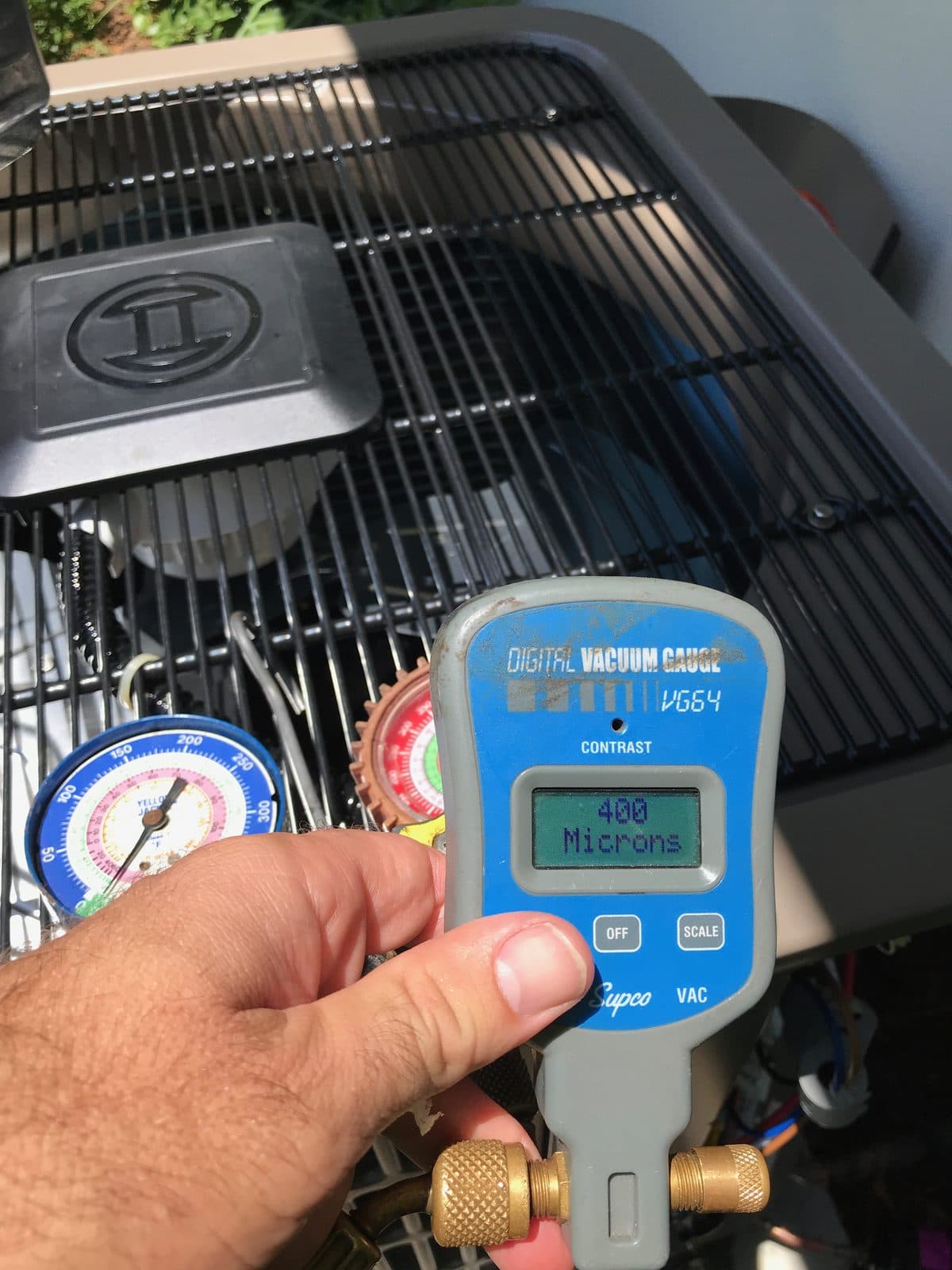
This is why the condition of the outdoor unit deserves assessment before anyone connects a gauge set. A coil that is corroded, bent, or blocked changes what every reading means. It is also why protective coil coatings and more corrosion-resistant coil geometries are worth specifying on a replacement in this county in a way they simply are not in Lakeland. Here it is not an upsell; it is the difference between a coil that reaches the end of the equipment's life and one that ends it early.
Salt, flood exposure and the components nobody inspects
Coil corrosion gets discussed because it is visible. The parts that quietly fail in a salt environment are the electrical ones. Contactor contacts pit faster. Terminal connections corrode where the coating has been nicked. Disconnect boxes and whips that were installed without attention to their exposure become a source of intermittent faults — the kind that produce a system working perfectly for a technician on a mild morning and failing again that afternoon.
With water on three sides and a barrier island chain, essentially no part of Pinellas County is far from mapped flood risk. For air conditioning, that translates into equipment pads and outdoor units that have been through water intrusion events, condensate terminations that need to discharge somewhere sensible rather than into a low area that already drains poorly, and electrical components whose service life has been shortened by conditions that were never dry to begin with.
None of that shows up in a five-minute visit. It shows up when someone takes the panel off and looks at what the environment has done to the connections rather than only at what the gauges say.
Twenty-four municipalities, one county, and why the permit answer depends on your address
Pinellas County permitting is genuinely fragmented, more so than most of the region. Pinellas County Building and Development Review Services covers unincorporated areas plus a handful of small municipalities including Belleair Beach, Belleair Shore, Indian Rocks Beach, Kenneth City, Oldsmar and Safety Harbor. But the county contains twenty-four incorporated municipalities, and the larger cities — St. Petersburg, Clearwater, Largo and Pinellas Park among them — run their own building departments.
Separately, countywide contractor licensing runs through the Pinellas County Construction Licensing Board. So licensing and permitting do not follow the same map, which is a distinction that trips up contractors who work here occasionally rather than routinely.
The practical consequence for a homeowner is simple: the correct permitting answer for your equipment change-out depends on which municipal boundary your property sits inside, not on the fact that you are in Pinellas County. And the permit inspection is what catches the items a rushed installation leaves wrong — disconnect and breaker sizing against the equipment nameplate, condensate configuration with a proper secondary path or float switch, line-set support, and refrigerant line insulation in unconditioned space. Those are the same items that later cause failures and water damage. Unpermitted equipment work tends to surface years later at a four-point insurance inspection or at closing, when the equipment's installation date matches no permit record.
Cool but still damp, in a county this humid
Reaching temperature and removing moisture are two different jobs, and in a county surrounded by water the second one is the harder half. When a house reads the right temperature and still feels clammy, the order of investigation matters, because the intuitive answer — that the system is too big — is often not the one the measurements support.
The refrigeration circuit comes first: charge verified by the manufacturer's method, and whether the evaporator coil is actually operating below the entering air's dew point. A coil has to be colder than the air's dew point for moisture to condense on it and leave through the drain. A coil that cools the air without reaching dew point lowers the temperature and removes very little water. Airflow comes next, and it fails in both directions — too much air crosses the coil quickly and leaves warmer, drying the house poorly, while too little drives the coil toward freezing and makes the cabinet and ducts sweat.
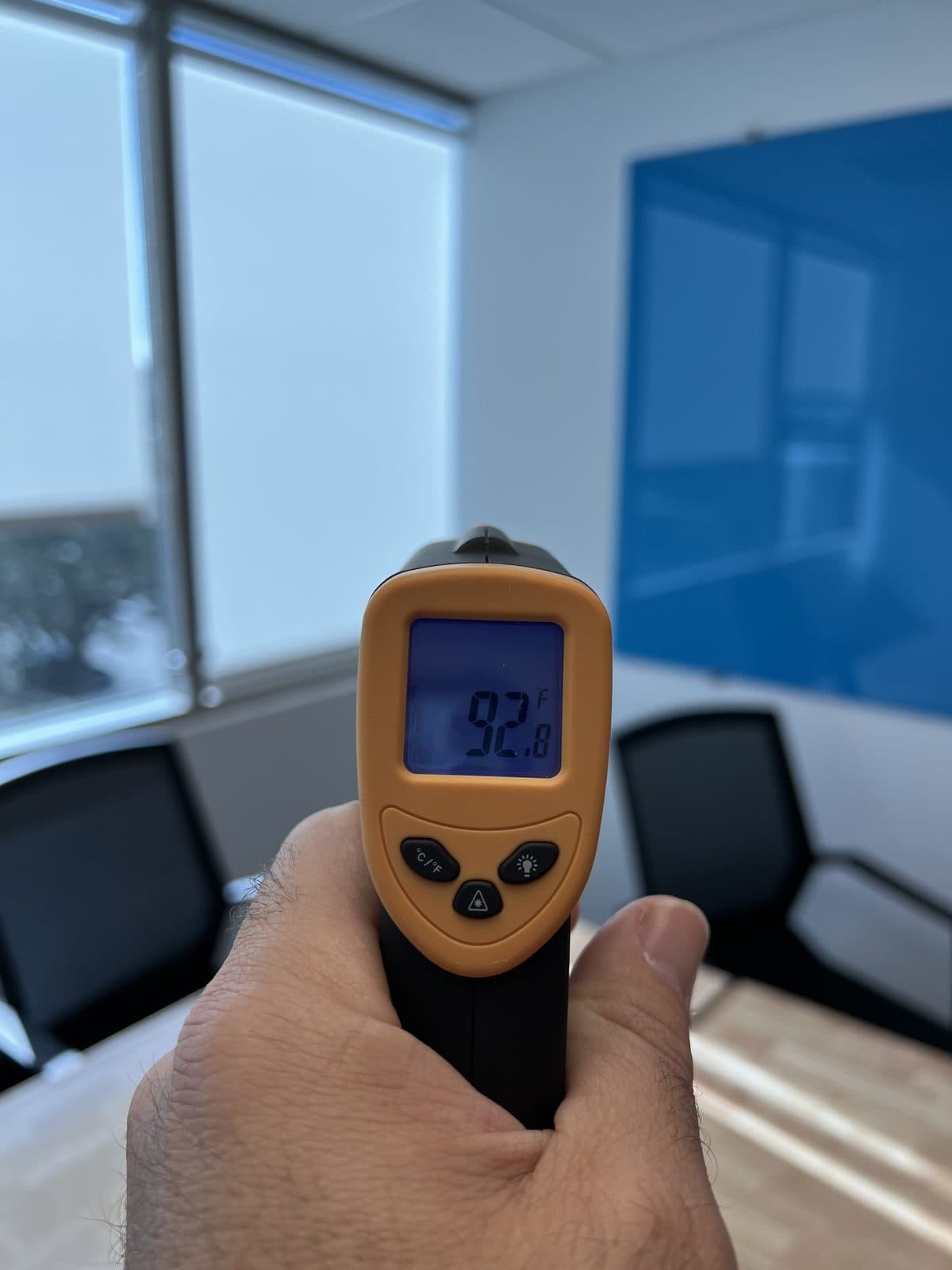
Only after the equipment proves out does the distribution system come into view, and in this housing stock that is frequently where the answer lives. A healthy system can be overwhelmed by humid attic air pulled in through leaking return ducts. One of the clearest indications is a rise in temperature or humidity between the return grille in the room and the air arriving at the coil — that gap means the duct system is adding load before the equipment ever sees it. Oversizing becomes the credible explanation only after all of that is clean, and it is confirmed by an ACCA Manual J load calculation rather than by floor area.
What Pinellas County work looks like from a commercial contractor
Pinellas has a diversified commercial base — healthcare, electronics and defense manufacturing, financial services, education and tourism, with BayCare operating a network of hospitals across the region. Roughly half of Blume's work is commercial mechanical service, and that shapes how we approach a house.
Commercial work forces habits that residential work often lets slide: measurements taken and written down, permits pulled because an inspection is not optional on a commercial project, and equipment failures documented properly so a warranty claim is defensible rather than dismissed on paperwork. A homeowner gets the same process applied to a smaller system — including the willingness to say that a system is worth keeping when the honest answer is that something simply broke on equipment that is otherwise sound.
Frequently asked
Why does equipment seem to fail faster in St. Petersburg than inland?
Because there is effectively no inland here. Pinellas is a narrow peninsula with water on three sides and a barrier island chain, so onshore breezes carry salt across most of the county. Salt attacks the outdoor coil and the electrical connections, and the damage is cumulative — a coil degrades rather than failing suddenly, which is why the symptom is usually a system that runs constantly and cools poorly.
My air conditioner is fairly new but the house is not comfortable. What is going on?
In a county where the median home dates to the late 1970s, the duct system is often decades older than the equipment. New equipment inherits whatever distribution and return sizing were already there, so a system that is technically fine can be pushing conditioned air through ductwork that loses a significant share of it into a hot attic. That is worth measuring before anyone concludes the equipment is the problem.
Do I need a permit for equipment work in St. Petersburg?
Equipment change-outs generally require a mechanical permit, and in Pinellas the answer depends on your municipal boundary rather than the county. St. Petersburg runs its own building department, as do Clearwater, Largo and Pinellas Park, while the county covers unincorporated areas and several smaller municipalities. Countywide contractor licensing runs separately through the Pinellas County Construction Licensing Board.
Are coated coils worth paying for here?
In this county, more often than not. Factory-applied protective coatings and more corrosion-resistant coil geometries meaningfully extend service life in a salt environment. That is a much stronger argument in Pinellas than it would be in Polk or eastern Hillsborough, where corrosion is rarely what ends a system's life.
Homeowner guides
- AC not turning on: what to check before you call
- Why your AC is not blowing cold
- AC troubleshooting guide
- Air conditioner leaking water
Air conditioning trouble in St. Petersburg? Talk to a licensed technician.
References: Pinellas County Building and Development Review Services; Pinellas County Construction Licensing Board · Pinellas County profile research — housing age, geography, commercial base (data/county-profiles.json) · ACCA Manual J — residential load calculation · ASHRAE — dehumidification and airflow guidance
Also in St. Petersburg: AC maintenance in St. Petersburg · AC installation in St. Petersburg · AC replacement in St. Petersburg · Mini-split installation in St. Petersburg · Heat pump repair in St. Petersburg
Residential AC Repair nearby: AC repair in Tampa · AC repair in Clearwater · AC repair in New Port Richey · AC repair in Lakeland