
HVAC, explained
Why Your AC Is Not Blowing Cold Air
An air conditioner that runs but does not blow cold air is usually caused by a simple issue you can check yourself: a thermostat fan set to ON instead of AUTO, a clogged air filter, or a tripped breaker. Deeper causes such as a dirty condenser coil, a frozen evaporator coil, or low refrigerant from a leak require a qualified technician to diagnose and repair safely.
When your air conditioner keeps running but the air feels warm or barely cool, the reason usually falls into one of a few categories: a thermostat setting, restricted airflow, a safety shutoff, or a refrigerant problem. Some of these you can check and fix in minutes. Others involve the sealed refrigerant system or live electrical parts and must be left to a professional. This guide walks through the causes in order, from the easiest to rule out to the ones that need a technician.
Start with the thermostat: fan ON vs AUTO
Before assuming your system is broken, look at the thermostat, because the most common false alarm lives right there. Every thermostat has a fan setting with two positions: ON and AUTO. This single switch explains a surprising number of "my AC stopped cooling" complaints.
When the fan is set to AUTO, the blower only runs while the system is actively cooling. Cold air comes out, the room reaches the set temperature, and the fan shuts off along with the cooling. That is exactly how it is supposed to work.
When the fan is set to ON, the blower runs continuously, all day and night, whether or not the system is cooling. Between cooling cycles there is no cold refrigerant moving through the indoor coil, so the fan simply pushes room-temperature or slightly warm air through the vents. To someone standing at a register, it feels like the AC is blowing warm air and has quit cooling, when in reality the fan is just doing what ON tells it to do.
The fix is simple: set the fan to AUTO and set the mode to COOL, then lower the target temperature a few degrees below the current room temperature. Wait a few minutes and feel the air again. If it turns cold on the next cycle, the system was fine all along. Also confirm the thermostat has power and a fresh set of batteries if it uses them, since a dying thermostat can behave erratically or fail to call for cooling at all.
Airflow problems: filter and coils
If the thermostat is set correctly and the air is still not cold, the next thing to suspect is airflow. An air conditioner cools by moving warm indoor air across a cold coil and carrying heat outside. Choke that airflow anywhere and cooling suffers.
Start with the air filter, because it is the easiest airflow problem to fix and one of the most common. A filter clogged with dust and pet hair restricts the air the blower can pull across the indoor coil. With less air moving, less heat gets removed, the air at the vents feels weak and lukewarm, and the coil can get so cold it begins to freeze. Locate your filter in the return grille or at the air handler, pull it out, and hold it up to the light. If you cannot see through it, replace it with a clean one of the same size and orientation. Making filter changes a regular habit is one of the simplest ways to keep a system cooling well.
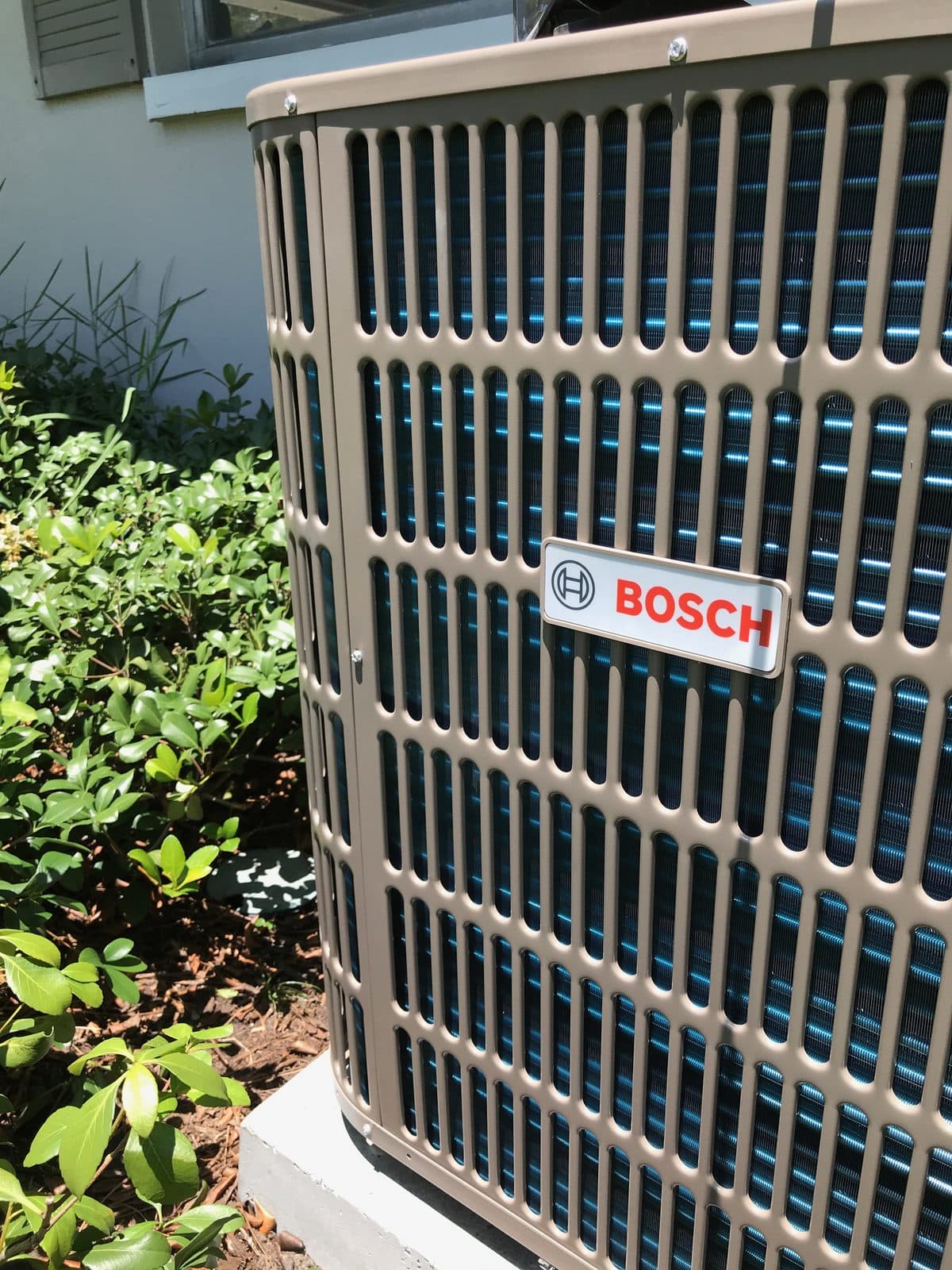
The other airflow culprit lives outside. The outdoor unit contains the condenser coil, which is where the heat collected from your home gets released into the outside air. That coil is a grid of thin metal fins, and over a season it collects grass clippings, leaves, cottonwood, and dirt. It can also be smothered by shrubs, a fence, or stacked items crowding the cabinet. When the condenser coil is dirty or blocked, the system cannot reject heat effectively, so the refrigerant cannot cool down enough and the air indoors never gets truly cold. You can help by keeping at least a couple of feet of clear space around the outdoor unit and gently rinsing loose debris off the outside of the fins with a garden hose on low pressure, with the power off. Do not pressure-wash the coil or bend the delicate fins. Deep cleaning of a heavily fouled coil is best left to a technician.
When the system shut itself off
Sometimes the air conditioner is not weak, it has actually stopped running, and warm air is just the house warming up. Two common shutoffs are worth checking.
The first is a tripped circuit breaker. Central air systems typically run on their own dedicated breakers in the electrical panel. If a breaker has tripped, the outdoor unit, the indoor unit, or both may be dead. Open the panel door and look for a breaker that is off or sitting in the middle position. You can reset it once by switching it fully off and then back on. If it trips again right away, stop. A breaker that keeps tripping is warning you about an electrical fault, and repeatedly resetting it is unsafe. Leave it off and call a technician. Do not open the equipment or work inside a live electrical panel yourself.
The second common shutoff is a full condensate line. As your AC cools, it pulls humidity out of the air, and that water drains away through a condensate line. Many systems include a safety float switch that shuts the system down if that drain backs up, so the overflow does not leak into your home. If your system is off and you find a full drain pan or a clogged drain line, that safety switch may be doing its job. Clearing a condensate clog can be straightforward, but if you are not sure what you are looking at, this is a good point to bring in a professional rather than guess.
A frozen coil, and why to turn it off
If you notice frost or a block of ice on the indoor unit or on the copper lines running to it, your evaporator coil has frozen. A frozen coil is a symptom, not a root cause. It usually comes from one of two things: airflow that was choked off, often by that dirty filter or a blocked vent, or a low refrigerant charge. In both cases the coil gets so cold that moisture on it freezes, and once ice forms it blocks airflow even more, which makes the freezing worse in a spiral.
Here is the important part: a frozen air conditioner cannot cool, and running it while frozen can push liquid refrigerant back toward the compressor and cause expensive damage. If you see ice, turn the system OFF at the thermostat. You can leave the fan set to ON, without cooling, to help move air across the coil and speed thawing, or simply leave everything off. Give it time, often several hours, to fully thaw, and expect some water as the ice melts, so keep towels handy near the indoor unit.
Once the coil is completely thawed and dry, replace a dirty filter, make sure all supply and return vents are open and unblocked, and try cooling again. If the system freezes up again after that, the cause is likely deeper, most often a refrigerant problem, and it is time for a technician. Do not chip at the ice or try to speed things with a heat source.
Refrigerant and the leak nobody topped off
If you have set the thermostat correctly, changed the filter, checked the breaker, cleared the outdoor unit, and let any ice thaw, and the air is still not cold, the problem is likely inside the sealed refrigerant system. This is where the do-it-yourself checks end and a qualified technician takes over.
Refrigerant is the substance that actually carries heat out of your home, and it is critical to understand one thing about it: refrigerant is not a fuel and it is not consumed. A properly sealed system holds the same charge for its entire life. So if your system is genuinely low on refrigerant, it does not mean the refrigerant ran out or wore off. It means there is a leak somewhere that let it escape. Low charge is a symptom of that leak.
This is why simply adding refrigerant, often called topping off, is not a real repair. If a technician only refills a leaking system, the refrigerant will escape again and you will be back to warm air, having paid to release refrigerant into the atmosphere in the meantime. The correct fix is to find the leak, repair it, and then recharge the system to the manufacturer's specification. Handling refrigerant is also regulated: by law it requires EPA Section 608 certification, along with the proper gauges, recovery equipment, and leak-detection tools. It is not a task a homeowner can or should do.
Other deep faults produce the same warm-air symptom and likewise need a professional, including a failing compressor, a bad capacitor or contactor in the outdoor unit, or a stuck blower motor. The common thread is that all of them involve the sealed system or live electrical components. The hard stop is simple: anything involving refrigerant or the electrical internals of the equipment is technician-only work. Do the safe checks, and when you reach that line, call a qualified professional.
Frequently asked
Why is my AC running but not blowing cold air?
The most frequent reason is the thermostat fan being set to ON instead of AUTO, which makes the blower push room-temperature air between cooling cycles. Other common causes are a clogged air filter restricting airflow, a tripped breaker, a dirty outdoor coil, a frozen indoor coil, or low refrigerant from a leak. Start by confirming the fan is on AUTO and the mode is COOL, then check the filter and breaker.
Should my thermostat fan be on ON or AUTO?
For normal cooling, AUTO is almost always the right choice. On AUTO, the fan runs only while the system is actively cooling, so the air at your vents is cold. On ON, the fan runs constantly and blows room-temperature air between cooling cycles, which is often mistaken for the AC failing. Use AUTO unless you have a specific reason to circulate air continuously.
Why is there ice on my air conditioner?
Ice on the indoor coil or refrigerant lines usually means airflow was restricted, often by a dirty filter or blocked vents, or that the system is low on refrigerant. Turn the system OFF and let the ice thaw completely, which can take several hours, before running it again. Never run a frozen system, since it can damage the compressor, and never chip at the ice.
Can I add refrigerant to my AC myself?
No. Refrigerant is not consumed during normal operation, so a low charge means the sealed system is leaking. Simply adding refrigerant without repairing the leak is not a real fix, and the charge will escape again. Handling refrigerant legally requires EPA Section 608 certification and specialized equipment, so this is technician-only work.
Do I need to call a pro for this?
Maybe. Start with the two causes that cost nothing: confirm the thermostat is calling for cooling rather than sitting in fan mode, and put in a clean filter. Between them those explain a large share of calls. If the air is moving and still warm, the problem is on the refrigerant or compressor side, and a licensed contractor has to measure it - there is no homeowner check left at that point.
Related
Blume Mechanical Service is a licensed commercial and residential HVAC contractor serving Florida's Tampa Bay region (CAC-1822618). If you are in our area and your AC still is not cooling after the basics, we can find out why.
Last updated: 2026-11-05
Sources: US Department of Energy — air conditioning operation and maintenance · ENERGY STAR — cooling system maintenance · General HVAC engineering principles (refrigeration cycle, airflow, condensate)
Search Google for why is my air conditioner not blowing cold air