
Pinellas County · Florida CAC-1822618
Air Conditioning Repair in Clearwater, FL
If your air conditioner has stopped cooling, you need two things quickly: a few safe checks you can do yourself, and a clear picture of what a proper repair visit involves. This page covers both for air conditioning repair in Clearwater, FL, including why a home near Clearwater Beach can fail differently from one farther inland.
Blume Mechanical Service repairs residential air conditioning in Clearwater and across Pinellas County. We are a Class A licensed Florida mechanical contractor, license CAC-1822618, and we offer 24/7 emergency HVAC service, with same-day response available based on location and technician availability.
Safe first checks when your AC stops cooling
These checks need no tools and no access panels. Work through them in order, and stop the moment you see anything wet near electrical parts or smell anything burning.
Check the thermostat
Confirm it is set to Cool and that the set temperature is below the current room temperature. If it runs on batteries, replace them. A blank display is worth mentioning to the technician, since it points to a power or control problem.
Check the breaker
Find the air conditioner's breaker in your electrical panel. If it has tripped, reset it once. If it trips again, leave it off and call, because a breaker that keeps tripping is protecting the wiring and equipment from a fault.
Check the filter and the vents
A clogged filter restricts airflow across the indoor coil. That can leave the house warm, and it can also let the coil get cold enough to freeze. Replace a dirty filter, and make sure the supply and return vents in the rooms are open and not blocked by furniture or rugs.
Look at the outdoor unit from a distance
Without removing any cover, check whether the outdoor fan is turning and whether leaves, trash or overgrown shrubs are blocking the unit. Keep plants clear so air can move through the coil. If you hear grinding, buzzing or repeated clicking, turn the system off at the thermostat and call.
Look for ice and water
Ice on the refrigerant line or indoor coil means airflow or refrigerant is off. Turn cooling off at the thermostat; running only the fan helps the ice thaw. Water around the indoor unit, or a stain on a ceiling below an attic air handler, points to the condensate drain, and a tripped float switch can shut the system off on purpose. Do not keep restarting it.
What not to do
- Do not remove electrical covers or reach into the outdoor unit.
- Do not add refrigerant by guesswork. A system low on refrigerant usually has a leak that has to be found and repaired.
- Do not bypass or remove the float switch. It is there to stop an overflow.
- Do not keep resetting the breaker or restarting a system that keeps shutting itself off.
When to stop and call
Turn the system off and call if you smell burning, see water near electrical equipment, find ice that returns after thawing, or have a breaker that trips again. If anyone at home is vulnerable to heat, such as infants or older adults, do not wait out a long outage in a hot house.
Beachside vs inland Clearwater homes: different air, different failures
Clearwater runs from the Gulf beaches across to neighborhoods closer to Tampa Bay, and that short distance changes what an air conditioner has to live with. The salt difference shows up in service life more than in sudden failure.
Beachside: salt air and the outdoor coil
Clearwater sits directly on the Gulf, and Clearwater Beach and its barrier-island neighbors take the full force of onshore wind. Salt carried on that wind settles on the outdoor unit and attacks the aluminum and copper of its coil continuously.
A corroded or blocked coil cannot reject heat the way it should. Head pressure rises, the compressor works harder, and the system delivers less cooling while running longer. The homeowner sees an air conditioner that runs and runs without cooling well. Because the refrigerant pressures really do look wrong, it is easy to misread as a low-charge problem, and adding refrigerant to a system whose coil cannot reject heat does not make it better.
That is why the outdoor unit is worth assessing before anyone connects a gauge set: a coil that is corroded, bent or blocked changes the meaning of every reading taken afterward. On the beach side, protective coil coatings are a fair topic to raise, and the answer for a beachside unit should not simply be copied from one miles inland.
Inland: older ductwork, humidity and drains
Inland neighborhoods still get a milder but constant dose of the same salt-laden air, so the outdoor coil still matters. What often decides the repair is the house itself. Clearwater's building stock is varied: condos on the barrier island, mid-century block homes in the neighborhoods between downtown and US-19, and newer construction farther inland.
In older homes, the air conditioner has often been replaced while the duct system stayed as built. That reverses the usual diagnostic order: when a fairly new system is not keeping up, the equipment may not be the problem. In an older attic, flexible duct can sag into low points so air must work upward out of the sag, tape at the plenum and boots can dry out and separate, and returns can be sized for equipment from a different era.
Leaky ducts waste cooled air in a hot attic, and leaky returns pull hot, humid attic air into the system. The system runs longer while delivering less to the rooms, so comfort and moisture control both slip. Before anyone decides a system is undersized, it is worth knowing how much of its output actually arrives.
What both share: a long, humid cooling season
Whether a home is on the beach or inland, Clearwater's humid cooling season effectively runs from spring well into fall. Long run hours and constant moisture wear on condensate drains, capacitors, contactors and motors, so air conditioning in Clearwater, FL calls for ongoing attention rather than an occasional errand.
What a proper AC diagnosis measures
A diagnosis should rest on readings, not on a guess about which part usually fails. The readings fall into four groups, and a technician should be able to tell you what was measured and what it showed.
At Blume, installations and replacements are commissioned with measured static pressure, airflow and refrigerant charge, documented. Those same measurements are what make a repair diagnosis worth trusting.
Air side: temperatures, humidity, airflow and static pressure
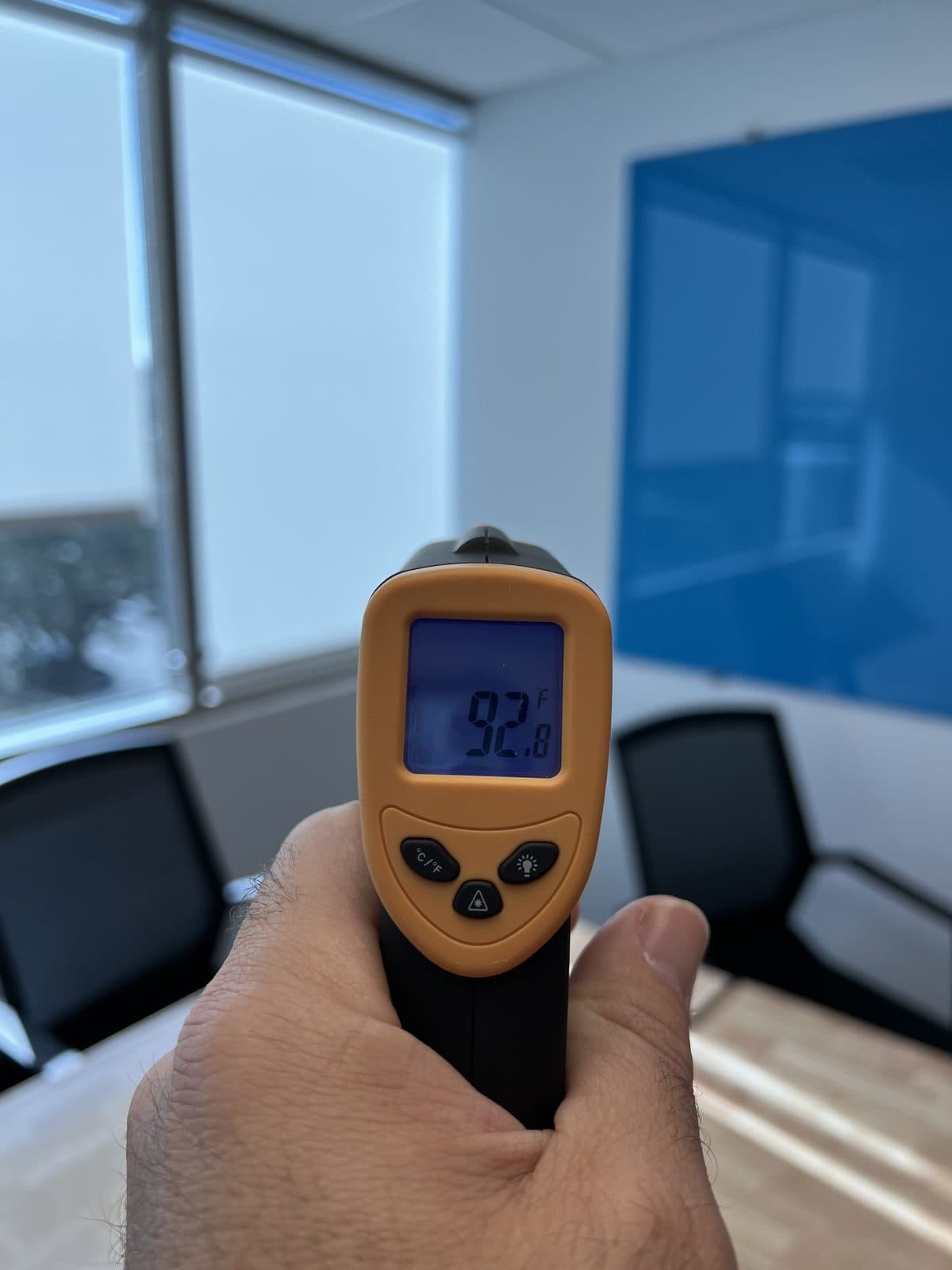
The air leaving the system is compared with the air entering it. Temperature drop across the indoor coil, humidity, airflow and the static pressure the blower works against show whether the coil is cooling and drying properly and whether the ducts deliver that air to the rooms. A rise in temperature or humidity between a room's return grille and the air arriving at the coil means the duct system is adding load before the equipment ever sees it.
Refrigerant side: pressures, temperatures and coil condition
Refrigerant pressures and line temperatures are read against the outdoor and indoor conditions, and the charge is verified by the manufacturer's method rather than by feel. The outdoor coil is checked first, because a restricted coil distorts those readings. Indoors, the evaporator coil has to run colder than the dew point of the air passing over it, or it will cool the house without removing much moisture.
Electrical side: voltage, current and capacitors
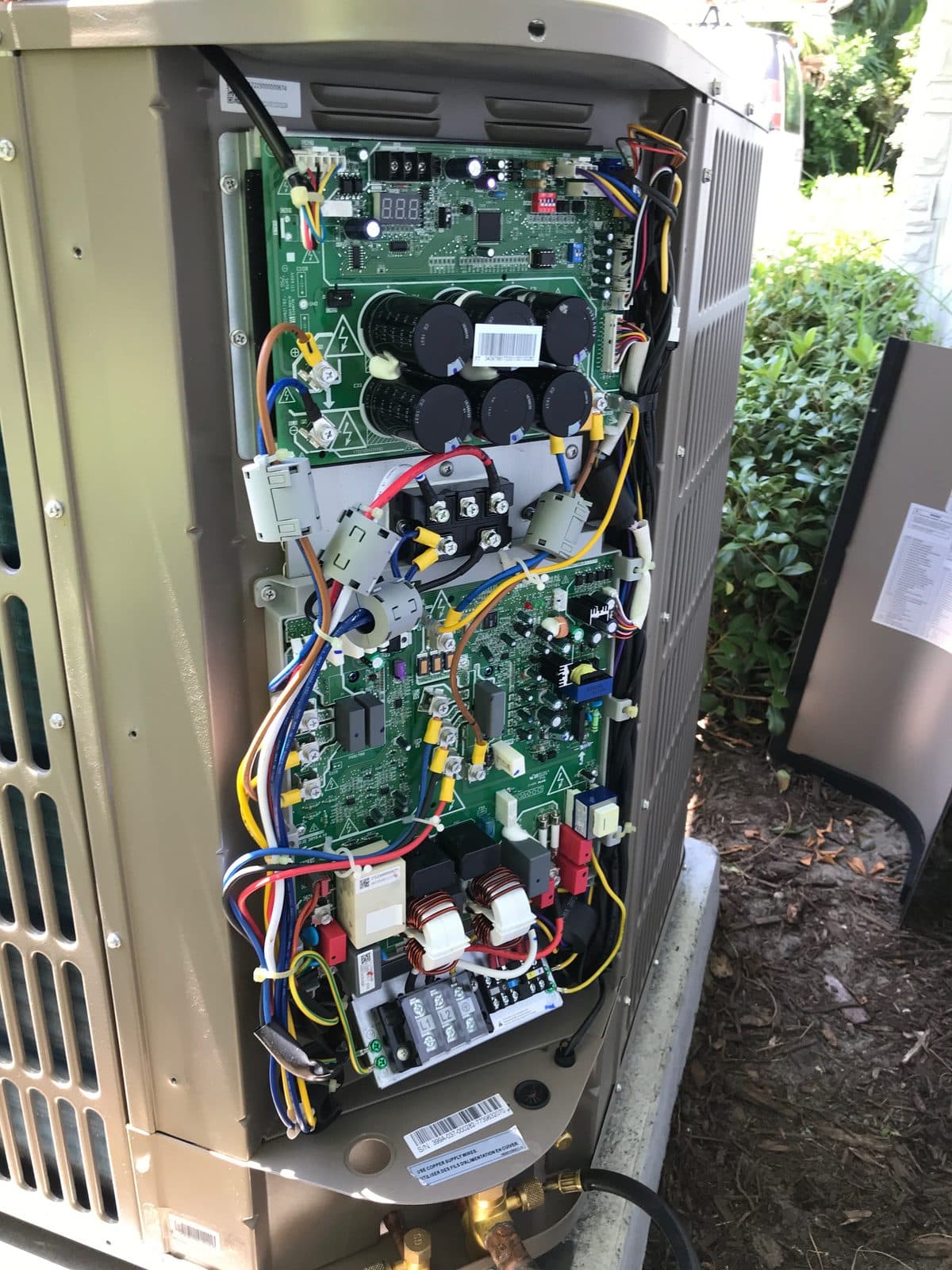
Voltage at the unit, the current drawn by the compressor and fan motors, and the condition of capacitors and contactors show whether a component is failing or being asked to work too hard. A weak capacitor and a failing motor can present the same symptoms; the meter tells them apart.
Drain side: the condensate line and float switch
The cooling coil removes water from humid air for much of the year, and that water leaves the building through a small, often nearly level line that is frequently routed through an attic. Biological growth can narrow it until the primary drain backs up. The secondary pan and the float switch are then what stand between a routine service call and a damaged ceiling. When a float switch shuts the system down, the switch did its job. The real problem is the drain upstream of it, and when the same drain backs up repeatedly, the useful question becomes why the line cannot reliably move water by gravity.
Repair or replace: how we help you decide
Deciding between repair and replacement depends on the age of the system, how often it has failed, the condition of the compressor and coil, and whether the real problem is in the ducts or drain rather than the equipment. Blume puts repair and replacement side by side so you can compare them, and we do not sell equipment a building does not need. When replacement is the better answer, equipment is sized with an ACCA Manual J load calculation and Manual S selection rather than a rule-of-thumb swap, and financing approved through Synchrony Bank is available.
Blume Mechanical Service for HVAC in Clearwater, FL
Blume Mechanical Service, LLC is based in Belleair Bluffs and serves Pinellas, Hillsborough and Pasco counties. The company was founded in September 2009 and is fully insured. We work on residential and commercial systems and service and install all major equipment brands, and paid priority scheduling is available.
Frequently asked
Why does my AC run all the time but not cool?
Several things can cause it. A corroded, bent or blocked outdoor coil cannot reject heat. A dirty filter or leaky ducts can starve the system of airflow, and a low charge points to a leak. Because the symptoms overlap, the readings matter more than the guess.
Why did my AC shut off and leave water near the indoor unit?
Most likely the condensate drain backed up and the float switch stopped the system before the water could overflow. The switch did its job; the drain needs to be cleared and the reason it backed up found.
Why is my house cool but still clammy?
Reaching a temperature and removing moisture are two different jobs. The evaporator coil has to run colder than the dew point of the air passing over it, so charge and airflow are checked first. Leaky return ducts pulling humid attic air into the system are another possible cause.
Do you offer emergency AC repair in Clearwater?
Yes. Blume offers 24/7 emergency HVAC service, with same-day response available based on location and technician availability. Paid priority scheduling is also available.
Homeowner guides
- AC not turning on: what to check before you call
- Why your AC is not blowing cold
- AC troubleshooting guide
- Air conditioner leaking water
To book air conditioning repair in Clearwater, call Blume Mechanical Service at 727-330-9131.
References: City of Clearwater Building Department; Pinellas County Construction Licensing Board · Pinellas County profile research — housing age, geography, commercial base (data/county-profiles.json) · ACCA Manual J — residential load calculation · ASHRAE — dehumidification and airflow guidance
Also in Clearwater: AC replacement in Clearwater · Mini-split installation in Clearwater · Heat pump repair in Clearwater · AC maintenance in Clearwater
Residential AC Repair nearby: AC repair in Tampa · AC repair in St. Petersburg · AC repair in New Port Richey · AC repair in Lakeland