
Pinellas County · Florida CAC-1822618
Residential Heat Pump Repair in Clearwater, Florida
Blume Mechanical Service repairs residential heat pumps across Clearwater and Pinellas County, from Clearwater Beach and Sand Key to the mainland. We diagnose the actual failure in both heating and cooling before quoting, pull the permit Pinellas requires, and document what we found. Florida license CAC-1822618.
Clearwater is a Gulf-front city split between barrier-island exposure and a more sheltered mainland. Clearwater Beach and Sand Key sit directly on salt water, and the outdoor half of a heat pump lives outdoors in that salt air year-round. A condenser on a beachfront balcony or a slab a block from the Gulf ages in a fundamentally harsher environment than the same unit two miles inland off Gulf-to-Bay. Salt does not care what season it is, and a heat pump's outdoor coil is exposed to it whether the system is heating or cooling.
A heat pump is an air conditioner that runs both directions
The single most useful thing to understand about a heat pump is that it is the same refrigeration machine as a standard air conditioner, with one extra part: a reversing valve. In summer it moves heat out of the house exactly like an AC. In winter it reverses, pulls heat out of the outdoor air, and delivers it inside. That is why a heat pump can heat a Clearwater home without burning any fuel, and it is also why a heat pump has more ways to fail than a cooling-only system.
When a homeowner calls and says the system 'is not heating,' the failure is usually one of a handful of things, and they are not interchangeable. The reversing valve can stick, so the system stays in cooling when it is asked to heat. The refrigerant charge can be low from a leak, which starves both modes but shows up first as weak heating on a cold morning. The defrost control can fail, so the outdoor coil ices over and the unit stops moving heat. Or the auxiliary electric heat strips that back the system up can be dead, so the heat pump is working but has nothing to lean on when it needs help.
Our job is to tell those apart before touching a part. A stuck reversing valve, a leak, a defrost board and a burned-out heat strip produce similar complaints from the thermostat and completely different repairs. Guessing is expensive. Measuring is not.
What salt air does to a Clearwater Beach heat pump
The outdoor unit is where a coastal heat pump earns its service history. Salt-laden air is corrosive to the aluminum fins and copper tubing of the outdoor coil, and on Clearwater Beach or Sand Key that air is present every day. Two identical heat pumps installed the same year — one on a beachfront property, one out near the mainland — will not age the same. On the coastal unit we begin seeing oxidation on the aluminum fins within the first few years. By mid-life the fin deterioration is visible: fins that were straight and evenly spaced are bridged, thinned, or eaten back. Late in life the usable coil face is reduced, the system runs at chronically high head pressure, and the efficiency it was sold with is gone.
This matters more on a heat pump than a cooling-only unit because the outdoor coil does double duty. In cooling it rejects heat; in heating it absorbs heat, and it also frosts and goes through defrost cycles. A corroded coil is compromised in both roles. A coastal heat pump also collects a salt film on the fan blades, the contactor, and the electrical connections, which pit and corrode faster near the water.
We call an outdoor coil finished on three conditions: visible perforation or an active refrigerant leak at the coil, substantial loss of fin area that keeps head pressure elevated even with a correct charge, or corrosion severe enough that a coil replacement approaches the cost of replacing the whole system. Factory-applied protective coil coatings genuinely extend coastal service life, and they are worth specifying on any Clearwater Beach installation. Rinsing the outdoor coil with fresh water on a routine schedule also helps more here than almost anywhere inland.
Condos, balconies, and where a beach unit actually sits
A large share of the housing on Clearwater Beach and Sand Key is condominium, and that changes heat pump service in ways a single-family home does not. Outdoor units are frequently on balconies, in wall sleeves, on rooftops, or grouped on a service deck shared by many units. Access can require building coordination, and the equipment often sits in the most salt-exposed position on the structure — high up, unshaded, facing the Gulf.
Many beach condos also use packaged or through-the-wall heat pump equipment rather than the split systems common on the mainland, and some associations restrict what can be installed and where condensate may drain. That is worth knowing before a repair-or-replace conversation, because the right answer for a beachfront condo is sometimes constrained by the building, not just the equipment.
Condensate is its own issue on a heat pump, and it runs in both seasons. In cooling the indoor coil sheds water continuously; in heating, the outdoor coil sheds water during every defrost cycle. Blocked drains, overflowing pans, and stained ceilings are the predictable result when a drain line narrows. On a high-rise or a stacked condo, a condensate overflow does not stay in one unit — it becomes the neighbor's ceiling. We treat the drain path as part of the system, not an afterthought, and on a beach property we pay attention to where that water is allowed to go.
The defrost cycle, and why your unit steams on a cold morning
On the coldest, dampest Clearwater mornings a heat pump's outdoor coil can frost over. This is normal. When the coil is absorbing heat from cold, humid air, moisture condenses and freezes on it, and if that frost is left alone it insulates the coil and kills the system's ability to heat. Every heat pump handles this with a defrost cycle: it briefly reverses into cooling mode, sends warm refrigerant out to the coil to melt the frost, and then switches back. That is why you may see a heat pump 'steaming' outside on a cool morning, or hear a whoosh as it changes modes. It is working correctly.
What is not correct is a coil that stays iced. If a defrost sensor or the defrost control board fails, the system never runs the melt cycle, the coil glazes over solid, and heating output collapses. Homeowners often describe this as 'blowing cold air when it should be heating.' Sometimes it is a stuck reversing valve; sometimes it is a defrost failure leaving an iced coil; sometimes it is simply low refrigerant charge from a leak, which drops heating capacity first. These look similar from inside the house and are different repairs.
Clearwater rarely gets cold enough for heavy, repeated defrost, which is one reason heat pumps suit this climate so well — most winters the system spends far more of its life cooling than heating. But when a cold front does push through and a unit will not heat, the diagnosis has to separate a real defrost or valve fault from a low charge, because adding refrigerant to a system that is not actually low just masks a leak.
Refrigerant, leaks, and the R-410A phase-down
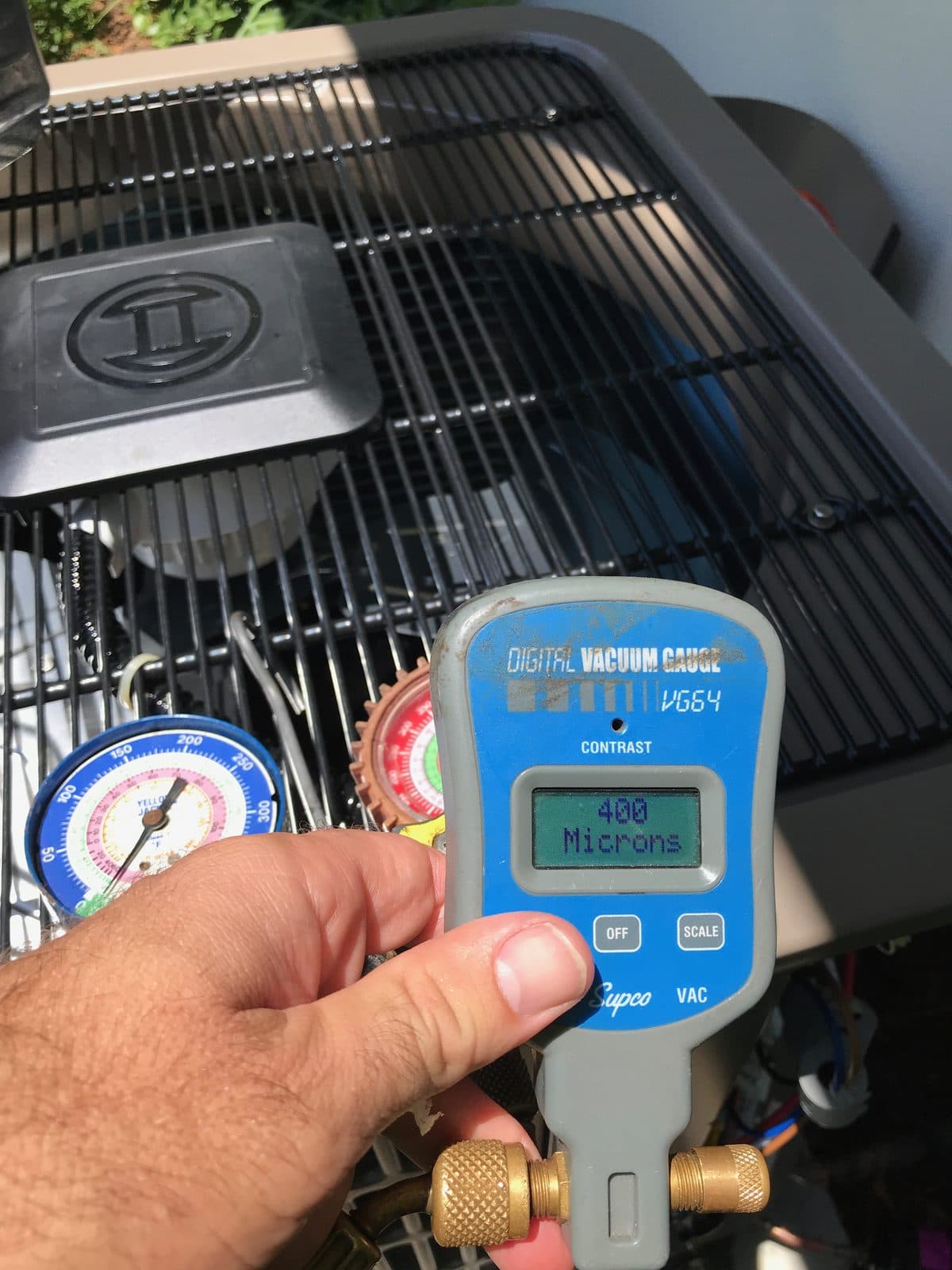
A heat pump does not consume refrigerant. If a system is low, it has a leak, and the honest repair finds the leak rather than topping off the charge and sending the technician away. On a heat pump a low charge tends to show up as weak heating before it shows up as weak cooling, because heating asks more of a marginal charge. Refrigerant work is regulated: only EPA Section 608-certified technicians may open a sealed refrigerant circuit, recover refrigerant, and recharge a system. That is the law, not a preference.
Under the federal AIM Act the United States is phasing down production of high-GWP refrigerants, and new residential heat pumps have moved from R-410A to lower-GWP refrigerants such as R-454B. Existing R-410A heat pumps remain legal to operate and service, and refrigerant remains available to service them. What has changed is the math on a marginal repair: a coastal system that has a coil leak and needs both a coil and a charge is a more serious proposition than it was a few years ago, especially when the coil is already corroded.
That does not mean an R-410A heat pump should be replaced because of its refrigerant. A system that holds its charge, has a sound coil, and just lost a capacitor or a contactor is fine. The phase-down affects new equipment and refrigerant purchases, not a sealed system that is running correctly. If a company condemns a Clearwater heat pump on refrigerant type alone, with no measured mechanical reason, that is not a diagnosis.
How a repair visit actually goes
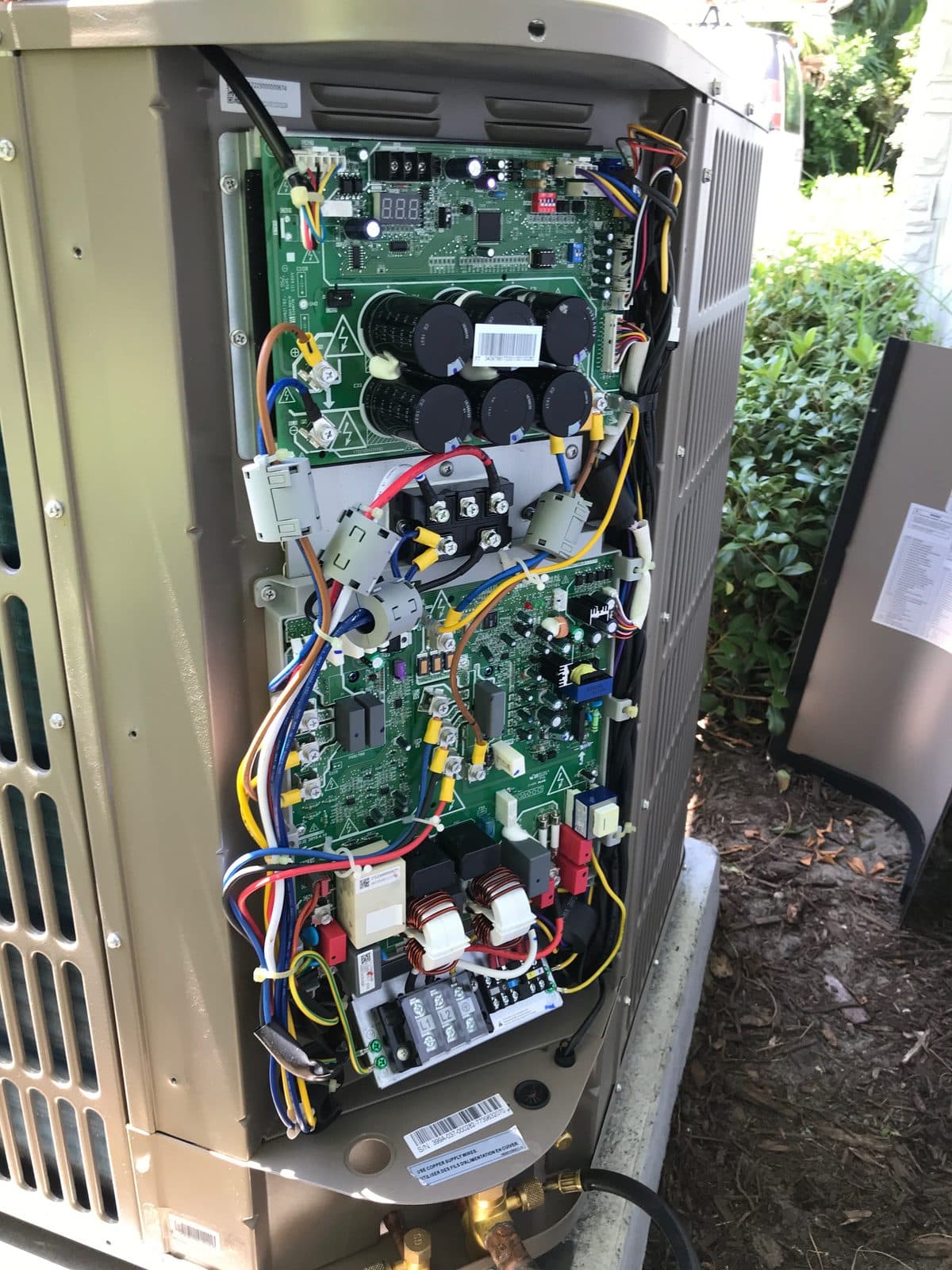
A technician inspects the system and identifies the failure before proposing work. On a heat pump that means checking the mode the system is actually in versus the mode it is being asked for, verifying the reversing valve responds, reading the refrigerant charge against manufacturer spec, and confirming the defrost cycle and the auxiliary heat both function. On a Clearwater Beach or Sand Key unit it also means looking hard at the outdoor coil, the contactor, and the electrical connections for salt corrosion, because those are the parts the coast attacks first.
You are told what failed, what caused it, and what happens if it is deferred. If the honest answer is that a corroded coastal unit is near the end of its life and a large repair is not the best use of your money, we say that. If the honest answer is that a modest repair keeps a sound system running for years, we say that too. When a repair needs a Pinellas County permit, we pull it, and when a system is under manufacturer warranty we document the failure so the claim is defensible rather than dismissed on paperwork.
That documentation habit comes from our commercial work, where a warranty denial is expensive and a well-built evidence file is the difference between the manufacturer standing behind the equipment and the owner absorbing the cost. A Clearwater homeowner gets the same discipline: measurements taken, the failure recorded, and a repair you can point to later rather than a part swapped on a hunch and forgotten.
Frequently asked
My heat pump is blowing cold air when I set it to heat. What is wrong?
On a heat pump that complaint has several possible causes and they are different repairs. The reversing valve may be stuck in cooling. The refrigerant charge may be low from a leak, which weakens heating first. The defrost control may have failed and iced the outdoor coil. Or the auxiliary heat strips that back up the system may be dead, so it feels cool during a cold snap. We measure the charge, test the reversing valve, and check the defrost and aux circuits before replacing anything, because guessing among these is expensive and each points to a different part.
Why does my outdoor unit on Clearwater Beach corrode so fast?
Salt air. Clearwater Beach and Sand Key sit directly on the Gulf, and salt-laden air oxidizes the aluminum fins and copper tubing of an outdoor coil, plus the fan and electrical connections. A coastal heat pump ages years faster than the same model inland. Factory-applied protective coil coatings extend service life meaningfully on the beach, and rinsing the outdoor coil with fresh water on a routine schedule helps. When corrosion perforates the coil or eats away enough fin area to keep head pressure high, the coil is finished regardless of charge.
My heat pump was steaming outside this morning. Is it broken?
Almost certainly not. On a cold, damp morning a heat pump's outdoor coil frosts, and the system runs a defrost cycle: it briefly reverses to send warm refrigerant out and melt the frost, which produces steam and sometimes a whooshing sound as it changes modes. That is normal and it protects heating output. What is not normal is a coil that stays iced solid and never clears — that points to a failed defrost sensor or control board, and it needs service.
Do I need a permit to replace a heat pump in Clearwater?
Generally yes. Equipment change-outs require a mechanical permit, and which office issues it depends on whether the property is inside the City of Clearwater or in unincorporated Pinellas County. On the barrier islands a condo association may also have its own rules about equipment and condensate. Confirm the requirement for your specific address before work begins, because an unpermitted change-out becomes your problem at resale or an insurance inspection, not the installer's.
Do you work on both homes and commercial buildings?
Both. A good share of our work is commercial mechanical service, which is where our documentation and diagnostic discipline comes from — a warranty denial on commercial equipment is expensive, so we learned to prove failures with measurements rather than guess at them. Residential customers in Clearwater get the same process on a smaller system: the failure is measured, the cause is identified, and you are told plainly whether a repair or a replacement is the honest call, with the coastal condition of the outdoor unit weighed into that decision.
Homeowner guides
Heat pump trouble in Clearwater or on the beach? Talk to a licensed technician.
References: Pinellas County permitting and contractor licensing (primary) · US Department of Energy — heat pump systems · US EPA — AIM Act HFC phasedown and Section 608 refrigerant handling · General HVAC engineering principles
Also in Clearwater: AC repair in Clearwater · AC replacement in Clearwater · Mini-split installation in Clearwater · AC maintenance in Clearwater
Residential Heat Pump Repair nearby: Heat pump repair in Dunedin · Heat pump repair in Largo · Heat pump repair in Palm Harbor · Heat pump repair in St. Petersburg