
Pinellas County · Florida CAC-1822618
Residential AC Replacement in Clearwater, Florida
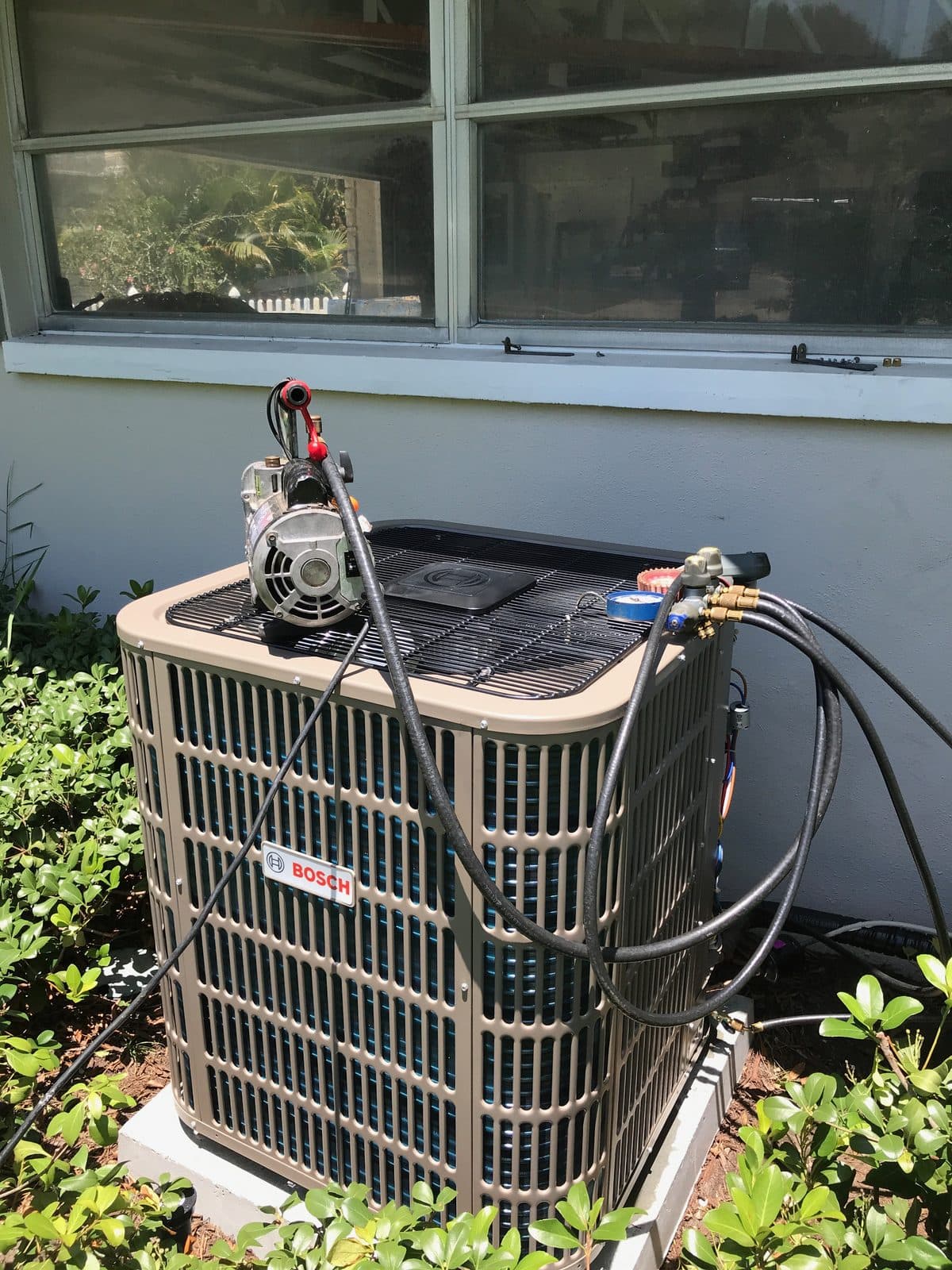
Blume Mechanical Service replaces residential air conditioning systems across Clearwater and Pinellas County. We size the new equipment from a load calculation, correct what the old install got wrong, pull the permit, and commission with documented measurements. Florida license CAC-1822618.
Clearwater spans a barrier island and the Pinellas mainland, with a large share of homes built between the 1950s and the 1980s. Salt-laden air off the Gulf and Clearwater Harbor is corrosive to outdoor condensers, so units near the water frequently reach the end of their life from corrosion years before the same equipment would inland. That, combined with systems old enough to still run R-22, is what actually drives most replacement decisions here.
Why coastal condensers wear out first
The single most Clearwater-specific fact about air conditioning here is that the outdoor unit lives in salt air. Salt-laden moisture off the Gulf and the Intracoastal is corrosive to the aluminum fins and copper of an outdoor coil, and a condenser a few blocks from open water does not age the way an identical unit does a few miles inland.
The pattern is consistent. Early in life you see oxidation starting on the aluminum fins. By mid-life the fin deterioration is measurable — fins that were evenly spaced are bridged, eaten back, or flaking. Late in life the effective coil face area is reduced, head pressure runs chronically high, and efficiency is simply gone. The coil does not fail all at once the way a compressor does; it degrades, and it drags the compressor down with it. A compressor running behind a badly corroded coil runs hotter than it was designed to, and the eventual compressor failure is really the downstream result of a coil that has been choking the system for a couple of years.
That is why, on the coast, it is usually the coil that ends a system's life, not the compressor everyone assumes is the expensive part. When we evaluate a corroded coastal unit we look at three things: visible perforation or an active leak at the coil, substantial loss of fin area confirmed by head pressure that stays high even with a clean charge and good airflow, and whether the cabinet and compressor are already well into their coastal life. When those stack up, replacement is the honest answer, and it is worth specifying corrosion protection on the new one.
R-22 and the age of Clearwater's housing
A large part of Clearwater's housing stock predates 2010, and many of those homes still carry their original or first-replacement air conditioning. Equipment from that era commonly uses R-22 refrigerant. The EPA ended production and import of R-22 at the start of 2020, so it is no longer manufactured — the only supply now is reclaimed, and it exists only to service systems already in the field.
That changes the arithmetic on a marginal repair. R-22 systems remain legal to operate, and a sound one with a single failed capacitor or contactor does not need replacing simply because of its refrigerant. But an R-22 system with a refrigerant leak is a different conversation: refrigerant does not get consumed, so a low charge means a leak, and topping off a leaking R-22 system is pouring an increasingly scarce refrigerant into a coil that is losing it. When a leak lands on an older R-22 unit that is also showing coastal corrosion, the factors stack toward replacement rather than repair.
New residential equipment has moved past R-22 entirely — first to R-410A, and now under the federal AIM Act toward lower-GWP refrigerants such as R-454B. We do not treat 'it uses R-22' as an automatic condemnation. We treat it as one factor among several: system age, whether the leak is repairable, the condition of the coil and cabinet, and how many times the system has already failed. If the mechanical evidence is not there, we will tell you to keep the system running.
Sizing the replacement from a load calculation
A replacement is the one moment to get sizing right, and in Florida the existing system is more often oversized than undersized. The original was frequently picked by rule of thumb — a ton per so many square feet — and since then the house may have gained new windows, better insulation, or a radiant barrier. Equipment that was merely generous when it went in can be clearly too large now.
We size the new system from an ACCA Manual J load calculation rather than by matching the old nameplate or by floor area alone. That matters more here than most homeowners expect, because oversizing produces the exact complaint people have about Florida air conditioning. An oversized system reaches the thermostat setpoint in a few minutes, shuts off, and lets humidity climb back during every off cycle — so the house ends up cold and clammy at the same time. A correctly sized system runs longer cycles, pulls more moisture out per cycle, and feels comfortable at a higher, cheaper thermostat setting.
Sometimes the load calculation says the right replacement is one size smaller than what is there, and that is an uncomfortable conversation worth having honestly. 'Smaller' sounds like 'less,' but what it actually means is a system that runs long enough to dehumidify instead of blinking on and off. When we install smaller equipment than what was there, we document the load calculation and the reasoning, so that when the first summer proves it out, there is a record of why the house is more comfortable.
Coil protection and where the outdoor unit sits
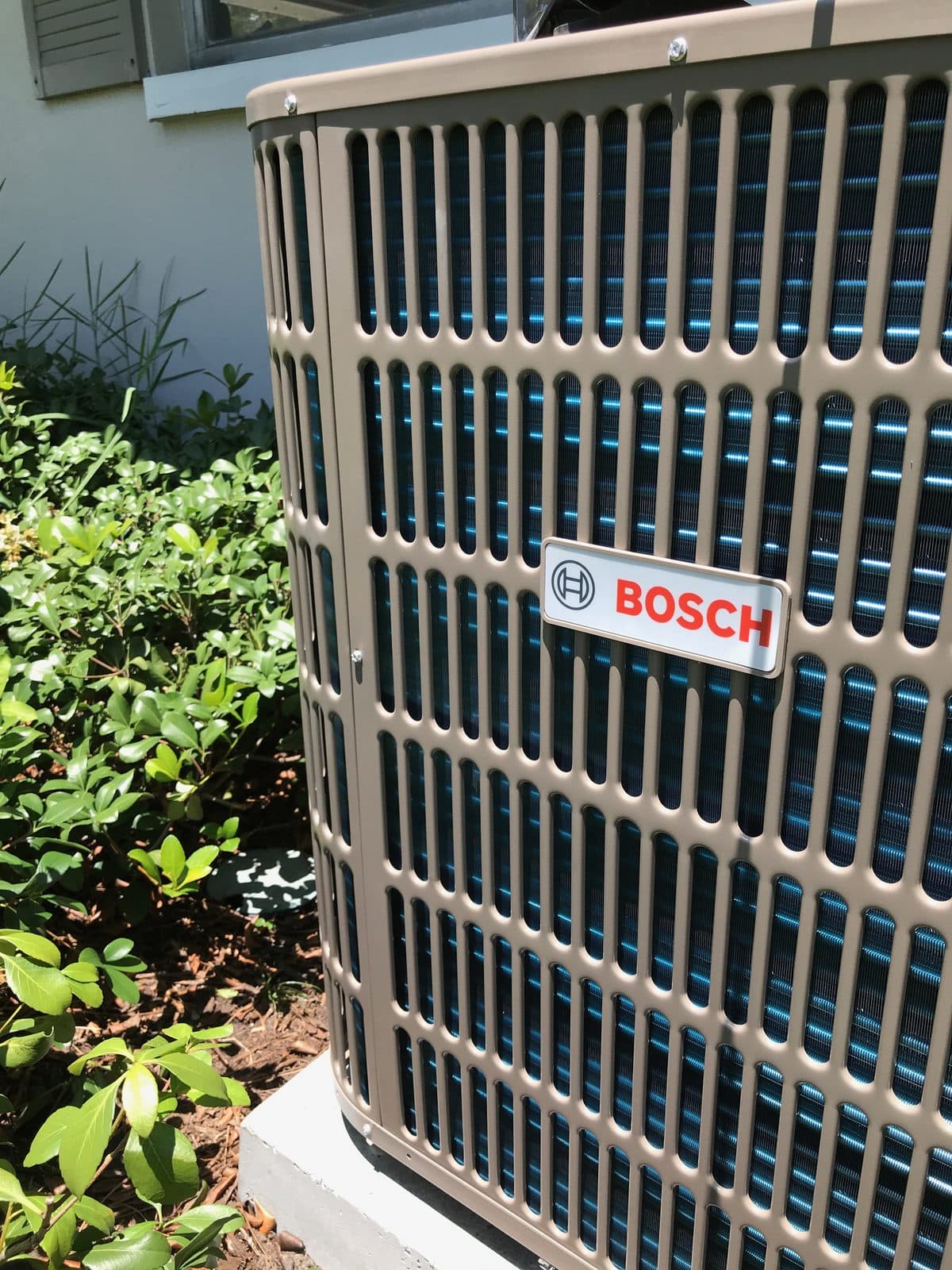
Because corrosion is the local enemy, the details of a coastal replacement matter as much as the equipment on the label. Factory-applied protective coil coatings and coil designs that are inherently more corrosion-resistant genuinely extend service life near saltwater. Not forever — no coating makes salt air harmless — but meaningfully enough that they are worth specifying and discussing on a Clearwater installation rather than defaulting to a bare standard coil.
Where the condenser sits is part of the same conversation. A unit tucked against a wall with poor airflow, or one sitting in the constant spray line of an irrigation head running salty reclaimed water, will corrode faster and run hotter. On a replacement we look at placement, clearance for airflow and service, and whether the pad and mounting will hold up. Regular freshwater rinsing of the outdoor coil is one of the few maintenance steps that measurably slows coastal corrosion, and we walk homeowners through it because it is genuinely worth doing here.
We also treat the line set, the disconnect, and the breaker as part of the job rather than as leftovers to reconnect. New equipment carries a minimum circuit ampacity and a maximum overcurrent protection rating on its nameplate, and the breaker that served the old unit may not match. On the coast, where the whole system is fighting a corrosive environment, connecting a new condenser to a corroded disconnect and undersized copper just builds the next failure into the install.
Matched systems: why you replace the coil with the condenser
A modern air conditioner is engineered as a matched pair — an outdoor condensing unit and an indoor evaporator coil designed to work together. The efficiency rating printed on the equipment is only valid for that specific matched combination. Put a new high-efficiency condenser on an old, mismatched, possibly corroded indoor coil and you do not get the rating you paid for; you get a system that underperforms and, on the coast, an old coil that may already be leaking or restricted.
This comes up constantly on replacement quotes, because leaving the indoor coil in place is a common way to make a bid look cheaper. It rarely is, in the long run. An old coil paired with a new condenser can throttle capacity, run the new compressor outside its design envelope, and shorten the life of the equipment you just bought. It also complicates any future warranty claim, because the manufacturer rated and warranted the equipment as a set.
When we replace a system in Clearwater we replace it as a matched set and confirm the pairing against the manufacturer's data, so the efficiency number on the label is the efficiency number in the house. We also verify that the metering device, the line set, and the airflow all suit the new pair. Matching is not an upsell — it is the difference between installing a rated system and installing two components that happen to be bolted to the same refrigerant lines.
Permits and inspection in Pinellas County
A residential equipment change-out generally requires a mechanical permit and an inspection, and in Pinellas County which office issues that permit depends on where the property sits. The incorporated cities — Clearwater, St. Petersburg, Largo, Dunedin and others — each run their own building department, while unincorporated Pinellas is served by the county. Two homes a short drive apart can follow different permit paths for the same equipment change. A contractor who does not know which jurisdiction a Clearwater address falls under has not pulled many permits here.
The inspection is not a formality. It is what catches the items a rushed replacement leaves wrong: disconnect and breaker sizing against the new equipment nameplate, the condensate configuration with a proper secondary path or float switch, line-set support, and refrigerant line insulation. Those are the same items that later cause failures and water damage.
And the consequence of skipping the permit usually arrives years later, at the worst moment. Florida insurers commonly require a four-point inspection on older homes, and inspectors increasingly flag equipment whose installation date matches no permit record. From there a carrier may require the permit be pulled retroactively, decline to write the policy, or exclude the HVAC system from coverage — any of which can stall a closing. The homeowner is rarely the one who chose to skip it; the permit got skipped because it was faster and cheaper for the contractor, not for them. We pull the permit and see the inspection through.
How a replacement actually goes
Before we quote a replacement, a technician evaluates the existing system and the reason it is failing. If the honest answer is that a sound system just lost a capacitor and does not need replacing, we say that — replacing a repairable system on age alone is not a diagnosis. If the honest answer is that a corroded coastal coil, an R-22 leak, and repeated failures have stacked up and a large repair is not the best use of your money, we say that too, and we show you what we found.
When we do replace, the job is more than swapping the box. We size the new system from a load calculation, match the coil to the condenser, correct the return and condensate problems the old install left in place, bring the electrical up to the new nameplate, and pull the permit. Then we commission the system with numbers — static pressure, refrigerant charge set by superheat or subcooling, airflow, temperature split, and a tested float switch — and hand you a record of what we measured, not just a receipt for what we installed. That documentation habit comes from our commercial work, where an undocumented job is an expensive callback.
Frequently asked
My outdoor unit is rusty and near the water. Does that mean I need a new system?
Not by itself, but coastal corrosion is a real factor here. We look at whether the coil is actually perforated or leaking, how much fin area has been lost, and whether head pressure stays high with a clean charge and good airflow. Surface rust on the cabinet is cosmetic; a coil eaten back to where it can no longer move heat is finished. If your Clearwater unit is also old and low on refrigerant, those factors stack toward replacement. If the coil is intact and only the cabinet looks weathered, we will tell you it has life left.
My system uses R-22. Do I have to replace it?
No, not automatically. R-22 systems remain legal to operate and service, and a sound one with a minor failure does not need replacing because of its refrigerant. What changed is that R-22 is no longer produced, so the supply is reclaimed only. That makes a leaking R-22 system a poor candidate for repeated top-offs. We weigh it as one factor alongside the system's age, whether the leak is fixable, and the condition of the coil and cabinet — not as an automatic reason to replace a system that is running correctly.
Should I coat or protect the new outdoor unit against salt air?
On a Clearwater installation near the water, it is worth discussing. Factory-applied protective coil coatings and inherently corrosion-resistant coil designs genuinely slow the deterioration that salt air causes, and they extend service life on the coast. No coating makes salt harmless, but the difference over the life of the system is real. We also recommend keeping the outdoor coil rinsed with fresh water and placing the unit where it gets good airflow and is not sitting in the spray of salty reclaimed irrigation. These steps matter more here than they would inland.
Do I need a permit to replace my AC in Clearwater?
Generally yes. A residential equipment change-out requires a mechanical permit and an inspection, and in Pinellas County the issuing office depends on your address — the City of Clearwater runs its own building department, while unincorporated areas go through the county. Confirm the requirement for your specific property before work begins. An unpermitted change-out becomes the homeowner's problem at resale or at an insurance four-point inspection, not the installer's, which is why we pull the permit and see the inspection through.
Can I keep my old indoor coil to save on the replacement?
We do not recommend it. A modern condenser is engineered as a matched pair with a specific indoor coil, and the efficiency rating only holds for that matched set. Bolting a new condenser to an old, possibly corroded coil throttles capacity, runs the new compressor outside its design range, and shortens its life. It also complicates warranty coverage, since the manufacturer rates the equipment as a set. Leaving the old coil in place makes a quote look cheaper, but it usually costs more over the life of the system.
Homeowner guides
- Repair or replace: how to decide
- AC replacement: what to expect
- How to compare replacement quotes
- How long AC units last in Florida
Planning an AC replacement in Clearwater? Talk to a licensed technician first.
References: Pinellas County permitting and contractor licensing (primary) · US EPA — R-22 (HCFC) phaseout and AIM Act HFC transition · US Department of Energy — central air conditioning · ACCA Manual J (residential load calculation) and Manual S (equipment selection)
Also in Clearwater: AC repair in Clearwater · Mini-split installation in Clearwater · Heat pump repair in Clearwater · AC maintenance in Clearwater
Residential AC Replacement nearby: AC replacement in Brandon · AC replacement in Dunedin · AC replacement in Largo · AC replacement in St. Petersburg