
Pinellas County · Florida CAC-1822618
Residential AC Replacement in Largo, Florida
Blume Mechanical Service replaces residential air conditioning systems across Largo and Pinellas County. We size the new equipment from a load calculation, correct what the old install got wrong, pull the permit, and commission with documented measurements. Florida license CAC-1822618.
Largo's housing leans mid-century — postwar ranch homes on modest lots — alongside a large number of manufactured and mobile homes in its many resident-owned and rental communities. A lot of that equipment is original or long overdue, and manufactured homes carry their own sizing and equipment rules. Getting the replacement matched to a smaller footprint and the right home type, rather than oversized by habit, is what drives good outcomes here.
Sizing for Largo's smaller footprints
Largo's housing runs to compact mid-century ranch homes and manufactured homes, and the most common mistake on a replacement here is carrying over an oversized system out of habit. The original equipment was usually picked by rule of thumb, and on a smaller, well-shaded 1960s ranch that often meant a system generous for the load from day one. Decades of window and insulation upgrades since then only widen the gap.
We size the replacement from an ACCA Manual J load calculation rather than by matching the old nameplate or by square footage. On a smaller footprint the penalty for oversizing is sharper, not softer, because there is less thermal mass to buffer a short cycle. An oversized system reaches setpoint in a few minutes, shuts off, and lets humidity climb during every off cycle, so a small Largo home ends up cold and clammy at the same time. A correctly sized system runs longer cycles, removes more moisture, and stays comfortable at a higher, cheaper thermostat setting.
That frequently means the right replacement is one size smaller than what is there, which is an uncomfortable word for a homeowner. 'Smaller' is not 'less' — it is a system that runs long enough to actually dehumidify a compact house instead of blinking on and off. When the load calculation points to smaller equipment, we document the calculation and the reasoning so the first humid shoulder season confirms it rather than surprising anyone.
Manufactured and mobile homes are a different job
Largo has a large stock of manufactured and mobile homes, and replacing air conditioning in one is genuinely different from a site-built home. Manufactured homes are frequently served by equipment specifically listed for manufactured-home use, and the ductwork often runs in a belly system beneath the floor rather than in an attic. You cannot simply drop a standard residential split system in and call it done.
Several things change. Many manufactured homes use a self-contained package unit or a system configured for the home's duct layout, and the equipment has to be matched to that configuration and to the home's electrical service, which is often more limited than a site-built home's. The belly duct and its connections are a common source of lost capacity and pulled-in humid or unconditioned air, and they are worth inspecting at replacement rather than reconnecting blind. Return air, filter access, and the transition between the unit and the existing duct all need to suit the home as built.
Getting the equipment type and configuration right for a manufactured home is most of the job, and it is exactly where a habit-driven change-out goes wrong. We identify the home type and existing configuration first, confirm what the replacement equipment needs to be listed and sized for, and address the duct and electrical realities as part of the work — not as an afterthought discovered when the new system underperforms.
When an older Largo system has crossed the line
A lot of Largo equipment is simply old, and on a system past its service life the failures stop being isolated. A capacitor goes, then a contactor, then the compressor starts drawing high current, then a coil begins to leak — and each repair buys less time than the last. Refrigerant does not get consumed, so a system that keeps needing charge has a leak that is getting worse. When several of those show up in one season on one old system, the honest math has moved from repair to replacement.
Much of that older equipment also predates 2010 and runs R-22 refrigerant. The EPA ended production and import of R-22 at the start of 2020, so no new R-22 is made — the only supply is reclaimed, kept for servicing systems already in the field. That does not force replacement of a sound R-22 system with a single broken part; the refrigerant sealed inside it is fine. It does make a leaking R-22 system a poor candidate for repeated top-offs.
We do not condemn a system on age or refrigerant type alone — that is not a diagnosis. We put instruments on it: static pressure, superheat and subcooling, amperage at the compressor. If a sound older system just lost one component and a modest repair keeps it running, we say so. If the leak, the coil condition, the R-22 supply, and a run of failures all stack up, we show you why replacement is the better use of your money.
Matched systems: why the coil goes with the condenser
A modern air conditioner is engineered as a matched pair — an outdoor condensing unit and an indoor evaporator coil designed to work together — and the efficiency rating is only valid for that specific combination. On a budget replacement, a common shortcut is to leave the existing indoor coil in place. It makes a quote look cheaper and usually costs more over the life of the system.
An old coil bolted to a new condenser can restrict capacity, run the new compressor outside its design envelope, and shorten its life. If that old coil is itself near the end, you have installed half a new system and set up the other half to fail. It also undercuts warranty coverage, because manufacturers rate and warrant the equipment as a set, and a mismatched pairing gives them a clean reason to deny a claim.
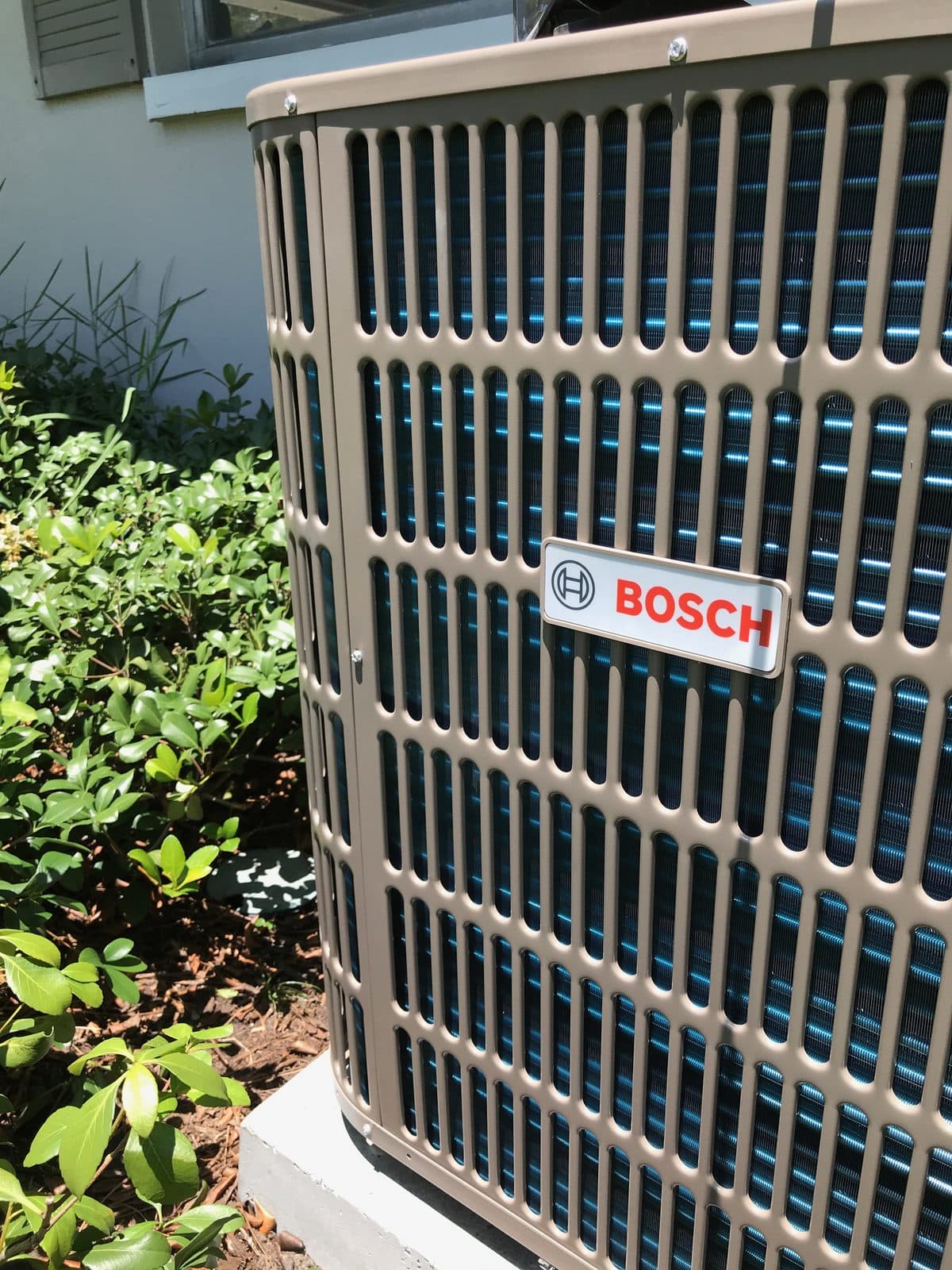
On a manufactured home the matching question is bound up with the equipment type, since a package unit or manufactured-home-listed system is matched as a unit to begin with — one more reason to identify the configuration up front. When we replace a system in Largo, whether site-built or manufactured, we install it as a matched set, confirm the pairing against the manufacturer's data, and verify the metering device, line set and airflow suit the new equipment. The efficiency number on the label should be the efficiency the home actually gets.
The install details a low bid skips
Beyond the equipment itself, a replacement lives or dies on the parts of the job that do not show up in a side-by-side price comparison. The return system is the most commonly ignored: new equipment goes in and the existing return grille and duct stay exactly as they were, even when they were already undersized. If the return cannot deliver the air the new system needs, the system runs below its rating from the first day while the homeowner assumes they bought the capacity on the label.
The condensate system is the second. On a change-out the new air handler goes in and the old drain line simply gets reconnected — often without flushing it, confirming it slopes to drain, verifying a secondary path, or testing the float switch. Six months later there is water where it should not be. On manufactured homes the drain routing is its own puzzle worth solving correctly. Then the electrical: new equipment carries a minimum circuit ampacity and a maximum overcurrent protection rating on its nameplate, and the breaker and disconnect left over from the old system may not match — a real concern on manufactured-home service that is often tighter to begin with.
We treat all of that as part of the replacement rather than as leftovers to reconnect. Correcting the return, the condensate path, and the electrical at the moment of the change-out is the difference between a system that performs for years and one that fights its own installation for its whole life.
Permits and inspection in Pinellas County
A residential equipment change-out generally requires a mechanical permit and an inspection, and in Pinellas County the issuing office depends on where the property sits. The incorporated cities — Largo, Clearwater, St. Petersburg, Dunedin and others — each run their own building department, while unincorporated Pinellas is served by the county. Manufactured homes can carry their own permitting and installation considerations on top of that. A contractor who does not know which office handles a given Largo address, or how a manufactured home is handled, has not pulled many permits here.
The inspection is what catches the items a rushed replacement leaves wrong: disconnect and breaker sizing against the new equipment nameplate, condensate configuration with a proper secondary path or float switch, line-set support, and refrigerant line insulation. Those are the same items that cause failures and water damage later.
And skipping the permit usually surfaces at the worst moment. Florida insurers commonly require a four-point inspection on older homes, and inspectors flag equipment whose installation date matches no permit record. A carrier may then require the permit be pulled retroactively, decline the policy, or exclude the HVAC system, any of which can stall a sale. The homeowner rarely made that choice; the permit got skipped because it was faster and cheaper for the contractor. We pull the permit and see the inspection through.
How a replacement actually goes
Before we quote a replacement in Largo, a technician evaluates the system and identifies the reason it is failing — and on a manufactured home, confirms the equipment type and duct configuration the home actually needs. If a sound system just lost one component and a modest repair keeps it running for years, we say that. If age, an R-22 leak, a degrading coil, and repeated failures have crossed the line where a large repair is not the best use of your money, we say that too, and we show you what we found.
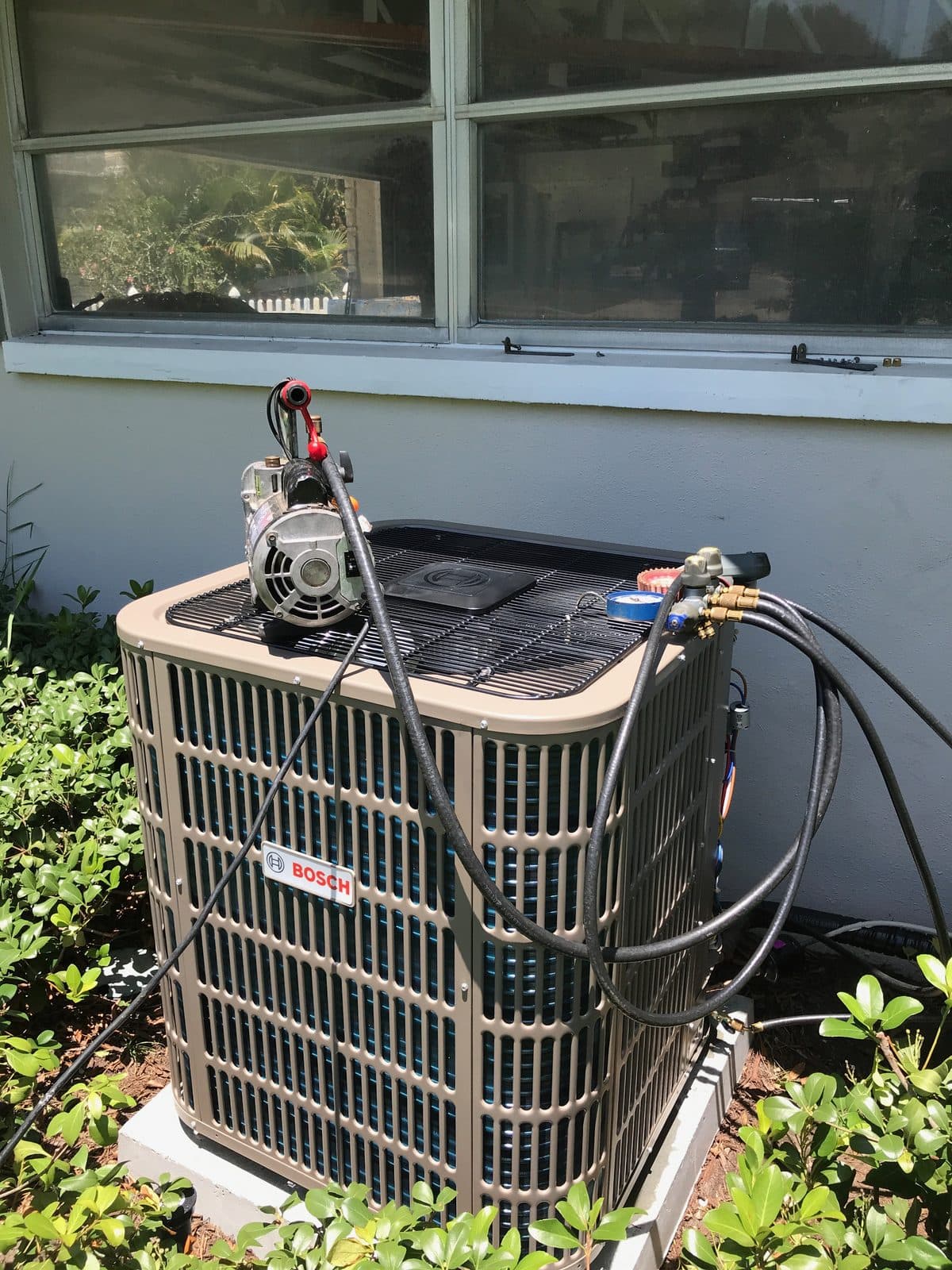
When we do replace, the job fits the home. We size the new system from a load calculation, match the equipment to the home type and the coil to the condenser, correct the return and condensate problems the old install left behind, bring the electrical up to the new nameplate, and pull the permit. Then we commission the system with documented numbers — static pressure, charge set by superheat or subcooling, airflow, temperature split, and a tested float switch — and hand you the record of what we measured, not just a receipt for the equipment. That habit comes from our commercial work, where an undocumented job is an expensive callback.
Frequently asked
Why would you install a smaller system than the one I have?
Because the load calculation says so, and on Largo's smaller homes oversizing is common. Equipment that is too large reaches the thermostat setting in a few minutes, shuts off, and lets humidity climb during every off cycle — which is why a compact house can feel cold and clammy at once. A right-sized system runs longer cycles, removes more moisture, and stays comfortable at a higher thermostat setting. On a smaller footprint there is less thermal mass to hide an oversized unit, so getting the size right matters more, not less. We document the calculation so the result is verifiable.
I live in a manufactured or mobile home. Is the replacement different?
Yes, meaningfully. Manufactured homes are often served by equipment specifically listed for manufactured-home use, frequently a package unit or a system matched to a belly duct system under the floor rather than an attic. The electrical service is often more limited, and the duct connections are a common source of lost capacity and pulled-in humid air. We identify the home type and existing configuration first, confirm what the replacement needs to be listed and sized for, and address the duct and electrical realities as part of the job rather than dropping in a standard split system and hoping it fits.
My AC is old and low on refrigerant every summer. Repair or replace?
A system that needs charge each year has a leak that is getting worse — refrigerant is not consumed. If it is an older R-22 system, that matters more, because R-22 is no longer produced and the reclaimed supply makes repeated top-offs a poor investment. We put instruments on it first: static pressure, superheat, subcooling, amperage. A sound system with a single fixable leak may be worth repairing. An old system with a worsening leak, a degrading coil, and a history of failures is usually past the line, and we will show you the evidence either way rather than deciding on age alone.
Can I keep the old indoor coil to lower the cost?
We do not recommend it. A modern condenser is engineered as a matched pair with a specific indoor coil, and the efficiency rating only holds for that matched set. Bolting a new condenser to an old coil restricts capacity, runs the new compressor outside its design range, and shortens its life — and if the old coil is near the end, you have installed half a system. It also complicates warranty coverage, since the equipment is rated and warranted as a set. Leaving the old coil in makes a quote look cheaper but usually costs more over time.
Do I need a permit to replace my AC in Largo?
Generally yes. A residential change-out requires a mechanical permit and an inspection, and in Pinellas County the issuing office depends on your address — the City of Largo runs its own building department, while unincorporated areas go through the county, and manufactured homes can carry their own considerations. Confirm the requirement for your specific property before work begins. An unpermitted change-out becomes the homeowner's problem at resale or at an insurance four-point inspection, not the installer's, which is why we pull the permit and see the inspection through.
Homeowner guides
- Repair or replace: how to decide
- AC replacement: what to expect
- How to compare replacement quotes
- How long AC units last in Florida
Replacing your AC in Largo? Get it sized and matched to your home first.
References: Pinellas County permitting and contractor licensing (primary) · US EPA — R-22 (HCFC) phaseout and AIM Act HFC transition · US Department of Energy — central air conditioning · ACCA Manual J (residential load calculation) and Manual S (equipment selection)
Also in Largo: Mini-split installation in Largo · Heat pump repair in Largo · AC installation in Largo · AC repair in Largo
Residential AC Replacement nearby: AC replacement in Brandon · AC replacement in Clearwater · AC replacement in Dunedin · AC replacement in St. Petersburg