
Hillsborough County · Florida CAC-1822618
Residential AC Replacement in Brandon, Florida
Blume Mechanical Service replaces residential air conditioning systems across Brandon and Hillsborough County. We size the new equipment from a load calculation, correct what the old install got wrong, pull the permit, and commission with documented measurements. Florida license CAC-1822618.
Brandon is a large east Hillsborough suburb built out heavily through the 1990s and 2000s, so much of its housing is newer subdivision stock served by builder-grade equipment installed a certain vintage ago. That equipment is now aging into its first replacement, often across a whole neighborhood at once. Inland, away from salt air, the driver here is not corrosion but worn-out builder-grade systems, first-generation ductwork, and a long, hot cooling season — which is what makes replacement decisions in Brandon their own kind of problem.
Builder-grade systems aging into replacement together
The defining fact about air conditioning in Brandon is timing. Much of the area was built out through the 1990s and 2000s, and subdivisions went up with builder-grade HVAC installed all at once. Builder-grade equipment is chosen to meet code and a construction budget, not to be the longest-lived option, and a whole street's worth of it tends to reach the end of its service life within a few years of itself. If your neighbors are replacing their systems, there is a reason yours is on the same clock.
That cohort effect changes the conversation. On a Brandon home from this era we often find equipment that has aged normally but was never quite right to begin with — an oversized selection made by rule of thumb, a return system sized to the minimum, or a condensate setup that met code and nothing more. A replacement is the one chance to correct those original shortcuts rather than reproduce them.
Much of this equipment uses R-410A rather than the older R-22, since it was installed after R-22 was already being phased out. New equipment is now moving under the federal AIM Act from R-410A toward lower-GWP refrigerants such as R-454B, but an R-410A system remains legal to operate and service, and refrigerant remains available for it. So we do not treat 'it uses R-410A' as any reason to replace. We put instruments on the system — static pressure, superheat and subcooling, amperage — and let the mechanical evidence decide.
Inland heat load and sizing the replacement
Brandon sits inland in eastern Hillsborough, away from the moderating effect of the bay, and it carries a long, hot cooling season with equipment that runs hard for many hours a day. The instinct on a heavy heat load is to reach for a bigger system, and that instinct is usually wrong.
In Florida the existing equipment is more often oversized than undersized, because the builder-grade original was picked by rule of thumb. Oversizing produces the exact complaint homeowners have: the system reaches setpoint in a few minutes, shuts off, and lets humidity climb during every off cycle, so the house feels cold and clammy at once. A correctly sized system runs longer cycles, removes more moisture per cycle, and stays comfortable at a higher, cheaper thermostat setting — which matters over a cooling season this long.
We size the replacement from an ACCA Manual J load calculation that accounts for the actual house — orientation, shading, windows, insulation, and infiltration — rather than by matching the old nameplate or by square footage. In a Brandon subdivision, two homes with the same floor plan can have different loads depending on exposure and how much tree cover has grown in since construction. Sometimes the load calculation points to equipment one size smaller than what is there, which deserves an honest explanation: smaller is not less, it is a system that runs long enough to dehumidify. We document the calculation so the first hot month confirms the sizing rather than second-guessing it.
Correcting first-generation ductwork and returns
The most valuable thing a Brandon replacement can do is fix what the original builder-grade installation left undersized. The return system is the item most commonly carried over untouched: new equipment goes in and the existing return grille and duct stay exactly as they were, even when they were built to the minimum for the old system. Equipment needs a certain volume of air moving through it to deliver its rated capacity, and a marginal return holds the new system below its rating from the first day — while the homeowner assumes they bought the capacity on the label.
First-generation subdivision ductwork has usually spent two decades or more in a hot attic, and it shows: flex duct that has sagged or kinked, connections that have loosened, and insulation that has degraded. Duct that leaks in an attic pulls in hot, humid, unconditioned air and adds load before the equipment ever sees it. One clear tell is a rise in temperature between the return grille in the room and the air arriving at the coil — that gap means the ducts are adding load. On a replacement we evaluate the ductwork and returns rather than reconnecting to whatever is there.
The condensate system is the other habitual carryover. On a change-out the old drain line gets reconnected without being flushed, confirmed to slope, fitted with a proper secondary path, or tested at the float switch — and on an attic air handler, common in Brandon, a condensate overflow damages the ceiling below before anyone knows there is a problem. We treat the return, the ducts, and the condensate path as part of the replacement, not as leftovers.
Repair or replace on a Brandon builder-grade system
There is no single number that decides repair versus replace. It is a set of factors that either stack up or do not. Stacking toward replacement: an aging builder-grade system, a failed compressor — the compressor itself, not a capacitor or contactor — a coil leak that means replacing the coil, several failures in one season, or comfort complaints that suggest the system was never sized or ducted right in the first place, because repairing a system that was wrong from the start just extends the problem. Stacking toward keeping it: a single component failure with no history, a sound coil and cabinet, and no comfort complaints.
Here is the part we say out loud. A younger system that holds its charge, has a clean coil, and just lost a capacitor or a contactor does not need to be replaced because it uses R-410A. The refrigerant sealed inside it is fine, and the phase-down affects new equipment purchases, not a sealed system running correctly. When we are asked for a second opinion and the first company condemned a Brandon system on age or refrigerant type alone, with no mechanical reason behind it, we will tell you to keep it.
The tell for an unnecessary replacement quote is whether anyone measured anything. If no one checked static pressure, no one measured superheat and subcooling, and no one opened the electrical panel, the system was looked at, not evaluated. And the most common oversell we see is a mid-life system with a single compressor failure sitting on a good coil in a sound install, where replacing the compressor is often the right answer. The compressor is not the whole system.
Matched systems and controls
A modern air conditioner is engineered as a matched pair — an outdoor condensing unit and an indoor evaporator coil designed to work together — and the efficiency rating is only valid for that specific combination. On a Brandon replacement, leaving the existing indoor coil in place is a common way to make a quote look cheaper, and it usually costs more over the life of the system.
An old coil bolted to a new condenser restricts capacity, runs the new compressor outside its design envelope, and shortens its life. If that coil is itself near the end, you have installed half a new system. It also undercuts warranty coverage, because manufacturers rate and warrant the equipment as a matched set. When we replace a system we install it as a matched pair, confirm the pairing against the manufacturer's data, and verify the metering device, line set, and airflow suit the new equipment.
Controls are the quiet item on newer-home replacements. A modern system installed on old thermostat wiring that does not support its staging, its dehumidification mode, and its fault reporting will run — but those functions will not be connected, and the homeowner will have paid for capability that was never wired. The electrical needs the same attention: new equipment carries a minimum circuit ampacity and a maximum overcurrent protection rating on its nameplate, and the breaker and disconnect from the builder-grade original may not match. We bring the controls and electrical up to the new equipment rather than reconnecting to whatever is on the wall.
Permits in Hillsborough County are not one process
Brandon is an unincorporated community in Hillsborough County, so its mechanical permits go through the county rather than a city building department — but Hillsborough is not a single jurisdiction. At least four permitting authorities operate inside the county: unincorporated Hillsborough, which covers Brandon, plus the cities of Tampa, Plant City and Temple Terrace, each with its own path and fee schedule. A contractor who does not know that Brandon work is filed as unincorporated county work has not pulled many permits here.
Mechanical permits for unincorporated county work are filed through the HillsGovHub online portal, and a contractor performing permitted work must hold either a Florida DBPR license or a Hillsborough County-issued license — the county maintains its own local licensing tier on top of state licensure, which is not universal across Florida counties.
The inspection is what catches the items a rushed replacement leaves wrong: disconnect and breaker sizing against the new equipment nameplate, condensate configuration with a proper secondary path or float switch, line-set support, and refrigerant line insulation in the attic. Those are the same items that cause failures and water damage. And skipping the permit surfaces at the worst moment — Florida insurers commonly require a four-point inspection on older homes, and as Brandon's 1990s and 2000s housing ages into that category, inspectors flag equipment whose installation date matches no permit record. A carrier may then require the permit be pulled retroactively, decline the policy, or exclude the HVAC system. We pull the permit and see the inspection through.
How a replacement actually goes
Before we quote a replacement in Brandon, a technician evaluates the system and identifies the reason it is failing, with instruments on it rather than a glance at its age. If a sound system just lost one component and a modest repair keeps it running for years, we say that — a builder-grade system is not automatically due for replacement just because the neighbors are replacing theirs. If age, a failed compressor, a coil leak, and repeated failures have crossed the line where a large repair is not the best use of your money, we say that too, and we show you what we found.
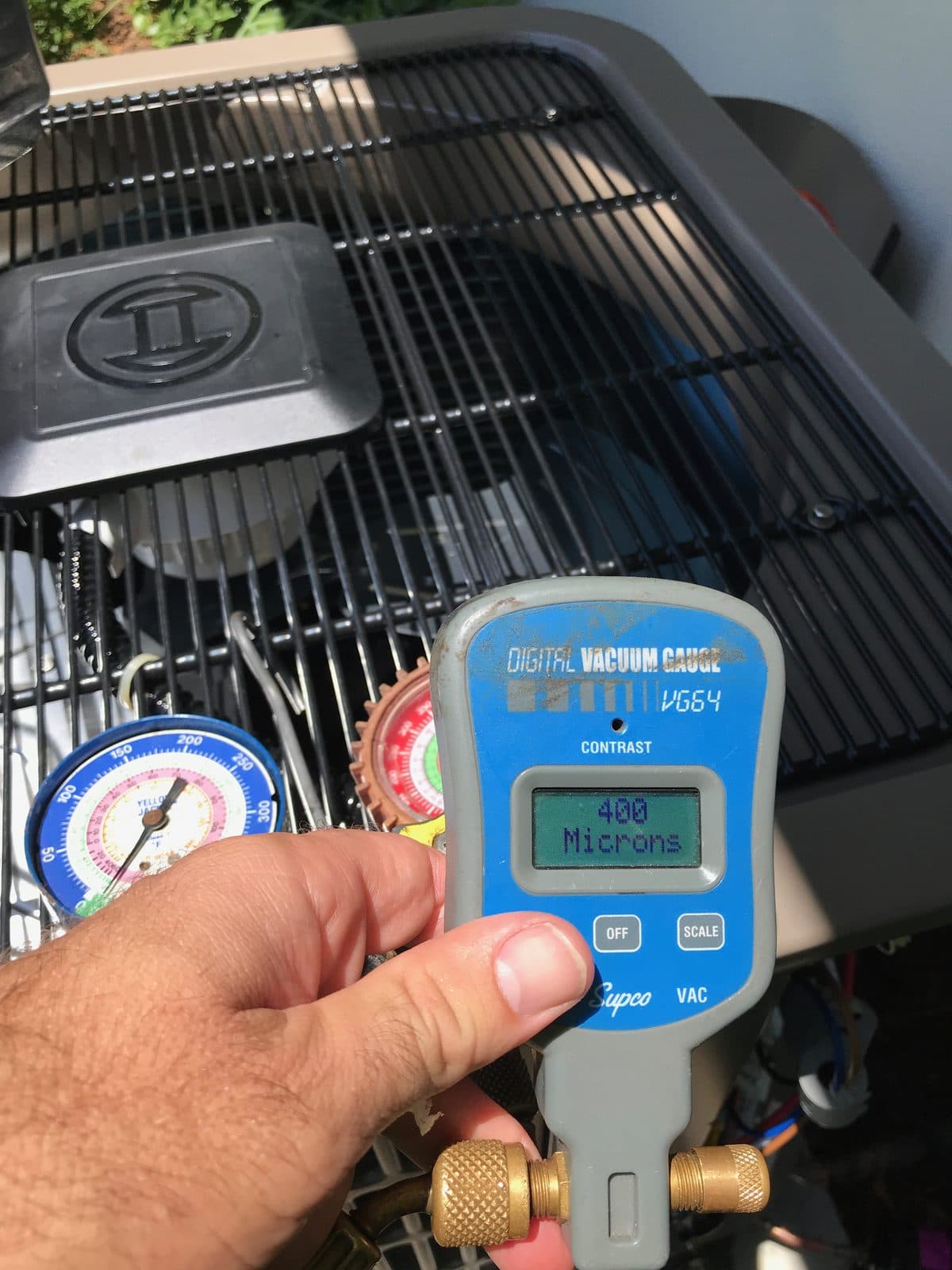
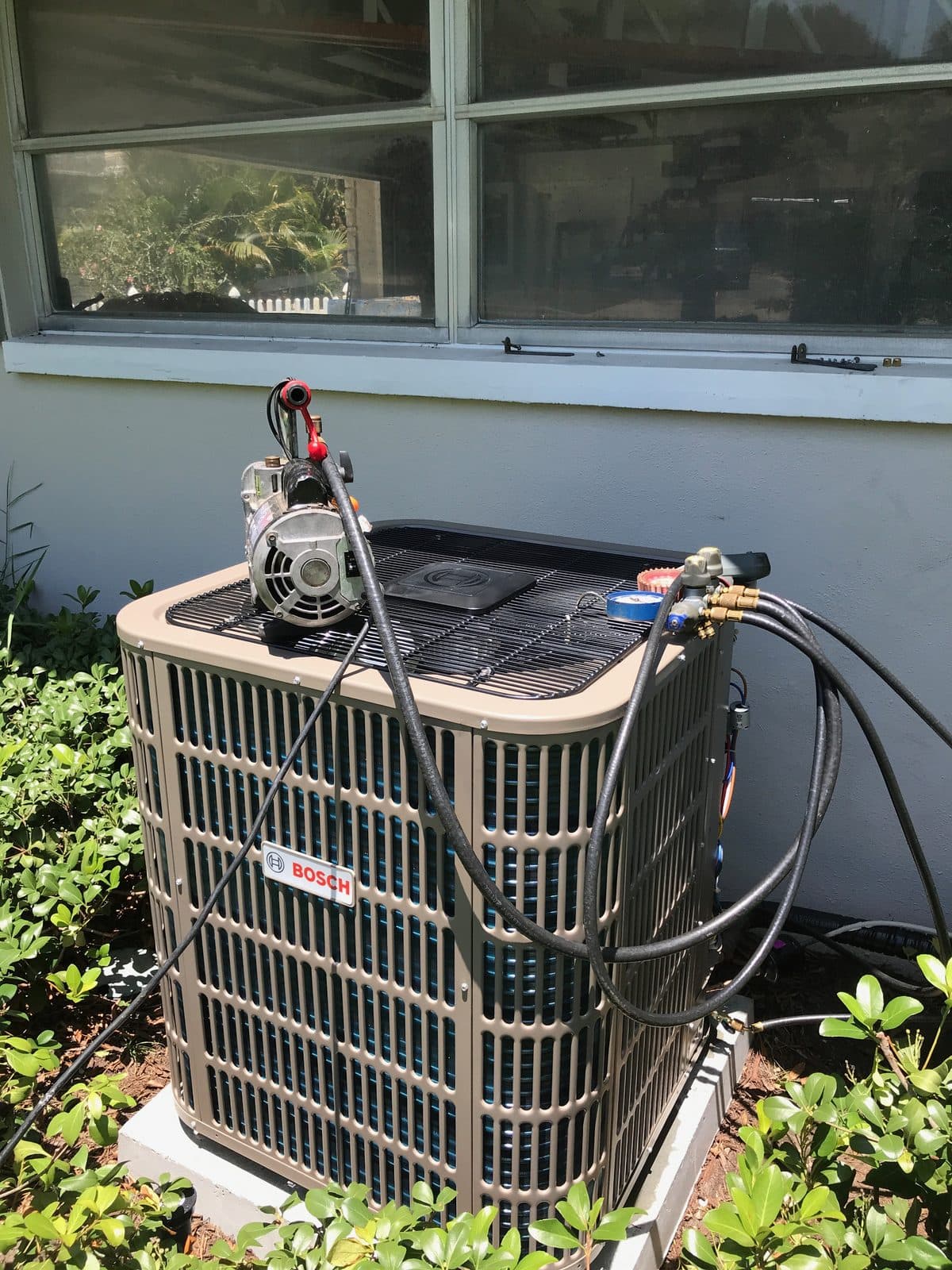
When we replace, the job corrects what the original builder-grade installation left behind. We size the new system from a load calculation, match the coil to the condenser, evaluate and fix the first-generation returns and ductwork, correct the condensate path, bring the controls and electrical up to the new nameplate, and pull the county permit. Then we commission the system with documented numbers — static pressure, charge set by superheat or subcooling, airflow, temperature split, and a tested float switch — and hand you the record of what we measured, not just a receipt for the equipment. That documentation discipline comes from our commercial work, where an undocumented job is an expensive callback.
Frequently asked
My whole neighborhood is replacing their AC. Is mine due too?
Possibly, and there is a reason for it. Much of Brandon was built out through the 1990s and 2000s with builder-grade equipment installed all at once, so a whole street's worth of systems tends to reach end of life within a few years of each other. But 'the neighbors are replacing theirs' is not a diagnosis. A sound system that holds its charge and just lost a single component can be worth repairing. We put instruments on yours — static pressure, superheat, subcooling, amperage — before recommending replacement, and we will show you the evidence for whichever way it points.
It is so hot here — should I just buy a bigger system?
Usually not. Inland Brandon has a long, hot cooling season, but in Florida the existing equipment is more often oversized than undersized, and a bigger system makes the common complaint worse: it reaches setpoint quickly, shuts off, and lets humidity climb during every off cycle, so the house feels cold and clammy. The heat load is real, but the fix is a system sized correctly to your specific house with a Manual J load calculation, not simply a larger one. A right-sized system runs longer cycles, dehumidifies properly, and stays comfortable at a higher, cheaper thermostat setting.
My system uses R-410A. Do I need to replace it soon?
No. R-410A systems remain legal to operate and service, and refrigerant remains available for them. New equipment is transitioning under the federal AIM Act to lower-GWP refrigerants such as R-454B, but that affects new purchases, not a sealed system running correctly. A younger Brandon system that holds its charge and just lost a capacitor or contactor does not need replacing because of its refrigerant. It is worth factoring into a repair-or-replace decision on an aging system, but it is not a reason to replace a system that is mechanically sound.
Should the replacement include work on my ducts?
It is worth checking, and often yes. Brandon's first-generation subdivision ductwork has usually spent two decades or more in a hot attic, where flex duct sags or kinks, connections loosen, and insulation degrades. Leaky attic ducts pull in hot, humid air and add load before the equipment sees it — a system runs below its rating no matter how good the new equipment is. Builder-grade returns were also frequently sized to the minimum. We evaluate the returns and ductwork at replacement rather than reconnecting to whatever is there, because a new system on undersized, leaky ducts never delivers what it should.
Do I need a permit to replace my AC in Brandon?
Yes. Brandon is unincorporated Hillsborough County, so a residential change-out requires a mechanical permit filed through the county's HillsGovHub portal, followed by an inspection. The contractor must hold a Florida DBPR or Hillsborough County license. Confirm the requirement before work begins. An unpermitted change-out becomes your problem at resale or at an insurance four-point inspection — and as Brandon's 1990s and 2000s homes age into four-point territory, that matters more each year — not the installer's. We pull the permit and see the inspection through.
Homeowner guides
- Repair or replace: how to decide
- AC replacement: what to expect
- How to compare replacement quotes
- How long AC units last in Florida
Replacing an aging builder-grade AC in Brandon? Get a licensed evaluation first.
References: Hillsborough County permitting and contractor licensing (primary) · US EPA — AIM Act HFC phasedown and refrigerant transition · US Department of Energy — central air conditioning · ACCA Manual J (residential load calculation) and Manual S (equipment selection)
Also in Brandon: Heat pump repair in Brandon
Residential AC Replacement nearby: AC replacement in Clearwater · AC replacement in Dunedin · AC replacement in Largo · AC replacement in St. Petersburg