
Pinellas County · Florida CAC-1822618
AC Repair in Largo, FL
AC repair in Largo, FL starts with working out what kind of failure you have, and a good deal of that can be sorted out before anyone arrives. This page is for Largo homeowners whose air conditioning has stopped cooling. It covers the checks that are safe to do yourself, what a real diagnosis measures, the failures that tend to follow Largo's weather and housing, and the signals that separate a repair from a replacement. Blume Mechanical Service is a licensed Florida contractor (license CAC-1822618) with its office in Belleair Bluffs, close to Largo, and Pinellas County is part of our core service area.
Safe first checks when your AC stops cooling
These checks need no tools and no panels removed. If any step feels unsafe, stop there and call a licensed technician.
- Check the thermostat. Confirm it is set to Cool, the set temperature is below the room temperature, and the fan is on Auto. A fan left on "On" keeps the blower running with the cooling off, which can feel like an AC that runs but does not cool.
- Check the breakers. Find the breakers for the indoor and outdoor units. If one has tripped, reset it once. If it trips again, leave it off, because a breaker that keeps tripping is reporting a real electrical problem.
- Check the filter and vents. A clogged filter restricts airflow, and weak airflow is a common reason an indoor coil freezes. Replace a dirty filter, and make sure furniture or closed registers are not blocking the air.
- Look at the outdoor unit. Switch the system off first, then look for leaves, grass clippings or debris against the cabinet and clear what comes away by hand. Do not remove panels or blast the coil with a pressure washer.
- Look for ice. Ice on the refrigerant lines or indoor coil means the cooling should be switched off. Set the fan to On to help it thaw and do not chip at the ice. Ice is a symptom, and it returns until the cause is found.
- Look for water. Cooling pulls moisture out of humid air, and the condensate drain carries it outside. Drains can clog with algae and debris, and many systems have a float switch that shuts the system down when water backs up. A system that quit with water nearby may be protecting your ceiling and floor, so do not bypass the switch.
Leave the electrical panels on the outdoor unit closed, because a capacitor can hold a charge even with the power off. Do not add refrigerant, and do not keep restarting a unit that hums without starting or keeps tripping the breaker. If you smell burning or find water near electrical components, turn the system off at the breaker and call.
For a longer walk-through, see our AC troubleshooting guide.
What a diagnosis measures
A diagnosis is a series of measurements that narrows the problem to one cause. Replacing parts until the house cools again is wasteful and often wrong, because warm air from the vents can come from a weak capacitor, a low refrigerant charge, a frozen coil or a blower that is not moving enough air.
Electrical readings
Line voltage at the outdoor unit and control voltage from the thermostat show whether the system is being told to run and has the power to do it. The capacitor, which helps start and run the compressor and fan motors, is tested against its rating. The contactor, the switch that sends power to the compressor and fan, is inspected for wear and pitting. Motor current is compared with the nameplate, because drawing too much and drawing too little point to different failures.
Refrigerant readings
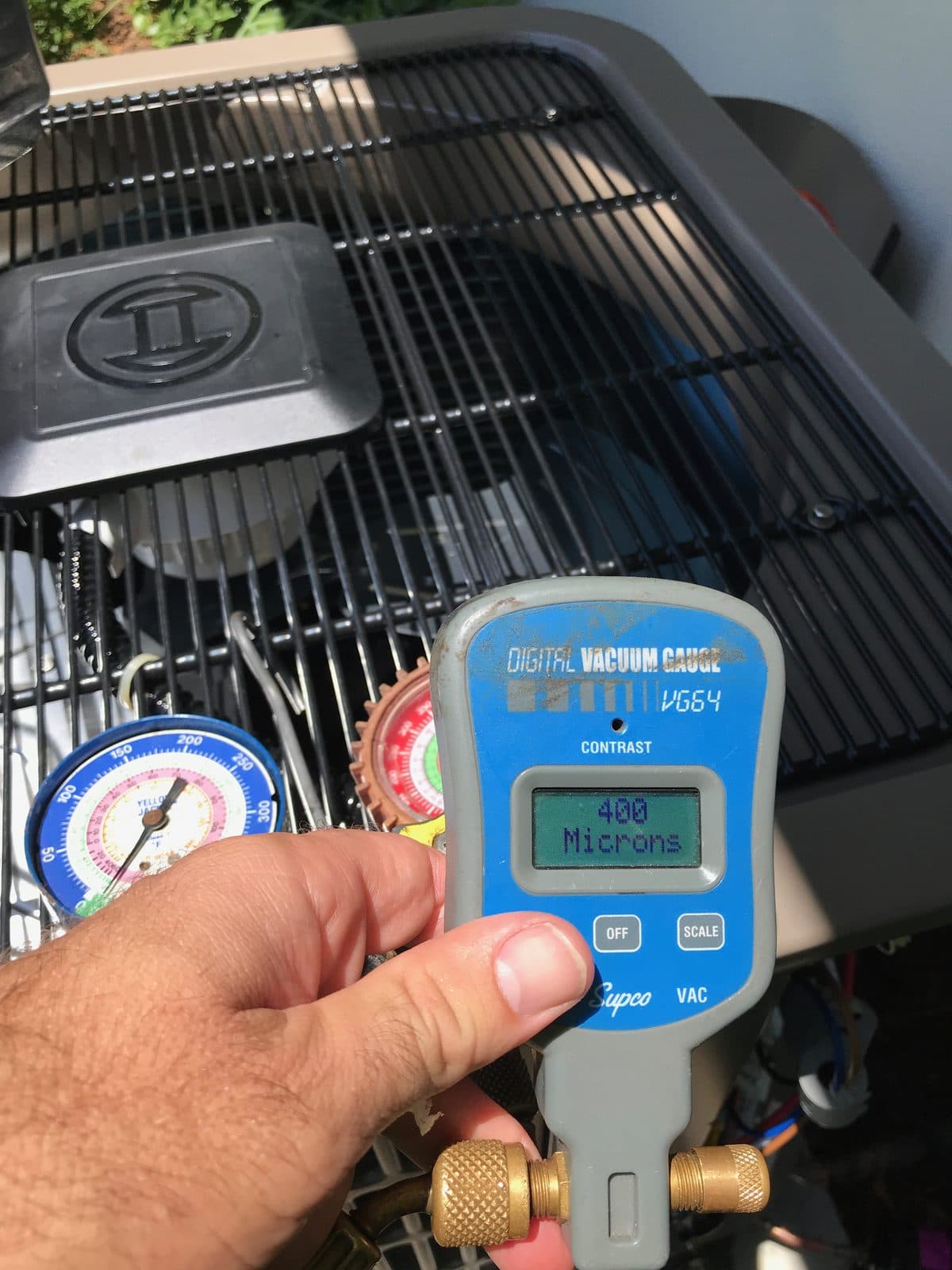
Pressures and line temperatures, read at the outdoor unit and interpreted alongside indoor and outdoor conditions, show whether the refrigerant charge is correct. A system that is low on charge has lost refrigerant somewhere, because an air conditioner does not use it up, so the job is finding the leak rather than topping off the system. Blume has EPA Section 608 certified technicians, the federal refrigerant-handling credential.
Airflow, drainage and controls
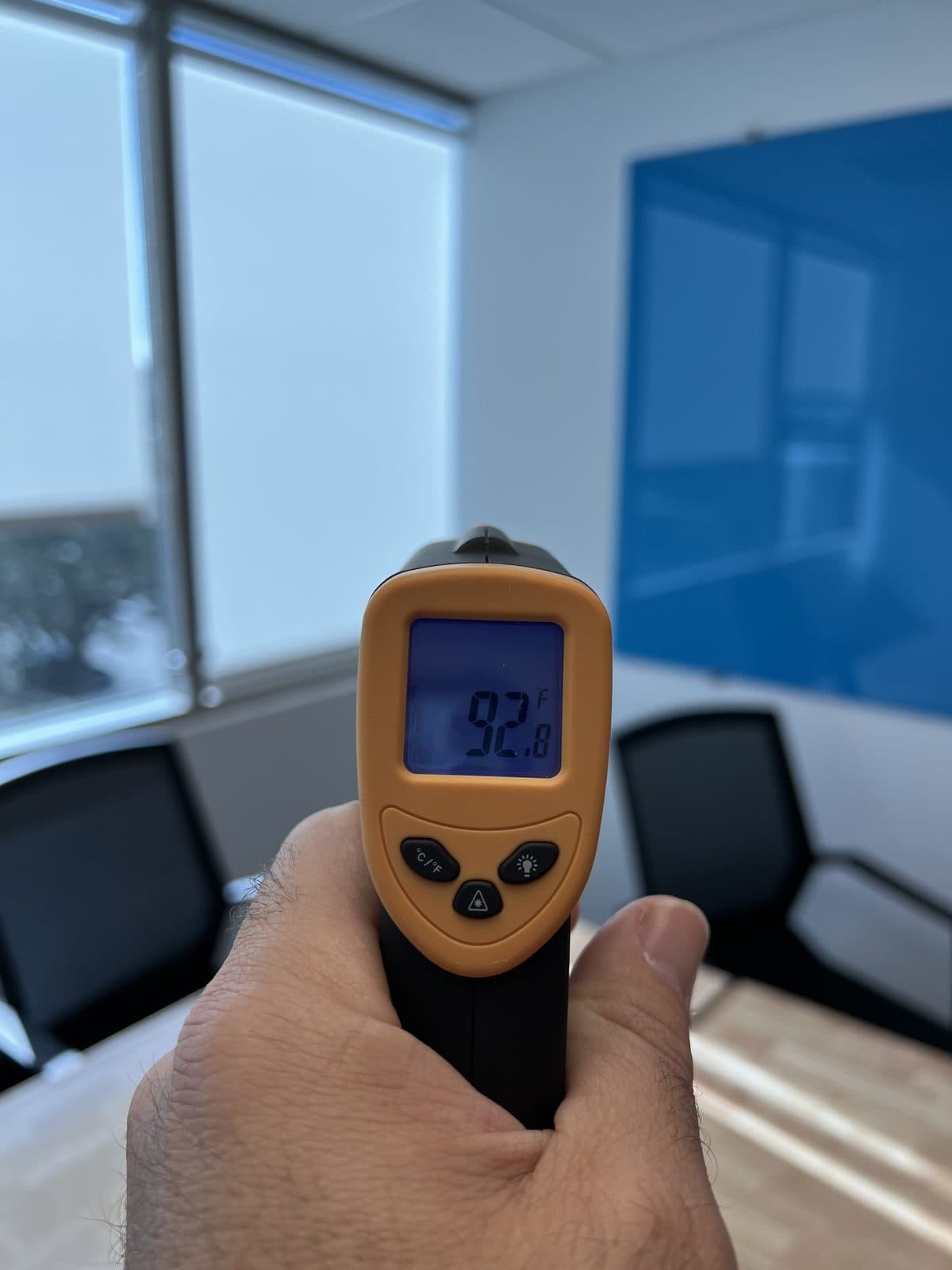
The temperature difference between the air returning to the indoor coil and the air leaving it shows whether the system is moving heat out of the house. Static pressure in the duct system shows whether the blower is fighting too much resistance from a dirty filter, a clogged coil or restricted ductwork. The drain pan, condensate drain, float switch, thermostat, control board and safety switches are checked too, because a safety device that has shut the system down is a symptom, not the cause.
What a good diagnosis ends with
A good diagnosis ends with a named cause, the readings that point to it, and the repair that addresses it. If the measurements show that replacement is the sounder choice, you should hear that too, and why. Blume lays out repair and replacement options side by side and does not sell equipment a building does not need.
Largo failure patterns
These are patterns that follow from Largo's climate and housing, not statistics from our service calls. Largo sits at the center of Pinellas County, and its homes are a mix of mid-century concrete-block ranch houses, manufactured-home and mobile-home communities, and condo neighborhoods, including some built for residents 55 and over.
Humidity and a long cooling season
Pinellas County has heavy humidity and a cooling season that dominates the calendar. Long run hours wear the parts that start and run the system: capacitors, contactors and fan motors. Humid air keeps the condensate drain working all season, and a drain in constant use can clog, while dirt on the indoor coil restricts airflow and can lead to freezing. Largo is not beachfront and is more inland and more sheltered from direct salt exposure than the barrier-island cities to its west, so humidity, run time and storms are the stresses to think about first.
Storms and power events
Summer thunderstorms bring lightning, power flickers and outages. Surges and sudden power loss stress capacitors, control boards and compressors, and a part that was already weak can fail right after a storm. If the system will not restart once power returns, run through the thermostat and breaker checks above before you call.
Mid-century block homes
A mid-century ranch house may have been through equipment changes, duct modifications, additions and remodeling. In an older house, the air side is as likely to cause a cooling complaint as the outdoor unit: leaky or poorly sealed ducts, restricted return air paths, and rooms added since the system was installed all show up as an AC that cannot keep up.
Manufactured homes and condos
Largo has a substantial number of manufactured-home and mobile-home communities. The equipment and ductwork in a manufactured home are not the same as in a site-built house, and in many the duct system runs beneath the floor rather than in an attic, so airflow complaints can trace back to the duct system as much as the outdoor unit. A repair or replacement has to suit the home type.
Many condo layouts put the air handler in a closet or tight utility space, where filters and drain lines are easy to neglect.
Repair or replace: the signals
Not every failure is a reason to replace a system. Measurements are what separate the two cases.
A repair usually makes sense when:
- Measurements point to one failed component, such as a capacitor, contactor, fan motor, float switch or clogged drain.
- The rest of the system tests healthy.
- The system kept up with the house before the failure.
Replacement deserves a serious look when:
- The same system keeps failing in different places, one repair after another.
- The compressor has failed, or the indoor coil keeps leaking refrigerant. These are major repairs, and they change the comparison.
- The system runs constantly and still cannot hold the set temperature although every component measures healthy. The unit may be the wrong size for the house as it is now, or the ductwork may be limiting it.
Replacement is not a matter of swapping in a unit of the same size. Blume sizes equipment with an ACCA Manual J load calculation and Manual S selection, not rule-of-thumb swaps, and commissions the system with measured static pressure, airflow and refrigerant charge, all documented. If replacement is the right answer, financing is available through Synchrony Bank. For a fuller framework, see how to decide between AC repair and replacement.
Blume Mechanical Service in Largo
Blume Mechanical Service, LLC is a Class A licensed Florida mechanical contractor (license CAC-1822618) and is fully insured. We work in residential and commercial HVAC; this page covers residential AC repair. We are brand-agnostic, installing and servicing all major manufacturers' equipment as a licensed contractor.
Our office is at 2840 West Bay Drive #114, Belleair Bluffs, FL 33770, and our core service area is Pinellas, Hillsborough and Pasco counties.
What to have ready when you call
- What the thermostat is set to and what it reads.
- Whether the outdoor unit and the indoor blower are running.
- Any ice, water, burning smell or unusual noise.
- Whether a breaker tripped, and whether a storm or power flicker came first.
- The make and model on the outdoor unit's data plate if you can read it, and whether your home is a house, a manufactured home or a condo.
Frequently asked
Why is my AC running but not cooling?
Start with the safe checks: thermostat setting, filter, blocked vents and ice. If the indoor blower runs but the outdoor fan or compressor does not, the cause is often electrical, such as a failed capacitor or contactor or a tripped breaker. If both run but the air is weak or only slightly cool, low refrigerant charge, restricted airflow or a failing compressor are possible. These look alike from the living room and take measurements to separate.
Can I keep running an AC that is icing up or tripping the breaker?
No. Switch the cooling off. With ice, set the fan to On so the coil can thaw, because running a frozen system can damage it and melting ice can overflow onto floors. With a breaker that keeps tripping, leave it off. Either way the system needs a diagnosis, not another restart.
Can I just add refrigerant if my AC is low?
An air conditioner is a sealed system, so a low charge usually means refrigerant has leaked out. Adding more without finding the leak only delays the same failure. Charge is set by measurement, and a low reading means the leak gets found first.
How soon can Blume get to a Largo home that is not cooling?
Blume offers 24/7 emergency HVAC service, with same-day response available based on location and technician availability. That is availability, not a promised arrival time. Paid priority scheduling is also available.
Homeowner guides
- AC not turning on: what to check before you call
- Why your AC is not blowing cold
- AC troubleshooting guide
- Air conditioner leaking water
For AC repair in Largo, FL, call Blume Mechanical Service at 727-330-9131.
References:
Also in Largo: AC replacement in Largo · Mini-split installation in Largo · Heat pump repair in Largo · AC installation in Largo
Residential AC Repair nearby: AC repair in Tampa · AC repair in St. Petersburg · AC repair in Clearwater · AC repair in New Port Richey