
Pinellas County · Florida CAC-1822618
Residential Heat Pump Repair in Seminole, Florida
Blume Mechanical Service repairs residential heat pumps across Seminole and central-west Pinellas County. We tell heating faults from cooling faults before quoting, account for the salt exposure this close to the Gulf beaches, and pull the permit the jurisdiction requires. Florida license CAC-1822618.
Seminole sits in central-west Pinellas, established single-family neighborhoods a short drive from the Gulf beaches at Madeira and Redington. That proximity is the local fact for a heat pump: the outdoor unit lives close enough to open saltwater that coastal salt exposure is real, milder than beachfront but enough to shorten an unprotected coil's life. Add long single-family tenure and equipment that has run many seasons, and the failures here cluster around aging coils, weak electrical parts, and the reversing side of a machine that runs both directions.
A heat pump fails in more ways than an air conditioner
A heat pump is the same refrigeration machine as an air conditioner with one extra part — a reversing valve that lets it run in both directions. In summer it moves heat out of the house like an AC; in the rare Pinellas cold snap it reverses and pulls heat from the outdoor air to warm the house without burning fuel. Because it does two jobs, it has more ways to fail, and the failures are not interchangeable.
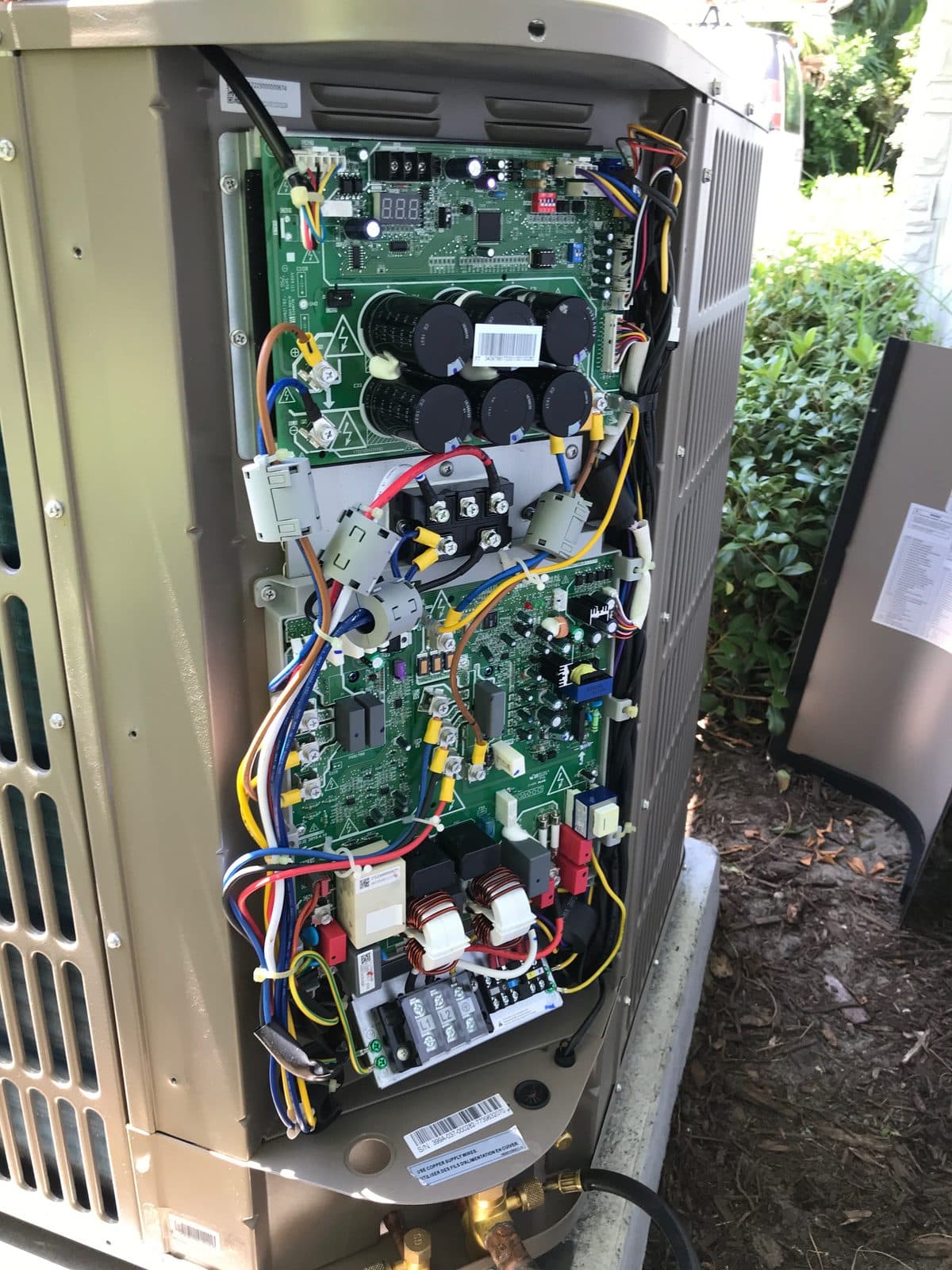
When a Seminole homeowner says the system 'is not heating,' the cause is usually a stuck reversing valve, a low refrigerant charge from a leak that weakens heating first, a failed defrost control that ices the outdoor coil, or dead auxiliary heat strips. When they say it 'is not cooling,' it is more often a weak capacitor, a pitted contactor, a low charge, or restricted airflow. Same machine, different circuits, different repairs.
We tell these apart before touching a part. The reversing valve is one of the most expensive components in the system and the last thing anyone should swap on a guess. We measure the refrigerant charge, verify the valve actually responds when commanded, and check the defrost and auxiliary circuits, then repair what the evidence points to rather than what the symptom superficially suggests. On an older Seminole system that has run many seasons, more than one of these can be marginal at once, and sorting them by measurement is what keeps a repair from becoming a string of guesses.
Close to the beaches: what salt exposure does here
Seminole is not beachfront, but it is close enough to the Gulf at Madeira Beach and the Redington shore that salt-laden air reaches the outdoor units, especially on the western side of town. Salt is corrosive to the aluminum fins and copper of an outdoor coil, and a Seminole condenser generally ages faster than the same unit would well inland — milder than a unit sitting on the sand, but a real factor over the life of the equipment.
The deterioration is gradual rather than sudden. Early on you see oxidation starting on the aluminum fins. Over years the fin damage becomes measurable, and eventually the effective coil face area is reduced, head pressure runs chronically high, and the compressor runs hotter than it was built to. A coil does not fail all at once the way a capacitor does; it degrades quietly and drags the compressor down with it, so a compressor failure on a coastal Seminole unit is sometimes the downstream result of a coil that has been choking the system for a couple of years.
On a repair here we look at the coil honestly. Visible perforation or an active leak at the coil ends it, because corroded aluminum will not hold a repair. Substantial fin loss confirmed by head pressure that stays high with a clean charge and good airflow ends it too. Where the coil is intact and only the cabinet looks weathered, the unit still has life. And we talk homeowners through freshwater rinsing of the outdoor coil, one of the few maintenance steps that measurably slows coastal corrosion and is genuinely worth doing this close to the water.
The blows-cold-when-set-to-heat call
One of the more common Seminole calls in a cold snap is a heat pump that blows cool air when it is set to heat. On a heat pump that single symptom has several possible causes, and they are different repairs, so it is exactly the kind of complaint that gets misdiagnosed by anyone reaching for a part before taking a reading.
The reversing valve may be stuck in the cooling position, so the machine is literally running as an air conditioner while the thermostat calls for heat. The refrigerant charge may be low from a leak — heating capacity weakens before cooling does, so a slow leak often shows up first as poor heat. The defrost control may have failed and let the outdoor coil ice over, which strangles the system's ability to pull heat from the outside air. Or the auxiliary heat strips that are supposed to back up the heat pump on a genuinely cold morning may be dead, so the system falls back to a heat pump that cannot keep up alone.
We measure the charge, command and verify the reversing valve, and check the defrost and auxiliary circuits before replacing anything. Because Pinellas heating demand is brief, these faults can hide for most of the year and only surface on the handful of cold mornings that matter — which is why we test the heating side deliberately rather than assuming a system that cools fine is entirely healthy.
Aging systems in long-tenure Seminole homes
Seminole's established single-family neighborhoods have a lot of long-tenure ownership, and long tenure means equipment that has run many seasons under one family rather than being swapped at every sale. That is not a bad thing — a well-maintained system that is simply old can still be sound — but it does mean the repair-or-replace conversation comes up more often here, and it deserves an honest framing.
We do not condemn a system on age alone. A sound Seminole heat pump that just lost a capacitor or a contactor and holds its charge is worth keeping, and we will tell you so plainly. What changes the picture is a stack of factors: a compressor or coil failure rather than a cheap component, a coil degraded by years of salt exposure, several failures in the same season, or a charge the system will not hold because of a leak that keeps getting worse.
There is a reliable tell for an unnecessary replacement quote: whether anyone measured anything. If no one checked static pressure, no one read superheat and subcooling, and no one opened the air handler, the system was looked at, not evaluated. When we are asked for a second opinion and the first company condemned an older Seminole system on age alone, with no mechanical reason behind it, we will tell you to keep it. Age is a factor in the decision; it is not a diagnosis by itself.
Humidity, short cycling, and moisture the thermostat can't see
A heat pump cooling a Seminole home does two jobs at once: it lowers temperature and it removes moisture. In this climate the moisture half is substantial, and it is the half a house notices when it goes missing — the thermostat reads 74 and the rooms still feel damp. A heat pump only dehumidifies while it runs, so a system that short-cycles, satisfying the thermostat in a few minutes and shutting off, leaves the house cool and clammy.
When a Seminole homeowner reports that the system cools but the house feels wet, we prove the machine before blaming its size. First the refrigeration side: correct charge, and whether the indoor coil actually gets cold enough to pull water out of the air. Then airflow in both directions, because too much air across the coil dries the house poorly while too little drives the coil toward freezing. Then the ductwork — a rise in temperature or humidity between the return grille in the room and the air reaching the coil is a clear tell that leaky attic ducts are adding humid load before the equipment ever sees it.
Only after refrigeration, airflow, the coil, and the ducts are all clean, and the system still short-cycles, does oversizing become the credible answer — and that is a selection decision confirmed by a Manual J load calculation, not a guess from floor area. A dirty coil, a weak blower, or a low charge all reduce moisture removal, and those are repairs we can make rather than reasons to replace the system.
Refrigerant rules, the R-410A phase-down, and honest repair
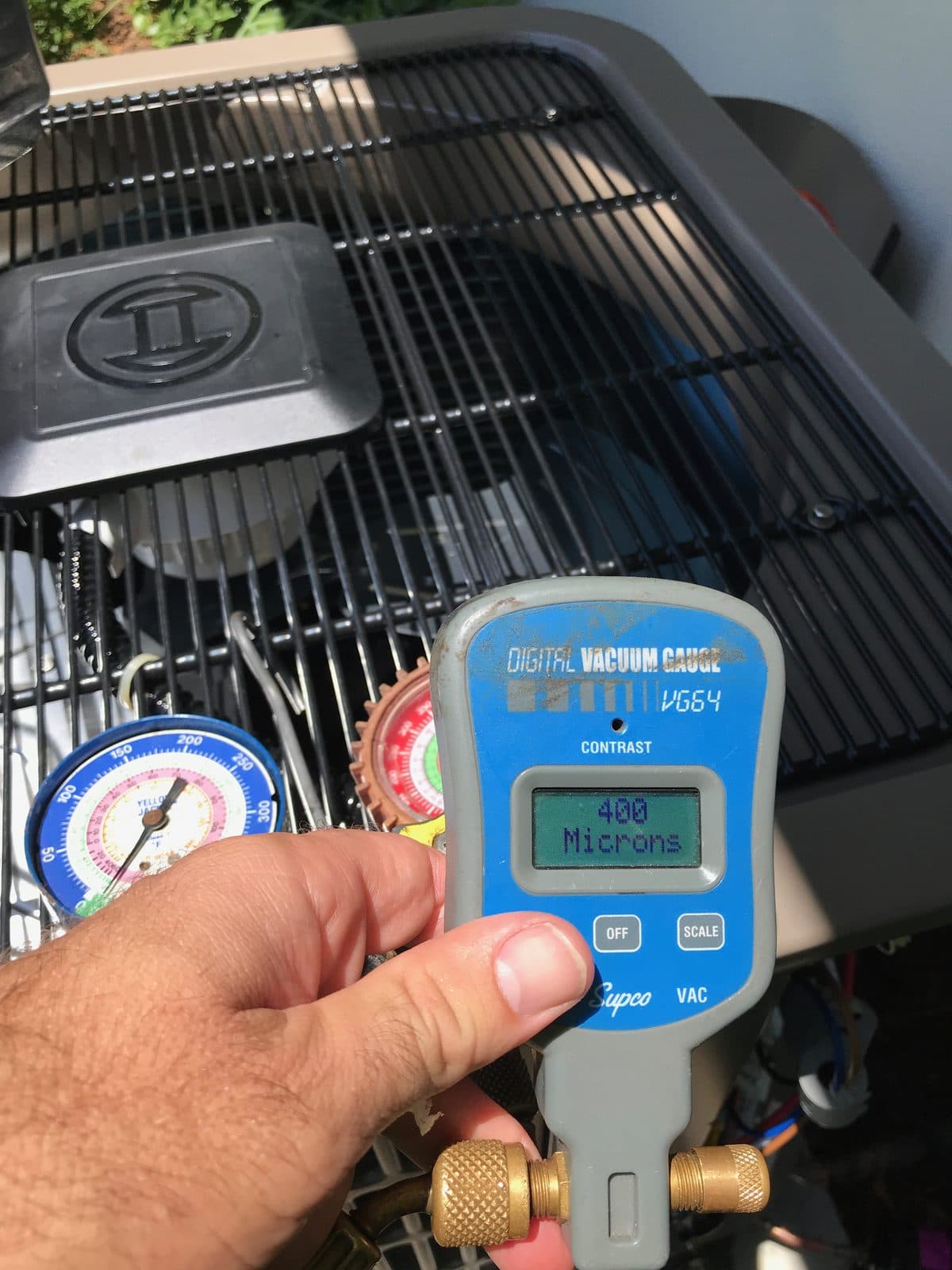
A heat pump does not consume refrigerant, so a system that is low has a leak, and the honest repair finds the leak rather than topping off the charge and sending you on your way. Refrigerant work is regulated — only EPA Section 608-certified technicians may open a sealed circuit, recover refrigerant, and recharge a system. That is a legal requirement, not a preference.
Under the federal AIM Act the country is phasing down high-GWP refrigerants, and new residential heat pumps have moved from R-410A to lower-GWP refrigerants such as R-454B. Existing R-410A systems remain legal to operate and service, and refrigerant is still available for them. Older Seminole systems on R-22 face a tighter picture, since no new R-22 has been produced since 2020 and only reclaimed refrigerant remains — which matters most when the leak is in a salt-corroded coil that will keep losing charge.
Here is the part we say out loud. A heat pump that holds its charge, has a sound coil, and lost a capacitor or a contactor does not need replacing because of the refrigerant it uses. The phase-down affects new equipment and refrigerant purchases, not a sealed system running correctly. When the repair is a leak on an aging coastal coil, refrigerant type is one honest factor in the replace-or-repair decision — but it is never the whole reason, and we will not pretend it is.
Frequently asked
My heat pump blows cold air when I set it to heat. What is wrong?
On a heat pump that single symptom has several possible causes and they are different repairs. The reversing valve may be stuck in cooling, so the machine is running as an AC while you ask for heat. The charge may be low from a leak, which weakens heating before cooling. The defrost control may have failed and iced the outdoor coil. Or the auxiliary heat strips that back up the system on a cold morning may be dead. We measure the charge, test the reversing valve, and check the defrost and aux circuits before replacing anything, because the reversing valve is expensive and a wrong guess is costly.
My unit is close to the beach. Is the salt shortening its life?
Seminole is not beachfront, but the western side of town is close enough to the Gulf that salt exposure is real, and it does age an outdoor coil faster than the same unit would well inland. The effect is gradual — oxidation on the aluminum fins first, then measurable fin loss, then reduced capacity and high head pressure over the years. What matters at a repair is the coil's actual condition, not how weathered the cabinet looks. We also recommend rinsing the outdoor coil with fresh water periodically, which measurably slows coastal corrosion and is worth doing this close to the water.
The house feels humid even though the AC is running. Is that a repair?
Sometimes yes and sometimes not, and the order of checks matters. We prove the equipment first: refrigerant charge, airflow, and whether the indoor coil gets cold enough to actually pull moisture out of the air, plus whether the system is short-cycling. A dirty coil, a weak blower, or low airflow all cut moisture removal, and those are repairs. Only after the machine is shown to be working correctly do we conclude the system is oversized for the load and never runs long enough to dehumidify — and that one is a sizing issue no single repair fixes.
My heat pump is old but still runs. Should I just replace it?
Not on age alone — age is a factor, not a diagnosis, and Seminole has plenty of sound older systems in long-tenure homes. A heat pump that just lost a capacitor and holds its charge is worth keeping. The picture changes when the factors stack: a compressor or coil failure rather than a cheap part, a coil degraded by years of salt exposure, repeated failures in one season, or a charge the system will not hold. If a company condemned yours on age alone without measuring static pressure, superheat, and subcooling, get a second opinion — it was looked at, not evaluated.
Do you work on both homes and commercial buildings?
Both. A good share of our work is commercial mechanical service, which is where our documentation and diagnostic discipline comes from — a warranty denial on commercial equipment is expensive, so we learned to prove failures with measurements rather than guess. Seminole homeowners get the same process on a residential heat pump: heating and cooling faults sorted by measurement, the coastal coil condition assessed honestly, and the reasoning written down rather than delivered as a glance and a verdict.
Homeowner guides
Heat pump trouble in Seminole? Talk to a licensed technician.
References: Pinellas County permitting and contractor licensing (primary) · US Department of Energy — heat pump systems · US EPA — AIM Act HFC phasedown and Section 608 refrigerant handling · ACCA Manual J (residential load calculation) and Manual S (equipment selection)
Also in Seminole: Mini-split installation in Seminole
Residential Heat Pump Repair nearby: Heat pump repair in Clearwater · Heat pump repair in Dunedin · Heat pump repair in Largo · Heat pump repair in Palm Harbor