
Pinellas County · Florida CAC-1822618
AC Repair and HVAC Service in St. Pete Beach, FL
Professional AC repair and HVAC service available 24/7
Choosing who to call for AC repair in St. Pete Beach is not quite the same decision as in an inland Pinellas town. The island sits in a flood zone, much of its housing is condos and older buildings, and the city has its own rules that touch air conditioning work.
Blume Mechanical Service is a Class A licensed Florida mechanical contractor (license CAC-1822618) and is fully insured. Our office is in Belleair Bluffs, and St. Pete Beach is in Pinellas County, one of the three counties we serve along with Hillsborough and Pasco. Refrigerant work is done by EPA Section 608 certified technicians, who hold the federal credential for handling refrigerant.
What makes HVAC different in St. Pete Beach
The whole city is in a flood zone
All of St. Pete Beach lies within a flood zone, and the city strictly enforces the rules of FEMA, which administers the National Flood Insurance Program. Most of the city is in FEMA zone AE or VE, which are Special Flood Hazard Areas.
For air conditioning, this matters because an outdoor condenser is usually the lowest and most exposed piece of the system. Where the equipment sits relative to the flood elevation is a design question here, not an afterthought.
Low ground, open water
The island's average land elevation is approximately 7.5 feet above sea level, which makes it highly susceptible to flooding and surges from large storms. King tides typically occur several times a year and can cause temporary coastal flooding in low-lying areas, even without storms or rainfall.
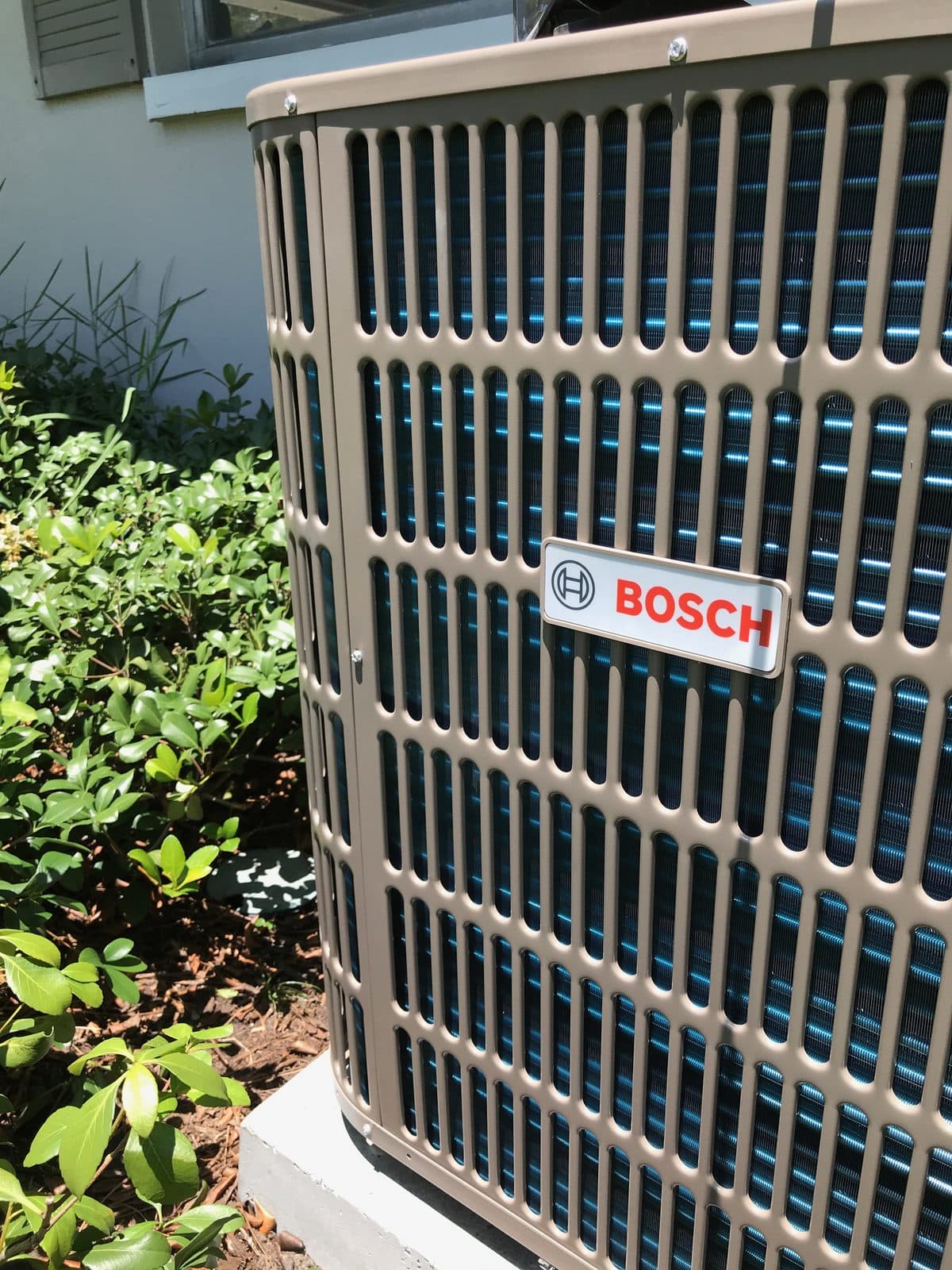
Salt air and standing water are hard on outdoor equipment. For buildings within 3,000 feet of the ocean, nonferrous metal, stainless steel, or steel with minimum G-90 hot-dip galvanized coating is recommended for the equipment itself, equipment stands and equipment anchors. If your building is within that distance, ask what the stand and anchors are made of, not just the condenser. Our guide to coastal coil protection explains how salt affects outdoor coils.
Storm history
Although thunderstorms and lightning are a more frequent threat in the Tampa Bay area, St. Pete Beach, as a barrier island community, is extremely vulnerable to hurricanes and tropical storms. During Hurricane Helene, the St. Petersburg gauge set a record of 6.31 feet above MHHW, and peak water levels elsewhere along coastal Pinellas County generally ranged from 4 to 7 feet above MHHW.
A local news report said that in St. Pete Beach about 85 percent of all structures were damaged by Helene and Milton. If your system was in a flooded building and is still running, have a technician look at it. A flooded system can run for a while and still be damaged.
Heat, humidity and the rainy season
The rainy season runs from May 15 to October 15 for Southwest Florida and from May 25 to October 10 for the rest of West Central Florida. It typically brings persistent dew points above 70°F, daily lows in the 70s to around 80°, and highs in the upper 80s to middle 90s. That is a long period when your system is removing moisture as well as heat. A system that cools but leaves the air clammy, or that drips from the air handler, is telling you something. See the AC maintenance checklist for Florida for what to check before and during that season.
One local rule is worth knowing. Under a Pinellas County local technical amendment to the residential Florida Building Code, all primary condensate drain lines installed within unconditioned areas shall be insulated with insulation of thermal resistivity not less than R-3. A bare drain line in an attic can sweat in humid weather and stain ceilings.
Condos, older buildings and seasonal homes
Mostly multi-family
Multi-family homes make up most of the inventoried housing in St. Pete Beach, the opposite of Pinellas County overall, where most housing is single-family. Condominium and apartment complexes range from 2 to 14 stories, and developments include as little as 4 units to over 100 units.
In a condo, the answer to "who is responsible for the AC" depends on the association's rules, so check before you schedule a replacement. A unit's air handler may be inside a closet, with the condenser on a balcony, a roof or a ground-level pad. Those layouts change how a system is accessed, supported and protected.
Older construction
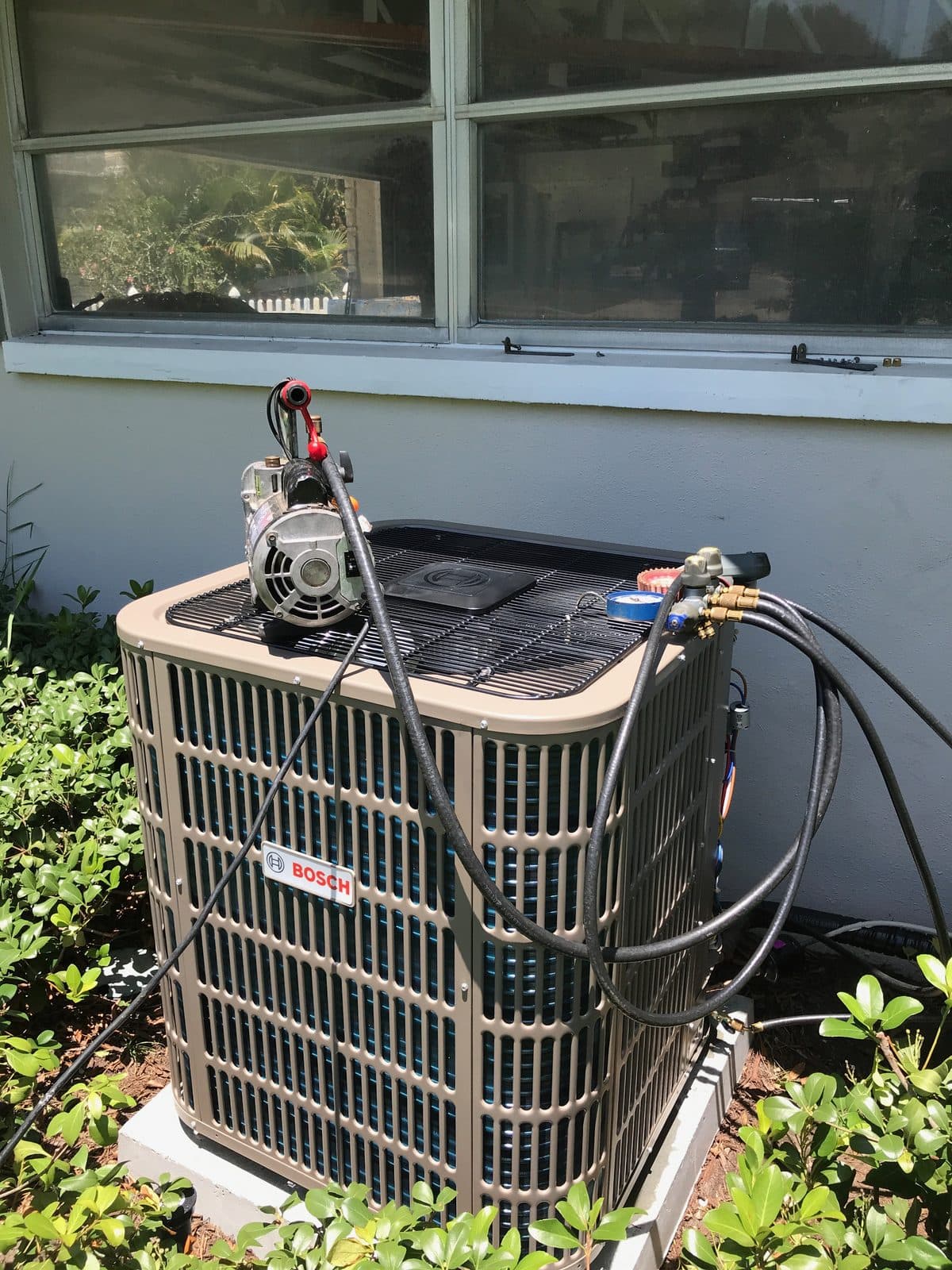
Most of the city's housing stock, 77.5 percent, was constructed between 1950 and 1989, with 30.9 percent constructed between 1970 and 1979. Replacing equipment without checking the ducts can leave a new system struggling with an old distribution problem. When we replace a system in a home, we size it by an ACCA Manual J load calculation with Manual S equipment selection instead of matching the old unit's size. We also commission the new system with measured static pressure, airflow and refrigerant charge, and document the results.
Seasonal and second homes
Nearly 28 percent of residential homes and condominiums are owned by people claiming primary residence elsewhere, reflecting a high volume of seasonal visitors.
A home that sits closed up in humid weather is a particular risk for musty air, drain-line clogs and mold. If you are away for part of the year, a maintenance visit before you leave or when you return is worth more than it would be for a home that is occupied year-round. Landlords and property managers handling several units can ask about maintenance schedules, and about paid priority scheduling, which is available.
Permits for AC replacement in St. Pete Beach
The City of St. Pete Beach reviews plans and issues permits under the 2023 8th Edition Florida Building Code, the 2020 National Electrical Code, Pinellas County local technical amendments and ASCE 24-14 flood-resistant design and construction. So the city, not the county, is who issues the permit for AC work here. People who live within a city contact their city, not Pinellas County, for substantial damage plan and permitting information.
The 9th Edition (2026) Florida Building Code has been in development since February 2024, with an effective date of December 31, 2026. If your replacement is scheduled near that date, ask which edition the city is applying when the permit is issued.
For a like-for-like swap, a mechanical equal changeout is permitted over the counter unless it is 5 ton or more. The application is a completed permit application, uploaded as a signed and notarized copy, with AHRI documentation. Plans are generally not required for work such as replacing heating and air conditioning equipment. Inspection requests require a contractor web code provided by the city. A recorded Notice of Commencement is required before the first inspection is scheduled and must be on the job site. Ask your contractor whether that applies to your particular job. Our Florida HVAC permit guide covers the state-level picture.
The flood rules that can change an AC job
Here is where St. Pete Beach differs from most places. Because nearly all properties are in the special flood hazard area, the FEMA 50 percent rule for substantial improvement or substantial damage will continue to be enforced during plan review. Substantial damage means damage whose cost of restoring the building to its before-damaged condition would equal at least 50 percent of the building's market value before the damage occurred.
HVAC equipment is among the utility and service equipment included in project cost when the city measures its substantial improvement threshold. In plain terms, a new AC system is not separate from the rest of a renovation. If you are doing a larger project, the HVAC cost is part of the total the city looks at.
The consequence can be large. A building that must be brought into compliance with the city's Floodplain Management Ordinance and the Florida Building Code may need to be elevated, along with all electrical and mechanical equipment, above the Design Flood Elevation, or demolished. If you are planning a major project or repairing storm damage, talk to the city's building division about where you stand before you commit to equipment.
A city manager's operational report describes an adopted requirement that replacement of flood-damaged equipment such as HVAC condensers be elevated above the floodplain, applying even if the home itself was not substantially damaged. The state code points the same way. The residential Florida Building Code requires duct systems and other service equipment to be at or above the elevation required in Sections R322.2 or R322.3, and replacement of exterior equipment and exterior appliances damaged by flood shall meet the requirements of that section. For commercial and multi-family buildings, the Florida Building Code, Mechanical (Section 301.16) requires mechanical systems, equipment and appliances in flood hazard areas to be located at or above the elevation required by Section 1612 of the Florida Building Code, Building. The same section permits equipment below that elevation if it is designed and installed to prevent water from entering or accumulating within the components.
What this means for you: if your condenser was flooded, expect the replacement to involve a raised platform or similar placement, and expect the city to care about it. Raising a condenser changes the line set, the support and the electrical disconnect, so it is better planned before the day of the install.
New residential and commercial plans must be designed to comply with the FEMA maps adopted August 24, 2021.
Gas and electric service
Duke Energy is the power and electrical utility provider in St. Pete Beach. TECO Peoples Gas is the natural gas utility. If you have gas heat or a gas furnace, the gas side is a separate utility from your electric bill. Tell us which you have when you call so the right technician comes out.
Services we offer in St. Pete Beach
Blume provides residential and commercial work, and the scope is design-build, maintenance, repair, installation and replacement. Blume installs and services all major brands as a licensed contractor.
- AC repair and diagnosis: no cooling, weak airflow, ice on the coil, water at the air handler, short cycling or a unit that will not start.
- Heating repair: a heat pump or furnace that is not warming the home. Heating matters here too, even if winters are short.
- Maintenance: cleaning and inspection tied to the coastal and humid conditions described above.
- Replacement and installation: sized by load calculation for homes, with the permit and flood-elevation questions handled up front.
- Commercial and multi-family work: a mechanical contractor's scope, for properties where the equipment is bigger or shared.
How a visit works
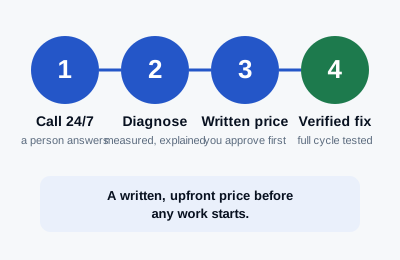
- You call and describe the problem. A person answers the 24/7 dispatch line. We offer 24/7 emergency HVAC service, with same-day response available based on location and technician availability.
- The technician diagnoses the system. We find the cause rather than guessing at parts. For a no-cool problem on the coast, that includes checking the outdoor coil, the condensate drain and the electrical connections for corrosion or water damage.
- You get the options. If the system can be repaired, we say so and what it involves. If replacement makes more sense, we show repair and replacement side by side so you can compare, and we do not sell equipment a building does not need.
- The work is done and checked. On a replacement, the commissioning readings are recorded and kept with the job.
When to call
Call right away if any of these apply; same-day response is available based on location and technician availability:
- the system has stopped cooling during hot, humid weather,
- water is leaking from the air handler or the ceiling below it,
- the outdoor unit has been under water or has a visible burn smell or tripped breaker,
- a system you had flooded is making odd noises or running poorly after the water went down.
Schedule a visit soon if the home feels humid even though the thermostat is satisfied, airflow from the vents has dropped, or your energy use has climbed without a reason. If you are planning a larger renovation, call before you choose equipment so the flood-zone and permit questions are settled first.
Frequently Asked Questions
Can I pull the AC permit myself in St. Pete Beach?
Sometimes. Permits can be obtained by a properly licensed contractor within the appropriate construction trade, or by the owner of a single family residence under specific conditions: the house is not for sale, lease or rent, and the owner signs a declaration. That excludes condo units, rentals and homes on the market. Even where an owner may pull one, refrigerant work and the equipment's electrical connection call for a licensed professional.
Does Duke Energy offer anything for a new AC system?
Customers can qualify for rebates on HVAC upgrades, along with attic insulation, windows, air ducts and water heater, through Duke Energy. Its EnergyWise Home program has equipment requirements: participants must have centrally ducted electric heating and cooling, or centrally ducted electric heating and water heating, using compatible equipment, and not all HVAC units are currently compatible with the EnergyWise system. Confirm eligibility with Duke before you buy.
Is a historic home treated differently under the 50 percent rule?
It can be. Structures on the local historic property registry, or that contribute to the Pass A Grille Historic District, may be exempt from the substantial improvement and substantial damage requirement. Confirm with the city's building division before planning equipment around it.
I got a compliance letter from the city after the storms. Does it affect my AC work?
Letters were sent to properties identified through aerial imagery, elevation and LIDAR data, post-storm assessments, or site observations as potentially having flood or wind damage and where no corresponding repair permits were issued after the storm. If you received one and your system was damaged, contact the city about what it needs. We can provide a licensed contractor's assessment of the equipment.
For AC or heating service in St. Pete Beach, call Blume Mechanical Service at 727-330-9131.
HVAC Services in St. Pete Beach
Every service we offer in St. Pete Beach — each link covers scope, pricing factors, and scheduling.
AC Repair & Installation (Residential)
AC Repair & Installation (Commercial)
HVAC Repair & Installation (Residential)
HVAC Repair & Installation (Commercial)
HVAC Service Guides for St. Pete Beach Homeowners
Start with the symptom or service you need — every guide connects to the same 24/7 dispatch serving St. Pete Beach.
More: all HVAC services · commercial HVAC
Homeowner guides: AC troubleshooting · Florida AC maintenance checklist · how long AC units last here
Local resources
Official sites, including where to check permitting. A city issues permits for addresses inside its limits; the county covers unincorporated addresses.
HVAC Service in St. Pete Beach
Blume Mechanical Service provides comprehensive HVAC repair, maintenance, and installation for residents and businesses throughout St. Pete Beach, Pinellas County. With 24/7 emergency response, licensed technicians, and a written, upfront price before any work starts, we're your trusted partner for all air conditioning and heating needs.
Why Choose Blume for St. Pete Beach HVAC Service?
✓ Licensed & Insured
Florida HVAC License #CAC-1822618
✓ 24/7 Emergency Service
Available anytime, day or night
✓ Same-Day Response
Available based on location and technician availability
✓ Written, Upfront Price
Before any work starts
Emergency AC Repair in St. Pete Beach
Your air conditioning stopped working? Our emergency HVAC team responds quickly to get your home or business comfortable again. Call us immediately at (727) 330-9131.
Call Now: (727) 330-9131Our HVAC Services
Air Conditioning Repair
AC unit diagnosis and repair services
Emergency AC Service
24/7 emergency HVAC response
Maintenance Plans
Preventative HVAC maintenance
Installation
New HVAC system installation
Other Cities in Pinellas County
Pinellas County · 24/7 dispatch
Need AC Repair in St. Pete Beach?
A person answers the 24/7 dispatch line, so call now. Same-day response is available based on location and technician availability.