
Clogged AC Drain Line: Indoor Water Leaks & Float Switch
Tampa Bay, Florida · Blume Mechanical Service · FL CAC-1822618
Understanding clogged ac drain line
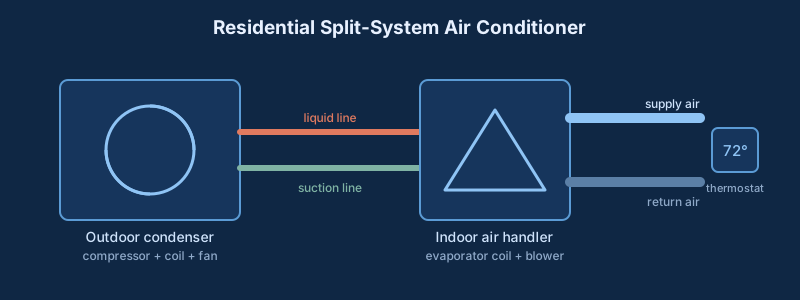
As your air conditioner cools, it pulls moisture out of the air, and that water drips off the evaporator coil into a pan and runs outside through the condensate drain line. When that line clogs, the water has nowhere to go, so it backs up and you see the classic signs: an AC leaking water inside near the air handler, a damp ceiling or wall, or the whole system suddenly shutting off. Many systems have a float safety switch on the drain pan or line; when water rises, the float trips and cuts the system off to prevent a flood, which is why some homeowners find the float switch keeps tripping. The usual culprit is a slow buildup of algae, mold, and slimy biofilm inside the pipe. Because the condensate is warm and damp, this growth is common and builds up gradually until the line finally blocks.
Common causes, most likely first
- Algae and biofilm buildup — Warm, damp condensate is an ideal home for algae, mold, and slime, which slowly coat the inside of the drain line until they form a plug that stops the water.
- Dust and debris washed into the pan — Dust, dirt, and bits of insulation that settle on the coil get rinsed into the pan and drain, where they combine with biofilm to form a blockage.
- Float safety switch doing its job — When water backs up, the float switch trips and shuts the system off on purpose. A system that keeps stopping is often a working float switch reacting to a clog, not a broken switch.
- Sagging, kinked, or poorly sloped drain line — If the line dips, kinks, or lacks a steady downward slope, water pools in the low spot, drains slowly, and gives biofilm a place to accumulate.
- Full or overflowing drain pan — A blocked line lets the pan fill; a rusted or cracked pan then leaks even when some water is still moving, showing up as water around the air handler.
- Disconnected or clogged pan overflow outlet — Secondary drains and overflow outlets can also clog or come loose, so the backup water that should be caught ends up on the floor or ceiling instead.
What to check, in order
- Turn the thermostat and the system breaker OFF before doing anything, so the unit is not making more condensate while you work and no water is being added to the backup.
- Look at the drain pan under the indoor air handler; if it is full or overflowing, you have confirmed a drainage backup rather than a refrigerant leak.
- Mop or wet-vac the standing water and place towels to protect the floor, ceiling, or nearby belongings from further dripping.
- Find the condensate drain outlet outside, usually a white PVC pipe near the outdoor unit or along an exterior wall, and check whether water is dripping from it during operation.
- Fit a wet/dry vacuum over the outdoor drain outlet, seal the connection with your hand or a rag, and run it for a minute or two to pull the clog and standing water out of the line.
- Check that the outdoor end of the line is clear of dirt, mud, or insect nests that could be blocking the opening.
- Once the line is clear and the pan is dry, restore power and watch to confirm water drains freely outside and the float switch no longer trips.
- If the pan refills or the float trips again soon after clearing, leave the system off and treat it as a professional service call.
What the numbers should read
| Reading | Normal range |
|---|---|
| Water level in the drain pan during operation | the pan stays essentially dry with condensate draining away as fast as it forms; standing water confirms a drainage backup rather than a refrigerant leak |
| Condensate flow at the outdoor drain outlet | a steady drip during cooling; little or no flow while the pan is full indicates a clog upstream in the line |
| Float safety switch operation | the switch opens the circuit only when water actually rises and closes again once the line is clear; tripping with a clear line points to a switch or wiring fault |
| Drain line slope and routing | a continuous downward slope with no sags or kinks; low spots let water pool and biofilm collect until the line blocks |
Ranges are general and vary by equipment; confirm against the unit’s own documentation before acting on them.
When to stop and call a licensed technician
If the line clogs again soon after you clear it, if the drain pan is rusted or cracked, if the float switch trips with a clear line, or if water has reached drywall, insulation, or flooring, call a licensed HVAC technician. Persistent or fast-returning clogs can mean a sagging line, a coil that needs cleaning, or a drainage design problem that a homeowner vacuum cannot fix, and standing water invites mold that is best handled before it spreads.
In Tampa Bay specifically
Florida's heat and high humidity mean an air conditioner pulls an enormous amount of water out of the indoor air, so condensate drains here run wet for most of the year and rarely get a chance to dry out. That constant warm moisture is exactly what algae and biofilm need, which is why clogged condensate lines, indoor water leaks, and tripped float switches are among the most common cooling-season complaints in the region.
How a licensed technician diagnoses it
The technician confirms the leak is from condensate and not refrigerant by checking the pan and the drain rather than the coil first. They verify the float safety switch is actually responding to a high water level, then locate the blockage by clearing the line from the drain outlet and checking that water flows freely afterward. They inspect the full drain path for sags, kinks, and improper slope, look at the pan for rust or cracks, and check that the coil is not so dirty that debris keeps washing into the drain. If the line clogs repeatedly, they treat the pattern as a routing or biofilm problem to correct at the source, and they confirm the secondary or overflow drain and its switch are intact so a future backup is caught safely.
Preventing it in the first place
- Have the condensate drain line and pan cleared and flushed during routine professional maintenance so biofilm never gets a chance to fully block the pipe (DOE, ENERGY STAR).
- Change the air filter on schedule, since less dust reaching the coil means less debris washing into the drain.
- Ask your technician to confirm the drain line has a proper downward slope with no sags or kinks that let water pool.
- Make sure the float safety switch is present and working, so any future backup shuts the system off before it floods.
- Keep the outdoor end of the drain line clear of mud, mulch, and insect nests so water can exit freely.
Frequently asked
Why is my AC leaking water inside the house?
The most common reason is a clogged condensate drain line. Your air conditioner constantly pulls moisture from the air, and that water is supposed to drain outside. When algae, biofilm, or debris blocks the line, the water backs up into the pan and then overflows near the indoor air handler, showing up as a leak on the floor, ceiling, or wall. Turning the system off stops it from making more water, and clearing the line with a wet/dry vacuum at the outdoor outlet often resolves it. If it returns quickly or the pan is damaged, have a technician inspect the drainage.
My AC float switch keeps tripping. What does that mean?
A float safety switch is designed to shut the system off when water rises in the drain pan or line, so it does not flood your home. If it keeps tripping, it is usually doing exactly its job: water is backing up because the condensate drain is clogged or draining too slowly. Clearing the drain line with a wet/dry vacuum at the outdoor outlet often lets the water flow again and stops the tripping. If the switch trips even after the line is confirmed clear, the switch or its wiring may be faulty, and that should be checked by a licensed technician.
How do I clear a clogged AC condensate drain myself?
First turn the thermostat and the system breaker off so no new water is added. Empty any standing water from the pan with a wet/dry vacuum and protect the surrounding floor with towels. Then go to the outdoor end of the drain, usually a white PVC pipe near the outside unit, fit a wet/dry vacuum over the opening, seal around it, and run it for a minute or two to pull out the clog and water. Restore power and confirm water now drips steadily outside. If the line blocks again soon, the drain likely needs professional attention.
Why do condensate drains clog so often in Florida?
Florida's warm, humid air means the system removes a large amount of moisture nearly year round, so the drain line is almost always wet. That steady supply of warm water is the perfect environment for algae, mold, and slimy biofilm, which gradually coat the inside of the pipe until they block it. Dust and debris that wash off the coil add to the buildup. Because the growth is continuous, drains here tend to clog faster than in cooler, drier places, which is why regular flushing during maintenance and a working float switch matter so much.
Talk to a licensed Blume technician
For federal efficiency ratings and rebate eligibility we point homeowners to ENERGY STAR heating & cooling rather than making those claims ourselves.
Call (727) 330-9131Related HVAC Guides
Browse all HVAC guides · find your city