
AC Smells Musty: Find & Fix the Source
Tampa Bay, Florida · Blume Mechanical Service · FL CAC-1822618
Understanding ac smells musty
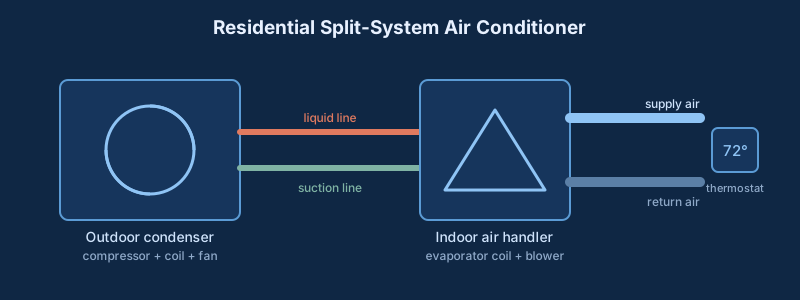
A musty, mildew, or 'dirty-sock' odor from the vents almost always traces back to moisture sitting somewhere it shouldn't inside the cooling system. As warm indoor air passes over the cold evaporator coil, water condenses on the coil and drips into a pan that drains away. When that water lingers, a biofilm of mold and bacteria grows on the wet coil, in the drain pan, or inside damp ductwork, and the blower pushes that smell into the house every time it runs. The diagnostic goal is to find and remove the moisture source, not just mask the odor. The most common culprits are a dirty or clogged filter, a slimed or standing-water drain pan, a plugged condensate drain line, or a coil that never fully dries between cycles.
Common causes, most likely first
- Biofilm or mold on a wet evaporator coil — The evaporator coil is cold and constantly wet during cooling, so dust that gets past the filter sticks to it and feeds mold and bacteria. That microbial film is the classic source of the musty or dirty-sock smell, and it rides the airstream into every room.
- Standing water in the condensate drain pan — The pan under the coil should shed water continuously. If it sits full because of a slope problem or a partial clog, the standing water grows a film that smells and can overflow near the air handler.
- Clogged condensate drain line — Algae and slime build up inside the drain line and eventually plug it. Water then backs up into the pan and onto the coil, keeping everything wet and feeding the odor; many systems also trip a float safety switch and shut off when this happens.
- Dirty or clogged air filter — A loaded filter lets dust bypass into the coil, giving mold more to feed on, and restricts airflow so the coil runs colder and wetter than it should. Both effects worsen a musty smell.
- Damp or contaminated ductwork — Ducts in humid, unconditioned spaces can collect condensation and dust, and any moisture intrusion or old contamination in the duct interior can smell musty even after the coil is clean.
- Coil that never dries between cycles — In short-cycling or very humid conditions the coil stays wet around the clock. Continuous dampness with no drying window is ideal for microbial growth and keeps the odor coming back.
What to check, in order
- Set the thermostat to OFF at the wall so the blower and cooling both stop before you inspect anything.
- Pull the air filter and replace it if it is gray, matted, or clogged, since a dirty filter both feeds and traps the smell.
- Locate the condensate drain pan under the indoor coil or air handler and look for standing water, slime, or overflow staining.
- Find the condensate drain line (usually a white PVC pipe) and check its outdoor termination for a slow or stopped drip while the system runs; a dry line during cooling suggests a clog upstream.
- If your system has an accessible drain-line cleanout, clear a visible clog only from that opening and confirm water flows freely; do not disassemble sealed refrigerant components.
- After servicing the filter and drain, switch the thermostat fan to ON for a while with cooling OFF so the blower can dry the damp coil and ducts.
- Run the system normally again and note whether the smell fades; a lingering odor after these steps points to coil biofilm or duct contamination that needs a professional.
What the numbers should read
| Reading | Normal range |
|---|---|
| Air filter replacement interval | inspect monthly during heavy cooling use and change at least every 3 months, more often with pets, dust, or constant running |
| Condensate drainage | the coil should drain continuously so the pan stays nearly empty and the drain line flows freely with no standing water |
| Indoor moisture control | cooling should pull indoor humidity down; a coil or ducts that stay wet with no drying window encourage the microbial growth behind musty odors |
Ranges are general and vary by equipment; confirm against the unit’s own documentation before acting on them.
When to stop and call a licensed technician
If the smell persists after you have replaced the filter, cleared an accessible drain clog, and dried the coil, the source is usually biofilm on the evaporator coil, a pan that won't drain, or contamination inside the ductwork, all of which call for a licensed HVAC technician. A professional coil cleaning, a drain-line clearing beyond a simple cleanout, or the addition of drainage improvements or a UV treatment are jobs that involve opening the sealed air-handler cabinet and working around the coil and electrical components, which is beyond safe DIY.
In Tampa Bay specifically
Florida's long, humid cooling season keeps evaporator coils wet for months at a time, and the EPA notes that mold needs only moisture and a food source to grow, so Gulf Coast systems that never get a dry-out window are especially prone to musty odors and algae-clogged drains.
How a licensed technician diagnoses it
The technician starts by confirming the odor is coming from the equipment rather than the space, then opens the air-handler access to inspect the evaporator coil for visible biofilm, dust caking, and standing moisture. They check the condensate pan for water level, slope, and slime, and test the drain line by verifying it flows and by clearing it if it is plugged, since a backed-up line keeps the coil and pan wet. They evaluate whether the coil is draining and drying properly and whether short-cycling or oversized equipment is leaving it wet between cycles. If the coil and drain are clean but the smell remains, they inspect accessible ductwork for moisture intrusion or contamination. From there they can recommend a targeted fix: a professional coil cleaning, a corrected or cleared drain, better drainage, or a UV light aimed at keeping the coil surface clear.
Preventing it in the first place
- Inspect the filter monthly during heavy cooling and replace it when dirty, since a clean filter keeps dust off the wet coil where mold grows (ENERGY STAR).
- Have the condensate drain line kept clear so water leaves the system continuously and the pan does not sit full (DOE).
- Have a qualified contractor clean the evaporator coil during maintenance, because a clean coil has far less biofilm to produce odors (DOE).
- Give the coil a chance to dry by avoiding constant fan-ON operation in very humid weather, so the coil surface is not wet around the clock (DOE).
- Control indoor humidity and fix any moisture intrusion near the air handler and ducts, since mold needs moisture to grow (EPA).
Frequently asked
Why does my AC smell musty only when it first turns on?
That pattern usually means moisture and microbial film have collected on the wet evaporator coil or in the drain pan while the system sat idle. When the blower starts, it pushes that first burst of stale, damp air through the vents before the coil dries out a little. The fix is to remove the moisture source rather than mask it: replace a dirty filter, make sure the condensate pan and drain line are clear, and have the coil cleaned if the smell keeps returning. The EPA notes mold grows wherever moisture and a food source persist (EPA).
Can changing the filter get rid of the smell?
Sometimes, if a clogged filter was the main problem. A dirty filter lets dust bypass onto the cold, wet coil where mold feeds, and it restricts airflow so the coil runs colder and wetter. Replacing it removes one food source and improves airflow, which can reduce a mild odor. But if mold has already established a biofilm on the coil or the drain pan is holding standing water, a new filter alone will not clear it; the coil and drain need attention. ENERGY STAR recommends checking the filter monthly during heavy cooling (ENERGY STAR).
What is the dirty-sock smell coming from my vents?
The 'dirty-sock' odor is a well-known symptom of bacterial and mold buildup on a damp evaporator coil, often noticed when the system starts a cooling cycle. It comes from the microbial film that grows on a coil that stays wet, especially in humid climates where the coil rarely dries. The diagnostic path is to clear the filter and drain, let the coil dry, and if the smell persists, have a technician clean the coil. The underlying condition is moisture on the coil, which the EPA identifies as the driver of indoor microbial growth (EPA).
Is a musty AC smell a health or safety problem?
A persistent musty odor signals moisture and microbial growth inside the system, which is worth addressing both for comfort and because damp, contaminated equipment is not something to ignore. The practical concern is finding and removing the moisture source: a wet coil, a full drain pan, or a plugged drain line. Keep the filter clean, keep the drain flowing, and have the coil cleaned if the smell continues. If you see extensive visible growth or water damage around the air handler, bring in a licensed technician; the EPA emphasizes correcting the moisture problem behind any mold (EPA).
Talk to a licensed Blume technician
For federal efficiency ratings and rebate eligibility we point homeowners to ENERGY STAR heating & cooling rather than making those claims ourselves.
Call (727) 330-9131Related HVAC Guides
Browse all HVAC guides · find your city