
AC Leaking: Water vs. Refrigerant
Tampa Bay, Florida · Blume Mechanical Service · FL CAC-1822618
Understanding ac leaking
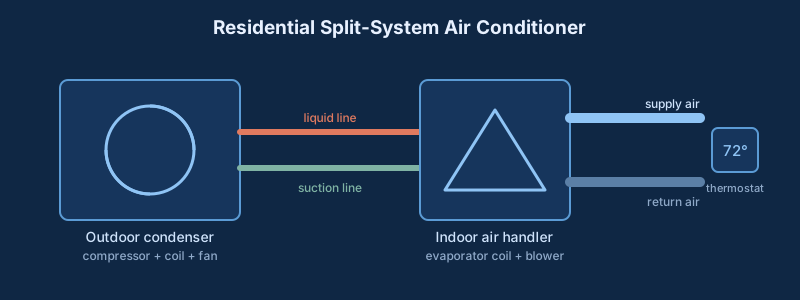
Most 'AC leaking' calls are water, not refrigerant: water pooling around the indoor air handler almost always means condensate isn't draining — a clogged drain line, a frozen evaporator coil that later melts, or a cracked/rusted drain pan. A refrigerant leak is different: it usually shows as weak cooling, ice on the copper lines or coil, and a hissing sound, not a puddle, because refrigerant is a gas that escapes into the air rather than dripping as liquid. Telling them apart matters because condensate problems are often homeowner-serviceable, while refrigerant is EPA-regulated and must be handled by a certified technician.
Common causes, most likely first
- Clogged condensate drain line — The line that carries away condensed water backs up, so water overflows the drain pan near the air handler — the single most common cause of indoor water leaks.
- Dirty air filter / frozen evaporator coil — Restricted airflow lets the coil ice over, then the ice melts faster than the pan can drain, spilling water; the coil can also freeze from low refrigerant.
- Cracked or rusted drain pan — An aged pan under the coil no longer holds condensate and leaks directly onto the floor or ceiling below.
- Disconnected or improperly sloped drain — A drain line that has come loose or lacks downward slope lets water escape instead of flowing to the drain.
- Refrigerant leak (not a water leak) — Low refrigerant causes weak cooling, ice on the copper suction line or coil, and hissing — a repair that is legally restricted to certified technicians.
What to check, in order
- Turn the system off at the thermostat if water is actively leaking to prevent further damage.
- Check the air filter — a dirty, clogged filter restricts airflow and is a leading cause of coil freeze-ups; replace it if it looks gray or blocked.
- Look at the evaporator coil and copper lines: visible ice means shut the system off and let it fully thaw before running again (ice can point to airflow or refrigerant problems).
- Inspect the drain pan under the air handler for standing water, rust, or cracks.
- Trace the condensate drain line and clear the drain channels of clogs; a blocked drain makes water back up and overflow.
- If the unit has a float switch / safety switch, confirm it hasn't tripped and shut the system off due to a full pan.
- If cooling is weak with hissing or persistent icing rather than a puddle, stop troubleshooting and call a technician — this suggests refrigerant, not condensate.
When to stop and call a licensed technician
Refrigerant work is regulated under Section 608 of the Clean Air Act: anyone who maintains, services, or repairs equipment that could release refrigerant must be Section 608-certified and use certified recovery equipment, so homeowners cannot legally recharge or repair a refrigerant leak themselves. Call a professional for any suspected refrigerant leak, a coil that keeps freezing after the filter is changed and ice has thawed, electrical faults, or water damage that persists after the drain is cleared.
In Tampa Bay specifically
In humid climates like Florida, air conditioners pull a large volume of moisture from the air, so drain pans and condensate lines carry heavy water loads; a blocked drain reduces the system's ability to remove that water and can cause overflow, water damage, and rising indoor humidity, which is why keeping the drain clear matters especially here (per U.S. DOE air conditioner maintenance guidance).
How a licensed technician diagnoses it
A technician first determines whether you are seeing water or refrigerant. For water, they inspect the condensate drain line, drain pan, and float switch, then clear any clog in the drain channels, since a blocked drain is a common cause of overflow and can shut the system off. If the drain and pan are clear, they investigate a possible refrigerant leak using an electronic leak detector or UV dye and by checking the system charge against the manufacturer's specification. Refrigerant work is federally restricted: under Section 608 of the Clean Air Act, only Section 608-certified technicians may service equipment containing refrigerant, and intentional venting is prohibited. This is why refrigerant diagnosis and repair should always be left to a certified professional rather than attempted at home.
Preventing it in the first place
- Inspect, clean, or replace air filters regularly (monthly is ideal, at minimum every three months) so restricted airflow does not cause the evaporator coil to freeze and later overflow the pan when it thaws (ENERGY STAR).
- Periodically clear the unit's condensate drain channels with a stiff wire to prevent clogs that reduce the system's ability to remove condensed water and can lead to overflow and water damage (DOE).
- Have a qualified HVAC contractor clean the evaporator coil as part of yearly service, since a clean coil maintains proper heat transfer and reduces the icing that leads to water leaks (DOE).
- Schedule an annual pre-season professional check-up in spring so a contractor can catch drain, pan, coil, and charge problems before peak cooling season (ENERGY STAR).
- Have the drain pan and float/safety switch checked during service so the switch can shut the system off before a blocked drain overflows (DOE).
- Keep refrigerant service with an EPA Section 608-certified technician; proper charge and leak-free lines are federally regulated and prevent refrigerant-related leaks (EPA).
Frequently asked
Can I use my AC while it's leaking water?
It is best to turn it off until the cause is found. A common source is a clogged condensate drain, and if water backs up it can overflow and cause water damage or trip a safety switch that shuts the system off on its own (DOE).
Is a clear liquid always water, or could it be refrigerant?
Condensate is water and is the most common leak. Refrigerant is a separate, regulated substance, and diagnosing or repairing a refrigerant leak requires a Section 608-certified technician under the Clean Air Act, so let a professional confirm which one you have (EPA).
Why does my AC leak water after I skip filter changes?
A dirty, clogged filter restricts airflow, which can let the evaporator coil get too cold and ice up; when that ice melts it can overflow the drain pan. Changing filters regularly helps prevent this (ENERGY STAR).
Can I clear a clogged AC drain myself?
The Department of Energy notes that drain channels can be cleared periodically with a stiff wire to prevent clogs. If the clog persists, the pan overflows, or you suspect a coil or refrigerant issue, call a qualified HVAC contractor (DOE).
How often should a professional inspect my AC to prevent leaks?
ENERGY STAR recommends an annual pre-season check-up by a contractor, ideally in spring before peak cooling demand, so drain, pan, coil, and charge issues are caught early (ENERGY STAR).
Talk to a licensed Blume technician
For federal efficiency ratings and rebate eligibility we point homeowners to ENERGY STAR heating & cooling rather than making those claims ourselves.
Call (727) 330-9131Related HVAC Guides
Browse all HVAC guides · find your city