
AC Making Noise
Tampa Bay, Florida · Blume Mechanical Service · FL CAC-1822618
Understanding ac making noise
The type of sound your air conditioner makes is the single most useful diagnostic clue, because different noises point to different systems: electrical, mechanical, or structural. Some sounds are minor and homeowner-fixable, while others—especially electrical buzzing or grinding—signal a hazard that means you should shut the unit off. Contact with electric current from air conditioners accounts for a significant number of electrocutions and injuries each year, most often during service, so knowing which noise is which matters.
Common causes, most likely first
- Buzzing (electrical) — A persistent electrical buzz or sizzle is a recognized warning sign of an electrical problem. Electrical safety authorities list 'unusual sizzling and buzzing sounds' alongside flickering lights and repeatedly tripping breakers as reasons to stop and call a qualified electrician rather than troubleshoot the appliance yourself.
- Humming (motor / electrical load) — A low continuous hum often comes from the running fan or compressor motor and its electrical components. A hum where the unit tries but fails to start can indicate a struggling motor or connection issue; loose or corroded electrical connections are a standard maintenance-inspection item.
- Clicking (controls / relays) — Light clicking at startup and shutdown is normal control-cycle operation. Constant or rapid clicking can point to a failing control or electrical connection—checking all electrical connections is part of professional AC service.
- Banging / clanking (moving parts) — Banging usually indicates a loose or failing internal moving part. Moving parts require periodic lubrication and adjustment; worn or unbalanced components are a service item, and hard banging from the compressor area warrants professional diagnosis.
- Screeching / squealing (motor or bearing) — High-pitched screeching typically comes from a motor or its bearings under stress. Because it involves moving parts that need lubrication and inspection, and can precede motor failure, it should be evaluated before continued running.
- Rattling (debris / loose panel) — Rattling is commonly loose hardware, a panel, or debris in or around the outdoor unit. Keeping the condenser area clean and clear supports proper airflow and cooling performance.
What to check, in order
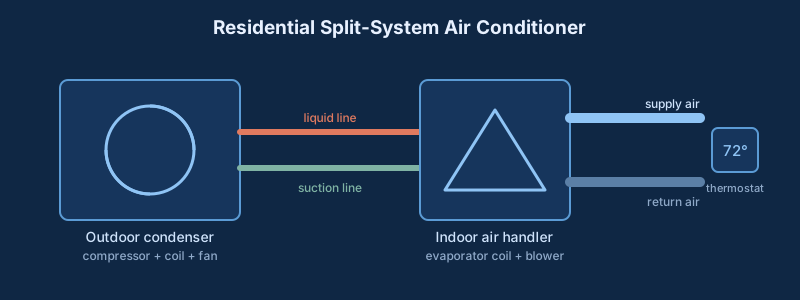
- Identify the sound first (buzz, hum, click, bang, screech, rattle) and where it comes from (indoor air handler vs. outdoor condenser)—this narrows the cause.
- For any electrical buzzing or sizzling: do NOT open the unit; turn it off and call a qualified electrician/technician. Electrocutions most often happen during DIY service.
- For rattling: with the system OFF, look for loose exterior panel screws and clear leaves, sticks, or debris from around the outdoor condenser to restore airflow.
- For humming or reduced cooling with noise: check and replace a dirty air filter (inspect monthly), since airflow restriction stresses the blower and cuts cooling efficiency.
- Inspect for a plugged condensate drain if you also notice water—a clogged drain can cause water damage and humidity problems.
- For banging, screeching, or compressor grinding: shut the system off and schedule professional service—these are internal moving-part or compressor issues, not homeowner repairs.
When to stop and call a licensed technician
Shut the unit off and call a professional for: any electrical buzzing or sizzling sound (a listed electrical-hazard warning sign—call a qualified electrician immediately), compressor grinding or hard banging, and persistent screeching from a motor or bearing. Because a significant number of electrocutions occur while people service or repair these appliances, opening the cabinet or touching wiring is not a homeowner task—licensed service is the safe path.
How a licensed technician diagnoses it
A technician first localizes the sound by asking whether it comes from the indoor air handler or the outdoor condenser, and whether it happens only at startup or the whole time the system runs, which separates electrical faults from mechanical wear. At the outdoor unit they inspect the contactor and start/run capacitor for a buzz or hum during startup, and check the fan motor bearings for the excessive noise, vibration, or heat that signals wear, following U.S. Department of Energy maintenance guidance. Indoors they examine the blower wheel and fan bearings and drive components, since restricted airflow and worn bearings are common noise sources. They also confirm the starting cycle so the system starts, runs, and shuts off properly, as ENERGY STAR recommends checking the controls of the system. The repair-versus-replace call weighs whether a single worn part (capacitor, bearing, loose panel) can be renewed against the age and condition of the motor.
Preventing it in the first place
- Inspect, clean, or change the air filter on the schedule the manufacturer and ENERGY STAR recommend, so restricted airflow does not force the blower to work harder against a clogged filter.
- Have all moving parts lubricated, because ENERGY STAR notes that parts lacking lubrication cause friction in motors that can surface as noise and added strain.
- Keep the evaporator and condenser coils clean, since ENERGY STAR advises that dirty coils make the system run longer and work harder.
- Inspect the fan bearings and drive belts for wear, as the Department of Energy advises checking air-conditioning fan bearings on older units for excessive noise, vibration, or heat.
- Have the technician verify and secure the cabinet, panels, and fasteners during service, following DOE air-conditioner maintenance guidance, so loose hardware does not rattle.
- Check the controls and the starting cycle of the equipment to assure it starts, operates, and shuts off properly, as recommended on the ENERGY STAR maintenance checklist.
Frequently asked
Is a humming AC dangerous?
A faint hum from normal operation is usually fine, but a loud or irregular buzz combined with a burning smell, warm or discolored switches, or flickering lights is an electrical warning sign. The Electrical Safety Foundation International lists these as signs of a potential electrical problem and advises having a qualified electrician inspect the home; if you smell burning, stop using the system and call a professional (ESFI).
Can a dirty air filter make my AC noisy?
It can contribute. A clogged filter restricts airflow, which makes the blower work harder; DOE and ENERGY STAR guidance emphasizes inspecting, cleaning, or changing the filter regularly to keep the system from straining. Replacing the filter on schedule is one of the simplest ways to reduce that added load (ENERGY STAR, DOE).
Why does my AC squeal or make noise from a motor?
Friction from parts that lack lubrication, or worn fan bearings and drive belts, are common mechanical sources. ENERGY STAR recommends lubricating all moving parts to reduce motor friction, and the Department of Energy advises inspecting fan bearings and belts for wear and replacing them as needed (ENERGY STAR, DOE).
Should I keep running my AC if it is making a loud noise?
For a persistent loud or unusual noise it is safer to shut the system off and have it inspected, since the Department of Energy notes fan bearings showing excessive noise, vibration, or heat can signal a developing problem. If the noise comes with a burning smell or warm, discolored electrical components, cut the power and call a professional, per ESFI's electrical warning-sign guidance (DOE, ESFI).
Can regular maintenance actually prevent these noises?
Routine maintenance targets the wear that causes many noises. The ENERGY STAR maintenance checklist includes lubricating moving parts, cleaning coils, changing filters, and checking the controls and startup cycle, all of which address common friction, airflow, and startup sources of sound (ENERGY STAR).
Talk to a licensed Blume technician
For federal efficiency ratings and rebate eligibility we point homeowners to ENERGY STAR heating & cooling rather than making those claims ourselves.
Call (727) 330-9131Related HVAC Guides
Browse all HVAC guides · find your city