
Hillsborough County · Florida CAC-1822618
Plant City AC Maintenance and Air Conditioning Tune-Ups
AC maintenance in Plant City is about timing. At the NOAA station in Plant City, the normal daily high climbs from 81.4°F in March to 90.8°F in May. Most Plant City homes also heat with electricity. This page explains when to book a tune-up, what it should check, who issues permits for your address, and which simple checks are yours.
Plant City's housing and what it means for a tune-up
Plant City is an incorporated city in Hillsborough County. The US Census Bureau's 2019-2023 American Community Survey estimates about 15,500 housing units in the city, and about 10,450 of them are detached single-family houses. The same survey estimates about 800 mobile homes.
Most homes were built before 2000
By the Census Bureau's year-built estimates, about 11,200 Plant City homes were built before 2000. The 1980s is the largest single decade, at about 2,900 homes, and the 1990s follows closely. About 4,300 homes were built in 2000 or later.
That spread matters for a maintenance visit. A good technician starts by learning what your home actually has: where the air handler sits, how the condensate drain leaves the house, and where the outdoor unit stands.
Most homes heat with electricity
The same survey estimates that about 13,800 of roughly 14,700 occupied Plant City homes heat with electricity. Only a few hundred use utility gas. If your home heats with a heat pump, the same system works for you in summer and winter.
If you are not sure whether your system is a heat pump, our guide on how to tell if you have a heat pump walks through the signs. It changes what the fall visit should cover.
When to schedule AC maintenance in Plant City
ENERGY STAR recommends annual pre-season check-ups by a contractor. It suggests checking the cooling system in the spring and the heating system in the fall, because contractors get busy once summer and winter come. Its tip is to tie the visits to the spring and fall time changes.
Spring: before the heat and the rain
NOAA's 1991-2020 climate normals for the Plant City station show how quickly spring turns to summer. The normal daily high is 81.4°F in March, 86.2°F in April and 90.8°F in May. The National Weather Service Tampa Bay office places the rainy season from May 15 to October 15 for Southwest Florida and from May 25 to October 10 for the rest of West Central Florida.
The office adds that the rainy season can begin abruptly in some years. It describes the season as bringing persistent dew points above 70°F. A March or April visit checks the drain, coils and electrical parts before both arrive.
Cooling demand, in plain words
A cooling degree day is the National Weather Service's way of counting cooling weather. When a day's average temperature is above 65°F, the amount above 65 is that day's cooling degree days. Heating degree days count the same way below 65°F.
The Plant City station's annual normal is 3,847.5 cooling degree days against 436.4 heating degree days. Cooling weather there is almost nine times heating weather in a normal year. July and August each carry 576.6 cooling degree days, and even January has some.
Fall: the heating side
Most of the station's heating degree days fall in December, January and February. The normal January low is 50.0°F. If your home has a heat pump, a fall visit is the time to confirm the heating side starts and runs properly, before the first cold night. Our guide to heat pumps in Florida explains how they work here.
What a Plant City tune-up should check
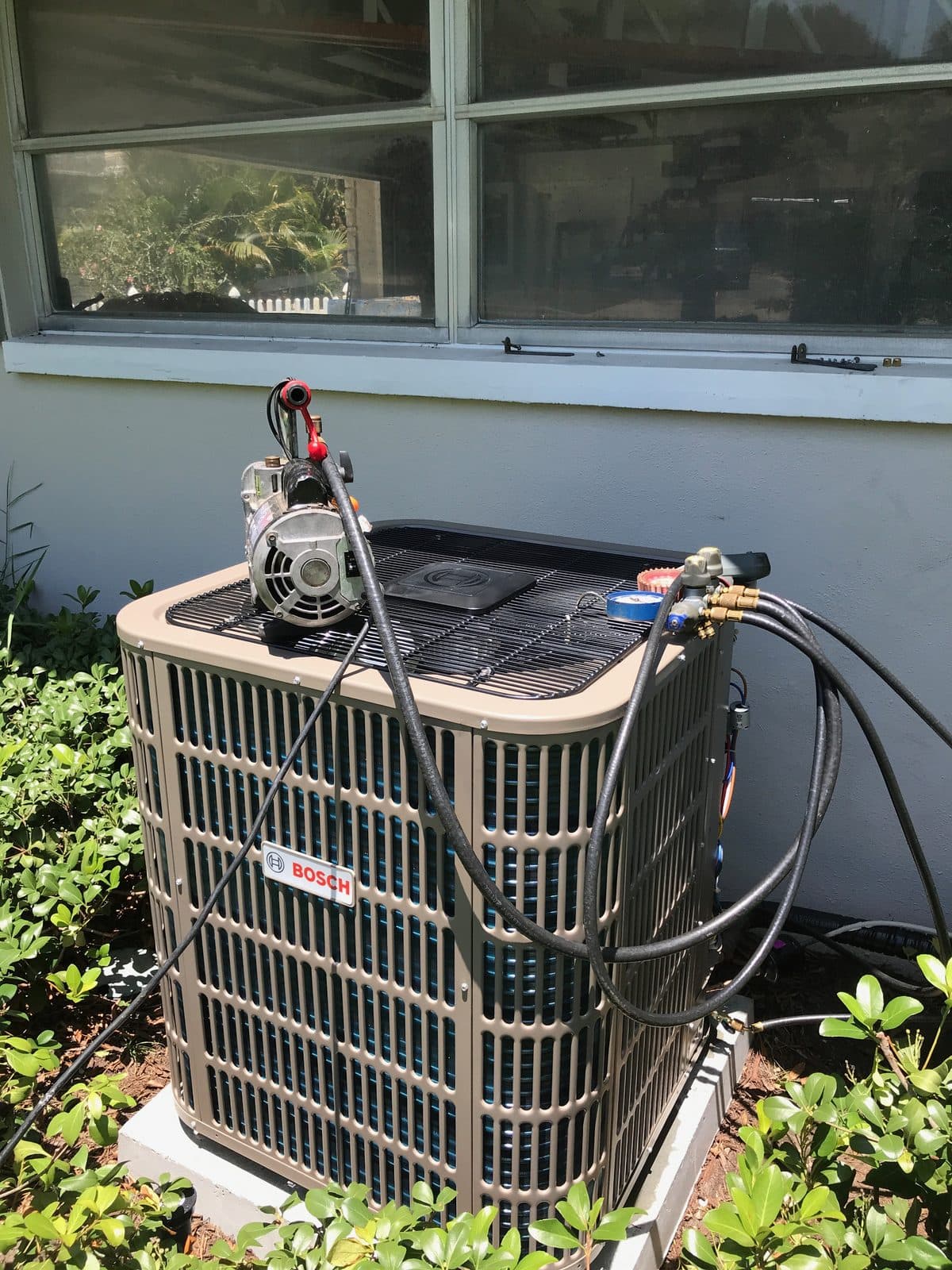
ENERGY STAR's maintenance checklist is a fair baseline for any contractor visit. ENERGY STAR's checklist lists these items for a contractor check-up:
- Electrical. Tighten electrical connections and measure voltage and current on motors. ENERGY STAR says faulty connections can cause unsafe operation and shorten the life of major components.
- Moving parts. Lubricate them, because parts that lack lubrication cause friction in motors.
- Condensate drain. Inspect it, because a plugged drain can cause water damage and affect indoor humidity.
- Controls and start-up. Confirm the system starts, runs and shuts off properly.
- Coils. Clean the evaporator coil indoors and the condenser coil outdoors.
- Refrigerant. Check the level and adjust if needed, because too much or too little makes the system less efficient.
- Blower. Clean and adjust it for proper airflow.
Readings, not just a look
A useful visit leaves numbers behind, so the next visit has something to compare against. Blume's approach is built on measurement. New equipment is sized by ACCA Manual J load calculation with Manual S selection, and commissioned with measured static pressure, airflow and refrigerant charge, documented. Static pressure is the resistance the indoor blower pushes against as it moves air through the filter, coil and ducts.
Refrigerant is the fluid that carries heat from inside your home to the outdoor unit. Blume's refrigerant work is done by EPA Section 608 certified technicians.
The drain and the float switch
The condensate drain carries away the water the indoor coil pulls out of the air. A float switch is a small safety sensor at the drain pan. Trane, the equipment maker, says that if the switch detects a potential overflow, it shuts the outdoor compressor and condenser fan down. A maintenance visit should check and inspect the condensate drain, as ENERGY STAR's checklist lists. See our guide to the AC drain pan for more.
Permits: city limits or county
If a tune-up ends in a replacement, the first question in Plant City is who issues the permit.
The City of Plant City says you must first determine whether you are inside the incorporated city limits. If you are, you apply for your permit with the City. The city also notes that you may have a Plant City address but be in the county. In that case, you go to the Hillsborough County Building Division.
On its disaster permitting page, the city answers a question about air conditioners damaged by water intrusion. It says repair of an HVAC unit does not require a permit, but replacement of an HVAC unit does. Its permit exemption page lists alterations to mechanical systems under work that requires a permit. The city's advice is to call the Building Department to confirm whether a permit is required for your scope of work. The Building Department can be reached at (813) 659-4254.
The city takes applications through its online permitting portal. It helps to know which office will be involved before replacement comes up.
What you can do between visits
A few checks are yours, and they make each professional visit more useful.
- Filter. ENERGY STAR suggests inspecting the filter once a month and cleaning or changing it as needed. Your contractor can show you how. See HVAC air filters.
- Thermostat. Check that your settings keep the house comfortable when you are home and save energy while you are away. See thermostat settings.
- Vents, returns and the outdoor unit. Keep furniture and rugs off supply vents and return grilles. Clear grass clippings, leaves and stored items away from the outdoor unit by hand, with the system off.
Leave panels closed. Coil cleaning, the drain line, electrical parts and refrigerant belong to a licensed contractor.
When to call before the next visit
Do not wait for the scheduled visit if you notice any of these:
- Warm air from the vents while the system runs.
- Water around the indoor unit, or a system that shuts itself off on a hot afternoon.
- Ice on the copper lines or the indoor unit.
- A tripped breaker for the air conditioner. Leave it off and call a licensed contractor.
- New noises, or a burning or musty smell when the system starts.
For a system that has stopped, Blume offers 24/7 emergency HVAC service, with same-day response available based on location and technician availability. A person answers the 24/7 dispatch line. Our AC troubleshooting guide explains common symptoms, and the Plant City HVAC page covers flood zones and storms.
AC maintenance with Blume Mechanical Service
Blume Mechanical Service is a Class A licensed Florida air conditioning contractor, license CAC-1822618, and is fully insured. We work on residential and commercial systems from our office at 2840 West Bay Drive #114 in Belleair Bluffs. Hillsborough County, which includes Plant City, is part of our core service area with Pinellas and Pasco.
We are brand-agnostic and service all major manufacturers as a licensed contractor. Before any work, you get a written, upfront price. If a visit finds a problem that adjustment will not fix, you see repair and replacement side by side, and we do not sell equipment a home does not need. Paid priority scheduling is also available.
For the full seasonal list, see our AC maintenance checklist for Florida homes. Plan details are on the AC maintenance plan page.
Frequently asked
How often should I have my AC maintained in Plant City?
At least once a year, in spring, before the cooling season. ENERGY STAR recommends a spring check for the cooling system and a fall check for the heating side. Most Plant City homes heat with electricity, so a fall visit makes sense if you have a heat pump.
What is the best month to book an AC tune-up in Plant City?
March or April. The normal high at the Plant City NOAA station reaches 86.2°F in April and 90.8°F in May. The National Weather Service Tampa Bay office places the start of the rainy season in mid-to-late May (May 15 for Southwest Florida, May 25 for the rest of West Central Florida), so a March or April visit lands ahead of both.
Does my house's age change what the visit should cover?
It can. Census estimates show most Plant City homes were built before 2000, while thousands are newer. The technician should start by learning how your system is laid out.
Will I need a permit if maintenance turns into a replacement?
Yes. On its disaster permitting page, the City of Plant City says replacement of an HVAC unit requires a permit, and it advises calling the Building Department to confirm whether a permit is required for your scope of work. If your Plant City address is outside the city limits, the permit comes from the Hillsborough County Building Division instead.
Do I need to call a pro for this?
Maybe. The filter, thermostat settings and clearing debris from vents, returns and the outdoor unit are yours to handle. Coil cleaning, the drain line and float switch, electrical parts and refrigerant belong to a licensed contractor, and the yearly spring visit is worth booking even when nothing seems wrong.
Drain line care and maintenance plans
If the drain line is why you are here, these pages cover what we offer for it:
- DrainGuard condensate drain protection plan
- AC maintenance plans
- Clogged AC drain line: causes and what to do
- AC capacitor replacement, installed by a licensed technician
Homeowner guides
To schedule AC maintenance in Plant City, call Blume Mechanical Service at 727-330-9131.
References: US Census Bureau — American Community Survey 2019-2023 5-Year Estimates, Selected Housing Characteristics (DP04), Plant City city, Florida · NOAA NCEI — U.S. Climate Normals 1991-2020, monthly, Plant City, FL (USC00087205) · NOAA NCEI — U.S. Climate Normals 1991-2020, annual and seasonal, Plant City, FL (USC00087205) · National Weather Service — What Are Heating and Cooling Degree Days · National Weather Service Tampa Bay — Florida Thunderstorm Season · ENERGY STAR — Maintenance Checklist · Trane — Troubleshooting the HVAC Air Handler Overflow Switch · City of Plant City — Information Search/FAQs · City of Plant City — Disaster Declaration · City of Plant City — Permit Exemption · City of Plant City — Applications, Forms, & Fees
Also in Plant City: AC repair in Plant City · Heat pump repair in Plant City · Heating repair in Plant City
Residential AC Maintenance nearby: AC maintenance in Tampa · AC maintenance in St. Petersburg · AC maintenance in New Port Richey · AC maintenance in Clearwater