
Pinellas County · Florida CAC-1822618
AC Maintenance in Treasure Island, FL
AC maintenance in Treasure Island is planned around an island, not a suburb. The city's resident guide describes a barrier island between the Gulf of Mexico and Boca Ciega Bay. Outdoor units here sit on a barrier island between the Gulf and Boca Ciega Bay, and the city dates hurricane season from June 1 to November 30. This page is for Treasure Island homeowners deciding when to book a tune-up and what it should check. It also covers the small jobs that are yours between visits.
Water on both sides of the house
The city's resident guide lists nearly four miles of Gulf beach and 28.39 miles of bay frontage.
The guide places most Gulf-front motels, hotels and condo-hotels on the wide beach mid-island. At the north end, by John's Pass, is Sunshine Beach. Sunset Beach sits at the south end, by Blind Pass. The guide calls both more residential than commercial, home to everything from beach cottages to Key West-styled three-story homes, with dunes of sea oats lining the beach. It also notes that the island's beaches are lined with condominiums, private residences, businesses and hotels.
What salt does to an outdoor unit
Carrier notes that salt water can be carried as far as two miles inland from the coast. It says corrosion depends on distance from the ocean, wind direction, relative humidity and coil temperatures. Carrier also says standard copper-aluminum coils without specialized protection can suffer galvanic corrosion, leading to refrigerant leaks and system failure.
On a maintenance visit, that means the outdoor coil and cabinet deserve a close look, not a quick glance. Carrier says regular maintenance cannot eliminate corrosion, but it can help keep the system operating properly and let problems be identified earlier. Our guide to coastal coil protection explains the options for coils that are already corroding.
When to book: spring, before June 1
ENERGY STAR recommends an annual pre-season check-up by a contractor, with the cooling system checked in spring. It notes that contractors get busy once summer comes. It also suggests tying the check-up to the spring time change, which makes the date easy to remember.
On Treasure Island, a spring visit also lands ahead of two seasons that work an air conditioner hard:
- Rainy season. The National Weather Service Tampa Bay office dates it from May 25 to October 10 for West Central Florida, peaking July through early September. It describes persistent dew points above 70°F in that stretch.
- Hurricane season. The resident guide says it runs from June 1 to November 30. It places Treasure Island in Evacuation Zone A because of the city's low elevation and the strong possibility of storm surge and flooding.
The resident guide puts a typical July at 88° high and 76° low, against 68° and 52° in January. A spring visit finds problems before those hot months arrive. Duke Energy, the city's electric utility, points out that a system runs longer the hotter it is outside, even if the thermostat setting never changes.
What the visit should check
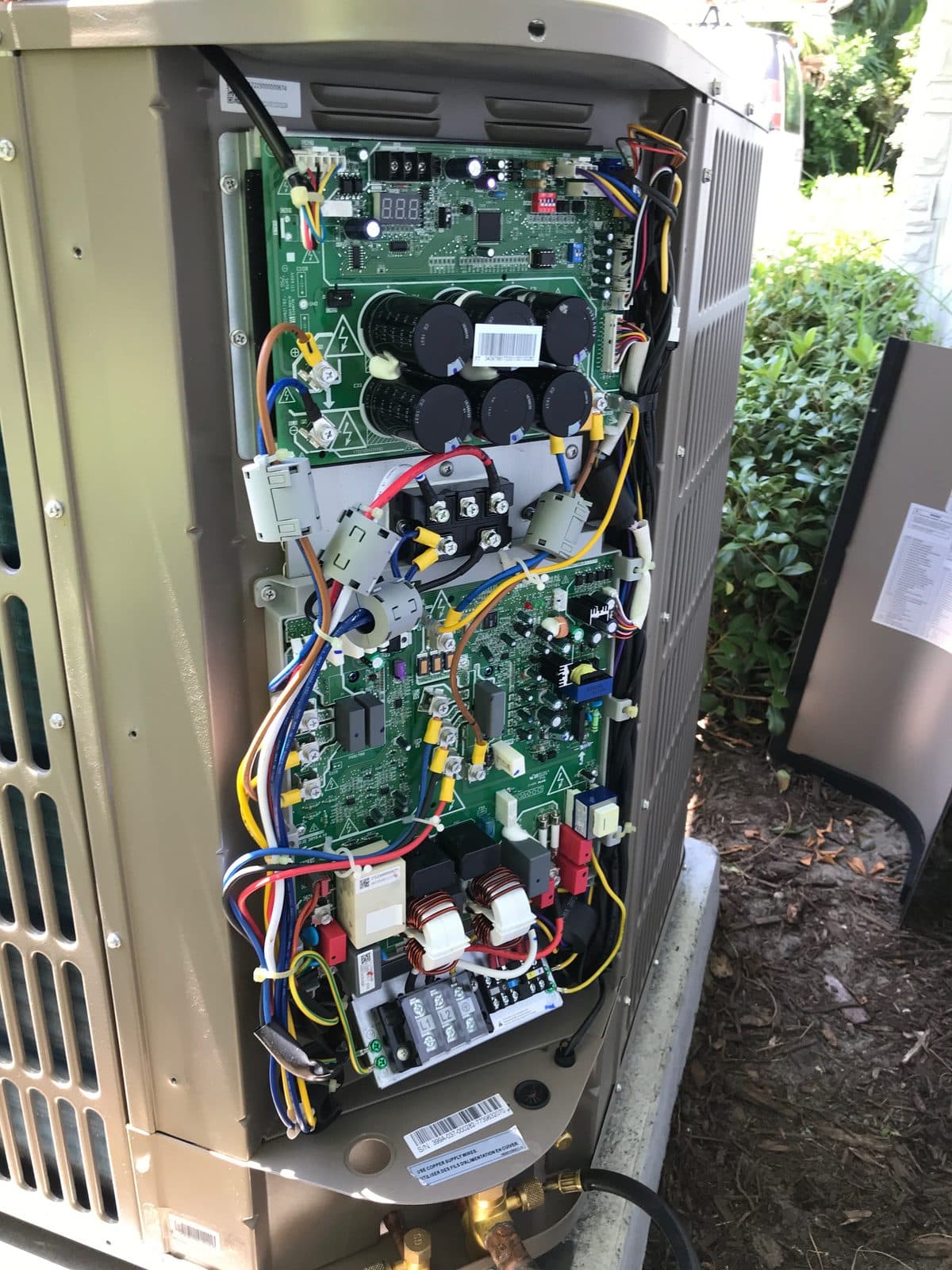
ENERGY STAR's maintenance checklist is a good yardstick for what a contractor should do. Its cooling items include:
- Tightening electrical connections and measuring voltage and current on motors.
- Lubricating moving parts.
- Checking and inspecting the condensate drain while the system is cooling.
- Checking the starting cycle, so the system starts, runs and shuts off properly.
- Cleaning the evaporator and condenser coils.
- Checking the refrigerant level and adjusting it if necessary.
- Cleaning and adjusting the blower for proper airflow.
On the island, add a careful look at the outdoor coil and cabinet for salt buildup or corrosion, which Carrier recommends for coastal equipment. Ask for the readings, not just a pass. Measurements give the next visit a baseline to compare against.
Blume's equipment work rests on measurement. New systems are sized with an ACCA Manual J load calculation and Manual S selection, then commissioned with measured static pressure, airflow and refrigerant charge, documented. Refrigerant work is done by EPA Section 608 certified technicians.
If the refrigerant level is low, ask what caused it before any is added. More detail on a full visit is on our AC tune-up page.
Stands, straps and storm exposure
The city's Building Division says all sites in Treasure Island are in a wind-borne debris zone and in a flood hazard area. It lists a wind speed requirement of 150 mph and Wind Exposure D.
The U.S. Department of Energy's Building America Solution Center gives guidance for equipment in places like this. It says outdoor units should be elevated to at least 1 foot above the base flood elevation. It says the pad or platform should be anchored to the floor or slab, and the equipment anchored to the pad. In coastal areas, it says anchors and straps should be stainless steel or hot-dip galvanized to resist salt spray and corrosion.
A maintenance visit is a good moment to look at that hardware. Ask the technician whether the straps, anchors and stand show rust, and whether anything has loosened. The same guidance says access and clearances must be kept for servicing and repairs, so a unit boxed in by storage or plants is harder to maintain.
If you do not know how high your equipment needs to sit, the city's Floodplain Management Division points owners to its Forerunner map for a property's flood zone and Base Flood Elevation.
After a storm, a flood or an outage
A resident guide photo shows street flooding in Sunset Beach from Hurricane Dennis in July 2005. The guide's hurricane advice includes turning off major appliances when power is lost, to reduce surge when electricity is restored.
The Building America Solution Center says floodwaters are likely to destroy the electrical parts of outdoor equipment. It warns that even brief submersion can short the electrical equipment and fill the condenser with sand or silt.
If water reached the outdoor unit or the air handler, do not switch the system on to test it. Have a licensed contractor inspect it first. The National Weather Service says late May through June is when severe storms are most likely, with hail, damaging winds and waterspouts common, so check for bent fins or debris after any strong storm. Our guide to hurricane season HVAC prep covers the steps before and after a storm.
What you can do between visits
Three jobs are safe for a homeowner and make each visit more useful.
- Filter. ENERGY STAR says to inspect, clean or change the filter once a month. Duke Energy says a dirty filter makes a cooling system work harder. Your contractor can show you where it is and how it comes out. See our guide to HVAC air filters.
- Thermostat settings. Duke Energy suggests the highest comfortable setting. In a home that sits empty part of the year, check for a hold or vacation setting. Our page on thermostat settings has more.
- Clear debris. Keep vents and return grilles open and free of furniture. Outside, pull leaves, palm fronds, sand and windblown litter away from the unit by hand. Carrier advises keeping debris away from coastal outdoor units.
Leave the rest to a licensed contractor: the electrical panels, the capacitor, the refrigerant and the drain line. If a breaker has tripped, leave it off and call a licensed contractor.
When to call before the next visit
Do not wait for the scheduled tune-up if you notice any of these:
- Warm air from the vents, or a system that runs and runs without cooling.
- Ice on the copper lines or the indoor coil.
- Water around the air handler, or a system that shuts off on its own.
- A tripped breaker. Leave it off and call.
- Rust, flaking or bent fins on the outdoor coil after a storm.
- A new noise, a burning smell or a musty smell at start-up.
For a system that stops entirely, Blume offers 24/7 emergency HVAC service, with same-day response available based on location and technician availability. A person answers the 24/7 dispatch line.
AC maintenance with Blume Mechanical Service
Blume Mechanical Service is a Class A licensed Florida air conditioning contractor, license CAC-1822618, and is fully insured. Our office is in Belleair Bluffs, and our core service area is Pinellas, Hillsborough and Pasco counties, which includes Treasure Island. We are brand-agnostic and service all major manufacturers as a licensed contractor.
If a visit finds something adjustment will not fix, you get a written, upfront price before any work. Where both make sense, you see repair and replacement numbers side by side, and Blume does not sell equipment a building does not need. Paid priority scheduling is also available.
The Building Division invites residents to verify a contractor's credentials through permits@mytreasureisland.org or at pcclb.com. Our guide to Florida HVAC contractor licenses explains what to look for.
For the full seasonal list, see our AC maintenance checklist for Florida homes. Plan details are on the AC maintenance plan page, and our Treasure Island HVAC page covers other services in the city.
Frequently asked
How often should I have my AC maintained in Treasure Island?
At least once a year, in spring, as ENERGY STAR recommends for the cooling system.
Do I need to call a pro for this?
Maybe. Checking the filter, setting the thermostat and clearing debris from vents, returns and the outdoor unit are yours to do. Coil cleaning, electrical checks, drain clearing and refrigerant are work for a licensed contractor. If a breaker has tripped, leave it off and call.
Is it worth booking maintenance before hurricane season?
Yes. The city dates hurricane season from June 1 to November 30, and a spring visit lands before it. It is also a chance to check the straps, anchors and stand that hold the outdoor unit in place.
My outdoor unit sat in floodwater. Can I just run it?
No. The Building America Solution Center says floodwater is likely to destroy the electrical parts of outdoor equipment and can fill the condenser with sand or silt. Leave it off and have a licensed contractor inspect it first.
Do you only service certain brands?
No. Blume is brand-agnostic and services all major manufacturers as a licensed contractor.
Drain line care and maintenance plans
If the drain line is why you are here, these pages cover what we offer for it:
- DrainGuard condensate drain protection plan
- AC maintenance plans
- Clogged AC drain line: causes and what to do
- AC capacitor replacement, installed by a licensed technician
Homeowner guides
To schedule AC maintenance in Treasure Island, call Blume Mechanical Service at 727-330-9131.
References: City of Treasure Island, New Resident Guide (PDF dated April 13, 2021) · City of Treasure Island, Building Division (no date printed) · City of Treasure Island, Floodplain Management Division (no date printed) · National Weather Service Tampa Bay Area, Florida Thunderstorm Season (no date printed) · ENERGY STAR (U.S. EPA), Maintenance Checklist (no date printed) · Carrier, Coastal Heating and Air (read November 13, 2026) · U.S. Department of Energy Building America Solution Center, Outdoor HVAC Equipment Elevated and Secured for Resistance to Floods, Earthquakes, and High Winds (updated September 30, 2022) · Duke Energy Florida, Summer of Savings: Duke Energy Florida offers ways to lower energy use and save (June 10, 2024)
Also in Treasure Island: AC repair in Treasure Island
Residential AC Maintenance nearby: AC maintenance in Tampa · AC maintenance in St. Petersburg · AC maintenance in New Port Richey · AC maintenance in Clearwater