
Pinellas County · Florida CAC-1822618
AC Maintenance in South Pasadena, FL: Timing, Bay Air and Flood Zones
AC maintenance in South Pasadena is best booked in early spring, before the long hot season and before hurricane season starts on June 1. The city sits on the shallow waters of Boca Ciega Bay, and its own emergency guide calls it a low-lying area. The city describes year-round breezes off the water. This page covers when to schedule a tune-up, what the visit should check, how condos, houses and mobile homes differ, and the checks you can safely make yourself.
When to schedule AC maintenance in South Pasadena
ENERGY STAR recommends an annual pre-season check-up by a contractor. It says contractors get busy once summer comes, so the cooling system is best checked in the spring. Its suggestion for remembering is to plan the visit around the spring time change.
That advice fits this city closely. NOAA's 1991-2020 climate normals for its St. Petersburg airport station count about 231 days a year with a high of 80°F or more. April already averages about 22 of those days. May through September average 29 to 31 a month, and October still averages about 27.
At that station, highs of 80°F or more are the norm from April through October. The normal March high at that station is 75.9°F, compared with 81.0°F in April. A visit in March comes before that stretch.
Hurricane season and extreme heat
The city's 2025 Emergency Action Guide says hurricane season runs from June 1 to November 30. A spring visit is finished before that window opens.
The same guide lists extreme heat as a hazard. It says long periods of high temperatures, especially with high humidity, raise the risk of heat-related illness, particularly for seniors. The guide puts the city's median age at 68.4.
What a maintenance visit should check
A useful tune-up produces readings and findings, not just a look at the unit. ENERGY STAR's maintenance checklist is a fair baseline for what a visit should include. A few terms first: the condenser is the outdoor unit that releases heat, and the evaporator coil is the indoor coil that absorbs it. Refrigerant is the fluid that carries heat between the two.
Coils, indoors and out
ENERGY STAR lists cleaning the evaporator and condenser coils. It says dirty coils reduce the system's ability to cool your home and make it run longer. The manufacturer manual for one split system adds that grass clippings, leaves, dirt and dryer lint can be drawn into the outdoor coil. It says clogged coils lower efficiency and can damage the compressor.
Electrical connections and controls
The checklist calls for tightening electrical connections and measuring voltage and current on motors. It warns that faulty connections can cause unsafe operation and shorten the life of major components. It also calls for checking the controls and the starting cycle, so the system starts, runs and shuts off properly.
Condensate drain
As an air conditioner cools, it pulls water out of the air. That water, called condensate, runs to a pan and out through a drain line. ENERGY STAR says a plugged drain can cause water damage in the house and affect indoor humidity. The manufacturer manual says drain maintenance may be needed more often in humid climates.
Airflow and refrigerant
The checklist includes cleaning and adjusting blower parts so the system moves enough air. It also includes checking the refrigerant level, because too much or too little makes the system less efficient. Blume's refrigerant work is done by EPA Section 608 certified technicians, who hold the federal refrigerant-handling credential.
Bay air and the outdoor unit
The city describes South Pasadena as having a semi-tropical climate with year-round breezes off the water. Its emergency guide places the city on the shallow waters of Boca Ciega Bay.
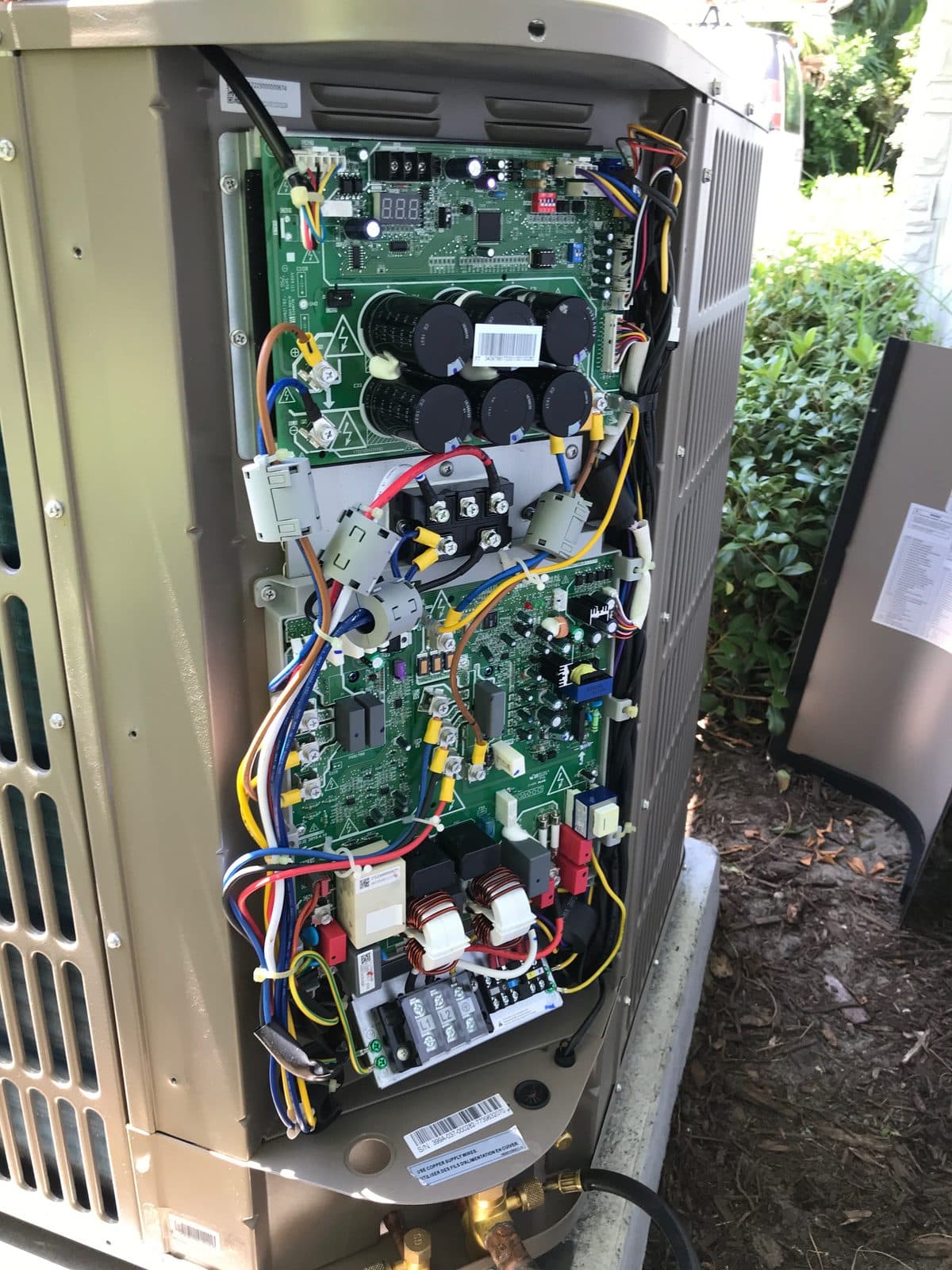
One manufacturer's homeowner manual says coastal locations need additional outdoor-unit maintenance because of highly corrosive airborne ocean salt. It suggests washing the exposed surfaces and outdoor coil about every 3 months. It also tells owners to consult their dealer for cleaning intervals and procedures.
The same manual warns against harsh chemicals or high-pressure water on coils, and says units near a sea coast need more frequent rinsing. It lists inspecting the cabinet and replacing parts that are damaged or severely rusted. On a maintenance visit here, the technician should look at the coil fins, cabinet and electrical connections for corrosion, not just dirt.
Ask your contractor what cleaning interval suits your unit's spot. The manual notes that inspection intervals can vary with climate and operating hours. Our guide to coastal coil protection explains what corrosion looks like and what helps.
Condo, house or mobile home
South Pasadena's housing is a mix. The city's emergency guide, using information as of March 26, 2025, lists 207 mobile homes, 329 single-family dwellings and 66 multi-family residential buildings.
- Condo units. Tell the technician where the indoor unit sits and where the outdoor unit is, whether on a roof, a balcony or the ground.
- Single-family homes. Ductwork, attic access and the location of the air handler all matter. The air handler is the indoor cabinet that holds the blower and evaporator coil.
- Mobile homes. Tell the technician it is a mobile home when you book. Our guide to mobile home air conditioning explains how these systems differ.
Wherever the system is, the same core checks apply: coils, drain, electrical connections, airflow and refrigerant.
Flood zone, elevation and your equipment
The city's flood safety page says all property in South Pasadena is in a Special Flood Hazard Area on the NFIP flood maps. Its emergency guide says elevation in the city ranges from 5 to 11 feet above sea level. It also notes that Sunset Drive South and Oleander Way South flood quickly in heavy rain, especially at high tide.
The flood page tells residents to elevate equipment such as water heaters and AC units. A maintenance visit is a good time to note how high your outdoor unit and its electrical connections sit. If a future replacement is planned, that height becomes part of the decision.
The city's permit list says a new or replacement air handler or condenser needs a permit, and so does duct work replacement. The list says it is not all inclusive. The Community Improvement Department asks residents who are unsure to call or email. The city also keeps elevation certificates on file that residents can look up from its flood page.
For the statewide permit picture, see our guide to HVAC permits in Florida. Before June, our hurricane-season HVAC prep guide covers what to do ahead of a storm.
What you can do between visits
Three checks are safe for a homeowner, and they help the visit go further.
- Filter. ENERGY STAR says to inspect, clean or change air filters once a month. It says a dirty filter can damage equipment and lead to early failure. Our guide to HVAC air filters covers sizes and types.
- Thermostat settings. Confirm it is set to Cool with a sensible temperature. Our thermostat settings guide explains the options.
- Vents, returns and the outdoor unit. Keep furniture and curtains off supply vents and return grilles. Keep leaves, plants and stored items away from the outdoor unit so air can move through it.
Leave everything else to a licensed contractor. Do not open panels, touch electrical parts or capacitors, clear drain lines, or add refrigerant. If a breaker for the air conditioner has tripped, leave it off and call a licensed contractor.
When to call before the next visit
Do not wait for the spring visit if you notice any of these:
- Warm air from the vents, or a home that stays damp even while the system runs.
- Ice on the indoor coil or the copper lines.
- Water around the indoor unit or standing in its pan.
- A tripped breaker for the air conditioner.
- New noises, burning smells, or rust on the outdoor cabinet.
- Floodwater that reached the outdoor unit, the indoor unit or the ducts.
Blume offers 24/7 emergency HVAC service, with same-day response available based on location and technician availability. A person answers the 24/7 dispatch line.
AC maintenance with Blume Mechanical Service
Blume Mechanical Service is a Class A licensed Florida air conditioning contractor, license CAC-1822618, and is fully insured. Our office is in Belleair Bluffs, and our core service area is Pinellas, Hillsborough and Pasco counties. We are brand-agnostic and service all major manufacturers as a licensed contractor.
If a maintenance visit finds a problem, you get a written, upfront price before any work starts. Where both make sense, repair and replacement are laid out side by side, and we do not sell equipment a building does not need. Paid priority scheduling is also available.
For the full seasonal list, see our AC maintenance checklist for Florida homes. Plan details are on the AC maintenance plan page. For permits, flood rules and other services in the city, see our South Pasadena HVAC page.
Frequently asked
When should I book AC maintenance in South Pasadena?
In early spring. ENERGY STAR recommends checking the cooling system in the spring, before contractors get busy in summer. NOAA's normals for its St. Petersburg airport station show about 22 days of 80°F or higher in April alone. Hurricane season starts June 1.
Does the bay air change what maintenance should include?
It should. One manufacturer's manual says coastal locations need additional outdoor-unit maintenance because of airborne ocean salt, and that units near a sea coast need more frequent rinsing. Ask the technician to check the coil, cabinet and electrical connections for corrosion.
Do I need a city permit for AC work in South Pasadena?
For some work, yes. The city's permit list says a new or replacement air handler or condenser needs a permit, as does duct work replacement. The list is not all inclusive, so call the Community Improvement Department if you are unsure.
Do I need to call a pro for this?
Maybe. Changing the filter, checking thermostat settings and clearing debris from vents, returns and the outdoor unit are yours to do. The annual check-up, coil cleaning, drain service and anything involving refrigerant, wiring or capacitors belong to a licensed contractor. If a breaker has tripped, leave it off and call one.
My AC seems fine. Is a maintenance visit still worth it?
ENERGY STAR says dirty coils make the system run longer and a plugged drain can cause water damage in the house. It also says faulty electrical connections can cause unsafe operation and shorten component life. ENERGY STAR recommends a contractor check the cooling system each spring.
Drain line care and maintenance plans
If the drain line is why you are here, these pages cover what we offer for it:
- DrainGuard condensate drain protection plan
- AC maintenance plans
- Clogged AC drain line: causes and what to do
- AC capacitor replacement, installed by a licensed technician
Homeowner guides
To schedule AC maintenance in South Pasadena, call Blume Mechanical Service at 727-330-9131.
References: Welcome to South Pasadena, FL (City of South Pasadena) · Emergency Action Guide 2025 (City of South Pasadena, Administrative Workshop agenda packet, May 6, 2025) · FEMA/Flood Safety (City of South Pasadena) · Permit or no permit? (City of South Pasadena Community Improvement Department, Rev. 1/2024) · NOAA National Centers for Environmental Information, 1991-2020 U.S. Climate Normals, station USW00092806 St Petersburg AP (read November 13, 2026) · Maintenance Checklist (ENERGY STAR) · Split System Heat Pump: Home Owner's Information (International Comfort Products, Catalog No. 428 02 5000 04)
Also in South Pasadena: AC repair in South Pasadena
Residential AC Maintenance nearby: AC maintenance in Tampa · AC maintenance in St. Petersburg · AC maintenance in New Port Richey · AC maintenance in Clearwater