
Pinellas County · Florida CAC-1822618
Residential Heat Pump Repair in Safety Harbor, Florida
Blume Mechanical Service repairs residential heat pumps in Safety Harbor, the small city on the west side of Upper Tampa Bay. We give you a written price before any work and explain which office issues the permit. Florida license CAC-1822618.
Safety Harbor covers about 4.9 square miles of land, by the Census Bureau's 2024 Gazetteer, plus a small water area. The city describes itself as sitting on the west side of Upper Tampa Bay. Its comprehensive plan maps a Coastal High Hazard Area below the Category 1 storm surge line. At the nearby airport weather station, a normal year adds up to about 3,701 cooling degree days and about 447 heating degree days, so a heat pump here does far more cooling than heating.
One machine, two jobs, and the part that switches between them
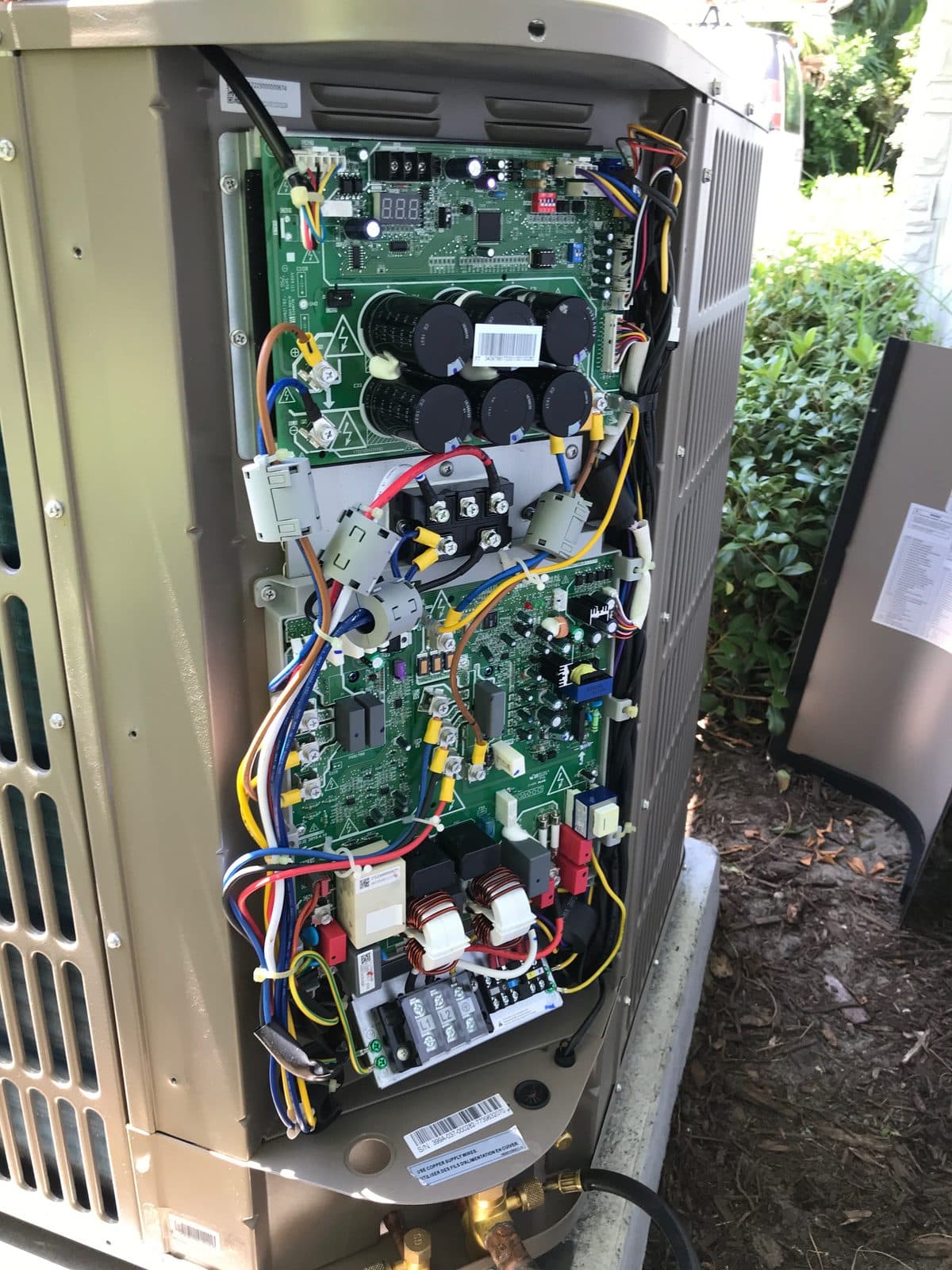
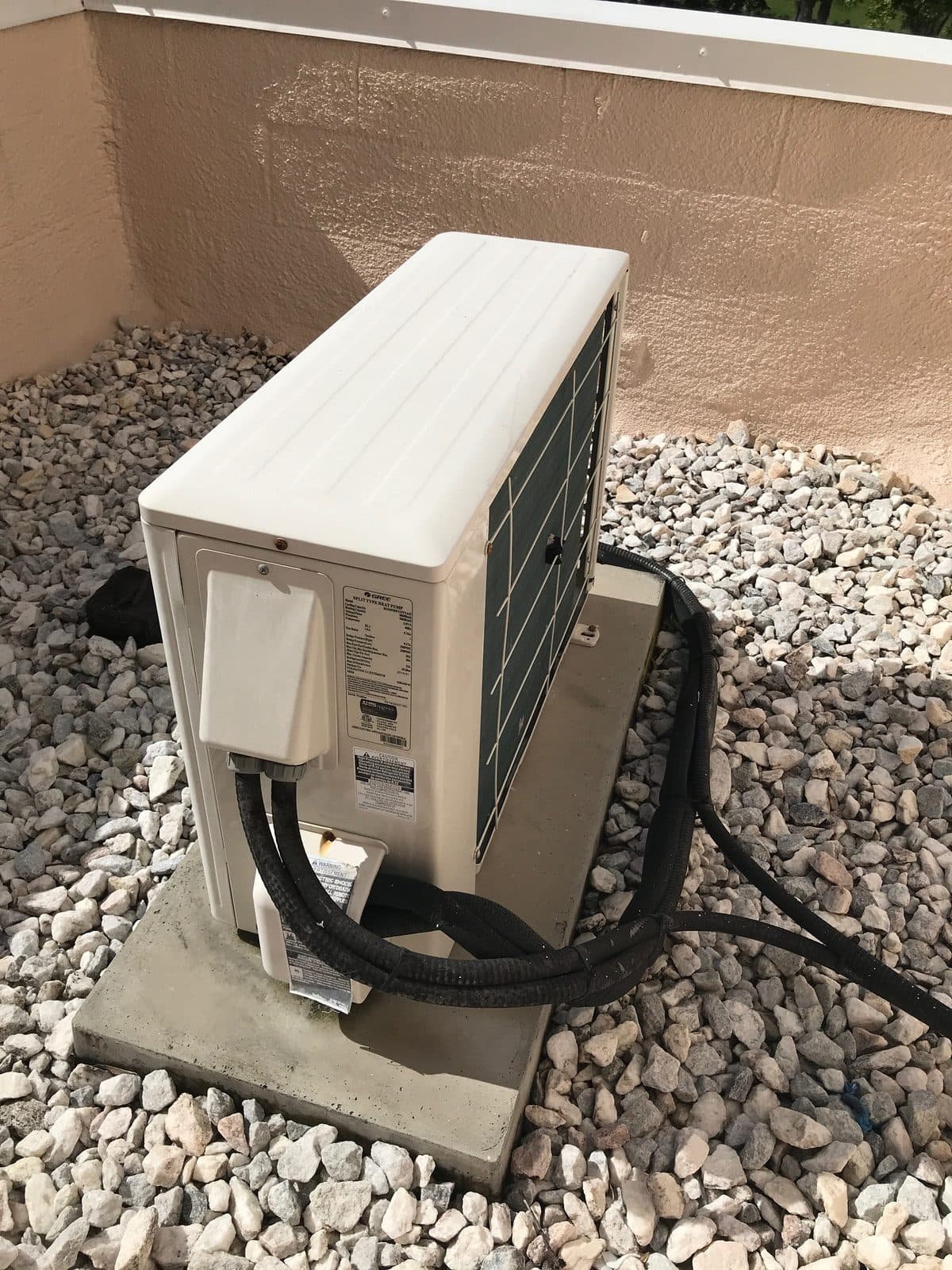
The US Department of Energy describes a heat pump as a system that heats your home by collecting heat from the outside air and concentrating it indoors. It does double duty as a central air conditioner by pumping indoor heat outside. An air-source heat pump moves heat between the house and the outdoor air.
The part that changes direction is the reversing valve. Carrier, the equipment maker, says it is the component that switches the system between heating and cooling modes. Carrier also says a heat pump that cools normally but fails to heat can have a malfunctioning or stuck reversing valve.
That is a possibility, not a verdict. Carrier adds that a reversing-valve symptom can sometimes be caused by another part of the system. Its recommended maintenance checks the valve along with refrigerant charge, electrical connections, capacitors, outdoor coils and the defrost cycle. Carrier says reversing valve issues are not DIY repairs because they involve refrigerant handling.
Not sure whether your system is a heat pump or a straight air conditioner? Our guide on how to tell if you have a heat pump walks through the signs.
Safety Harbor's climate: a cooling machine that heats now and then
A nearby weather station with NOAA's 1991 to 2020 climate normals sits at St. Petersburg-Clearwater International Airport. The station is about six and a half miles south of the Census Bureau's center point for Safety Harbor.
The National Weather Service measures heating and cooling need in degree days, counted from a daily mean of 65°F. A day warmer than that adds cooling degree days, and a cooler day adds heating degree days. At the airport, the normal year adds up to about 3,701 cooling degree days and about 447 heating degree days.
The heating side gets long rests. NOAA's normals show 0.2 heating degree days in May and none from June through September. In a Safety Harbor home, the heating mode of a heat pump can go unused for months, so a heating fault may not show until the first cool morning.
When the cold does come, it is brief. January's normal high at the airport is 70.6°F and its normal low is 52.5°F. A normal year has about 34 days with a low of 50°F or colder, and 0.4 days with a low of 32°F or colder. By contrast, it has about 94 days with a high of 90°F or hotter.
Why the thermostat says AUX on a cold Safety Harbor morning
Carrier describes auxiliary heat, often labeled AUX on the thermostat, as a secondary heating source built into a heat pump system. It typically uses electric resistance heating strips inside the indoor air handler.
Carrier defines the thermal balance point as the outdoor temperature at which a heat pump's heating capacity meets the home's heating demand. Below the system's thermal balance point, Carrier says supplemental heat may be needed. Carrier also says auxiliary heat helps raise the indoor temperature quickly if you increase the thermostat setting by more than 2 to 3 degrees at once, and assists during the defrost cycle.
Carrier says there is no single outdoor temperature at which every one of its heat pumps turns on auxiliary heat. So AUX on one of Safety Harbor's few cold mornings is not proof of a fault.
What matters is when it shows. The Department of Energy advises against setting back a heat pump's thermostat manually if that brings on backup electric-resistance heat, which costs more to run. If AUX stays on through a mild afternoon, or the house will not warm without it, that is worth a call. Our guide to auxiliary heat covers what the light means and how to set the thermostat around it.
Frost, defrost and the blows-cold-on-heat call
Carrier says that when the outdoor unit develops frost or ice during heating operation, the system can enter a defrost cycle. Auxiliary heat can help keep cold air from blowing out of the vents while the outdoor unit de-ices itself.
Carrier calls defrost a temporary cycle. Cool air that goes on and on while the thermostat calls for heat is a different call on a cold Safety Harbor morning. Carrier names a stuck reversing valve as one possible cause, and its maintenance list also covers the defrost cycle.
For more on what defrost looks like, see our guide to heat pump defrost mode.
Bay air and the outdoor coil
Safety Harbor's waterfront faces Upper Tampa Bay. Carrier notes that salt water can be carried as far as two miles inland from the coast. It says systems in those areas can be exposed to corrosive elements that may degrade performance and shorten equipment life.
Carrier says the severity of this corrosion depends on several factors, including distance from the ocean. Without special protection, a standard copper-aluminum coil can suffer galvanic corrosion, leading to refrigerant leaks and system failure.
If a leak is the problem, the US Environmental Protection Agency advises homeowners to ask technicians to locate and repair leaks instead of topping off a leaking system. The EPA also says major leaks rarely develop in properly installed and regularly maintained units. On a Safety Harbor heat pump that keeps losing charge, the condition of the outdoor coil is part of the repair question. Our coastal coil protection guide explains what slows corrosion down.
Storm water, the surge line and where the equipment sits
The City of Safety Harbor's comprehensive plan defines its Coastal High Hazard Area as land below the Category 1 storm surge line in the SLOSH storm surge model. The plan's resiliency goal names sea-level rise, high-tide events, storm surge, stormwater runoff and flash floods as hazards.
The 2024 hurricane season reached the city's own waterfront. The city says Waterfront Park, the pier, the marina, the living shoreline and part of the boardwalk sustained significant damage. It says the pier was fully destroyed during Hurricane Helene in September 2024.
The plan also says the city will follow Florida Building Code requirements for new and substantially repaired or improved structures in flood zones. Those structures must sit at least 1.0 feet above the applicable base flood elevation. If a storm pushes your home toward a major repair, ask about elevation before the equipment decision. For broader storm-season steps, see our Safety Harbor AC repair page.
Refrigerant rules and who may open the system
The EPA requires technicians who maintain, service, repair or dispose of equipment that could release refrigerant to be certified under Section 608 of the Clean Air Act. The EPA also prohibits knowingly venting refrigerants, including R-22 and its substitutes such as R-410A, during service. Blume has EPA Section 608 certified technicians.
Some older heat pumps still run on R-22, which the EPA calls HCFC-22. The EPA says no new HCFC-22 has been made or imported into the United States since January 1, 2020. It says reclaimed refrigerant cleaned to the same specifications as new will continue to be available, and you can continue to service an existing system.
So the refrigerant in an older Safety Harbor heat pump is one factor in a repair-or-replace decision. On its own it is not a reason to replace a system that holds its charge. Our guide to EPA Section 608 refrigerant rules has more.
Permits, repair or replace, and how Blume works
Pinellas County Building and Development Review Services issues permits for Safety Harbor, along with several other cities. The county's directory lists the city's Building Division at 750 Main Street and tells Safety Harbor residents to contact Pinellas County Building Services for permitting and inspection requests. Since May 1, 2021, the city's building permit and inspection work has run under an interlocal agreement with the county.
On repair versus replacement, the Department of Energy says your contractor should give you information on the safety and cost effectiveness of each. It suggests considering replacement when a heat pump is more than 10 years old, needs frequent repairs while energy bills are going up, or leaves some rooms too hot or too cold. Age is one of those signs, not a diagnosis.
Blume gives you a written, upfront price before any work and lays repair and replacement side by side. We do not sell equipment a home does not need. If replacement is the right call, we size the new system with an ACCA Manual J load calculation and select it with Manual S. After installation we commission it with measured static pressure, airflow and refrigerant charge. Financing is available through Synchrony Bank, subject to approval.
For more, see when to replace a heat pump, our guide to Florida HVAC permits and our Safety Harbor HVAC page.
Frequently asked
My heat pump cools fine but blows cool air on heat. What is wrong?
Carrier says a heat pump that cools normally but fails to heat can have a malfunctioning or stuck reversing valve. It also says that symptom can sometimes come from another part. Its maintenance list also covers the defrost cycle. In Safety Harbor the heating side can sit unused from June through September, so the fault may only show on the first cool morning. Carrier says reversing valve issues are not DIY repairs because they involve refrigerant handling.
Why does my thermostat show AUX on a cold morning?
AUX is auxiliary heat, a backup heat source in the heat pump system, usually electric heating strips in the air handler. Below the system's thermal balance point, Carrier says supplemental heat may be needed. Carrier also says auxiliary heat helps when you raise the thermostat more than 2 to 3 degrees at once and assists during defrost. On one of Safety Harbor's few cold mornings that can be normal. If AUX runs on mild days too, call a licensed contractor.
Is bay air near my Safety Harbor home hurting the outdoor unit?
Carrier's coastal guidance is about salt exposure near the coast. Carrier notes that salt water can be carried as far as two miles inland from the coast and that the severity of this corrosion depends on several factors, including distance from the ocean. It says standard copper-aluminum coils can suffer galvanic corrosion that leads to refrigerant leaks. The city sits on Upper Tampa Bay, so if your heat pump keeps losing charge, have the outdoor coil checked as part of the repair.
Who issues the permit to replace a heat pump in Safety Harbor?
Pinellas County. The county says its Building and Development Review Services issues permits for Safety Harbor, and its directory tells city residents to contact Pinellas County Building Services for permitting and inspection requests. If you are not sure your address is inside city limits, the county suggests looking it up on the Pinellas County Property Appraiser website.
Do I need to call a pro for this?
Maybe. First check that the thermostat is set to Heat or Cool as you intend, and clean or change a dirty filter, as the Department of Energy advises once a month or as needed. Clear leaves and debris from around the outdoor unit by hand. If the system still blows the wrong temperature, AUX runs on mild days, or water reached the equipment, call a licensed contractor. Refrigerant, electrical parts and the reversing valve are never do-it-yourself jobs.
Homeowner guides
Heat pump trouble in Safety Harbor? Talk to a Blume technician.
References: 2024 Gazetteer Files, Places, Florida - US Census Bureau · US Climate Normals 1991-2020, St. Petersburg Intl Airport - NOAA NCEI · What Are Heating and Cooling Degree Days - National Weather Service · Explore Safety Harbor | Safety Harbor FL - Official Website · Comprehensive Plan: Goals, Objectives & Policies - City of Safety Harbor · Hurricane Recovery Projects | Safety Harbor FL - Official Website · Building Division | Safety Harbor FL - Official Website · Building Departments in Pinellas County - Pinellas County · Energy Saver Guide - US Department of Energy · What Is a Reversing Valve? - Carrier · What Is Auxiliary Heat? - Carrier · Coastal Heating and Air - Carrier · Homeowners and Consumers: Frequently Asked Questions - US EPA · Section 608 Technician Certification Requirements - US EPA
Also in Safety Harbor: AC repair in Safety Harbor · AC maintenance in Safety Harbor
Residential Heat Pump Repair nearby: Heat pump repair in Clearwater · Heat pump repair in Dunedin · Heat pump repair in Largo · Heat pump repair in Palm Harbor