
Pinellas County · Florida CAC-1822618
Dunedin AC Maintenance and Air Conditioning Tune-Ups
Dunedin AC maintenance comes down to timing and exposure. The city has more water than land inside its limits. At the nearest NOAA normals station, in Tarpon Springs, normal daily highs top 80°F from April through October, and the National Weather Service places the rainy season from May 25 to October 10. This page explains when to book a tune-up in Dunedin, what the visit should check, what flooding changes, and which simple checks are yours.
A waterfront city with more water than land
Dunedin is an incorporated city in Pinellas County, so its own city government runs its building permits and inspections. The US Census Bureau's 2024 Gazetteer lists 10.586 square miles of land and 12.538 square miles of water inside the city boundary. In other words, Dunedin has more water than land within its limits.
The city describes itself as one of the few open waterfront communities from Sarasota to Cedar Key where buildings do not obscure the view. It also gives access to Honeymoon Island State Park. The city sits on the shores of the Gulf of Mexico.
What seacoast air does to the outdoor unit
Carrier, an equipment manufacturer, warns that harsh seacoast air can wreak havoc on standard outdoor equipment. Salt and other airborne contaminants can accumulate on outdoor components. Carrier also notes that standard copper-aluminum coils can suffer from galvanic corrosion.
The condenser coil is the finned coil in the outdoor unit that releases your home's heat outdoors. Carrier's advice is to inspect the outdoor coil and cabinet periodically for visible buildup or corrosion. It is also candid that regular maintenance cannot eliminate corrosion, but can help keep the system operating properly. That is the honest goal of a maintenance visit near the water in Dunedin: find corrosion early and keep the system working, not promise to stop it.
For coil coatings and other ways to protect a coastal unit, see coastal coil protection.
When to schedule AC maintenance in Dunedin
ENERGY STAR advises checking the cooling system in the spring and the heating side in the fall. Dunedin's climate gives a clear reason to take the spring part seriously.
The NOAA climate normals station at Tarpon Springs lies north of Dunedin. Its 1991-2020 normals show daily highs above 80°F in every month from April through October. The normal high reaches 89.7°F in June and passes 90°F in July and August.
Cooling degree days, in plain words
A cooling degree day is the National Weather Service's way of counting cooling demand. When a day's mean temperature is above 65°F, the amount above 65 is that day's cooling degree days. The Tarpon Springs station's annual normal is 3,485.5 cooling degree days against 589.4 heating degree days. At that station, cooling demand in a normal year is about six times heating demand.
The rainy season
The National Weather Service in Tampa Bay places the rainy season from May 25 to October 10 for West Central Florida outside Southwest Florida. It notes that the start date varies from year to year. The season brings dew points that stay above 70°F and almost daily showers and thunderstorms.
Put together, the sensible time to book a Dunedin tune-up is March or April. That puts the check ahead of the May heat and the late-May start of the rainy season.
When one visit a year may not be enough
Ask about a second, shorter check after the rainy season if your outdoor unit faces the water or catches wind straight off the Gulf. The same goes for a drain that has clogged before, or a system that ran almost without a break all summer.
What a Dunedin tune-up should check
ENERGY STAR's maintenance checklist sets the baseline for a contractor visit. It covers tightening electrical connections, lubricating moving parts, inspecting the condensate drain and checking the system controls. It also covers cleaning the evaporator and condenser coils, checking the refrigerant level and cleaning and adjusting blower components.
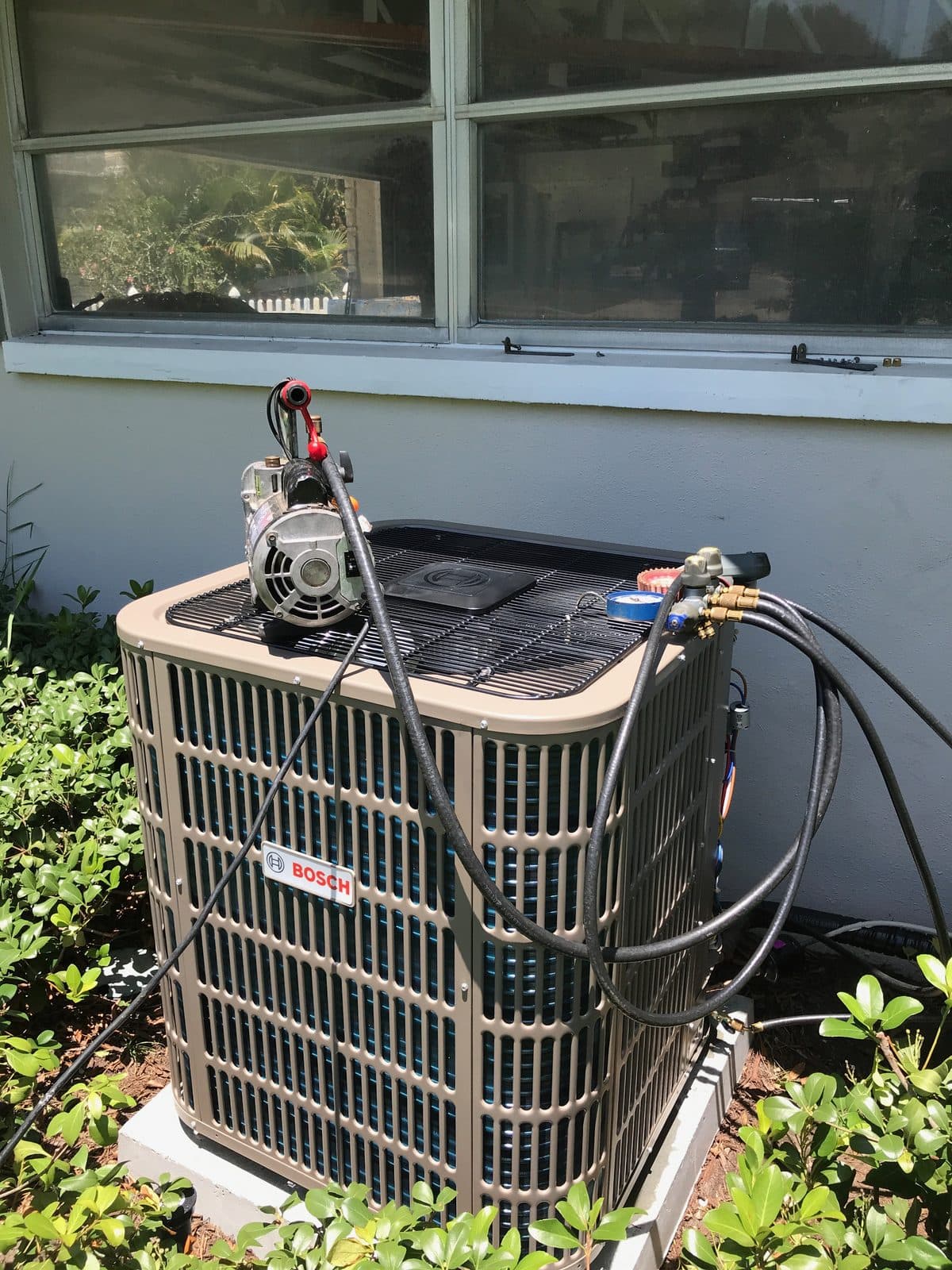
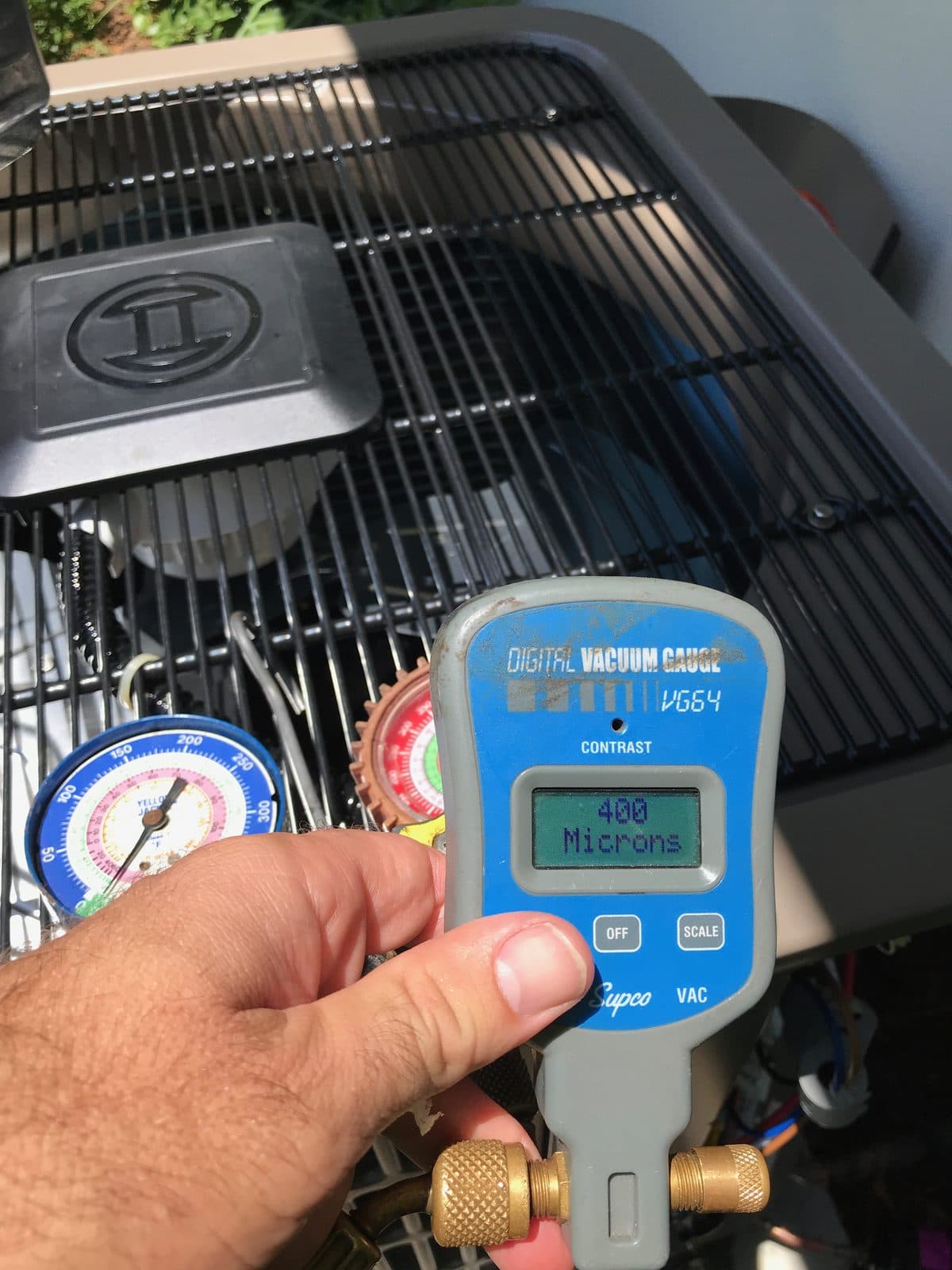
A good visit adds readings, so the next visit has something to compare against. Blume works from measurement rather than rule of thumb. Equipment is sized by ACCA Manual J load calculation with Manual S selection, and commissioned with measured static pressure, airflow and refrigerant charge, documented. Static pressure is the resistance the indoor blower pushes against as it moves air through the filter, coil and ducts.
Coils and refrigerant
The evaporator coil is the indoor coil that takes heat and moisture out of your home's air. ENERGY STAR notes that dirty coils make the system run longer and wear it out sooner. Refrigerant is the fluid that carries heat from inside your home to the outdoor unit. ENERGY STAR notes that too much or too little refrigerant lowers efficiency. Blume's refrigerant work is done by EPA Section 608 certified technicians. The rules behind that credential are covered in EPA Section 608 refrigerant rules.
The drain and the float switch
ENERGY STAR warns that a clogged drain can cause water damage and affect indoor humidity. Trane says an air handler float switch works like a miniature sump pump float switch, and that an overflow switch can be installed on the inside or outside of the condensate drain pan. Trane describes it as a safety device that shuts the outdoor compressor and condenser fan down when water rises too high. Trane also notes that a sudden shutdown in hot weather may point to a clogged drain line or pan.
A maintenance visit should clear the drain line and test that the float switch actually trips. More on the pan itself is in AC drain pan.
Flooding, storm surge and your air conditioner
The City of Dunedin's flood awareness page lists hurricanes, storm surge and heavy rain among the causes of flooding. It offers a flood zone map that shows the zone for any property in Dunedin. It also advises residents to elevate utilities, naming water heaters and A/C units, and to know the substantial improvement and damage rules.
If your outdoor unit sits on a low pad, look up your property's zone on the city map before your next maintenance visit. Then ask the technician whether raising or moving the unit makes sense. Raising a unit is work for a licensed contractor, not a weekend project.
After a flood
The US EPA's guidance for flooded homes is direct. Do not turn on your HVAC system until you have completed all the steps to clean and dry the home and addressed needed repairs. If the flood affected any part of the ducts or HVAC system, EPA says not to use it to dry the house until a professional says it is safe. Debris in the HVAC system, including mold spores, could spread into unaffected areas.
The city's hurricane page reminds residents that power grids can go out during fast, powerful storms, and it links to Duke Energy's outage map. For steps before and after a storm, see hurricane season HVAC prep.
If maintenance turns into a replacement in Dunedin
Sometimes a tune-up ends with a repair-or-replace decision. Dunedin runs its own building department at 737 Louden Avenue, according to Pinellas County's list of building departments. The city says building permits are required for most work on residential buildings and structures. Permits are submitted, reviewed and approved online through the Dunedin Citizen Self Service portal.
Air-conditioning and heating change-outs are among the permits the city says may be issued on the same day it receives the application. When an equipment replacement must be done in an emergency, the city allows the application to be submitted the next business day. If replacement is on the table, the Dunedin AC replacement page covers sizing and the install.
What you can do between visits
A few checks are yours, and they make each professional visit more useful.
- Filter. ENERGY STAR suggests inspecting the filter once a month and cleaning or changing it as needed. A dirty filter raises energy costs and can lead to early equipment failure. See HVAC air filters.
- Thermostat. Check your settings so the house is comfortable when you are home and uses less energy when you are away. See thermostat settings.
- Outdoor unit. Keep leaves, grass and other debris away from it, and look for visible salt buildup or corrosion. Leave coil cleaning to the technician.
- Drain line. Look at where the drain line ends outside and around the indoor unit for standing water. A look is enough; call if you see water where it should not be.
When to call before the next visit
Do not wait for the scheduled visit if you notice any of these:
- Warm air from the vents while the system runs.
- Water around the indoor unit, or a system that shuts off on its own in hot weather.
- A breaker that trips.
- Rust or heavy white buildup spreading on the outdoor cabinet or coil.
- Any sign that floodwater reached the outdoor unit, the indoor unit or the ducts.
For a system that has stopped, Blume offers 24/7 emergency HVAC service, with same-day response available based on location and technician availability, and a person answers the 24/7 dispatch line. Diagnosis for a failed system is covered on the Dunedin AC repair page.
AC maintenance with Blume Mechanical Service
Blume Mechanical Service is a Class A licensed Florida air conditioning contractor, license CAC-1822618, and is fully insured. We work on residential and commercial systems from our office at 2840 West Bay Drive in Belleair Bluffs, and Pinellas County, which includes Dunedin, is part of our core service area. We are brand-agnostic and service all major manufacturers as a licensed contractor.
Before any work, you get a written, upfront price. If a visit finds a problem that adjustment will not fix, you see the repair and replacement numbers side by side, and we do not sell equipment a home does not need. Paid priority scheduling is also available.
For the full seasonal list, see our AC maintenance checklist for Florida homes. Plan details are on the AC maintenance plan page.
Frequently asked
How often should I have my AC maintained in Dunedin?
At least once a year, in spring, which is when ENERGY STAR suggests checking the cooling system. If your outdoor unit faces the water or your drain has clogged before, ask about a second check after the rainy season.
What is the best month to book an AC tune-up in Dunedin?
March or April. Normal highs at the NOAA station in Tarpon Springs pass 80°F in April, and the National Weather Service places the rainy season from late May. A spring visit checks the drain and coils before both arrive.
My outdoor unit faces the water. Does that change the visit?
Yes. Carrier notes that salt and other airborne contaminants can accumulate on outdoor components near the coast. The technician should look closely at the coil and cabinet for corrosion and talk with you about how often to check it.
Can I run my AC after a flood or storm surge?
Not right away. The US EPA says not to turn on your HVAC system until you have completed all the steps to clean and dry the home and addressed needed repairs. If the flood affected any part of the ducts or HVAC system, do not use it to dry the house until a professional says it is safe, because debris in the system, including mold spores, could spread into unaffected areas.
Do I need to call a pro for this?
Maybe. The filter, thermostat settings and clearing debris around the outdoor unit are yours to handle. Coil cleaning, electrical parts, refrigerant and float switch testing belong to a licensed contractor, and the yearly spring visit is worth booking even when nothing seems wrong.
Homeowner guides
To schedule AC maintenance in Dunedin, call Blume Mechanical Service at 727-330-9131.
References: US Census Bureau — 2024 Gazetteer Files, Places, Florida · City of Dunedin — About Dunedin · City of Dunedin — Permits & Inspections · Pinellas County — Building Departments in Pinellas County · City of Dunedin — Flood Awareness · City of Dunedin — Hurricane / Tropical Storm Information · NOAA NCEI — U.S. Climate Normals 1991-2020, Tarpon Springs Sewage Plant, FL (USC00088824) · National Weather Service — What Are Heating and Cooling Degree Days · National Weather Service Tampa Bay — Florida Thunderstorm Season · ENERGY STAR — Maintenance Checklist · Trane — Troubleshooting the HVAC Air Handler Overflow Switch · Carrier — Coastal Heating and Air · US EPA — Text Version of the Flooded Home
Also in Dunedin: AC replacement in Dunedin · Heat pump repair in Dunedin · Mini-split installation in Dunedin · AC repair in Dunedin
Residential AC Maintenance nearby: AC maintenance in Tampa · AC maintenance in St. Petersburg · AC maintenance in New Port Richey · AC maintenance in Clearwater