
Hillsborough County · Florida CAC-1822618
Ductless Mini-Split Installation in Tampa, Florida
Blume Mechanical Service designs and installs ductless mini-split systems across Tampa and Hillsborough County — historic bungalows in neighborhoods like Seminole Heights and Hyde Park, garage conversions, and home offices and additions. We size each system to the space, protect older homes, and pull the permit the City of Tampa requires. Florida license CAC-1822618.
Tampa's older neighborhoods are full of homes that never had ductwork. Seminole Heights and Hyde Park bungalows from the 1910s through the 1930s were built for cross-ventilation, not central cooling, and their plaster walls and finished ceilings leave nowhere clean to route a trunk line. Add a citywide wave of garage conversions, home offices and additions, and you get exactly the situations ductless handles best — a small line-set penetration instead of demolition. That is why mini-splits fit so much of Tampa's stock.
Tampa's historic bungalows and the ductwork problem
Neighborhoods like Seminole Heights, Hyde Park, Tampa Heights and Palma Ceia are built around bungalows and early-century homes that predate central air conditioning. They were designed for cross-ventilation, deep porches and shade, with high ceilings and plaster walls — beautiful, and genuinely difficult to duct. When central air was retrofitted into these houses, it was often forced through whatever chases existed, run through a hot attic, or undersized for the rooms at the ends of the runs. The result is a familiar Tampa complaint: a bungalow that is comfortable in the front room and stubbornly hot in a back bedroom or a converted attic space.
Ductless is a natural fit here precisely because it needs no ducts. A mini-split moves refrigerant, not air, through a small line set between an outdoor unit and an indoor head, so the only building penetration is a hole about the size of a coffee mug. For a bungalow with plaster walls and no good duct path, a ductless head conditions a problem room directly without opening walls or dropping ceilings. It is the least invasive way to bring reliable, dehumidifying cooling to a room the original builder never planned to cool — and in a historic home, less invasive is worth a great deal.
Installing in a historic home without wrecking its character
The advantage of a mini-split in a Seminole Heights or Hyde Park bungalow is that it can go in with almost no damage to the house — but only if the installer respects the house. We plan indoor head placement and the line-set route to minimize what shows and what gets touched, usually keeping the outdoor unit and line set to a less conspicuous side and placing the penetration where trim or landscaping hides it rather than across a street-facing facade.
We are also straight about the trade-offs. A wall head is a modern object in an old room, and in a period house that matters to some owners. There are lower-profile choices — ceiling cassettes, or slim heads set high — and we will walk through them rather than mounting the most convenient box in the most visible place. Tampa has designated historic districts, and exterior changes in them can carry additional review through the city's preservation process; we flag that up front so it is handled before installation, not discovered after. This is not about selling a fancier unit. It is about leaving a hundred-year-old Tampa bungalow looking like itself while finally making the back rooms livable in August.
Garage conversions, home offices and additions
Tampa has seen a wave of garage conversions and home-office buildouts, along with the steady addition of bonus rooms and back suites. These spaces are among the strongest cases for ductless anywhere in the city, because they share one root cause: the existing central system was sized and ducted for the original house, and tapping a converted garage or a new office into it usually starves either the new space or the rest of the home. Stretch the ducts to reach a converted garage and you rob airflow from bedrooms that already needed it.
A dedicated ductless system solves the new space without disturbing the balance of the house. A garage-turned-home-office gets its own capacity and its own thermostat, which matters when someone is working in there through the hottest part of the day while the rest of the house is set back. A single outdoor unit and one head typically cover a converted garage or office cleanly. The part that usually needs attention is the envelope, not the equipment: a converted garage often has an uninsulated slab, a filled-in door opening, and walls built to exterior standards, all of which raise the load. We size to that real load and will tell you where a modest amount of insulation or air-sealing lets a smaller, quieter system keep the space comfortable.
How a ductless mini-split works, and why it suits Tampa's climate
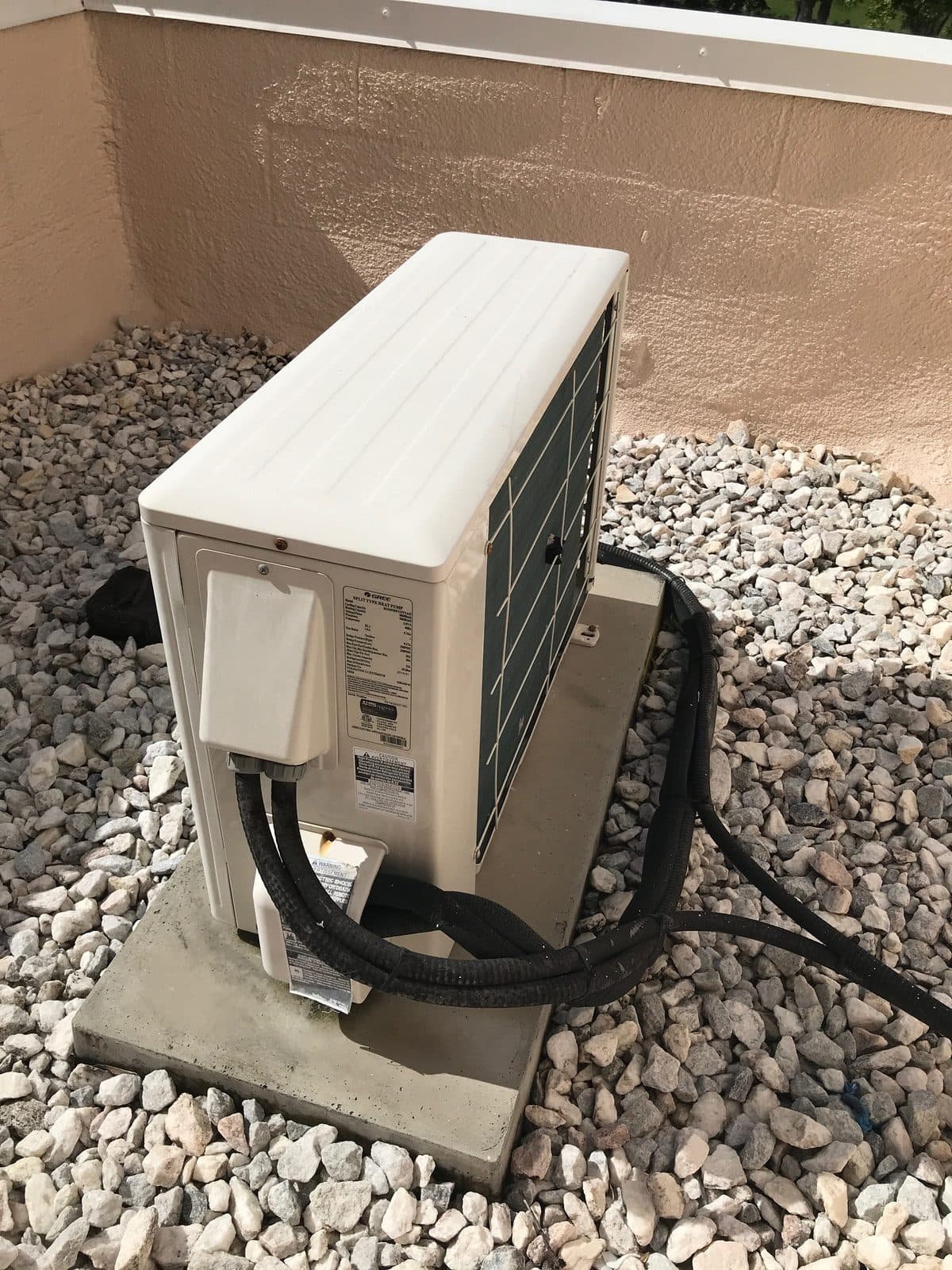
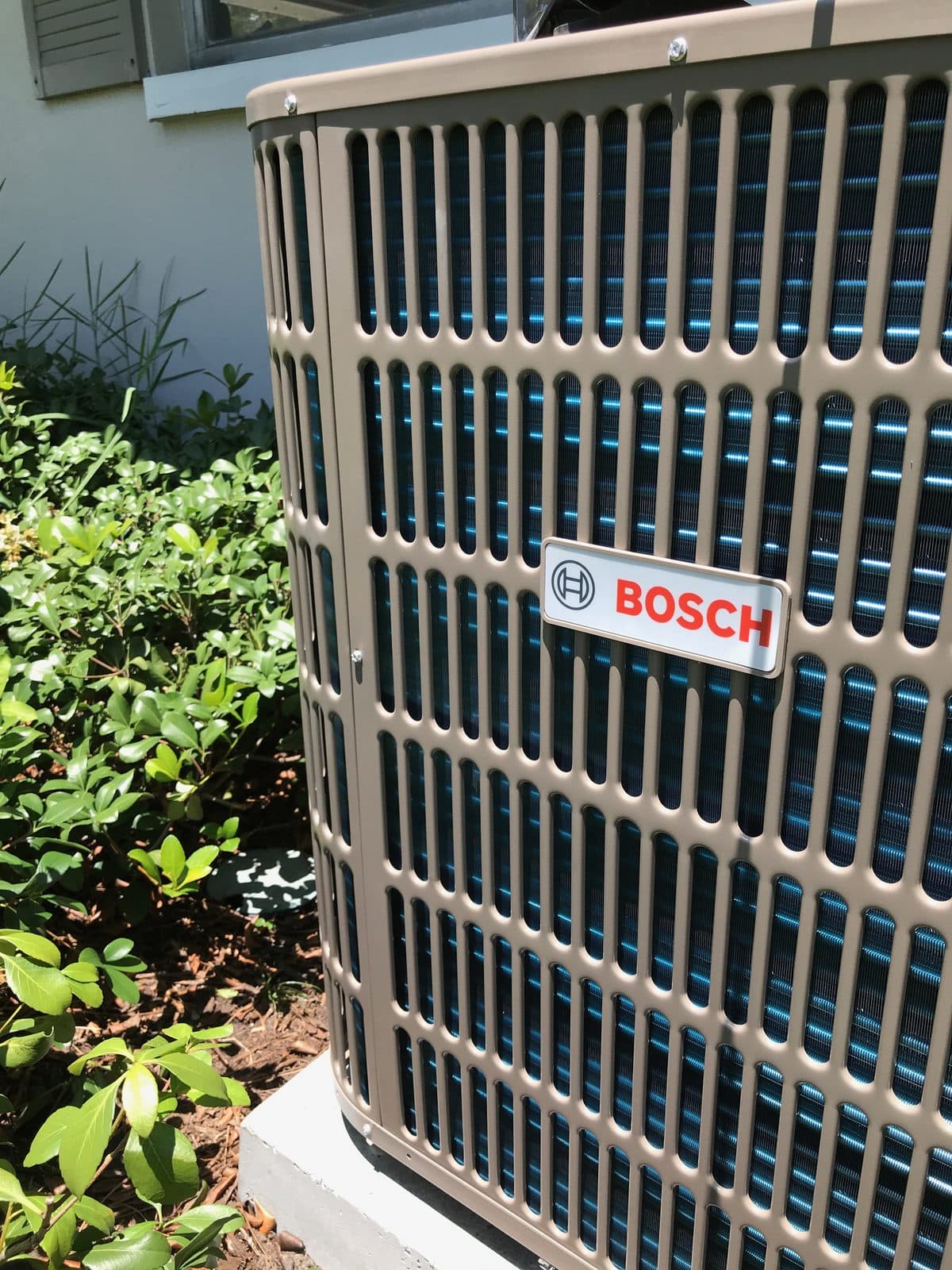
A ductless system pairs an outdoor condensing unit with one or more indoor heads, joined by a refrigerant line set running through a single small wall penetration alongside a condensate drain and control wiring. No ducts are involved, and each head is its own zone with its own thermostat.
Most residential mini-splits use inverter-driven compressors, which is what makes them a strong match for Tampa's humid subtropical climate. Rather than switching fully on and off like an older single-stage system, an inverter compressor modulates its output to track the room's actual load. On a humid but mild day — common in Tampa's long shoulder seasons — it can run steadily at low output, and steady runtime is exactly what pulls moisture out of the air. A single-stage system on the same mild day tends to short-cycle, cooling the room quickly and shutting off before it dehumidifies, which leaves a house cool and clammy. One outdoor unit can serve a single head or several depending on the home. As with all modern cooling equipment, new mini-splits are transitioning from R-410A to lower-GWP refrigerants such as R-454B, and any work that opens the sealed refrigerant circuit — installation, charging, repair — must be performed by an EPA Section 608-certified technician. Existing R-410A systems remain legal to operate and service.
Sizing to a Tampa room, not a square-footage rule
The most common way a ductless installation goes wrong is sizing by floor area and a rule of thumb. In a Tampa bungalow with big single-pane windows, or a west-facing converted garage, floor area is a poor predictor of load, because the heat is coming through glass and thin construction rather than through the footprint. Size off square footage and you routinely install a head that is too big — and an oversized mini-split short-cycles in exactly the way Florida punishes: it satisfies the thermostat in a few minutes, shuts off, and never runs long enough to dehumidify, leaving the room cool and damp. That clammy result is the single most common thing we are called to fix on somebody else's install.
We size to the load the room actually imposes — a Manual J-style calculation that reflects the glass, its orientation, the real insulation and how the space is used — and select the head to match that load rather than a round number. Undersizing is a mistake too: a head that is too small runs continuously on the hottest afternoons and never quite reaches setpoint. The goal is the capacity that lets that specific room hold temperature while running long enough to stay dry. On a multi-zone system feeding several heads from one condenser, we confirm that both the combined load and the individual zones make sense before recommending it.
Permits in the City of Tampa are not the county's process
Ductless installations are permitted mechanical work, and which office issues the permit depends on the jurisdiction. Hillsborough County contains several separate permitting jurisdictions — the City of Tampa, unincorporated Hillsborough, Plant City and Temple Terrace — and the permit path follows the municipal boundary, not the county line. A home inside the City of Tampa is permitted through the city; a property a few streets outside the city limits may be unincorporated county. A contractor who is unsure which jurisdiction a Tampa address belongs to is a contractor who has not pulled many permits here.
Hillsborough also maintains its own local contractor-licensing tier in addition to state DBPR licensure, which is not universal across Florida counties, so permitted work must be performed by a properly licensed contractor — and refrigerant work specifically requires EPA Section 608-certified technicians. The inspection confirms the things that cause failures if they are wrong: the electrical disconnect and breaker sized to the equipment nameplate, the line set supported and insulated, the condensate given a real drainage path, and the penetration sealed. Unpermitted equipment work surfaces later, at resale or during a Florida four-point insurance inspection, and Tampa's older neighborhoods see a lot of those. We pull the correct permit for your address and leave a clean record.
How a ductless installation visit goes
We start at the space and the problem, not at a unit price — whether it is a hot Seminole Heights bedroom, a Hyde Park attic room, or a converted garage doubling as a home office. We walk the room, check the wall for the head and the route for the line set, confirm the electrical panel can support the equipment, and find an outdoor location that satisfies the manufacturer's clearances and any historic-district requirements. Then we size to the real load and recommend a single-zone or multi-zone layout that fits how you use the space.
When you approve the work, we pull the permit for the correct jurisdiction, mount the indoor and outdoor units, run and seal the line set with attention to how it looks on an older home, pull a proper vacuum on the refrigerant circuit before commissioning, verify the charge, and confirm the condensate drains cleanly. We document what we installed and hand you the paperwork. If the walk-through shows that repairing or extending your existing central system would genuinely serve you better than a ductless head, we will say so — the objective is the right fix for the room and the house.
Frequently asked
My Seminole Heights bungalow has no ductwork. What are my options?
A ductless mini-split is usually the least invasive answer. Bungalows built before central air often have no clean path for ducts through plaster walls and high, finished ceilings, and the retrofits that were forced in tend to be leaky and undersized. A mini-split conditions a room with only a small line-set penetration — no plaster to open, no ceiling to drop. It is the most common way we bring dehumidifying cooling to a hot back room in Tampa's older neighborhoods. If repairing your existing system is the better path, we will tell you that instead.
Can you install a mini-split in a historic Tampa home without changing its look?
That is the whole approach. A mini-split needs only a small penetration, and we plan head placement and the line-set route to minimize what shows, usually keeping the outdoor unit and line set to a less visible side. Lower-profile options like ceiling cassettes exist where a wall head would stand out in a period room. If your home is in a designated Tampa historic district, exterior changes may carry additional preservation review, and we flag that before installation so it is handled properly.
I converted my garage into a home office. Will ductless keep it comfortable?
Yes, and it is one of the strongest cases for ductless in Tampa. The garage was never tied into the main system, and tapping it in would starve the rest of the house. A dedicated head gives the office its own capacity and thermostat — useful when you are working in there all day while the house is set back. The usual challenge is the envelope: an uninsulated slab, a filled-in door opening, exterior-grade walls. We size to that real load and note where a little insulation lets a smaller, quieter system keep up.
Do I need a permit for a mini-split in Tampa, and who issues it?
Yes, it is permitted mechanical work, and the issuing office depends on your address. Hillsborough County has several jurisdictions — the City of Tampa, unincorporated Hillsborough, Plant City and Temple Terrace — and the permit follows the municipal boundary, not the county line. A home inside the city goes through the City of Tampa. The inspection confirms the electrical, line set, condensate drainage and sealed penetration are correct. We pull the permit for the right jurisdiction and leave a clean record, which matters at resale and for a four-point insurance inspection.
Will a mini-split keep a Tampa room dry through the humid months?
A correctly sized one will. Humidity removal depends on runtime, and inverter-driven mini-splits modulate their output to run steadily rather than short-cycling — which is exactly what pulls moisture out of the air on Tampa's mild, humid shoulder-season days. The failure mode is an oversized head that cools the room in minutes and shuts off before it dehumidifies, leaving it cool and clammy. That is why we size to the room's real load, driven by glass and construction, rather than to floor area alone.
Homeowner guides
- How ductless mini-splits work
- What size mini-split you need
- Mini-split installation: what drives the job
Considering a ductless mini-split in Tampa? Talk to a licensed technician.
References: Hillsborough County and City of Tampa permitting and contractor licensing (primary) · US Department of Energy — ductless heating and cooling · ACCA Manual J (residential load calculation) and Manual S (equipment selection) · General HVAC engineering principles
Also in Tampa: AC repair in Tampa · AC maintenance in Tampa · AC installation in Tampa · AC replacement in Tampa · Heat pump repair in Tampa
Ductless Mini-Split Installation nearby: Mini-split installation in Clearwater · Mini-split installation in Largo · Mini-split installation in Pinellas Park · Mini-split installation in Seminole