
Hillsborough County · Florida CAC-1822618
Ruskin AC Maintenance: When to Schedule It and What It Checks
AC maintenance in Ruskin is mostly a question of timing. The 1991-2020 climate normals for the National Weather Service station in Ruskin show cooling demand ahead of heating demand in every month from March through November. Heavy rain arrives in June. A tune-up in March or April gets the drain, coils, electrical parts and airflow checked before the hardest stretch of the year.
What the Ruskin climate record says about your AC
The National Weather Service office for the Tampa Bay area is in Ruskin, and it publishes daily climate normals for its own Ruskin station. Normals are 30-year averages, and this set covers 1991 to 2020.
Cooling degree days, in plain words
A degree day measures how far a day's average temperature sits from 65°F. The weather service treats 65°F as the point where a home needs neither heating nor cooling. When the day's average is above 65°F, the difference counts as cooling degree days. Added up over a month, they give a rough measure of how much cooling the weather asked for.
What the Ruskin station's normals show
- Cooling degree days outnumber heating degree days in every month from March through November.
- Heating degree days are zero from June through September, so that stretch is cooling only.
- August carries the most cooling work in the table, with a normal high of 91.0°F and a normal low of 73.9°F.
- Even January logs some cooling degree days at this station.
Put simply, an air conditioner in Ruskin gets a short off-season and a very long working season.
Rain and humidity arrive together
Normal monthly rainfall at the Ruskin station jumps from 3.01 inches in May to 7.92 inches in June. It stays above 7.5 inches in every month through September, and the yearly normal is 53.59 inches. The weather office describes its rainy season as warm and humid, with frequent showers and thunderstorms and dew points that stay above 70°F. The dew point tracks how much moisture the air holds. Pulling that moisture out is part of the air conditioner's job, and the water it collects has to drain away.
When to schedule AC maintenance in Ruskin
ENERGY STAR's general advice is to check the cooling system in the spring and the heating system in the fall. In Ruskin, spring comes with a clear deadline. The normal high at the Ruskin station reaches 87.6°F in May, and the weather office dates the start of the rainy season to the middle or end of May.
That makes March or April a sensible window. The system is already running by then, so a developing problem has a chance to show itself. The long run from June through September is still ahead of it.
A fall visit is less about heating here than in colder places. December and January carry the most heating degree days in the Ruskin table, and both are small next to the summer cooling figures. If your home also heats with its air conditioning equipment, ask whether a fall check of heating mode makes sense for your system.
What a Ruskin AC tune-up should check
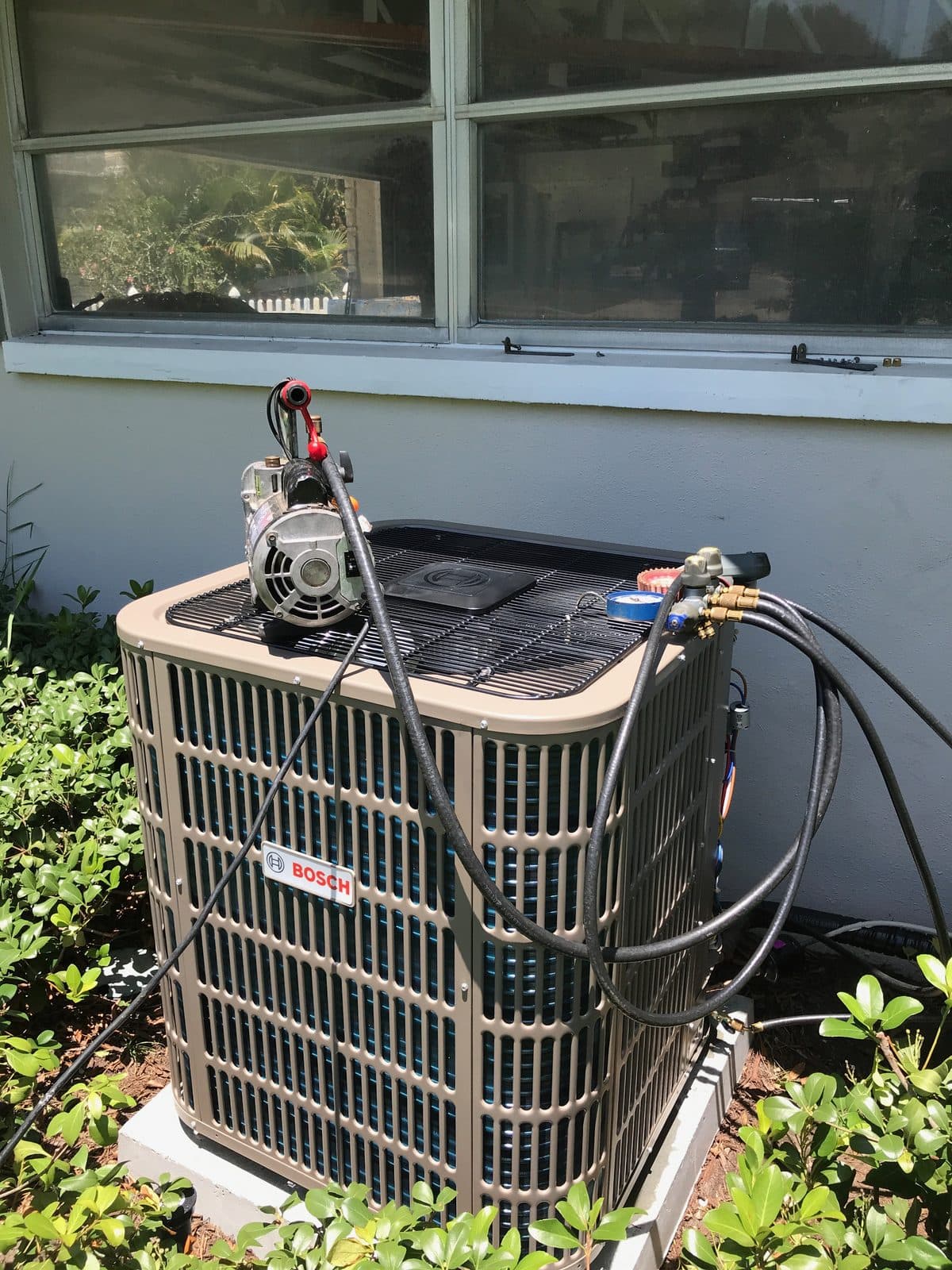
ENERGY STAR's maintenance checklist is a fair outline of a real cooling visit. Each item below follows that list, with the local reason it matters.
The condensate drain
ENERGY STAR lists inspecting the condensate drain and warns that a plugged drain can cause water damage and affect indoor humidity. With dew points above 70°F for months at a time, a Ruskin system pulls a great deal of water out of the air.
Both coils
Cleaning the indoor and outdoor coils is on the checklist. The indoor coil is where the moisture condenses out of your air. The outdoor coil gives off the heat, and near the bay it also sits in salt-laden air. Our coastal coil protection guide explains what salt does to coil fins.
Electrical connections
ENERGY STAR calls for tightening all electrical connections, because faulty connections can cause unsafe operation. That is technician work, not a homeowner task.
Refrigerant charge
The checklist notes that too much or too little refrigerant makes a system less efficient. Refrigerant is the fluid the system uses to carry heat from inside the house to the outdoor unit. Checking and adjusting it is work for a licensed contractor. Blume uses EPA Section 608 certified technicians, and Section 608 is the federal refrigerant-handling credential.
Blower, controls and thermostat
The list also covers cleaning and adjusting the blower, the fan that pushes air across the indoor coil and through the ducts, because airflow problems cut efficiency. The visit should confirm the system starts, runs and shuts off properly, and that the thermostat settings are right.
Blume commissions systems with measured static pressure, airflow and refrigerant charge, and documents the readings. Readings recorded at one visit give the next one something to compare against.
Bay-shore storms and the outdoor unit
Hillsborough County describes Ruskin as a community on the southeast shore of Tampa Bay that is not incorporated and has no formal boundaries. That means Hillsborough County, not a city hall, is the local government for Ruskin homes. Subdivisions, stores and roads have replaced many of the farm fields Ruskin was once known for, and more than 25,000 people now live in the area.
A spring maintenance visit is a good time to look at how the outdoor unit would ride out a storm season. The U.S. Department of Energy's Building America Solution Center makes three points that apply here:
- Outdoor HVAC equipment should sit at least 1 foot above the base flood elevation, on a pedestal or platform if needed.
- Floodwater is likely to destroy the outdoor unit's electrical components, and the condenser can fill with sand or silt.
- In coastal areas, anchors and straps should be stainless steel or hot-dip galvanized to resist salt spray and corrosion.
If your flood-zone paperwork lists a base flood elevation, ask the technician to note how the condenser pad compares. A rusted strap or a unit sitting low belongs in the visit report. Raising or re-anchoring equipment is work for a licensed contractor. If the outdoor unit has been in floodwater, do not run it until a licensed contractor has inspected it. Our hurricane season HVAC prep guide covers the rest of storm preparation.
What you can do between visits
Three checks are yours, and they make each visit more useful:
- Filter. ENERGY STAR suggests inspecting, cleaning or changing the filter once a month, because a dirty filter raises energy costs and can lead to early equipment failure. Our HVAC air filters guide covers sizes and types.
- Thermostat settings. Confirm the mode is set to cool and the setpoint is where you want it. The thermostat settings guide goes further.
- Vents, returns and the outdoor unit. Keep furniture and rugs off supply vents and return grilles. Clear leaves, grass clippings and stored items from around the outdoor unit so air can move through it.
Leave everything else to a licensed contractor. That includes the refrigerant circuit, electrical parts, capacitors, the drain line and anything behind a panel.
When to call before the next visit
Do not wait for the next scheduled visit if you notice any of these:
- Water around the indoor unit, or a system that shuts itself off.
- Warm air from the vents while the system runs.
- Ice on the indoor coil or the copper refrigerant lines.
- A tripped breaker for the air conditioner. Leave it off and call a licensed contractor.
- New noises, or a burning or musty smell.
- An outdoor unit that has been standing in floodwater.
If the whole house loses power in a summer storm, report it to your electric utility. Tampa Electric describes itself as the primary power provider in Hillsborough County. For an air conditioning failure, Blume offers 24/7 emergency HVAC service, with same-day response available based on location and technician availability. A person answers the 24/7 dispatch line.
AC maintenance with Blume Mechanical Service
Blume Mechanical Service is a Class A licensed Florida air conditioning contractor, license CAC-1822618, and is fully insured. Our office is in Belleair Bluffs, and we serve Pinellas, Hillsborough and Pasco counties, which includes Ruskin. We are brand-agnostic and service all major manufacturers as a licensed contractor.
If a visit turns up a problem that maintenance will not fix, you get a written, upfront price before any work, with repair and replacement options side by side. Paid priority scheduling is also available.
For Blume's other services in the area, see our Ruskin service page. The full seasonal task list is in our AC maintenance checklist for Florida homes, and plan details are on the AC maintenance plan page.
Frequently asked
When is the best time to schedule AC maintenance in Ruskin?
March or April. The normal high at the Ruskin weather station reaches 87.6°F in May, and the rainy season begins in the middle or end of May. A spring visit finds problems before the long June-to-September stretch.
Do I need to call a pro for this?
Yes, for the maintenance visit itself. Cleaning coils, testing electrical parts, clearing the condensate drain and checking the refrigerant charge are jobs for a licensed contractor. Changing the filter, setting the thermostat and keeping vents, returns and the outdoor unit clear are yours to handle.
Does a Ruskin home need AC maintenance more than once a year?
ENERGY STAR's general advice is to check the cooling system in the spring and the heating system in the fall. In Ruskin the spring cooling check is the one that matters most. At that visit, ask the technician whether anything they found calls for a follow-up.
My outdoor unit sat in floodwater. Can I just turn it back on?
No. Department of Energy guidance says floodwater is likely to destroy an outdoor unit's electrical components, and silt can fill the condenser. Keep it off and have a licensed contractor inspect it first.
Is maintenance worth it if my AC seems to be running fine?
A system that runs is not always healthy. ENERGY STAR notes that a plugged drain can cause water damage and affect indoor humidity, and that too much or too little refrigerant makes a system less efficient. A spring visit checks for both while you still choose the timing.
Drain line care and maintenance plans
If the drain line is why you are here, these pages cover what we offer for it:
- DrainGuard condensate drain protection plan
- AC maintenance plans
- Clogged AC drain line: causes and what to do
- AC capacitor replacement, installed by a licensed technician
Homeowner guides
To schedule AC maintenance in Ruskin, call Blume Mechanical Service at 727-330-9131.
References: NWS Tampa Bay - Ruskin 1991-2020 Daily Normals · What Are Heating and Cooling Degree Days · Florida Thunderstorm Season · Community of Ruskin · Maintenance Checklist | ENERGY STAR · Outdoor HVAC Equipment Elevated and Secured for Resistance to Floods, Earthquakes, and High Winds · Economic Contribution · Community Planning - Plan Hillsborough
Also in Ruskin: AC repair in Ruskin · Heating repair in Ruskin
Residential AC Maintenance nearby: AC maintenance in Tampa · AC maintenance in St. Petersburg · AC maintenance in New Port Richey · AC maintenance in Clearwater