
Pinellas County · Florida CAC-1822618
AC Maintenance in Tarpon Springs, FL
AC maintenance in Tarpon Springs means keeping up with a system that rarely gets a month off and, near the water, runs in salty air. NOAA climate normals for the Tarpon Springs station show cooling demand in every month of the year. This page covers when to book a visit, what it should check, and what salt air and humidity do to an air conditioner here.
How hard a Tarpon Springs air conditioner works
NOAA's 1991-2020 climate normals for the Tarpon Springs Sewage Plant weather station measure the cooling load in cooling degree days. The National Weather Service explains that degree days start from 65°F, the point where a home needs neither heating nor cooling. When a day's mean temperature is above 65°F, the difference is that day's cooling degree days. The daily figures are added up so that months and seasons can be compared.
The Tarpon Springs station's normal is 3,485.5 cooling degree days a year, against 589.4 heating degree days. June through August alone account for 1,638.2. No month has a normal of zero: January, the lowest, still has 41.5, and August peaks at 565.7.
The same station averages 242.8 days a year with a high of 80°F or more. In plain terms, an air conditioner in a Tarpon Springs home gets very few months off. Maintenance here is less about waking a system up for summer and more about keeping up with a cooling need that NOAA's normals show in every month of the year.
When to book AC maintenance in Tarpon Springs
ENERGY STAR recommends having a contractor do annual pre-season check-ups. It says contractors get busy once summer comes, so the cooling system is best checked in the spring.
In Tarpon Springs, spring is already warm. The station averages 65.2 days between March and May with a high of 80°F or more. Monthly cooling degree days climb from 117.6 in March to 392.6 in May.
Two dates help with the timing. The National Weather Service Tampa Bay office dates the rainy season from May 25 to October 10 for West Central Florida outside Southwest Florida, which runs from May 15 to October 15. It describes that season as warm and humid, with frequent showers and thunderstorms. The City of Tarpon Springs gives hurricane season as June 1 to November 30.
Booking in early spring means the drain, the coils and the electrical parts are checked before the rainy season and hurricane season begin. The Weather Service notes that the rainy season can begin abruptly in some years, so earlier is safer than later.
Salt air and the outdoor unit
The city's flood zone page lists VE 12-16 and CAZ 10-12 among the zones found in Tarpon Springs. It describes Zone V as coastal areas with a 1% or greater chance of flooding and with the additional hazard of storm waves. It describes Coastal A as a high-risk area between the LiMWA and Zone VE, where waves can reach 1.5 feet or more.
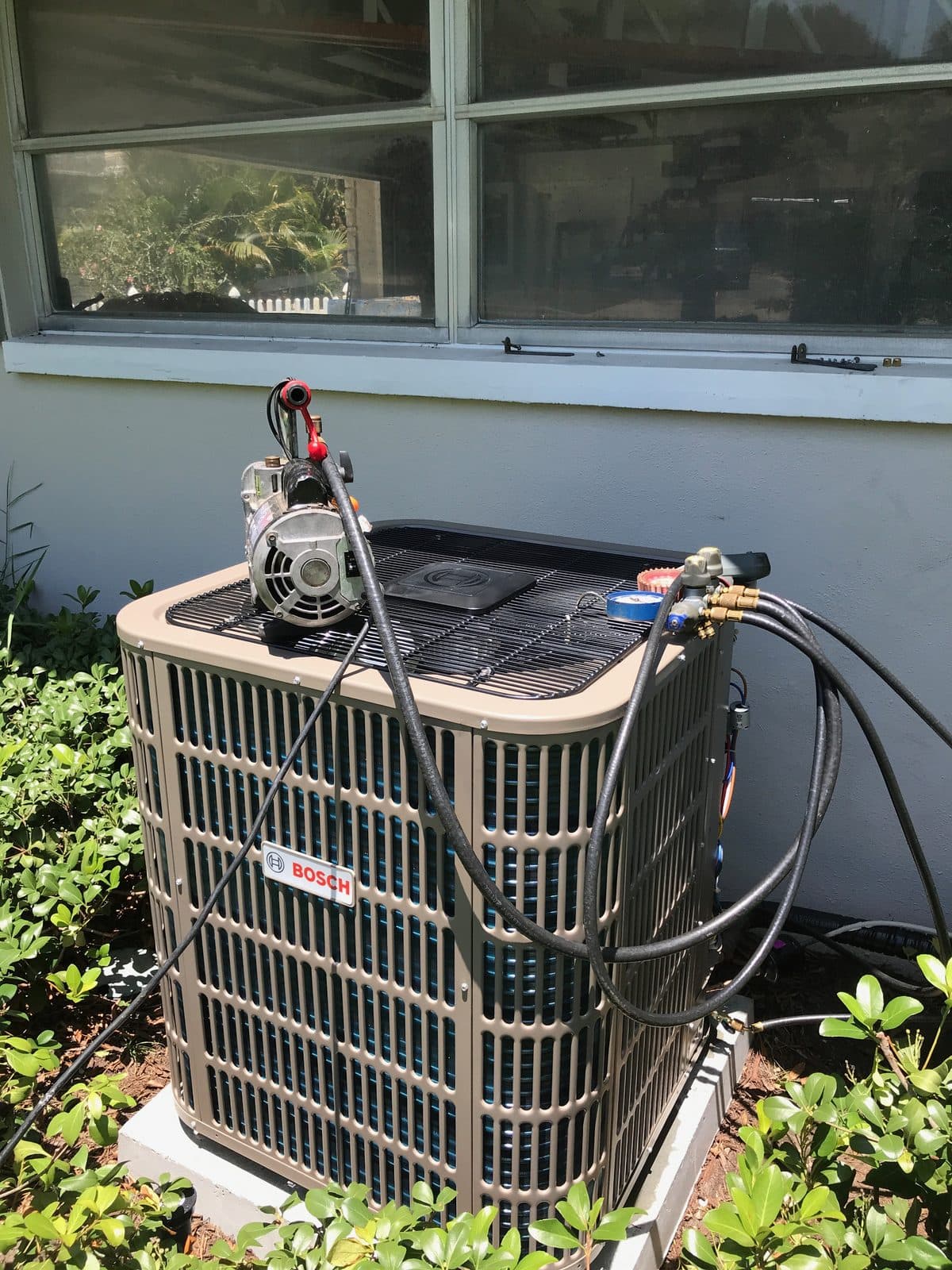
That coastline matters for the outdoor unit, which holds the condenser coil. The Department of Energy describes the condenser as the hot coils that release the collected heat into the outside air. Carrier says salt water can be carried as far as two miles inland from the coast. It says the severity of corrosion depends on distance from the ocean, wind direction, relative humidity and coil temperatures.
Without specialized protection, standard copper-aluminum coils can suffer galvanic corrosion, leading to refrigerant leaks and system failure, Carrier says. Refrigerant is the fluid the compressor moves between the indoor and outdoor coils to carry heat out of the house. Carrier's installation instructions for its GA4SAN5 and GA5SAN5 air conditioners say maintenance frequency may vary by geographic area, such as coastal applications.
Carrier also says regular maintenance cannot eliminate corrosion, but it can help keep the system operating properly and let problems be found earlier. On a home near the water, the visit should include a close look at the outdoor coil and cabinet for buildup or corrosion. Our page on coastal coil protection goes further.
What a maintenance visit should cover
ENERGY STAR's maintenance checklist is a fair standard for what a check-up includes. For a central air conditioner, it covers:
- Thermostat settings, so the system keeps you comfortable at home and saves energy while you are away.
- Electrical connections, tightened, with voltage and current measured on the motors.
- Moving parts, lubricated, because parts that lack lubrication cause friction in motors and use more electricity.
- The condensate drain, checked and inspected.
- The starting cycle, so the system starts, runs and shuts off properly.
- Both coils, cleaned: the indoor evaporator coil and the outdoor condenser coil.
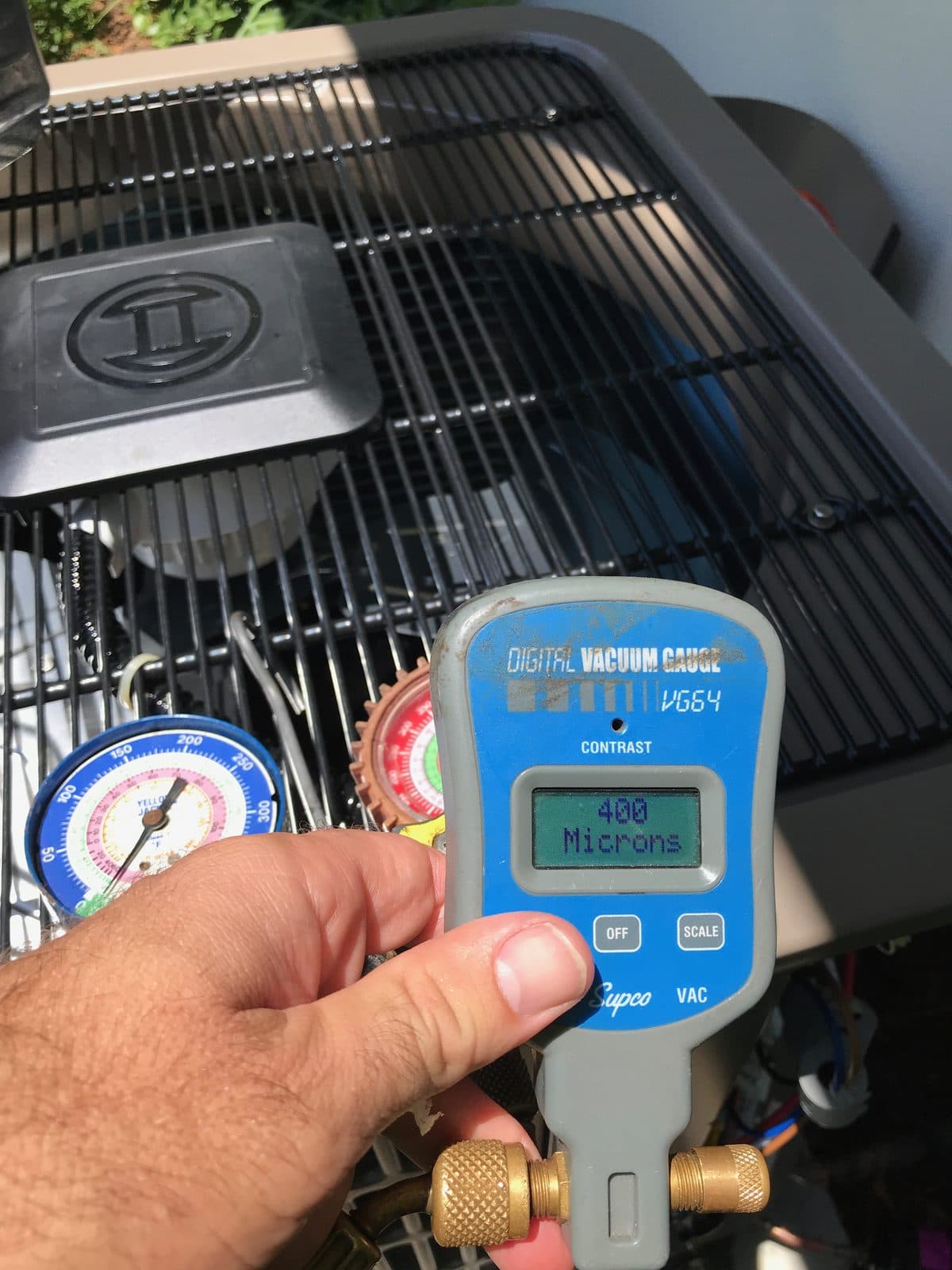
- Refrigerant level, checked and adjusted if needed. ENERGY STAR says too much or too little makes the system less efficient and shortens the life of the equipment.
- Blower components, cleaned and adjusted for proper airflow.
Blume's refrigerant work is done by EPA Section 608 certified technicians, who hold the federal refrigerant-handling credential. Ask for the readings from each visit, not just a sticker on the unit, so the next visit has something to compare against.
Humidity and the condensate drain
An air conditioner dries the air as it cools it. The Department of Energy says cooling coils remove heat and humidity from the air using refrigerant. The National Weather Service defines the dew point as the temperature at which water vapor turns into liquid droplets, a process called condensation.
The Tampa Bay office says dew points across West Central and Southwest Florida range from below 30°F on cool winter days to above 80°F on sweltering summer days. The higher the dew point, the more moisture is in the air. The water the indoor coil pulls out of that air has to leave through the condensate drain.
ENERGY STAR warns that a plugged drain can cause water damage in the house and affect indoor humidity levels. That is why the drain belongs on every visit. For how the pan and the line work together, see our page on the AC drain pan.
What you can do between visits
- Filter. ENERGY STAR says to inspect, clean or change the filter once a month, and that your contractor can show you how. Our guide to HVAC air filters explains the options.
- Thermostat. Confirm it is set to Cool and to a temperature you actually want. See thermostat settings.
- Outdoor unit. Keep leaves, grass and other debris away from it, as Carrier advises. After a storm, pick fronds and litter away by hand.
- Look, don't open. Carrier suggests periodically inspecting the outdoor coil and cabinet for visible buildup or corrosion. Look from outside and leave every panel closed.
- Drain. If you see standing water in the pan or around the indoor unit, call a licensed contractor.
The Department of Energy advises hiring a certified professional when a unit needs more than basic maintenance. Anything involving refrigerant or electrical parts belongs with a licensed contractor.
If a visit points to replacement
When a visit turns up a system near the end of its life, Blume lays out repair-versus-replace numbers side by side. You get a written, upfront price before any work, and Blume does not sell equipment a building does not need.
For mechanical permits, the city says the application is made online through its GoPost portal. Pinellas County lists the Tarpon Springs building department at 324 East Pine Street, phone (727) 942-5617.
The city's floodplain management page links FEMA's guide, Protecting Building Utility Systems From Flood Damage (FEMA 348). Our Tarpon Springs AC repair page covers flood rules and storm permits in more detail.
AC maintenance with Blume Mechanical Service
Blume Mechanical Service is a Class A licensed Florida air conditioning contractor, license CAC-1822618, and is fully insured. Our office is at 2840 West Bay Drive #114 in Belleair Bluffs. Our core service area is Pinellas, Hillsborough and Pasco counties, which includes Tarpon Springs. We are brand-agnostic and service all major manufacturers' equipment.
When we install a new system, we commission it with measured airflow and refrigerant charge, documented. Paid priority scheduling is available. For a system that stops between visits, Blume offers 24/7 emergency HVAC service, with same-day response available based on location and technician availability.
For the full seasonal list, see our AC maintenance checklist for Florida homes. Plan details are on the AC maintenance plan page, and the city overview is on our Tarpon Springs HVAC page.
Frequently asked
How often should I have my AC maintained in Tarpon Springs?
At least once a year. ENERGY STAR recommends annual pre-season check-ups, and the Tarpon Springs weather station has a cooling degree day normal above zero in every month. If your outdoor unit is close to the water, ask about checking the coil more often. Carrier says maintenance frequency may vary in coastal applications.
What is the best time of year to schedule it?
Spring, before the rainy season. ENERGY STAR says the cooling system is best checked in the spring, before contractors get busy. The National Weather Service dates the rainy season from May 25 for West Central Florida outside Southwest Florida, and the city gives June 1 as the start of hurricane season.
Does salt air matter if my home is not on the water?
It can. Carrier says salt water can be carried as far as two miles inland from the coast. It says the amount of corrosion depends on distance from the ocean, wind direction, relative humidity and coil temperatures. Ask the technician to look closely at the outdoor coil and cabinet.
Do I need to call a pro for this?
Maybe. Changing the filter, checking thermostat settings and clearing debris from around the outdoor unit are yours to do. Cleaning coils, tightening electrical connections and checking the refrigerant level are on ENERGY STAR's list for a contractor's check-up. Refrigerant and electrical work always belong with a licensed contractor.
Should the heating side be checked too?
Yes, briefly. The Tarpon Springs station's normal is 589.4 heating degree days a year, and it averages 49.7 days with a low below 50°F. ENERGY STAR suggests checking the heating system in the fall.
Homeowner guides
To schedule AC maintenance in Tarpon Springs, call Blume Mechanical Service at 727-330-9131.
References: NOAA National Centers for Environmental Information, 1991-2020 U.S. Climate Normals, annual and seasonal, station USC00088824 Tarpon Springs Sewage Plant (read November 13, 2026) · NOAA National Centers for Environmental Information, 1991-2020 U.S. Climate Normals, monthly, station USC00088824 Tarpon Springs Sewage Plant (read November 13, 2026) · National Weather Service, What Are Heating and Cooling Degree Days (no date printed) · National Weather Service Tampa Bay Area, Florida Rainy Season (no date printed) · National Weather Service Tampa Bay Area, Dew Point Statistics for West Central and Southwest Florida (no date printed) · City of Tarpon Springs, Hurricanes (no date printed) · City of Tarpon Springs, Flood Zone (no date printed) · City of Tarpon Springs, Floodplain Management (no date printed) · City of Tarpon Springs Building Development, Mechanical (no date printed) · Pinellas County, Building Departments in Pinellas County (read November 13, 2026) · ENERGY STAR (U.S. EPA), Maintenance Checklist (no date printed) · U.S. Department of Energy, Energy Saver: Home Cooling 101 (2014) · Carrier, Coastal Heating and Air (October 27, 2026) · Carrier, GA4SAN5, GA5SAN5 Split-System Air Conditioner Installation Instructions, Catalog No. GA4SAN5-01SI (edition date 11/24)
Also in Tarpon Springs: AC repair in Tarpon Springs · Heat pump repair in Tarpon Springs
Residential AC Maintenance nearby: AC maintenance in Tampa · AC maintenance in St. Petersburg · AC maintenance in New Port Richey · AC maintenance in Clearwater