
Pinellas County · Florida CAC-1822618
AC Repair in Indian Rocks Beach, FL
AC repair in Indian Rocks Beach is shaped by two things an inland repair call rarely involves: salt air and water. This page is for owners of homes, cottages and condo units on the island whose air conditioning has stopped cooling. It covers the checks that are safe to do yourself, what to do differently when the equipment has been wet, how salt changes what a technician looks for, and how a diagnosis separates a repair from a replacement. Blume Mechanical Service is a licensed Florida contractor (license CAC-1822618) with its office in Belleair Bluffs, and Pinellas County is part of our core service area.
First: has the equipment been wet?
On a barrier island this question comes before the thermostat. According to the city, FEMA designates all of Indian Rocks Beach as a Special Flood Hazard Area, and the city says many areas flood with only a high tide and a west wind. So an AC that quit after a storm, a king tide or a day of heavy rain may have a water problem, not a parts problem.
If floodwater or surge reached the outdoor unit, the air handler or the electrical disconnect:
- Do not restart the system. Compressors, motors and control boards that have been under water can be unsafe and can fail when power returns.
- Leave the breaker off and stay out of standing water near the equipment.
- Photograph the unit and the water line on the cabinet or the wall before anything is cleaned or moved, so you have a record.
- Call for an inspection before deciding anything else.
If the equipment stayed dry, carry on with the checks below.
Safe checks for an island home or condo
None of these needs tools or a panel removed. Stop at any step that feels unsafe.
- Thermostat. Set to Cool, with the set temperature below the room temperature and the fan on Auto. In a rental or a seasonal home, also check that nobody has left it in a vacation or hold setting.
- Breakers and the outdoor disconnect. Reset a tripped breaker once. If it trips again, leave it off. On the island, a disconnect box that looks rusted, swollen or stained is a finding in its own right and worth mentioning when you call.
- Filter. A seasonal home that sat closed for months can have a filter loaded with dust and a coil that freezes on the first hot day back. Replace the filter before you judge the system.
- Outdoor unit. With the system off, look at the fins. Sand, salt crust and windblown debris pack into a coil near the beach faster than they do inland. Clear loose debris by hand and do not use a pressure washer, which flattens the fins.
- Ice. Ice on the copper lines or the indoor coil means switch cooling off and set the fan to On so it can thaw.
- Water at the air handler. In a condo, the air handler is often in a closet above someone else's ceiling. If the drain pan is full or the float switch has shut the system down, leave it off and tell building management as well as your contractor.
Do not open the electrical compartment of the outdoor unit, do not add refrigerant, and do not keep restarting a unit that hums without starting.
What salt air does to an air conditioner
Indian Rocks Beach sits between the Gulf of Mexico and the Intracoastal Waterway, so no address on the island is far from saltwater. Salt carried in the air settles on the outdoor unit and attacks metal over time. These are the places a technician looks first here, and they are patterns that follow from the setting, not statistics from our service calls.
The outdoor coil
The coil is thin aluminum fins on copper or aluminum tubing. Corrosion eats the fins, the fins stop shedding heat, and the system runs longer and hotter to do the same work. A coil can look intact from a few feet away and crumble when touched. A coil in that state changes the repair conversation, because cleaning does not restore metal that is gone.
Electrical connections
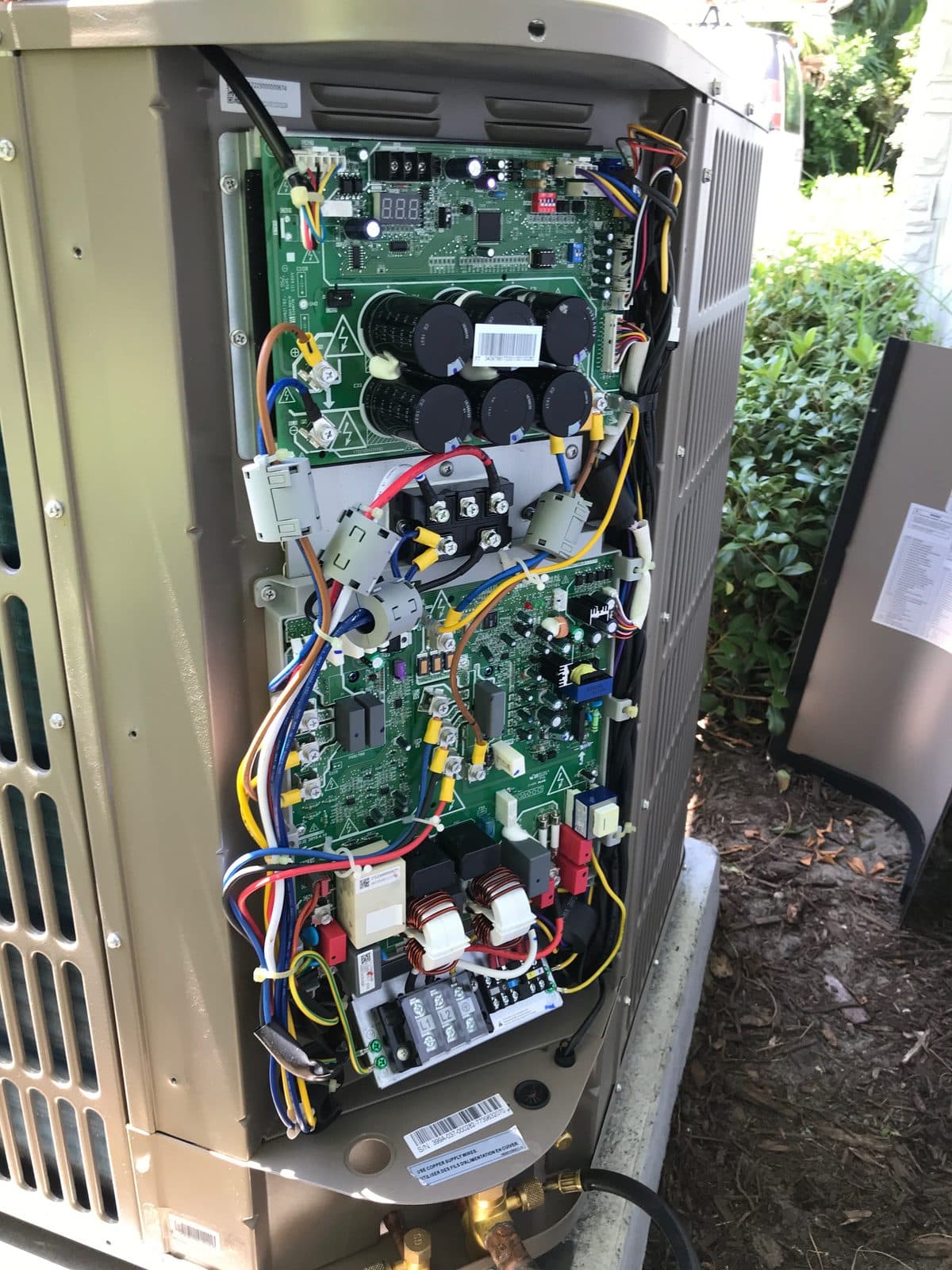
Contactors, capacitor terminals, wire lugs and the disconnect all corrode. A corroded connection adds resistance, resistance makes heat, and a connection that overheats can fail or take the part it feeds with it. Many no-cool calls near saltwater end at a connection, not at a major component.
Fasteners, cabinet and base
Rusted screws and panels are more than cosmetic. A cabinet that no longer closes lets salt and rain reach the controls, and a unit that has worked loose on its stand or pad vibrates. Where the unit is mounted on a raised platform, the platform and its fasteners need the same look as the unit.
Refrigerant leaks
Corrosion can open pinhole leaks in a coil. A system that is low on refrigerant has lost it somewhere, because an air conditioner does not use refrigerant up. The work is finding the leak, and on a corroded coil the honest answer may be that the coil itself is the leak. Blume has EPA Section 608 certified technicians, the federal refrigerant-handling credential.
Our guide to coastal coil protection covers how to slow this down between visits.
What a diagnosis measures
A diagnosis is a set of measurements that ends with one named cause. On the island it also records the condition of the equipment, because salt and water decide whether a repair will last.
- Electrical: line and control voltage, the capacitor tested against its rating, the contactor inspected for pitting, and motor current compared with the nameplate.
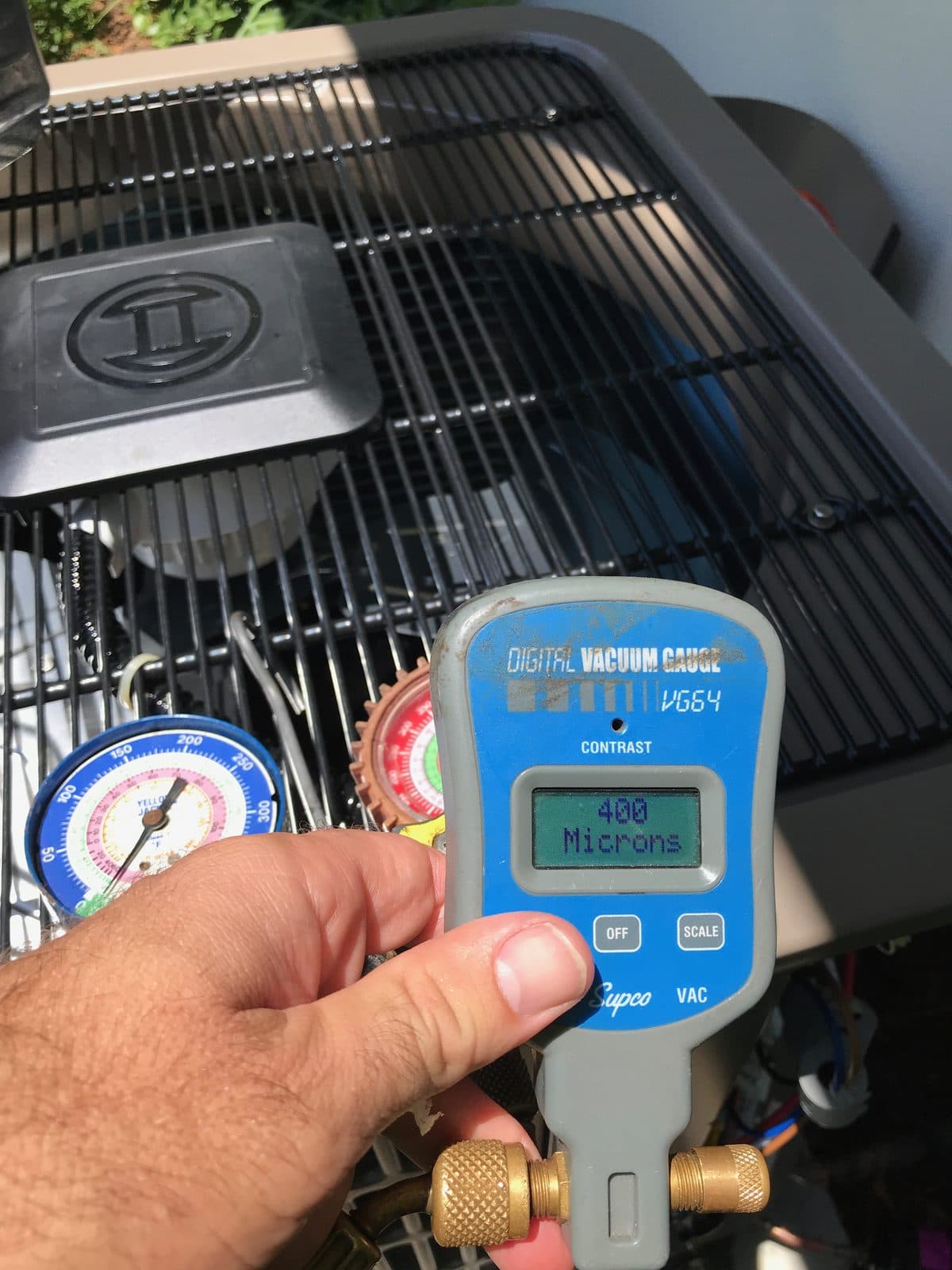
- Refrigerant: pressures and line temperatures read against indoor and outdoor conditions, to show whether the charge is correct.
- Airflow: the temperature drop across the indoor coil and the static pressure in the ducts, to show whether the blower is moving enough air.
- Drainage and safeties: the drain pan, condensate line and float switch.
- Condition: corrosion on the coil, connections and mounting, and any sign that the unit or air handler has been wet.
You should come away with the cause, the readings behind it, and a written, upfront price before any work starts.
Repair or replace on the island
The usual signals apply. One failed part on an otherwise healthy system is a repair. A failed compressor, a coil that keeps leaking, or a system that fails somewhere new every season deserves a look at replacement. Blume lays out both options side by side and does not sell equipment a building does not need.
Two things are specific to Indian Rocks Beach.
Flood-damaged equipment may not go back in the same spot. The state's summary of the Florida Building Code flood provisions says replacement of exterior equipment damaged by flood must meet the elevation requirements. Whether that applies at your address depends on your flood elevation and is a question for the building department.
Permits go through the county. The city says all development in Indian Rocks Beach, including repair and replacement work, requires a permit from the Pinellas County Building Department. The city also says maintenance projects are logged toward its 50 percent substantial-improvement rule, though its wording does not say how an AC replacement is counted. Ask the county before a large job, and keep every invoice and written estimate.
For the rules in more detail, see our Indian Rocks Beach HVAC page. For the general decision, see how to decide between AC repair and replacement.
Rentals, seasonal homes and condos
The city's plan counts seasonal and tourist populations alongside residents, and a home that is not occupied year-round changes how AC failures get found.
- Seasonal homes. A system that fails in an empty, closed-up home is discovered late, often by the smell. If you are away for the summer, ask whoever checks the property to look at the thermostat reading and the drain pan, not just the front door.
- Vacation rentals. Guests rarely report weak cooling until it has stopped. When a guest does call, ask the same questions listed below so the technician arrives knowing what to expect.
- Condo units. Equipment location, roof or balcony access, shared drain lines and building rules differ from one building to the next. Check with building management before work is scheduled, and find out who is responsible for the condensate drain.
Blume Mechanical Service in Indian Rocks Beach
Blume Mechanical Service, LLC is a Class A licensed Florida air conditioning contractor (license CAC-1822618) and is fully insured. We are brand-agnostic and service all major manufacturers' equipment. Our office is at 2840 West Bay Drive #114, Belleair Bluffs, FL 33770, and our core service area is Pinellas, Hillsborough and Pasco counties.
What to have ready when you call
- Whether water reached the outdoor unit, the air handler or the electrical boxes, and when.
- What the thermostat is set to and what it reads.
- Whether the outdoor unit and the indoor blower are running.
- Any ice, water, burning smell or unusual noise.
- Where the outdoor unit sits: on a ground pad, a raised platform, a roof or a balcony.
- Whether the home is a house, a cottage or a condo unit, and whether it is occupied now.
Frequently asked
My AC got wet in a storm but seems to run. Is it fine?
Not necessarily. Salt water left inside a motor, a contactor or a control board keeps corroding after it dries, so equipment that runs the week after a flood can fail weeks later. Switch it off and have it inspected before you rely on it.
How long does an outdoor unit last this close to the Gulf?
There is no single number, and we will not give you one. It depends on how exposed the unit is, how it is mounted and how it has been maintained. What we can do on a visit is show you the condition of the coil, the connections and the cabinet, so you can see where your unit stands.
Do I need a permit to repair my AC in Indian Rocks Beach?
The city says all development, including repair and replacement work, requires a permit from the Pinellas County Building Department. What a specific repair needs is the county's call, so ask the county or your contractor before work starts.
How soon can Blume get to an Indian Rocks Beach home that is not cooling?
Blume offers 24/7 emergency HVAC service, with same-day response available based on location and technician availability. That is availability, not a promised arrival time. Paid priority scheduling is also available.
Homeowner guides
- AC not turning on: what to check before you call
- Why your AC is not blowing cold
- AC troubleshooting guide
- Air conditioner leaking water
For AC repair in Indian Rocks Beach, FL, call Blume Mechanical Service at 727-330-9131.
References:
Residential AC Repair nearby: AC repair in Tampa · AC repair in St. Petersburg · AC repair in Clearwater · AC repair in New Port Richey