
Pinellas County · Florida CAC-1822618
Chiller Service in St. Petersburg, FL
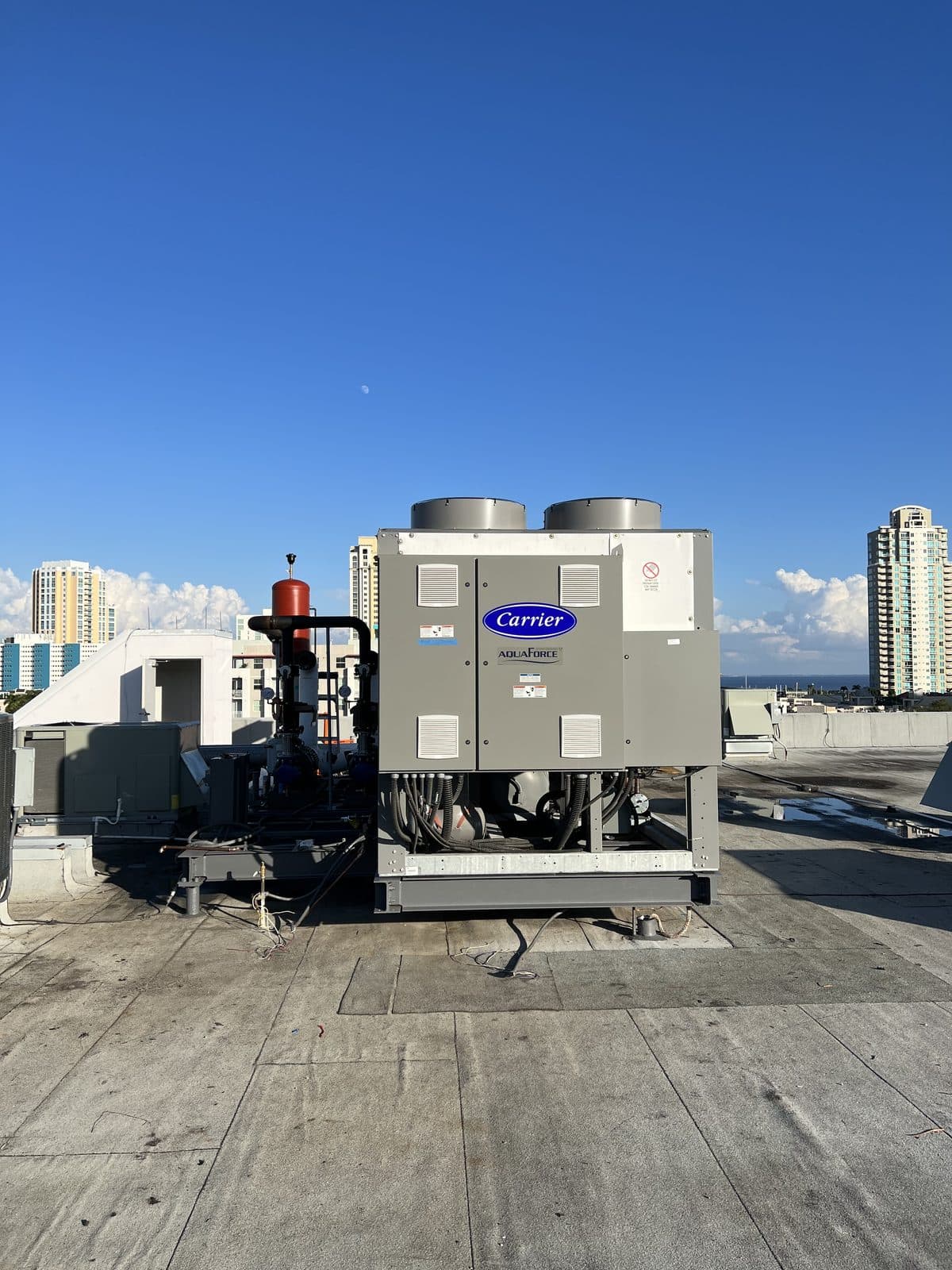
Blume works on commercial chillers in St. Petersburg, in Pinellas County. This page quotes the City of St. Petersburg, NOAA and Pinellas County on the districts, permits and flood questions that touch a chiller plant, then sets out what to ask before a service call or a replacement.
Ask what the plan is for the chillers before the day they stop. The sections below quote what the City says about its districts and its permit office, then what to ask before a service call or a replacement.
Downtown, the Innovation District and the hospital campuses
These are the City of St. Petersburg's own descriptions of its districts, quoted so that nothing here is our paraphrase of them. This page makes no claim about who services the equipment in any building named.
The City's economic development page on its districts says: “Immediately south of Downtown, the Innovation District is a cluster of higher education, marine science, healthcare, business incubation, and media institutions.” (source). In the same page's words: “Key areas of Downtown include the Innovation District with the University of South Florida, St. Petersburg campus; Johns Hopkins All Children's Hospital and Research Center” (source).
For a campus with teaching, research and patient buildings together, ask whether one chilled water plant serves all of them or whether each building has its own, and ask for the plant drawing to be shown before any scope is written. Ask which areas cannot be shut down at all, and which can be shut down at night.
The same City page says of the downtown core: “Revitalization of the Downtown core continues with projects that include new retail shops, restaurants, research facilities, residential towers, craft breweries, and cultural facilities.” (source). Ask the owner of a tower how the equipment on the roof or in the plant room is reached, what lifting would be needed to replace it, and who else in the building must be told before the chilled water is isolated.
Multi-building campuses
Ask the manager of any multi-building office campus whether one central plant feeds all the buildings, who decides when the plant may be shut down, and how the tenants are told. Ask for the sequence in which the machines start after a power interruption, and for the name of the person who checks that each one came back.
Hotels and historic buildings
Ask the owner of a historic building how its age affects where equipment can stand, how a replacement would be brought in, and which reviewer has to approve the work. Ask a hotel operator which rooms and public spaces lose cooling first when a chiller is down, and what the plan is for a full house.
Permits for replacing mechanical equipment in St. Petersburg
The City of St. Petersburg's building permits page says: “Once the plans are ready to be submitted, complete a building permit application form and any other applicable forms to submit with your plans.” (source). The same St. Pete page describes the office responsible, saying: “The Construction Services and Permitting Division works to facilitate the development process, partnering with citizens and customers to ensure their projects meet minimum code standards.” (source).
Ask the City whether a commercial plan review checklist applies, and read it before a scope is priced. Ask the City, in writing, how a chiller replacement is classified. Ask who signs the application, whether drawings are required, and whether the permit cost is inside or outside the contractor's proposal.
Hurricane season and flooding: what to ask
NOAA's National Hurricane Center climatology page says: “The Atlantic hurricane season runs from June 1 to November 30.” (source). Pinellas County's flood information page says: “Hurricanes, tropical storms and other threatening weather can present flood hazards to residents due to high tides, storm surges caused by winds and heavy rainfall.” (source).
Ask where each chiller, pump and electrical panel sits and who can say what the plan is for it before a named storm. Ask whether anyone has written down the steps for shutting the plant down safely and for restarting it, and ask who is called if it does not restart.
What a chiller service call involves
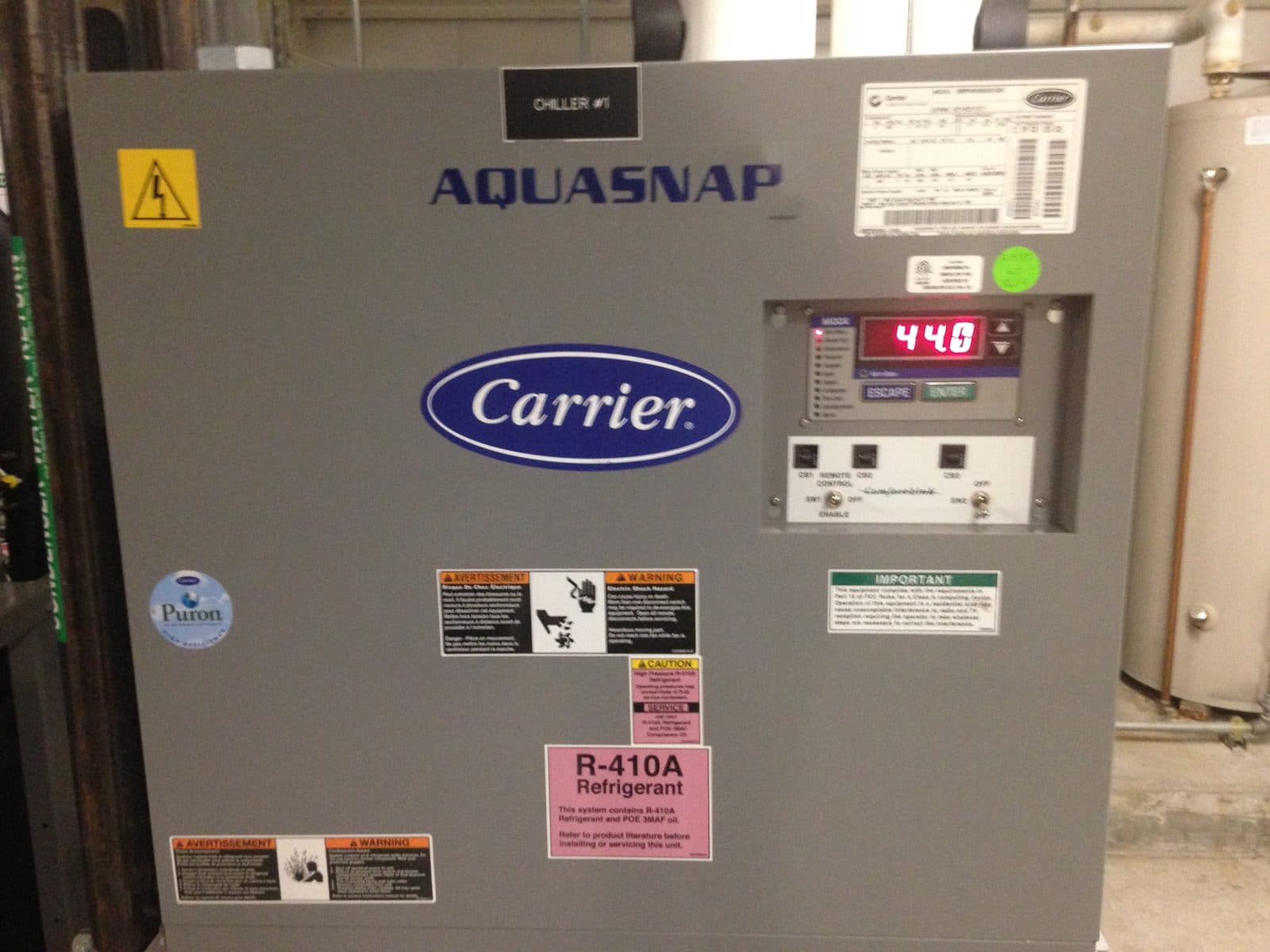
A service call starts with the machine's identity. Ask for the model, the serial number, the refrigerant and its charge, the compressor type and the controller to be written down first, with a photograph of the nameplate.
Then ask what was measured. A service report should let the next person compare this visit with the last one, so ask for dated readings rather than a sentence saying the machine ran well. See chiller maintenance service for what a routine visit covers, and the commercial chiller hub for links to the brand, service and city pages. See chiller repair if the machine is already faulting, and emergency chiller service if the plant has stopped.
What to ask before a chiller replacement
Ask for the case to be made in writing. A good proposal states the load the new machine serves, the refrigerant and what it means for the plant room, how the building will be cooled during the changeover, and what happens to the pumps, the tower or coils, and the controls.
Blume prices a replacement option alongside repair, especially when a machine is close to its expected life. See refrigerant transition for the refrigerant side, capital planning for scheduling the cost, and chiller vs VRF if the choice is wider than one machine. See chiller replacement for the full list of replacement questions and temporary chiller rental for cooling during the changeover.
Chiller brands in St. Petersburg
Blume works on commercial chillers in St. Petersburg, in Pinellas County. Blume doesn't necessarily push one brand or another, and Blume has commercial accounts with Carrier, Trane and Daikin Applied. Each page below covers one manufacturer.
- See Carrier chiller service in Tampa Bay.
- See Trane chiller service in Tampa Bay.
- See Daikin chiller service in Tampa Bay.
- See York chiller service in Tampa Bay.
- See McQuay chiller service in Tampa Bay.
See commercial HVAC in St. Petersburg for the wider commercial picture.
Where to start
Call 727-330-9131 with the nameplate details and a short description of the machine, the building and what it serves. If there is no service history yet, a photograph of the plate and the last report you can find are enough to begin.
Frequently asked
Does Blume work on chillers in St. Petersburg?
Blume works on commercial chillers in St. Petersburg, in Pinellas County. Call 727-330-9131 with the nameplate details.
Who decides whether a chiller replacement needs a permit in St. Petersburg?
Ask the City of St. Petersburg's building department, and ask for its answer in writing before a contract is signed.
What should I have ready before calling about a chiller?
Have a photograph of the nameplate, the controller type if you know it, the last service report, and a note of what the machine serves.
Does Blume push a particular chiller brand?
Blume doesn't necessarily push one brand or another.
Related
- Commercial chiller service in Tampa Bay
- Chiller maintenance service
- Cooling tower maintenance
- Pumps and hydronic services
- Refrigerant transition and A2L
- Chiller vs VRF
- Capital planning
Unit converter
Showing 1 therm in 4 other units
| Unit | Value |
|---|---|
| Btu | 100,000 |
| kWh | 29.31 |
| MMBtu | 0.1000 |
| Ccf (natural gas) | 0.9653 |
Used only for Ccf and therm conversions. Source: EIA, Heat Content of Natural Gas Consumed (U.S., 2025).
Sources: 1 therm = 100,000 Btu and 1 kWh = 3,412 Btu, from EIA. MMBtu from EIA. MBH from Wikipedia. 1 ton of refrigeration = 12,000 Btu/h from NIST. Ccf = 100 cubic feet from Wikipedia. — means no result for the current input.
Call with what is on the nameplate and describe the machine and the building.
References: City of St. Petersburg economic development, districts page · City of St. Petersburg building permits page · NOAA National Hurricane Center climatology page · Pinellas County flood information page