
HVAC, explained
What Is HVAC? The Parts of a Florida Home's System
HVAC stands for heating, ventilation and air conditioning. In a home it is the set of equipment that cools or heats the air, moves it through the house and cleans it. A central split system pairs an outdoor unit with an indoor unit, then adds ducts, a filter and a thermostat. This page names each part and links to the page that goes deeper. Our reading: name the part before you ask about a quote or a repair.
The facts below come from public documents, not from any Blume field measurement. The page gives no repair steps, because refrigerant, electrical and combustion work is for licensed or certified professionals.
What the letters mean, and what the system is for
UF/IFAS Extension, from the University of Florida, spells the term out as Heating, Ventilation, and Air Conditioning. EPA's design guidance for school buildings says the main purposes of an HVAC system are to help maintain good indoor air quality through adequate ventilation with filtration, and to provide thermal comfort. Thermal comfort means feeling neither too hot nor too cold. Our reading: that makes an air conditioner one part of HVAC, not the whole of it.
Our reading: ventilation is the exchange of stale indoor air for outdoor air. Our reading: in a house, the V may be a bathroom fan, a duct that brings in outdoor air, or only leaks, so ask what ventilates yours on purpose. Home ventilation in Florida covers the ways outdoor air gets in, fans and whole-house systems.
UF/IFAS Extension says the largest consumer of energy in the typical Florida home is the HVAC system, which can account for more than 40% of home energy use. Our reading: the part that uses the most energy is worth knowing by name.
Follow the air: a map of the parts
The Department of Energy's guide to home cooling says an air conditioner works much as a refrigerator does, transferring heat from a home's interior to the warm outside environment. UF/IFAS Extension describes the air's path this way: supply registers and ducts bring conditioned air in, and return registers and ducts draw air out to be reconditioned. A register is the vent cover where air enters or leaves a room. The list below starts with the air's path indoors, then covers the outdoor unit, the heat source, the thermostat and two variations.
- Filter: DOE's diagram places the filter in the air conditioning unit, where it removes particles from the air. ENERGY STAR lists inspecting, cleaning or changing the air filter once a month under actions to do yourself. AC filter replacement covers sizes, MERV ratings and how often to change a filter.
- Indoor unit, coil and blower: In DOE's diagram the evaporator holds cooling coils that remove heat and humidity from the air using refrigerant. A blower circulates air over the coils. UF/IFAS calls the indoor unit that moves the air through the system the air handler. The evaporator coil covers what the coil does, what dirties it and what makers say about cleaners.
- Condensate drain: Condensate is the water that the cold indoor coil removes from the air. ENERGY STAR says a plugged drain can cause water damage in the house and affect indoor humidity levels. Air conditioner leaking water follows the drain path link by link.
- Ducts and registers: DOE says a central air conditioner circulates cool air through a home using a system of ducts and registers. Ductwork in Florida covers leaks, sweating ducts and the airflow numbers to ask for.
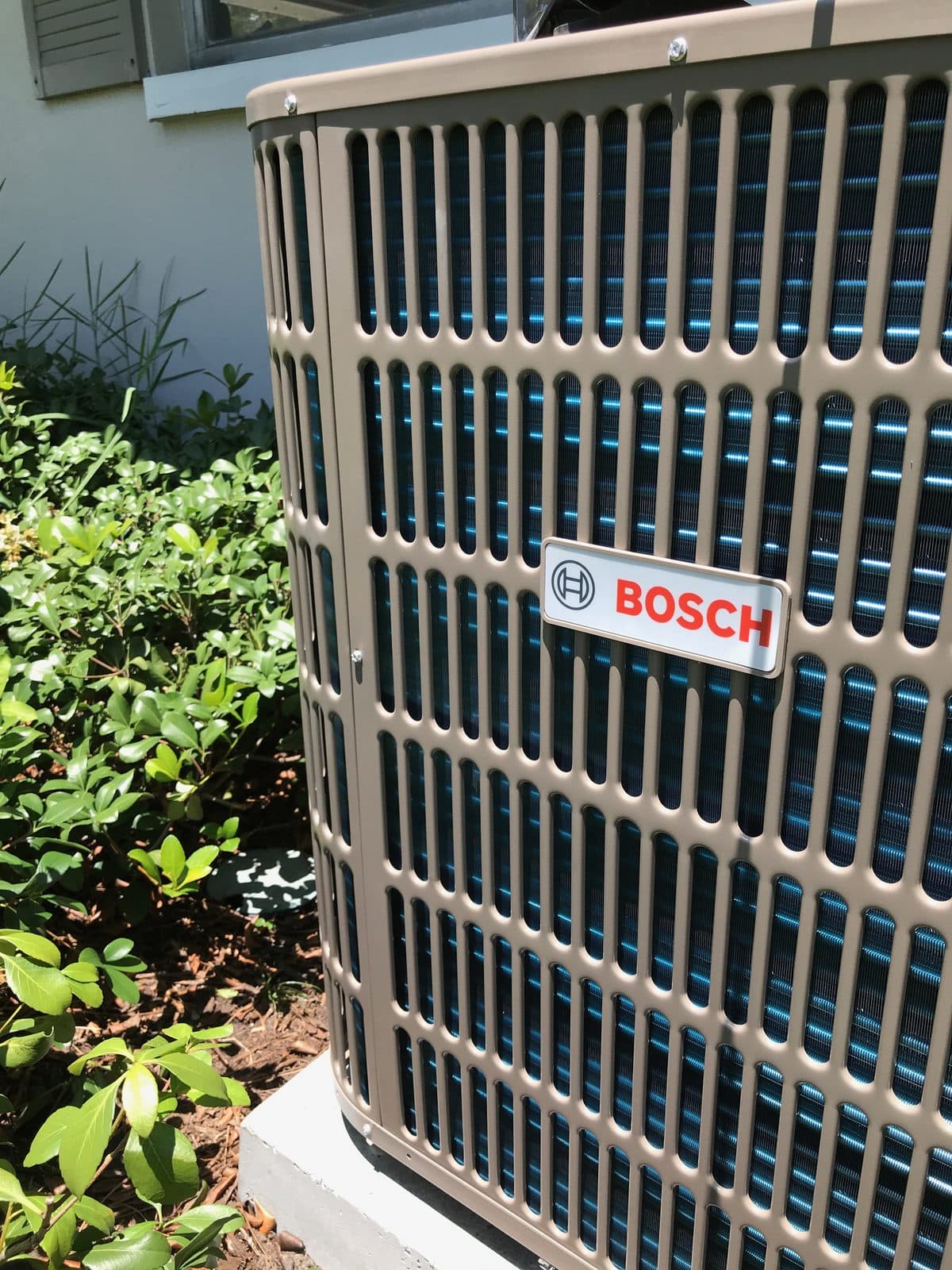
- Outdoor unit: In DOE's description, a split system keeps the condenser and compressor in its outdoor unit. In DOE's diagram, the condenser's hot coils pass the heat they have collected to the air outside. Central air conditioning system types covers split and packaged systems and how the pieces pair. Heat pumps in Florida covers the outdoor unit in salt air, in flood zones and in wind.
- Heat source: DOE says the indoor unit of a split system is often connected to a furnace or heat pump. UF/IFAS defines a heat pump as an air conditioner equipped with a valve that lets it switch between cooling mode and heating mode. Forced-air heating covers the furnace, the blower and the ducts that carry the heat. Heat pump vs furnace compares the two.
- Thermostat: DOE describes the thermostat as a control system that regulates the amount of cool air that is distributed. How a thermostat works explains the switch, the sensor and the control wires.
- A packaged unit: DOE says systems that have the evaporator, condenser and compressor in one unit are called packaged systems.
- A ductless system: According to ENERGY STAR, a mini-split heat pump needs no ductwork, and it mounts on an indoor wall or ceiling and pairs with an outdoor unit. Ductless mini-splits covers what the indoor and outdoor units do and which homes suit one.
Who may work on which part
ENERGY STAR's maintenance checklist says to have a contractor do annual pre-season check-ups of the cooling and heating system. Under its heading for actions to do yourself, it lists the air filter. The check-up it describes includes tightening electrical connections, checking the refrigerant level, and checking gas or oil connections and burner combustion. Our reading: those are the electrical, refrigerant and combustion jobs, and they stay with a professional.
EPA's Section 608 rules require certification for technicians who work on, or dispose of, equipment that can let refrigerant escape into the air. Refrigerant rules and EPA 608 certification explains who may handle refrigerant.
In Florida's contractor law, section 489.105, the Class A and the Class B air-conditioning contractor definitions list the same systems: central air-conditioning, refrigeration, heating, and ventilating systems. Our reading: Florida licenses heating, ventilating and air conditioning together, with refrigeration alongside. The state's MyFloridaLicense.com site says each construction business needs a properly licensed individual contractor to qualify it. To verify a license, it says to search by license number, by contractor name or by business name. Our reading: apart from the filter, leave the cabinets closed and the work to a licensed contractor.
What Florida adds: the moisture job
NWS Tampa Bay says rainy-season dew points typically stay above 70°F. In plain terms, that is very damp outdoor air. The indoor coil in the map above removes humidity as well as heat, in DOE's wording. Our reading: in a Tampa Bay summer, removing moisture is a second job for the same equipment.
Humidity with the AC on covers how an air conditioner dehumidifies and what can go wrong. For an add-on that dries the air, see whole-home dehumidification in Florida. Growth in the damp parts is covered in mold in HVAC systems.
When a quote or report says HVAC: questions to ask
Our reading: the word HVAC on a quote can mean one part or the whole system, so ask for the parts in writing. ENERGY STAR advises getting written, itemized estimates. It says a signed proposal protects you by listing the costs, model numbers, schedule and warranty information.
- Which parts does this quote cover: the equipment outdoors, the equipment indoors, the coil, the ducts, the thermostat?
- Are the indoor and outdoor units new together, and what are the model numbers on the proposal?
- Is any duct work in the job, or only the equipment?
- What, if anything, brings outdoor air into the house on purpose?
- What is the contractor's Florida license number, and does it check out on the state's license search?
Frequently asked
What does HVAC stand for?
Heating, ventilation and air conditioning. The UF/IFAS Extension glossary on home air conditioning spells it out the same way.
Is HVAC the same thing as air conditioning?
No, air conditioning is one of the three words. EPA's school guidance lists ventilation with filtration and thermal comfort as the system's main purposes. Florida's contractor statute lists heating and ventilating systems alongside central air-conditioning.
Is a heat pump part of an HVAC system?
Yes: UF/IFAS Extension defines a heat pump as an air conditioner equipped with a valve that lets it switch between cooling mode and heating mode. Heat pumps in Florida covers what that means for a Florida home.
Does my air conditioner bring in fresh air?
It depends on the house, since EPA counts leaks, open windows and mechanical ventilation as the routes for outdoor air. Home ventilation in Florida covers each one.
What can a homeowner do about HVAC maintenance?
ENERGY STAR lists inspecting, cleaning or changing the air filter once a month under actions to do yourself, and puts the annual check-up with a contractor. AC filter replacement covers the filter.
Do I need to call a pro for this?
No. This page is vocabulary - what the parts are and what they do - so that the rest of the site, and any quote you are handed, makes sense. Nothing here is a repair. The reason it is worth ten minutes: knowing which part someone is talking about is what lets you ask whether a recommendation is reasonable.
Related
- Ductless Mini-Splits: How They Work and When
- What is forced-air heating?
- Heat pump vs furnace
- How a thermostat works
- House humid with the AC running
- Florida AC maintenance checklist
- Home Ventilation in Florida: Fresh Air, Fans
Blume Mechanical Service is a licensed commercial and residential HVAC contractor serving Florida's Tampa Bay region (CAC-1822618). Blume installs and services all major brands as a licensed contractor, and estimates on new systems and retrofits are no-cost.
Last updated: 2026-11-05
Sources: UF/IFAS Extension, Energy Efficient Homes: Air Conditioning (FCS3262/FY1026) · U.S. Department of Energy, Energy Saver 101: Everything You Need to Know About Home Cooling · EPA, Heating, Ventilation and Air-Conditioning Systems, Part of Indoor Air Quality Design Tools for Schools · EPA, Introduction to Indoor Air Quality · EPA, Section 608 Technician Certification Requirements · ENERGY STAR, Maintenance Checklist · ENERGY STAR, 10 Tips for Hiring a Heating and Cooling Contractor · ENERGY STAR, Air-Source Heat Pumps · Florida Statutes, section 489.105, Definitions (Chapter 489, Contracting), 2026 edition · Florida Department of Business and Professional Regulation, Construction Industry Business Information · National Weather Service Tampa Bay Area, Rainy Season