
HVAC, explained
Central Air Conditioning System Types
A central air conditioner cools a whole house through ducts, the channels that carry air to each room. Most are split systems: an outdoor unit and an indoor unit joined by refrigerant lines, the copper tubes that carry the cooling fluid. The other kind is a packaged unit, which puts everything in one cabinet outside the house. A heat pump is an air conditioner that also runs in reverse to heat the house. An air handler is an indoor cabinet with a blower and a coil. A split system can pair an air conditioner with a furnace or an air handler, and a heat pump with an air handler or a furnace.
The heat pump comparisons have their own pages: heat pump vs furnace, heat pump vs straight-cool air conditioner and heat pumps in Florida. The facts below come from Department of Energy (DOE) rules, a federal home energy survey, ENERGY STAR and manufacturer pages, not from Blume field measurements.
What a central air conditioner is
Federal rules define a central air conditioner as air-cooled equipment below a set size, in either of two forms: a cooling unit only, or a heat pump. That makes a heat pump a kind of central air conditioner. ENERGY STAR puts it this way: a ducted heat pump can be thought of as a central air conditioner that also works in reverse, to heat the whole house in winter.
All of these systems move heat with one loop of refrigerant. The indoor coil is a bundle of tubing and thin metal fins. There, cold liquid refrigerant absorbs heat from the house air and turns into a gas. The compressor, a pump that squeezes the gas, raises its temperature until it is hotter than the outdoor air. The outdoor coil then releases that heat outside.
Refrigerant lines hold fluid under pressure, and the equipment cabinets hold line-voltage electrical parts. Opening, charging or wiring any of it is work for a licensed contractor. The federal rules for handling refrigerant are explained in EPA Section 608 refrigerant rules.
Split systems: outdoor condenser, indoor coil
DOE's definition of a split system, which ENERGY STAR's heat pump specification repeats, calls for at least two separate assemblies connected with refrigerant piping when installed. One assembly includes an indoor coil that exchanges heat with the indoor air, and another includes an outdoor coil that exchanges heat with the outdoor air.
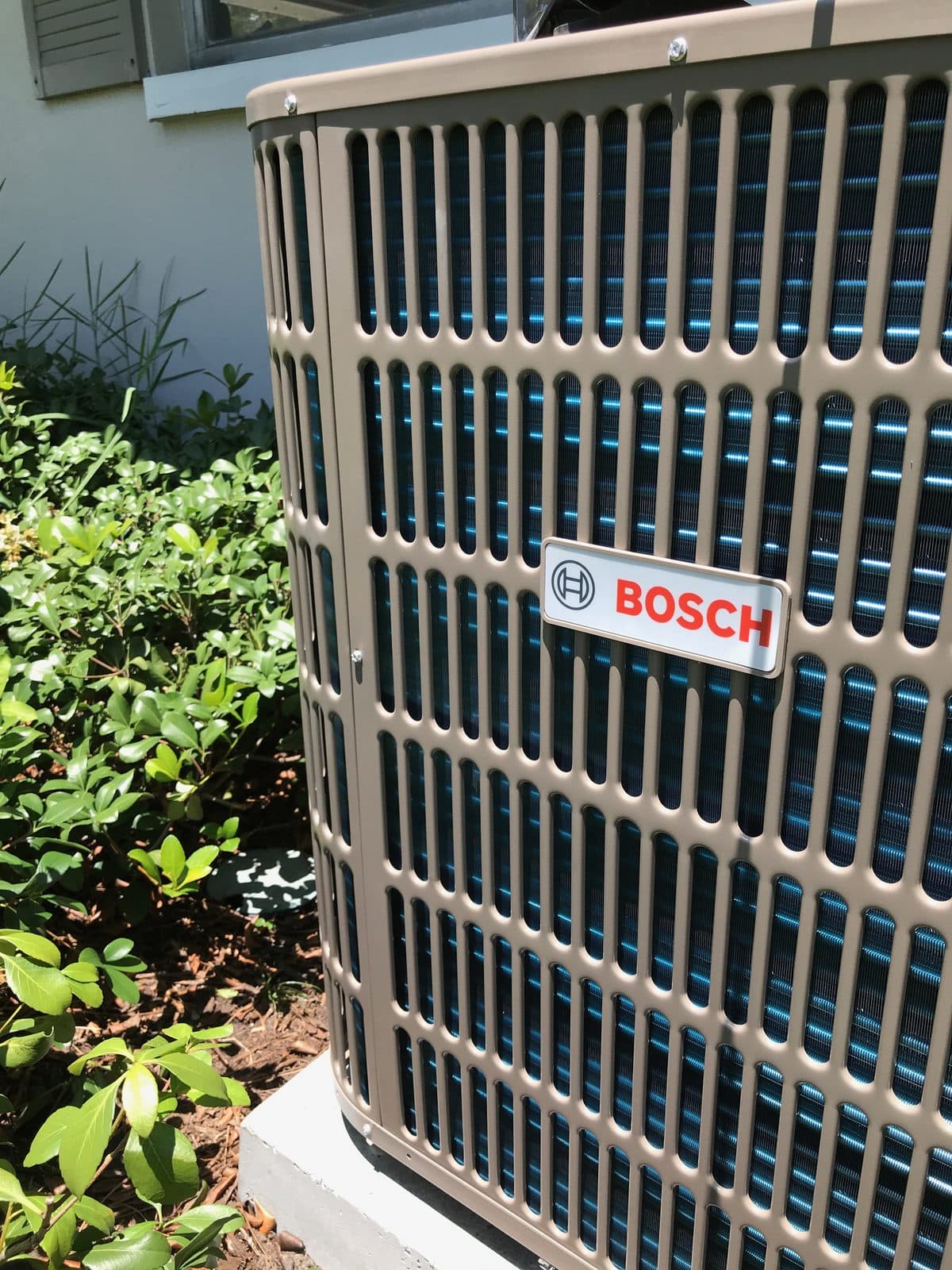
The outdoor unit is the condensing unit, and DOE says it consists of an outdoor coil, a compressor and an air-moving device. The outdoor coil is also called the condenser, because it is where the refrigerant gives off its heat.
The indoor unit holds the indoor coil, called the evaporator coil, where the refrigerant takes in heat. A blower, which is a large fan, pushes house air across that coil and out through the ducts.
Packaged units: everything in one cabinet
A packaged unit is the other main kind of central air conditioner. DOE calls it a single-package unit, meaning all major assemblies are enclosed in one cabinet. Trane says a packaged system sits entirely outside the home, except for the ductwork. Because DOE's definition covers any central air conditioner or heat pump, a packaged unit can be a cooling-only unit or a heat pump. ENERGY STAR also names a gas/electric package unit: a single-package unit with gas heating and electric air conditioning, often installed on a slab or roof.
Where an outdoor cabinet sits matters in a flood zone and in a hurricane, and heat pumps in Florida covers elevation, stands and anchoring.
What sits indoors: a furnace or an air handler
In a split system, the indoor unit is a furnace or an air handler. Trane's buyer's guide says the indoor unit is typically a furnace but sometimes an air handler.
Carrier describes air handlers as indoor units that move air over a coil to heat or cool it, depending on the season. An air handler can work with a heat pump or with an air conditioner.
A furnace is the indoor heat source, and DOE's rules describe two kinds. A forced air central furnace burns gas or oil. An electric central furnace makes heat with electric resistance heating elements, which are coils that warm up when current flows through them. Both kinds use a fan or blower to circulate the heated air through ducts.
In some systems the cooling coil has no blower of its own. DOE calls that a coil-only indoor unit and says an installed one relies on a furnace or a separate blower to move the air. That is how one furnace blower and one set of ducts can serve both heating and cooling. Forced-air heating explains how a furnace and its ducts work, and gas furnace vs electric strip heat compares two ways to make the heat.
Four common pairings
- Air conditioner and furnace. The outdoor unit only cools, and the furnace makes the heat. Carrier describes furnaces as the indoor component that pairs with many air conditioners.
- Air conditioner and air handler. The outdoor unit only cools, and the air handler moves the air. Trane says split system air conditioners may be paired with a furnace or an air handler.
- Heat pump and air handler. One outdoor unit cools and heats, and the air handler moves the air. Carrier says air handlers are often paired with heat pumps.
- Heat pump and furnace. This is called a dual fuel system. ENERGY STAR says it allows heating with a heat pump or with a more traditional gas or oil furnace.
ENERGY STAR says that in most zones a heat pump can be installed as a drop-in replacement when either a central air conditioner or a furnace needs replacement. EPA ended the ENERGY STAR specification for central air conditioners on February 1, 2026, while heat pumps still have one. How the compressor adjusts its output is covered in single-stage, two-stage and variable-speed compressors. The efficiency rating is covered in best SEER rating for Florida.
What Florida homes actually have
The Energy Information Administration (EIA), part of the federal government, ran its Residential Energy Consumption Survey in 2020. Its Florida tables count about 8.06 million primary homes, meaning year-round homes that people live in. These are statewide figures from 2020, not a count of Tampa Bay homes. Homes using central air conditioning equipment, which includes central heat pumps, were 90% of the Florida total, against 67% of homes nationwide.
For main heating equipment, furnaces served about a third of Florida homes (33%) and central heat pumps about three in ten (31%). Our reading: the survey is a sample, so those two shares are roughly equal. EIA's terms list defines a central warm-air furnace as a unit where a central combustor or resistance unit makes the heat, using natural gas, fuel oil, propane or electricity. Natural gas was the main heating fuel in only 5% of Florida homes, and electricity was the main heating fuel in 66%. Our reading: the survey counts about 2.65 million Florida furnaces but only about 0.42 million homes heated mainly by natural gas, so most Florida furnaces are probably electric. On that reading, an AC and furnace system in a Florida house often means an air conditioner paired with an electric furnace.
EIA also reports that 8% of Florida homes have no space-heating equipment, and another 20% have it but do not use it. Our reading: that is a reason to ask a contractor how much heating the house really needs.
Ductless systems: a different branch
A ductless system is still a split system, with an outdoor unit and one or more indoor units, but it has no ducts. ENERGY STAR says a mini-split mounts directly on an interior wall or ceiling, with an accompanying outdoor unit.
Other kinds exist as well. Window and wall units cool a single room, and EIA counts them with ductless heat pumps as individual air-conditioning equipment. A ground-source heat pump uses the earth instead of outdoor air; see geothermal heating and cooling.
Which type fits which house
These matches are our reading of the sources above, not a rule.
- The house has ducts. ENERGY STAR says a central heat pump can use the ductwork a home already has.
- The house has no ducts, or an addition would need new ones. ENERGY STAR says a ductless heat pump can still heat and cool a portion of the house without them.
- There is little indoor space, or the unit has to sit on a slab or roof. Lennox says packaged units are designed for areas with limited space or where rooftop placement is preferred.
Questions to ask in writing
Put these questions to every contractor, and get the answers on paper.
- Which type are you proposing: split with a furnace, split with an air handler, packaged or ductless, and why for this house?
- What is the indoor unit, and what supplies the heat: a furnace, electric heating elements or the heat pump itself?
- Is the indoor coil matched to the new outdoor unit, as ENERGY STAR expects for split systems? Heat pumps in Florida explains what a rated combination means.
- Are the existing ducts being reused, and who has checked them for leaks? Duct sealing vs duct repair explains the difference.
- How was the system size calculated? ENERGY STAR says the contractor should verify the size with Manual J, a calculation of the heating and cooling the home requires. What size AC you need in Florida goes deeper.
- Where will the outdoor unit or packaged cabinet sit, and what is it fastened to?
- Who pulls the permit, and what inspection follows? For the rules on that, read HVAC permits in Florida.
Opening a cabinet, handling refrigerant, wiring and gas piping are professional work, so leave the panels closed.
Frequently asked
Is a central air conditioner the same as a split system?
Not always. Central means one system cools the house through ducts. Split means the equipment is divided into an outdoor unit and an indoor unit. Split systems are the most common kind, and packaged units are the other main kind.
Is a heat pump the same as central air conditioning?
In federal wording a heat pump is a kind of central air conditioner. A ducted heat pump cools the way an air conditioner does and also runs in reverse to heat. Heat pump vs straight-cool air conditioner compares the two.
What is the difference between a furnace and an air handler?
A furnace makes heat itself, from gas, oil or electric resistance heating elements. An air handler moves air over a coil, and a heat pump or an air conditioner supplies the cooling or heating. Either one pushes the air through the ducts.
Do most Florida homes have a furnace?
In the 2020 EIA survey, a furnace was the main heating equipment in 33% of Florida homes and a central heat pump in 31%. Natural gas was the main heating fuel in only 5%, so many of those furnaces are probably electric. Another 8% had no space-heating equipment.
Can a home without ducts have central air?
Central air needs ducts to carry the cooled air. A ductless heat pump needs none, according to ENERGY STAR, and it heats and cools a portion of the house. Whether new ducts make sense for a particular house is a question for a licensed contractor.
Do I need to call a pro for this?
No. Knowing which kind of system you have is a matter of looking at what is in the house and reading the label, and nothing here is a repair. It turns into a call when you are choosing between system types for a replacement, because that choice rests on the ductwork and the load, and a licensed contractor has to measure both.
Related
- Heat pump vs furnace
- Heat pump vs straight-cool AC
- What is forced-air heating?
- Gas furnace vs electric strip heat
- Single, two-stage & variable-speed
- What size AC you need in Florida
Blume Mechanical Service is a licensed commercial and residential HVAC contractor serving Florida's Tampa Bay region (CAC-1822618). Blume installs and services all major brands as a licensed contractor, and estimates on new systems and retrofits are no-cost. If you are comparing system types for a Tampa Bay home, take the questions above with you.
Last updated: 2026-11-05
Sources: Department of Energy, 10 CFR part 430 (eCFR): section 430.2 definitions and subpart B, appendix M definitions · ENERGY STAR, Heat Pump specification Version 6.2 (Rev. February 2026) · ENERGY STAR, Air-Source Heat Pumps, and Central Air Conditioners Sunset · Energy Information Administration, 2020 Residential Energy Consumption Survey: state tables for space heating, space heating fuel and air conditioning, and RECS terminology · Energy Information Administration, Today in Energy: Nearly 5% of U.S. households did not use space heating in 2020 · Trane, How Does an Air Conditioner Work?, What Is a Split System? and What Is an Air Handler? · Carrier, What Is a Split HVAC System? · Lennox, Central Air-Conditioning