
HVAC, explained
Ductless Mini-Split Repair: What the Code Means and What a Technician Checks
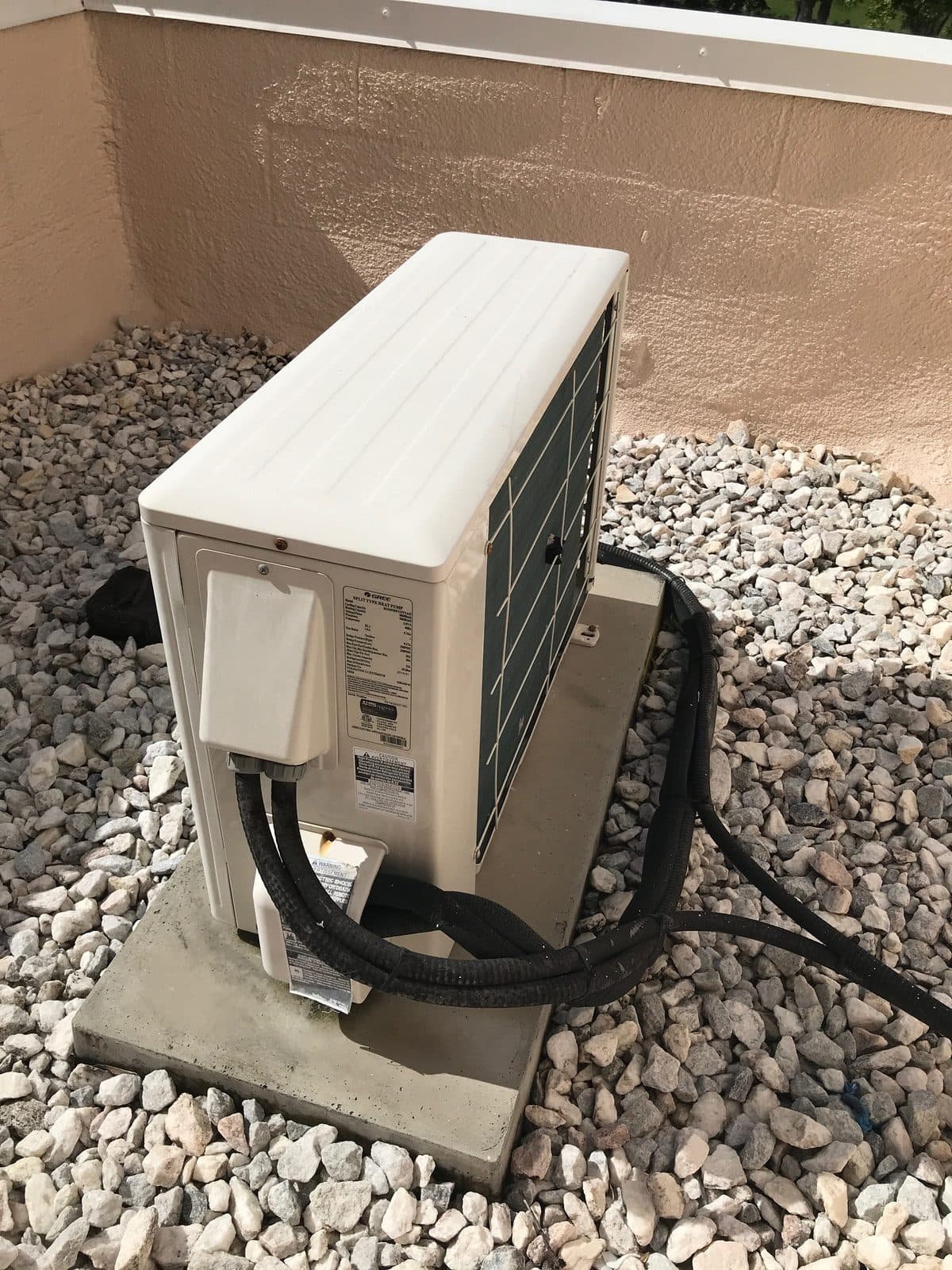
A mini-split is a ductless air conditioner or heat pump: an outdoor unit joined to one or more indoor units by refrigerant lines and wiring. When it develops a fault, it often shows a blinking lamp or a code on the indoor unit. That code is a starting point, not a diagnosis. In one manufacturer's service manual a single code lists several possible causes, and some of them are a disconnected connector or a power dip rather than a failed part. You can check the filter, the settings and the airflow, and write the code down. Refrigerant and electrical repairs are for licensed professionals.
How mini-splits work is covered in ductless mini-split systems, and installation is covered in mini-split installation. The facts below come from public documents: manufacturer manuals and repair pages, EPA and Florida law. They are not Blume field measurements.
What a blinking lamp or a code is telling you
Many mini-splits report a fault with a blinking lamp or a code on the indoor unit. Codes differ between brands, as the two manuals below show, so the manual for your unit is the only table that applies to it.
A Daikin service manual for one line of inverter split systems says the operation lamp blinks in two cases. One is when a protection device in the indoor or outdoor unit is activated, or when a thermistor malfunctions. A thermistor is a temperature sensor. The other is when a signal error occurs between the indoor and outdoor units. An inverter model varies its compressor speed instead of switching fully on and off, and single-stage, two-stage and variable-speed compressors explains the difference.
A Midea owner's manual lists its codes as starting with letters such as E, P and F. The Daikin manual uses codes such as U4 and A1, and also E1, F3 and P4. Our reading: the same letter or blink count can mean something else on another brand, so these two manuals show how codes are built. They are not a code list for your unit.
Why one code can have several possible causes
For each code, the Daikin manual lists what it calls supposed causes, and the list often has more than one item. The code for a signal problem between the indoor and outdoor units lists a wiring error, broken connection wires between the units and a disturbed power supply waveform. It also lists a defective circuit board in either unit.
The refrigerant shortage code shows the point well. The manual says the unit detects it by checking the input current and the compressor running frequency. If the refrigerant is short, it says, the input current is lower than the normal value. The compressor is the pump that moves refrigerant around the system. The causes the manual lists include a disconnected temperature sensor, a closed stop valve and a refrigerant leak. They also include poor compression and a defective expansion valve. A stop valve is a shut-off valve on the refrigerant line, and an expansion valve meters refrigerant into the coil.
Our reading: the code tells a technician where to look, and it can be set off by something that only looks like a leak. That is why a technician should confirm the cause before any refrigerant is added. The same manual says that if refrigerant leaks, the technician should locate the leaking point and repair it before charging refrigerant, then check for leaks again after charging. AC refrigerant leak repair covers leaks in more depth.
A voltage code works the same way. The manual's low-voltage and over-voltage code lists a supply voltage that is not as specified, a momentary fall of voltage and a momentary power failure among its supposed causes. Our reading: in storm season a code like that can come from the power supply and not from the unit. AC surge protection in Florida covers that side.
For the refrigerant shortage code, the manual says the system is shut down if the error repeats. A code that appears once and then clears is still worth writing down.
What the manufacturers say you can check, and what to write down
Carrier and Bryant each publish an owner checklist for mini-splits, and the lists overlap.
- Settings and power. Make sure the remote or controller is set to the mode and temperature you want, and that its batteries are good. Bryant also says to confirm that the system has power.
- The filter. ENERGY STAR says heat pump filters should be cleaned when visibly dirty or when the filter light shows. Bryant says to clean washable filters every 2 to 4 weeks, depending on use and the home.
- Airflow. Carrier says to make sure the vents and outdoor coils are not blocked by furniture, debris or vegetation.
- The code. Both pages say to record the code shown on the indoor unit or remote so the technician can use it. Midea adds that you should give the dealer a detailed description of the problem and your model number.
- Water or ice. If you see ice, Bryant says to turn the system off and call a qualified technician, rather than trying to remove the ice or judge the refrigerant level yourself.
A power reset is a step where the sources differ. A dealer quoted on Bryant's page says to turn the power off at the breaker for about 60 seconds. Midea's manual says to wait about 10 minutes because the problem may resolve itself, and if not, to disconnect the power and connect it again. Carrier says to turn the system off with the remote, remove power as the installation instructions describe, wait about 20 minutes, and restore power. Our reading: there is no single right wait, so follow the one in your own manual. Carrier adds that if the problem returns after a reset, the system may need professional diagnosis. Do not open any panel or touch any wiring to reset anything. A breaker that keeps tripping is a different problem, covered in the AC troubleshooting guide.
Behavior that may be normal
Midea's owner manual lists several behaviors that it says are not a malfunction for its units.
- A restart delay. The manual says the unit has a 3-minute protection feature, so it cannot restart within three minutes of being turned off.
- A low hissing sound. The manual says a low hissing sound during operation is normal and is caused by refrigerant gas flowing through the indoor and outdoor units.
- White mist. The manual says that in humid regions a large temperature difference between the room's air and the conditioned air can cause white mist.
These are one maker's statements about its own models, so check your manual. A sound alone does not settle the question, because Carrier lists hissing among its warning signs of low refrigerant. Our reading: a sound or a mist is a reason to read the manual first, and to ask a technician if it comes with poor cooling, ice or a code.
What a technician checks
The Daikin manual is written for service technicians, and it sets out how they work through each code. It is described here in general terms so that you can follow a visit, not so that you can copy it.
- The code, then its listed causes. Each code has its own section, which lists how the unit detects the fault, what triggers the code and the supposed causes. Flow charts follow.
- Connections, sensors and power. Several lists include a disconnected connector or sensor, and the voltage code's causes include the supply voltage itself.
- The refrigerant circuit. EPA's definition of a technician covers attaching hoses and gauges to measure pressure and adding or removing refrigerant. So this work falls under the certification rule.
- The finish. The manual's repair rules include checking the drainage of the indoor unit after repair work and measuring the insulation resistance after the repair.
The manual's safety section is a reason to leave the cabinet closed. It warns that the outdoor unit's step-up capacitor supplies high-voltage electricity, and that a charged capacitor may cause an electrical shock. It tells technicians to discharge the capacitor completely before repair work. This page gives no steps for that work.
Who may repair a mini-split heat pump in Florida
EPA's Section 608 rules say technicians who maintain, service, repair or dispose of equipment that could release refrigerants into the atmosphere must be certified. EPA also prohibits intentionally venting refrigerants while servicing or repairing air-conditioning equipment. EPA 608 certification and the refrigerant rules explains both.
Florida's contractor law adds a second layer. The 2026 Florida Statutes say no person shall act in the capacity of a contractor, or advertise as available to, without being duly registered or certified. The Florida Department of Business and Professional Regulation says that to verify a contractor is licensed, you need the license number, the contractor's name or the business name. Our reading: ask for the license number before the visit and check it.
The manufacturers say much the same. Midea's owner manual says any unit repairs should be performed by a licensed service provider or by a dealer that Midea has authorized. Carrier recommends a qualified HVAC professional for refrigerant, electrical or component repairs. Bryant says not to open electrical components or make wiring repairs yourself.
Repair or replace: what to ask
Carrier gives a rule of thumb for its mini-splits. It recommends considering repair when the system is under 10 years old and the repair costs less than half of replacing the system. Carrier calls the 50% guideline a starting point, not a standalone replacement decision. It says a qualified professional can weigh the system's age, condition, repair history, efficiency and the availability of replacement parts.
Our reading: that is one maker's rule of thumb, not a standard, and it can only be applied to a repair figure given in writing. The questions that decide it are about your unit, such as the cause, how sure the technician is, and whether the part is available. AC repair or replace gives the general framework. R-410A after 2025 covers repairing an R-410A system. A second opinion on an AC repair covers when to ask another contractor. If you replace the system, mini-split installation is the next page to read.
What is different in Tampa Bay: humidity and the condenser coil
The National Weather Service's Tampa Bay office says the rainy season typically brings more humidity. It describes persistent dew point values above 70°F and daily low temperatures in the 70s to around 80°. It dates that season May 25 to October 10 for West Central Florida outside Southwest Florida. Dew point is the temperature at which water vapor starts to condense.
A mini-split removes moisture from the air as it cools. Carrier says that water, called condensate, should drain away safely. Carrier and Bryant both list a clogged drain line and a frozen coil that melts among the common causes of water at the indoor unit. Our reading: in a humid summer there is more water to drain, so it is fair to ask a technician whether the drain was checked. Air conditioner leaking water explains how condensate leaves an air conditioner.
Salt air is a separate risk for the outdoor unit and its condenser coil. Coastal coil protection covers it.
What to ask for in writing
These questions turn the points above into answers a contractor can put on paper. They work for any contractor.
- Which code or fault did the unit show, and what does the maker's table say it means for this model?
- What did you check to confirm the cause, and which other listed causes did you rule out?
- Is the cause confirmed, or only suspected?
- If refrigerant was added, where was the leak found, how was it repaired, and how was the repair checked afterward?
- Which parts were replaced, and are the replacements made for this model?
- What did you re-check after the repair, and did the code come back?
- What is your license number, what is the repair figure in writing before work begins, and what does the repair warranty cover?
Ask for the answers in the written estimate or invoice, not only in conversation. Opening the cabinet, handling refrigerant and working on wiring or circuit boards are licensed work, so leave the cabinet closed.
Frequently asked
What do the blinking lights on my mini-split mean?
It depends on the brand and model. In one Daikin service manual the operation lamp blinks for a protection or sensor problem, or for a signal error between the indoor and outdoor units. Midea's codes start with letters such as E, P and F. Check the owner's manual for your unit, and write the pattern or code down for the technician.
Can I repair a mini-split myself?
You can make the checks the manufacturers name: the settings, the filter, clear airflow, and recording the code. Carrier recommends a qualified HVAC professional rather than refrigerant, electrical or component repairs yourself. EPA requires Section 608 certification for technicians who service equipment that could release refrigerant.
Is a mini-split worth repairing?
It depends on the age, the repair history and the repair figure. Carrier's rule of thumb is a starting point, not a decision, and a qualified professional can weigh the details. AC repair or replace lays out the general questions.
Why is water dripping from my indoor unit?
Carrier says water from a mini-split is usually a drainage issue, and Bryant says it commonly comes from a clogged condensate drain line or a frozen coil that is melting. Our reading: those are possibilities, and a technician confirms the cause. If you see ice, Bryant says to turn the system off and call a qualified technician.
Does a hissing sound mean a refrigerant leak?
Not by itself. Midea's owner manual says a low hissing sound during operation is normal for its units, while Carrier lists hissing among its warning signs of low refrigerant. A technician can check which it is.
Do I need to call a pro for this?
Maybe. Reading the blinking code off the indoor unit and writing it down is yours, and doing it before you call saves time - the code narrows the fault before anyone arrives. The repair itself, on either the refrigerant or the electronics side, is a licensed contractor's. Also worth ruling out first: a dirty filter, which these units are sensitive to.
Related
- Ductless Mini-Splits: How They Work and When
- Mini-Split Installation: What Drives the Job
- AC refrigerant leak repair
- AC repair or replace
- Second opinion on AC repair
- AC troubleshooting guide
- Air conditioner leaking water
- AC Surge Protection in Florida
- Coastal coil protection
Blume Mechanical Service is a licensed commercial and residential HVAC contractor serving Florida's Tampa Bay region (CAC-1822618). Blume installs and services all major brands as a licensed contractor. If your mini-split shows a code, take the list of questions above with you when you talk to any contractor.
Last updated: 2026-11-05
Sources: Daikin, Service Manual, Inverter Pair FTXS-L Series and FDXS-L Series (document SiUS091133) · Midea America Corporation, Ductless Split Unit System Owner's Manual (9,000 to 24,000 BTU) · Carrier, Ductless Mini Split Repair (carrier.com) · Bryant, Your Guide To Ductless Mini Split Repair (bryant.com) · ENERGY STAR, Ductless Heating & Cooling · EPA, Section 608 Technician Certification Requirements (updated July 15, 2026) and Prohibition on Venting Refrigerants (updated December 8, 2025) · The 2026 Florida Statutes, section 489.127 (Prohibitions; penalties) · Florida Department of Business and Professional Regulation, Construction Industry Business Information · National Weather Service Tampa Bay, Florida Thunderstorm Season