
HVAC, explained
AC Surge Protection in Florida
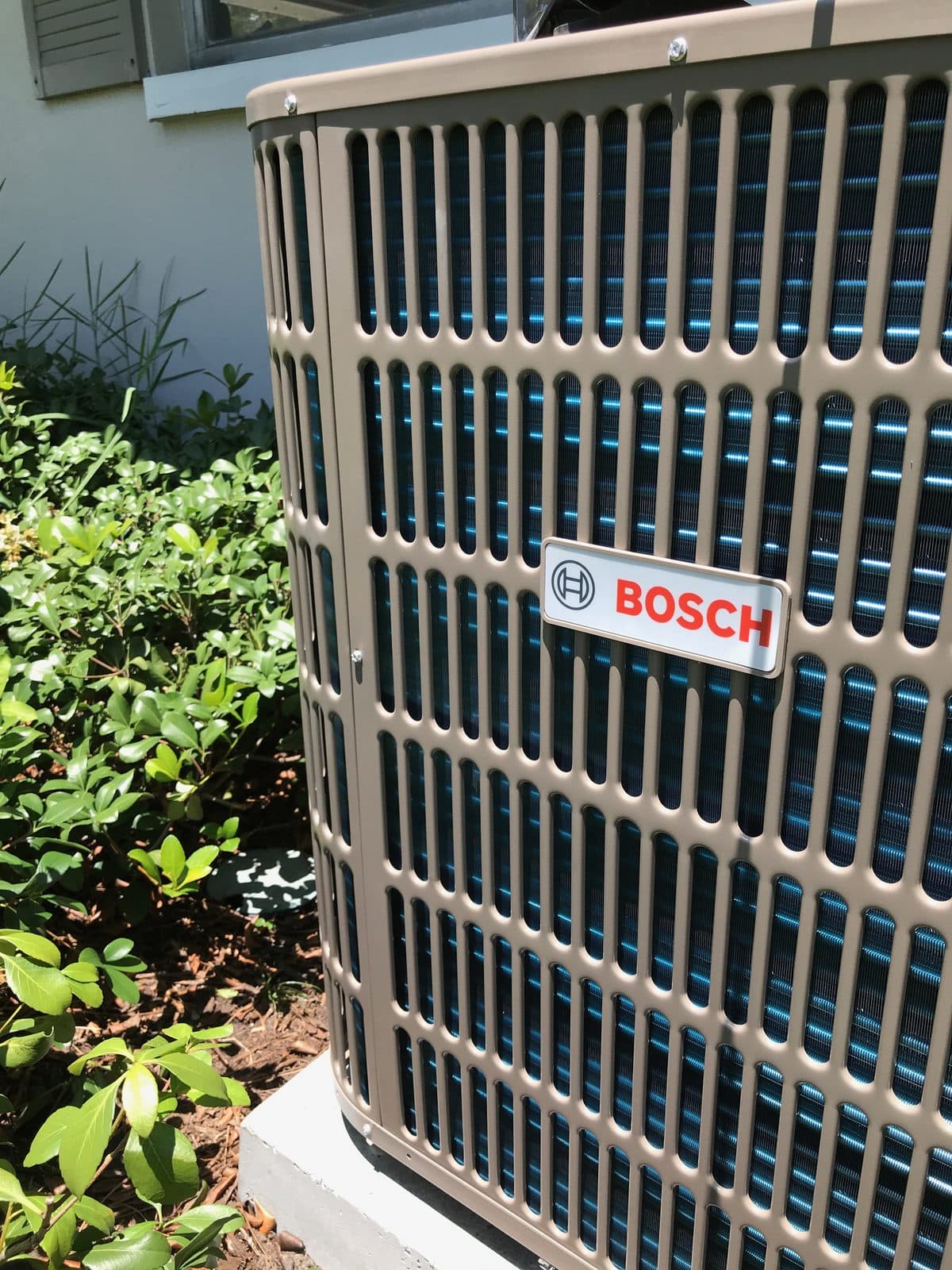
In the Tampa Bay area — statistically among the most lightning-active regions in the United States — surge protection for an air conditioner is not an upsell, it is matched to the actual local failure pattern. The layered approach that works: a whole-home surge protective device at the panel, plus an HVAC-rated surge protector at the condenser disconnect, because the outdoor unit sits on its own high-current circuit and holds the system's most expensive electronics.
Ask any Tampa Bay HVAC technician what the phone sounds like after a summer thunderstorm and the answer is the same: a run of 'it was working this morning and now it's dead' calls, clustered along whatever corridor the storm tracked. Florida's Gulf coast summer pattern — a sea-breeze thunderstorm nearly every afternoon from June through September — makes this region one of the most lightning-dense places in the country, and air conditioners absorb a disproportionate share of the damage. This guide explains why AC systems are uniquely exposed to electrical events, what surges actually destroy inside a system, and how the layers of protection differ — because a surge protector that saves your television will do nothing for your condenser.
Why air conditioners take the hit
Three things make a central AC system the most surge-exposed appliance on a Florida home. First, exposure: the condenser sits outdoors, connected to the panel by its own dedicated high-current circuit, with refrigerant lines and control wiring penetrating the building — multiple metallic paths for induced voltage. Second, vulnerability: modern systems concentrate their value in electronics. A variable-speed or communicating system carries inverter drives and control boards outdoors, where a nearby strike's induced spike finds them directly. Third, duty cycle: in a Florida summer the system is running or cycling almost continuously through exactly the hours when thunderstorms fire. A strike does not need to hit the house — a discharge blocks away induces voltage on utility lines and on the home's own wiring, and the AC circuit is one of the biggest antennas attached to the panel.
What a surge actually destroys
The classic post-storm failure is the run capacitor — a small component that helps the compressor and fan motors start and run. Capacitors are the fuse of the AC world: marginal ones fail on the next hot afternoon after an electrical event, which is why so many 'storm damage' calls come a day or two late. Next up the ladder are contactors, whose contacts can pit or weld under a spike, and control boards, where a surge that crosses the low-voltage transformer takes out the system's brain. The expensive endpoint is the compressor itself: windings insulated for normal line voltage can short when spiked, and a shorted compressor on an older system frequently ends the economic life of the whole unit. One event can also do staged damage — a weakened capacitor stresses the compressor for weeks before either finally fails, which is why a professional post-surge check tests components rather than just confirming the unit runs.
The layered defense: panel first, then the condenser
Surge protection works in layers, each catching what the previous layer lets through. Layer one is a whole-home surge protective device (SPD) installed at the main electrical panel — it clamps large surges arriving from the utility side and protects every circuit at once. Electrical code has required SPDs on new and replaced residential services for several years, but the large stock of older Tampa Bay homes predates that requirement. Layer two is an HVAC-rated SPD mounted at the condenser's outdoor disconnect. This is the layer people skip, and it matters for two reasons: the panel device cannot fully protect against surges induced on the run of wire between panel and condenser, and the condenser is where the system's costliest components live. HVAC-specific SPDs are built for the sustained current of a compressor circuit and typically fail visibly — an indicator shows when the device has sacrificed itself and needs replacement, which is exactly what it is designed to do.
What surge protection honestly can and cannot do
Honesty matters here because surge protection is often sold with implied invincibility. A direct or very close lightning strike delivers energy beyond what any residential protective device can fully clamp — protection reduces damage in that scenario; nothing eliminates it. What layered SPDs genuinely defend against is the far more common event: induced surges from nearby strikes and the switching surges and restoration spikes that ride the grid during and after storms. That distinction is also why the shutdown habit still matters — during an active severe storm or an outage, a system switched off at the breaker is protected absolutely, by disconnection, which no device matches. And protection is not a substitute for grounding: an SPD works by diverting energy to ground, so a home with corroded or inadequate grounding electrodes has undermined the whole scheme. A proper surge assessment starts at the ground rod, not the gadget.
After a suspected surge: how to tell and what to document
The pattern that says 'surge' rather than 'wear': the system was running normally, a storm passed through, and afterward it will not start, trips its breaker, or runs with a new hum or click. Check the simple things first — thermostat display present, breaker not tripped, any SPD indicator lights. If the whole-home SPD's indicator shows it has sacrificed, treat that as confirmation an event occurred and assume downstream equipment saw stress. For insurance purposes, note the storm date and time, photograph any SPD indicators and visible damage, and ask the diagnosing technician to write component-level findings — 'failed run capacitor and pitted contactor consistent with electrical surge' supports a claim in a way 'unit not cooling' does not. Homeowner policies routinely cover lightning and surge damage to HVAC equipment, but adjusters act on documented causation.
The Tampa Bay calculus
Surge protection is a probability decision, and the probabilities are not the same everywhere. A homeowner in a low-lightning region can reasonably shrug; a homeowner between the Gulf and the interior sea-breeze collision zone — Pinellas, Hillsborough, Pasco — lives where afternoon discharges are a near-daily summer event and where the local repair economy visibly spikes after every storm line. Against the replacement cost of a modern system, and especially against the electronics-heavy variable-speed equipment the market is moving to, the two-layer approach is small insurance matched to the region's dominant failure mode. It belongs on the same short list as condenser tie-downs and a maintained drain line: unglamorous items that decide whether Florida's climate is an inconvenience or a recurring bill.
Frequently asked
Is a surge protector for my AC really worth it in Florida?
In the Tampa Bay area, yes — this region sits in one of the most lightning-active zones in the country, and post-storm component failures are the local repair pattern every summer. The layered approach (whole-home device at the panel plus an HVAC-rated device at the condenser disconnect) is modest insurance against the area's most common cause of electrical HVAC damage.
My AC stopped working right after a thunderstorm. Was it a surge?
Quite possibly. The classic signature is a system that ran normally before the storm and afterward will not start, trips its breaker, or hums without starting — most often a failed run capacitor, sometimes a contactor or control board. Note the storm date, check any surge-protector indicator lights, and have the diagnosis documented at component level for insurance.
Does a whole-house surge protector cover my air conditioner?
Partially. A panel-mounted device clamps large utility-side surges for every circuit, but it cannot fully protect against voltage induced on the wire run between the panel and the condenser, and the condenser holds the system's most expensive electronics. That is why an HVAC-rated second device at the outdoor disconnect completes the protection.
Will surge protection save my AC from a direct lightning strike?
No device honestly can — a direct or very close strike exceeds what residential protection fully clamps. Layered protection greatly reduces damage from the common events: induced surges from nearby strikes and grid switching spikes. During an active severe storm, turning the system off at the breaker remains the only absolute protection.
Do surge protectors wear out?
Yes — by design. Surge protective devices sacrifice themselves absorbing events, and most show a status indicator when they are spent. After any major electrical event, check the indicators; a spent device is doing exactly its job, and replacing it restores the protection. This is also why surge devices belong on a maintenance-visit checklist.
Do I need to call a pro for this?
Yes for the protection worth having. A plug-in strip is yours to buy and plug in, but it does nothing for a central system - the devices that do are fitted at the equipment or at the service panel, which is licensed electrical work. In a state with this much lightning the case for it is strong, but it is a contractor's install, not a weekend job.
Related
- Hurricane Season HVAC Prep in Florida
- Why your AC is not blowing cold
- How long AC units last in Florida
Suspect storm damage, or want surge protection installed before the next line of afternoon storms? Blume Mechanical Service is a Class A licensed Florida contractor (CAC-1822618) serving Tampa Bay since 2009 — call (727) 330-9131.
Last updated: 2026-11-05
Sources: Vaisala / NLDN lightning-density data — Florida Gulf coast among highest U.S. flash densities · NEC 230.67 — surge protective device requirement for dwelling services · IEEE guidance on layered (Type 1/Type 2) residential surge protection · Motor winding insulation and capacitor failure modes under transient overvoltage