
AC Recharge in Tampa
When the Tampa heat and humidity peak, a struggling air conditioner can quickly turn your home uncomfortable. If your system is blowing warm air or taking longer than usual to cool, it may be time to schedule an AC recharge in Tampa. Keeping refrigerant at the proper level helps your unit run efficiently, maintain steady indoor temperatures, and reduce unnecessary strain on the system.
In the Tampa area, long cooling seasons, salty coastal air, and heavy summer use can all impact AC performance. Homes in neighborhoods from South Tampa to Carrollwood often rely on their air conditioning nearly year-round, which means even small refrigerant issues can become a major comfort problem fast.
Two common causes of low refrigerant include small leaks in the refrigerant lines and wear on coils or fittings over time. Unlike normal energy use, refrigerant does not simply run out. If levels are low, there is usually an underlying issue that should be inspected and repaired before recharging the system.
A simple DIY tip is to check and replace your air filter regularly. While this will not solve a refrigerant problem, a clean filter improves airflow and can help your AC perform better while you wait for professional service. You can also make sure vents are open and clear of furniture or dust buildup.
If you suspect your system needs an AC recharge in Tampa, don’t wait for a complete breakdown during the hottest part of the season. Contact a trusted local HVAC professional today to inspect your unit, find the cause, and restore cool comfort fast.
AC Recharge in Tampa: What Homeowners Need to Know
If your air conditioner is blowing warm air in the middle of a Tampa summer, an AC recharge may sound like a quick fix. In some cases, it helps restore cooling performance. But in many situations, low refrigerant points to a deeper issue that should be diagnosed first. Here’s a practical guide to what AC recharge means, what causes the need for it, the basic service steps, and what Tampa homeowners can expect to pay.
Summary
An AC recharge is the process of adding refrigerant to your air conditioning system after confirming the system is low. Residential AC systems do not “use up” refrigerant under normal conditions. If refrigerant is low, there is usually a leak somewhere in the system. In Tampa’s long cooling season, heavy AC use can make refrigerant issues more noticeable, especially when the unit struggles to keep up during hot, humid weather.
Common signs you may need service include:
- Warm or weak airflow from vents
- AC running constantly without cooling well
- Ice forming on refrigerant lines or evaporator coil
- Hissing or bubbling sounds near the unit
- Higher energy bills with lower comfort
A recharge alone may temporarily improve performance, but the best long-term solution is to identify and repair the leak before adding refrigerant.
Root Cause
The root cause of a needed AC recharge is almost always refrigerant loss from a leak. Unlike fuel in a car, refrigerant circulates in a closed loop. It should not need topping off unless something is wrong.
Typical causes of refrigerant leaks include:
- Corrosion in copper lines or coils
- Vibration-related wear at fittings or connections
- Factory defects in coils or joints
- Physical damage during service or renovation work
- Age-related deterioration of seals and components
Tampa’s climate can contribute indirectly. Constant system use increases wear over time, and salt air in coastal areas may speed up corrosion on some components. If your system is older, the refrigerant type also matters. Units using R-22 refrigerant are more expensive to recharge because that refrigerant has been phased out and is now limited and costly.
2 Basic Steps in an AC Recharge Service
1. Diagnose the system and locate the issue
A technician first checks refrigerant pressures, temperature split, airflow, and overall system performance. If the system is low, the next step is determining why. This may include:
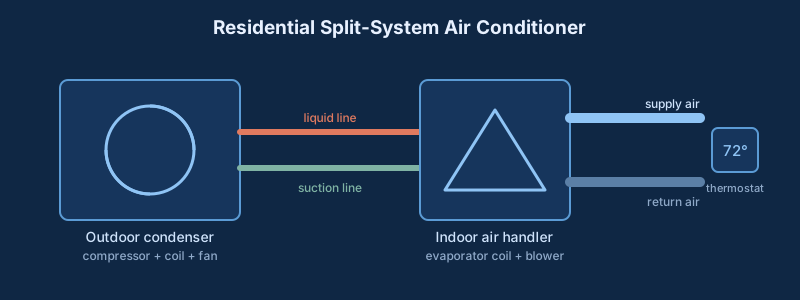
- Inspecting coils and line sets
- Checking for oil residue around leak points
- Using electronic leak detectors
- Performing pressure or dye testing if needed
This step matters because simply adding refrigerant without addressing the leak can lead to repeat breakdowns, wasted money, and compressor damage.
2. Repair if needed and recharge to manufacturer specs
Once the leak is identified, the technician may repair or replace the affected component. After that, the system is vacuumed if required and recharged with the correct type and amount of refrigerant based on manufacturer specifications. The technician should then test operation to confirm proper cooling, pressure levels, and airflow.
A proper recharge is not guesswork. Overcharging or undercharging can reduce efficiency and harm the system.
AC recharge costs in Tampa vary based on refrigerant type, system size, leak severity, and whether repairs are needed first.
What each part of a refrigerant repair turns on:
- Diagnostic service call: confirming a low charge takes gauges, a superheat or subcooling reading, and time at the unit.
- Leak detection: electronic detectors, bubble tests or dye. A leak at an accessible valve is found quickly; one inside the evaporator coil takes longer.
- Minor leak repair: a leaking Schrader valve core or flare fitting is a small repair. A brazed repair on the line set is more involved.
- AC recharge with R-410A: the size of the charge, which depends on the system's tonnage and the length of the line set.
- AC recharge with R-22: production and import of R-22 (HCFC-22) ended in the U.S. in 2020 under the EPA phaseout, so only recovered and reclaimed supply remains and each pound costs more.
- Evaporator coil replacement: coil size, whether the coil is still under warranty, and how accessible the air handler is.
- Condenser coil replacement: often weighed against replacing the whole outdoor unit, especially on an older system.
In Tampa, many homeowners with older systems face a cost decision: repair and recharge, or invest in replacement. If your unit uses R-22, is over 10–15 years old, and has a major leak, replacement may be more cost-effective than repeated refrigerant services.
Frequently asked questions
Does low refrigerant always mean I need a recharge?
Not exactly. Low refrigerant means the system may need refrigerant added, but it also means there is likely a leak. A recharge without fixing the cause is a temporary fix: the refrigerant leaks back out.
Can I recharge my AC myself?
No. Handling refrigerant requires EPA Section 608 certification, and adding refrigerant without measuring superheat or subcooling can overcharge the system and damage the compressor. Blume's technicians are EPA Section 608 certified.
My system uses R-22. Should I recharge it or replace it?
R-22 is no longer produced or imported in the U.S., so every recharge draws on a shrinking supply. If an R-22 system has a significant leak, replacing it with a current system is usually the better investment.
What are the signs of low refrigerant?
Warm air from the vents, ice on the refrigerant lines or the indoor coil, a hissing or bubbling sound near the lines, and a system that runs longer without cooling the house.
Talk to a licensed Blume technician
For federal efficiency ratings and rebate eligibility we point homeowners to ENERGY STAR heating & cooling rather than making those claims ourselves.
Call (727) 330-9131Related HVAC Services
Browse all HVAC services · find your city