
AC Capacity Upgrade in Tampa
If your air conditioner struggles to keep up with Tampa’s intense heat and heavy humidity, it may be time to consider an AC capacity upgrade. Many local homeowners notice uneven cooling, longer run times, and rising energy bills during the hottest months. When your current system is too small for your home’s needs, comfort and efficiency both suffer.
Tampa’s climate puts extra pressure on cooling systems nearly year-round. High outdoor temperatures, strong sun exposure, and constant moisture in the air can make an undersized unit work harder than it should. Homes in growing neighborhoods or older properties with renovations often need more cooling power than the original system was designed to deliver.
Two common causes lead homeowners to explore an AC capacity upgrade. First, home additions or converted spaces can increase square footage without updating the HVAC system. Second, aging equipment may lose performance over time, making it harder to maintain consistent indoor temperatures even if the unit once worked well.
A simple DIY tip is to check and replace your air filter regularly. A clogged filter restricts airflow and can make your AC seem less effective, even when the real issue is capacity. Keeping vents open and unobstructed can also help improve circulation throughout your home.
If your current system can’t handle Tampa’s cooling demands, professional guidance can help you choose the right solution. Schedule an AC capacity upgrade evaluation today and enjoy stronger performance, better comfort, and more reliable cooling when you need it most.
AC Capacity Upgrade in Tampa: What Homeowners Need to Know
If your air conditioner struggles to keep up with Tampa’s long, humid cooling season, it may be time to consider an AC capacity upgrade. Many homeowners assume poor cooling always means a broken unit, but in many cases the real issue is that the system is undersized, aging, or no longer matched to the home’s cooling demands. In a climate like Tampa, where high temperatures and heavy humidity are common for much of the year, having the right AC capacity is essential for comfort, efficiency, and indoor air quality.
Summary
An AC capacity upgrade means replacing or modifying your current air conditioning system so it can deliver the right amount of cooling for your home. Capacity is typically measured in BTUs or tons, and if your current system is too small, it may run constantly without ever fully cooling the home. On the other hand, an oversized system can short cycle, waste energy, and leave excess humidity indoors.
In Tampa, capacity issues often become obvious during peak summer months when the system runs all day, utility bills rise, and certain rooms still feel warm or sticky. Upgrading capacity can improve comfort, reduce wear on the equipment, and help lower long-term operating costs when paired with proper sizing and installation.
Common Root Cause of AC Capacity Problems
The most common root cause behind AC capacity issues is incorrect system sizing. This can happen for several reasons:
- The original unit was too small for the home.
- The home was remodeled or expanded without updating the HVAC system.
- Insulation, windows, or sun exposure changed the cooling load.
- The current unit has lost performance due to age or wear.
- Ductwork restrictions are preventing the system from delivering enough cooled air.
In Tampa, humidity also plays a major role. Even if the temperature drops somewhat, an undersized or poorly matched system may fail to remove enough moisture from the air. That leaves the home feeling uncomfortable even while the AC appears to be running normally.
A proper diagnosis should always come before any upgrade. A contractor should evaluate square footage, insulation levels, ductwork, window placement, occupancy patterns, and Tampa’s climate conditions before recommending a larger system.
2 Steps to Plan an AC Capacity Upgrade
Step 1: Schedule a Professional Load Calculation
The first step is to have a licensed HVAC professional perform a Manual J load calculation or equivalent home cooling assessment. This determines how much cooling your home actually needs. It’s not enough to simply replace your old unit with a bigger one. Bigger is not always better.
A detailed load calculation helps identify:
- Whether your current system is undersized
- If ductwork is limiting airflow
- Whether insulation or air sealing issues are contributing to the problem
- The correct tonnage for efficient cooling in Tampa conditions
This step prevents costly mistakes and ensures the upgrade solves the real issue.
Step 2: Compare Upgrade Options and Installation Scope
Once sizing is confirmed, review your upgrade options. Depending on your home, the solution may involve:
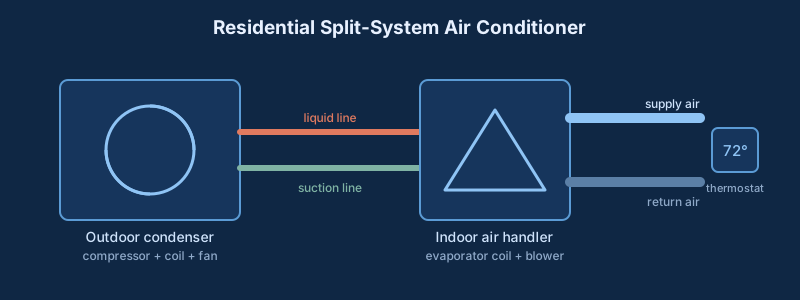
- Replacing the outdoor condenser and indoor air handler
- Installing a higher-capacity central AC system
- Upgrading to a heat pump system
- Modifying or replacing ductwork
- Improving thermostat controls or zoning
Ask for a written estimate that includes equipment efficiency ratings, labor, permit requirements, warranty details, and any electrical or duct modifications. In Tampa, installation quality matters just as much as equipment size, especially because systems work hard for much of the year.
Costs for an AC capacity upgrade in Tampa vary depending on system size, brand, efficiency level, ductwork needs, and installation complexity. What each part of the job turns on:
- Load calculation / system assessment: how many rooms, windows and duct runs have to be measured. An ACCA Manual J calculation is what tells you whether you need more capacity at all.
- Basic capacity upgrade for a central AC system: whether the new equipment fits the existing pad, line set and electrical circuit, or needs changes to any of them.
- Higher-efficiency or larger-capacity replacement: the SEER2 rating, whether the compressor is single-stage, two-stage or variable-speed, and the brand.
- Ductwork modifications or replacement: whether the existing ducts can carry the extra airflow. Undersized returns are common, and adding capacity without fixing them wastes the upgrade.
- Electrical upgrades or code-related improvements: a larger unit may need a bigger breaker, new wire or a new disconnect, and the permit has to reflect it.
If you are upgrading from an older unit, you may also need refrigerant line changes, pad replacement, new thermostat controls, or attic duct corrections. While the upfront cost can feel significant, a correctly sized system improves comfort and humidity control, where an oversized one short-cycles and leaves the house clammy.
Talk to a licensed Blume technician
For federal efficiency ratings and rebate eligibility we point homeowners to ENERGY STAR heating & cooling rather than making those claims ourselves.
Call (727) 330-9131Related HVAC Services
Browse all HVAC services · find your city