
Pinellas, Hillsborough and Pasco Counties · Florida CAC-1822618
Restaurant HVAC Service in Tampa Bay, Florida
Kitchen exhaust has to be replaced by makeup air, from the building's HVAC system or a dedicated makeup air unit, and the annex to Food Code section 6-304.11 states that balancing of the exhaust and make-up air must be ensured so that the system can operate efficiently. Hood cleaning and fire suppression belong to other trades. Blume Mechanical Service is a Class A licensed Florida air conditioning contractor, license CAC-1822618, fully insured, serving Pinellas, Hillsborough and Pasco counties.
Pinellas, Hillsborough and Pasco Counties, where Blume works, are all classified Hot-Humid in the Department of Energy's climate guide.
Exhaust and makeup air: the balance the Food Code annex calls for
A kitchen hood removes heat and cooking effluent, and the air it removes has to come back from somewhere. ENERGY STAR describes the two options: makeup air from the building's HVAC system, or a makeup air unit dedicated to the kitchen. The dedicated unit has its own fans, ducts, and possibly heating or cooling depending on the climate.
The U.S. Food and Drug Administration (FDA) Food Code is adopted by rule in Chapter 61C-1, Florida Administrative Code; Florida's Division of Hotels and Restaurants lists the 2017 edition, effective 11/01/2019. Section 6-304.11 reads: "If necessary to keep rooms free of excessive heat, steam, condensation, vapors, obnoxious odors, smoke, and fumes, mechanical ventilation of sufficient capacity shall be provided." The annex to that section states that balancing of the exhaust and make-up air must be ensured so the system can operate efficiently.
An Oak Ridge National Laboratory (ORNL) field study shows what happens when that balance is missing. With no outdoor air supplied, the kitchen exhaust fans pulled makeup air through doors and other pathways in the building. The resulting excess static pressure reduced exhaust airflow leaving the hoods, reducing capture efficiency and impacting indoor air quality.
The Department of Energy says the design and specifications of the whole hood system, including makeup air, need to be addressed by the food service consultant and/or the mechanical engineer, working together.
Why makeup air in Tampa Bay carries a moisture problem
The Department of Energy (DOE) Building America climate guide lists Hillsborough, Pinellas and Pasco as Hot-Humid.
In the ORNL study, sited in Georgia for its hot, humid climate, the original design called for a makeup air fan to introduce unconditioned air directly to the canopy covering the kitchen area. The fan was turned off soon after the building was occupied because it made conditions uncomfortable for kitchen workers: too hot in summer and too cold in winter.
The same unconditioned air also let much of the outdoor humidity migrate into the dining area, because nothing separated the two rooms.
ORNL calls adequately conditioning the makeup air the classic problem encountered by most restaurants. Our commercial humidity control page covers the measurement side of that question.
Rooftop units and high outdoor air: where standard equipment struggles
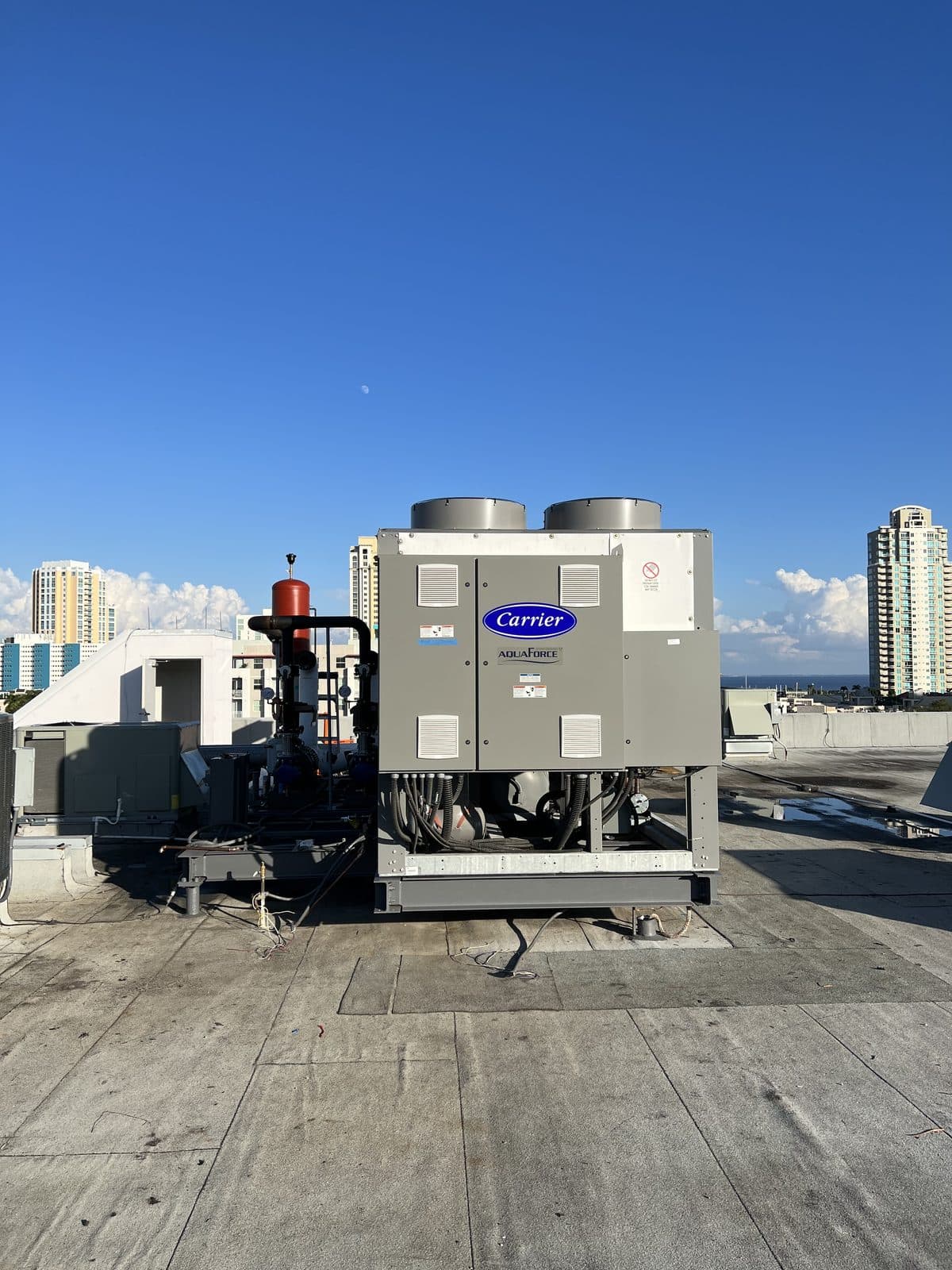
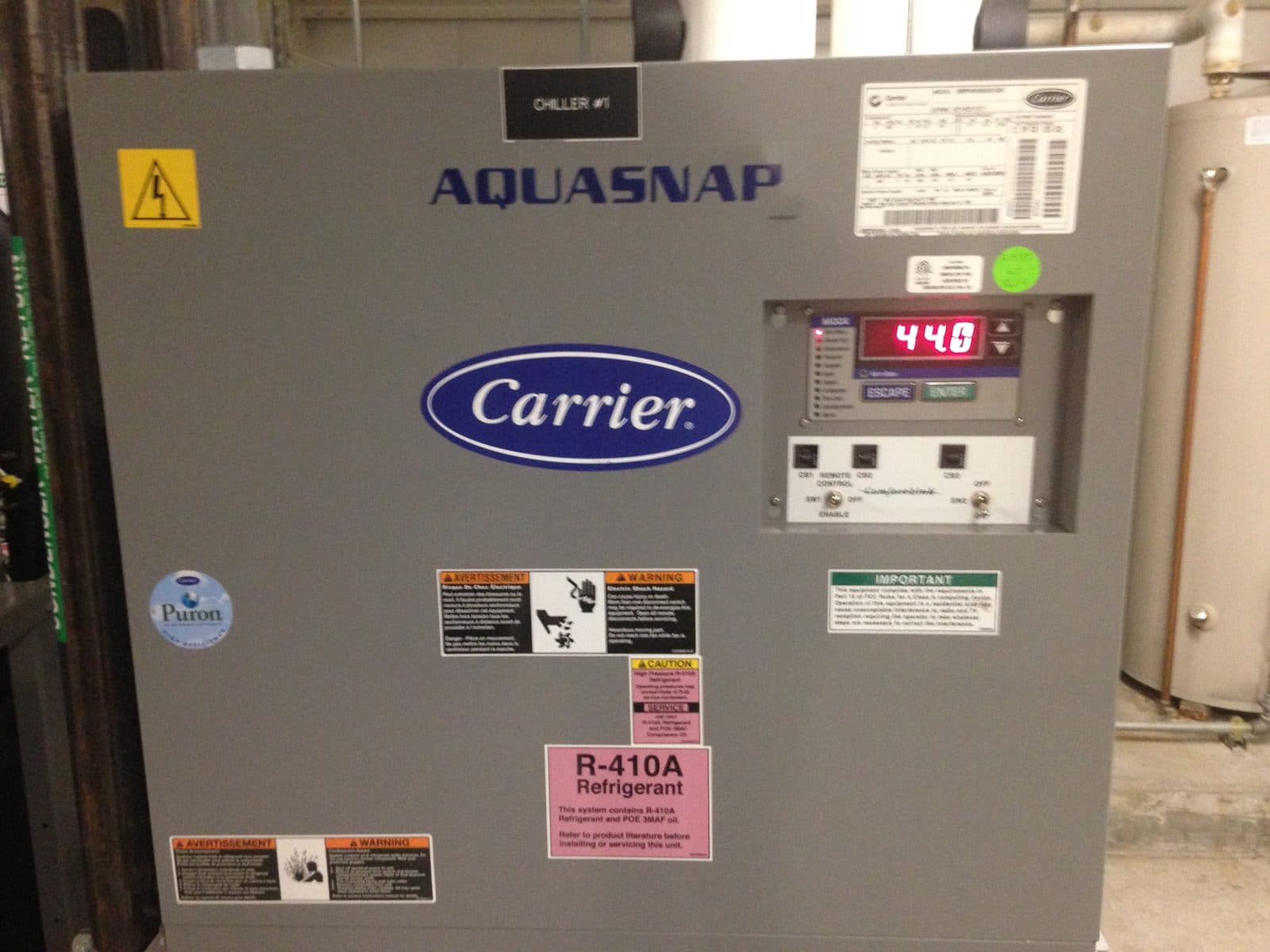
ORNL notes that restaurants and hotels often need makeup air or all-outdoor-air systems, and that packaged rooftop units get used for the job because they are cheap and compact. The report says this can be particularly problematic.
The numbers it gives explain why. A conventional rooftop unit is rated at approximately 400 cfm/ton. Conditioning 1500 cfm of outdoor air from 85°F and 130 grains of moisture per pound of dry air to a 56°F dewpoint takes 10 tons of net cooling, per the report. Yet the least airflow a 10-ton unit can process without control problems, coil frosting and compressor failure is approximately 3000 cfm (300 cfm/ton), twice the amount necessary.
A unit oversized for peak outdoor air cools the space to setpoint quickly and shuts the compressor off. If the supply fan keeps running, raw outdoor air enters, humidity climbs, and the space holds temperature while losing humidity control.
In the field study, the three packaged units could not be effectively operated with what amounted to half outdoor air. The owner closed their outdoor air intakes, which is how the kitchen exhaust ended up pulling air through the doors. When units on a restaurant roof near end of life, the outdoor air load belongs in the rooftop unit replacement plan from the start.
Dining room comfort: setpoint met, humidity lost
With outdoor air intakes closed, the ORNL site's units processed only return air. They ran at a very high sensible heat ratio. That left them limited dehumidification capacity. They ran long enough to meet the space temperature setpoint, then cycled off.
In an attempt to achieve comfort, especially for the highly active wait staff, the thermostat setting was continually dropped to compensate for the high indoor humidity. The report says the result was cold and clammy conditions much of the time, and says this common problem in restaurants has been termed thermostat wars.
The restaurant added a fourth rooftop unit, and the manager found it gave little noticeable improvement in comfort.
For a facility manager briefing a contractor, that points to what to ask for. Measure dining room humidity, not only temperature. Check whether outdoor air dampers are open, closed or disabled. Find out whether the makeup air unit actually runs whenever the hood does. Where the building has a building automation system, our page on it covers the controls side.
Demand-controlled kitchen ventilation and the controls question
ENERGY STAR describes the traditional kitchen hood as running at maximum design speed for the whole operating day, or offering manual control over two speeds. Demand-controlled kitchen ventilation instead varies fan speed continuously. It responds to temperature, optical or infrared (IR) sensors that monitor cooking activity, or to direct communication with cooking appliances.
The Department of Energy puts this step second, not first. Its guidance is to minimize total airflow through equipment layout and hood design while still giving complete capture and containment. Only then does it suggest variable-speed hood systems.
Any change to hood fan speeds, makeup air sequences or rooftop unit outdoor air settings is controls work for a licensed contractor and the system's designer, not for staff.
What the HVAC contractor covers, and what belongs to other trades
Refrigerant work is done by EPA (U.S. Environmental Protection Agency) Section 608 certified technicians. Commissioning is done with measured static pressure, airflow and refrigerant charge, documented.
Hood cleaning, grease duct cleaning and kitchen fire suppression systems belong to other trades. Food Code section 6-501.14(A) separately reads: "Intake and exhaust air ducts shall be cleaned and filters changed so they are not a source of contamination by dust, dirt, and other materials." Schedule that work with the trade that performs it, and tell your HVAC contractor when it happens.
Routine coil, drain and filter care on restaurant rooftop units follows the same discipline as any other building, covered on our commercial HVAC maintenance page. If a unit has stopped outright, start with rooftop unit not running. Blume offers 24/7 emergency HVAC service at (727) 330-9131.
Frequently asked
Why does our dining room feel cold and clammy at the same time?
The ORNL restaurant study describes exactly this. Rooftop units processing all return air ran at a very high sensible heat ratio, which gave them limited dehumidification capacity; they ran long enough to meet setpoint, then cycled off. The thermostat setting was continually dropped to offset the humidity, which left the facility cold and clammy much of the time.
What happens when kitchen exhaust is not matched by makeup air?
ORNL found exhaust fans pulling makeup air through doors and other pathways at a restaurant whose outdoor air intakes had been closed. The resulting excess static pressure reduced exhaust airflow leaving the hoods and reduced their capture efficiency.
Will adding another rooftop unit fix our comfort problems?
Not necessarily. In the ORNL field study, a restaurant added a fourth rooftop unit and the manager saw little noticeable improvement in comfort. Diagnose before adding tonnage.
Do you clean hoods or service fire suppression systems?
No. Blume is an air conditioning contractor, and hood cleaning, grease duct cleaning and kitchen fire suppression belong to other trades.
Do I need a contractor for this?
Maybe. Staff can change filters, read and record thermostat or building automation setpoints, report alarms, and look for standing water or a blocked condensate line. Anything involving refrigerant, electrical work, gas-fired makeup air heat, fan speeds, damper settings or controls sequences needs a licensed contractor. Balancing exhaust and makeup air needs measured airflow, so that is contractor work too.
Unit converter
Showing 1 therm in 4 other units
| Unit | Value |
|---|---|
| Btu | 100,000 |
| kWh | 29.31 |
| MMBtu | 0.1000 |
| Ccf (natural gas) | 0.9653 |
Used only for Ccf and therm conversions. Source: EIA, Heat Content of Natural Gas Consumed (U.S., 2025).
Sources: 1 therm = 100,000 Btu and 1 kWh = 3,412 Btu, from EIA. MMBtu from EIA. MBH from Wikipedia. 1 ton of refrigeration = 12,000 Btu/h from NIST. Ccf = 100 cubic feet from Wikipedia. — means no result for the current input.
Running a kitchen that fights its own dining room? Talk to a licensed Florida air conditioning contractor about the rooftop units and makeup air.
References: U.S. Department of Energy — ZEB Technologies: Kitchen Equipment & Design · ENERGY STAR (U.S. EPA) — 2015–2016 Demand Control Kitchen Ventilation · U.S. Food and Drug Administration — Food Code 2017, as adopted by Florida DBPR (sections 6-304.11 and 6-501.14 with annex) · Florida DBPR Division of Hotels and Restaurants — Statutes & Rules · Oak Ridge National Laboratory for U.S. DOE — Field Demonstration of Active Desiccant Modules Designed to Integrate with Standard Unitary Rooftop Package Equipment, Final Report: Phase 3 (2004) · Pacific Northwest National Laboratory for U.S. DOE — Building America Guide to Determining Climate Regions by County, Volume 7.3 (2015)