
Pinellas, Hillsborough and Pasco Counties · Florida CAC-1822618
Industrial Facility HVAC Service in Tampa Bay, Florida
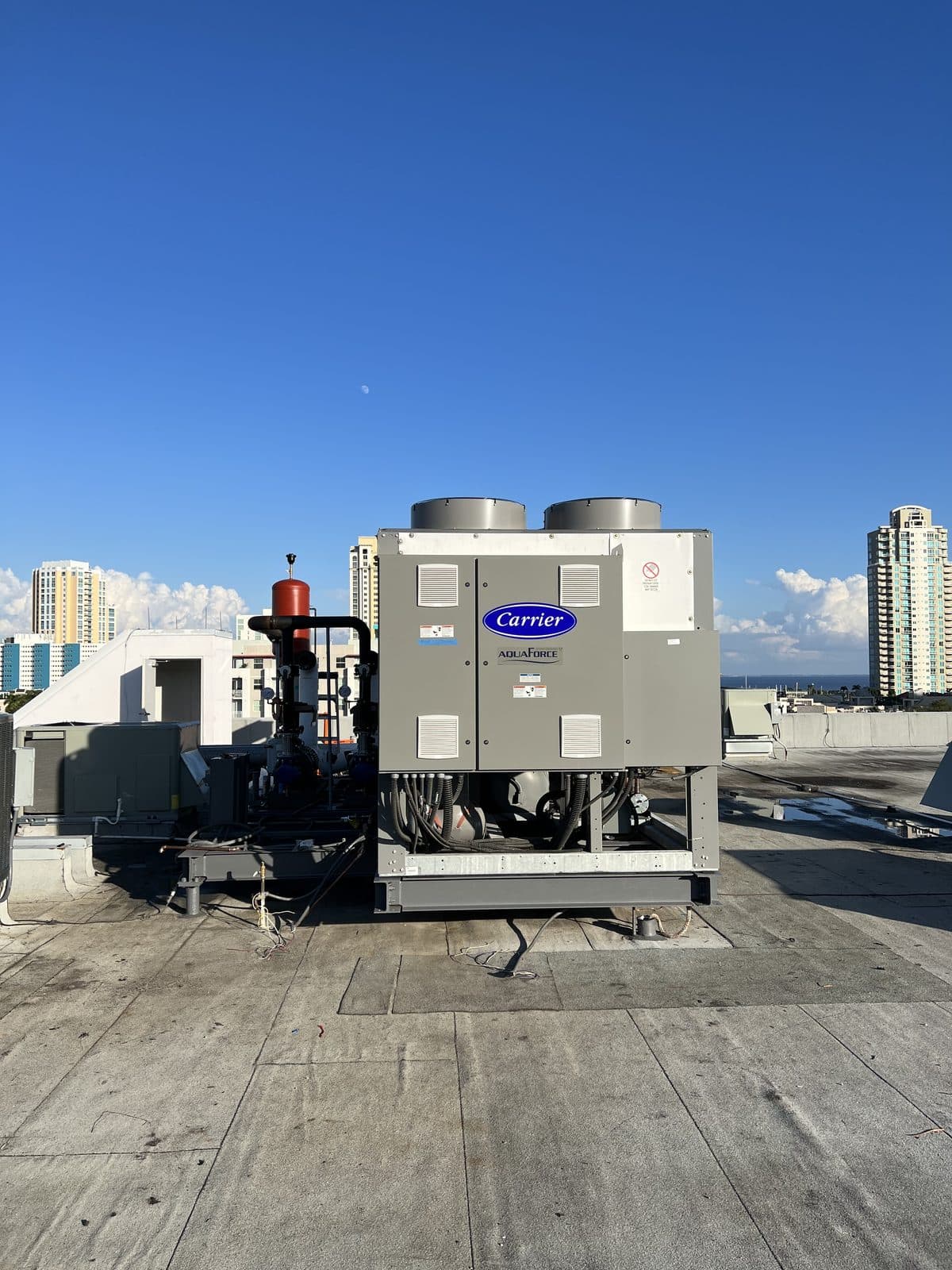
HVAC service for a manufacturing or industrial building covers more than comfort cooling. It means air movement and humidity around hot processes, make-up air for the exhaust that welding, painting or sanding remove, and EPA leak repair rules on appliances with a full charge of 50 or more pounds of ozone-depleting refrigerant. Blume Mechanical Service is a commercial HVAC contractor serving Pinellas, Hillsborough and Pasco Counties: Florida license CAC-1822618, fully insured, with EPA Section 608 certified technicians.
A plant floor in Tampa Bay asks its HVAC to work against process heat, exhaust fans that pull air out by the volume, and outdoor air that, on some summer days, arrives with dew points above 80°F.
What an industrial service call covers that an office call does not
The US Environmental Protection Agency (EPA) lists chillers, commercial split systems and packaged rooftop units among comfort cooling appliances. The EPA's trigger-rate table has separate rows by appliance type, and comfort cooling is one of them.
The EPA describes industrial process refrigeration as complex customized appliances directly linked to processes in industries such as chemical, pharmaceutical, petrochemical and manufacturing. It says the sector also includes industrial ice machines, appliances used directly in the generation of electricity, and ice rinks. Under 40 CFR 82.152, an appliance used for both industrial process refrigeration and other applications counts as industrial process refrigeration if 50 percent or more of its operating capacity is used for industrial process refrigeration.
Start with an inventory. Which units cool people, and which cool a process? What does each one serve when it stops? If you are still sorting out what kind of equipment you have, our guide to industrial air conditioner types walks through the families before you compare quotes.
Process heat and the people who work beside it
The National Institute for Occupational Safety and Health (NIOSH) defines occupational heat stress as the combination of metabolic heat, environmental heat, and clothing and personal protective equipment (PPE), resulting in increased heat storage within the body. Its list of risk factors includes high temperature and humidity, indoor radiant heat sources and limited air movement.
NIOSH tells employers to reduce heat stress with engineering and administrative controls. NIOSH says engineering controls might include increasing air velocity, using reflective or heat-absorbing shielding or barriers, and reducing steam leaks, wet floors or humidity. NIOSH also notes that taking breaks in air conditioning will not affect acclimatization.
NIOSH advises consulting a safety and health professional where heat stress is a hazard.
Exhaust and make-up air: what leaves the building has to come back
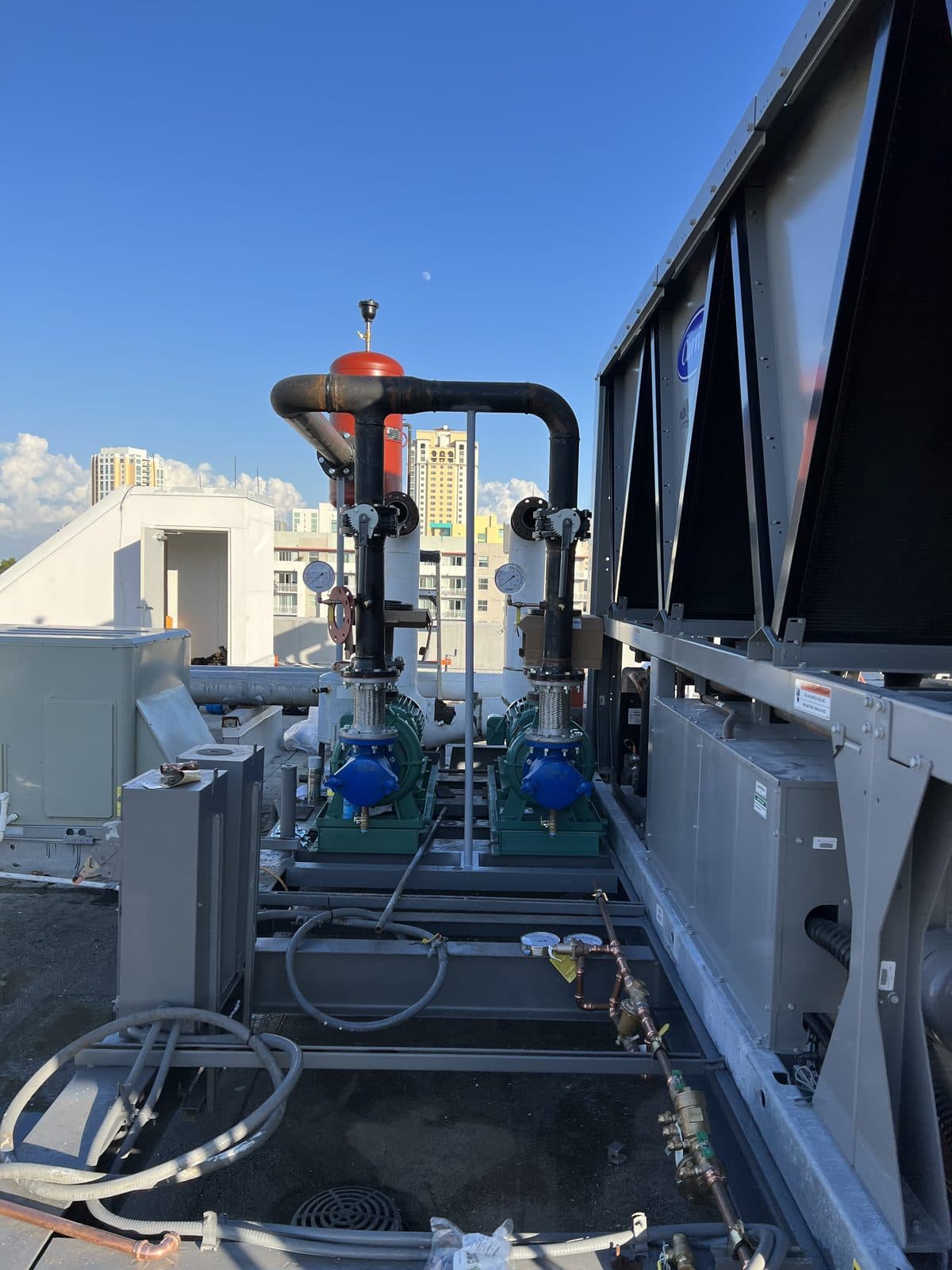
Greenheck, a fan and make-up air equipment maker, explains that air may be exhausted from a building for many reasons, including smoke, heat, odors, contaminants or the byproducts of an industrial process. If replacement air is not provided in a controlled way, the building will pull outdoor air in wherever it can. Make-up air equipment delivers controlled outdoor air to replace what is exhausted.
When more air is exhausted than supplied, the space runs at negative pressure. Greenheck lists the symptoms: doors become harder to open, exhaust systems lose effectiveness, and infiltration occurs. Infiltration is the leakage of unconditioned outdoor air through gaps around windows and doors.
In industrial settings, air is exhausted from processes such as welding, painting or sanding, and airflow volume is the main driver. When the process turns on, exhaust rises and make-up air must follow. Make-up air units can be configured with variable air volume (VAV) to track changing exhaust, and advanced systems ramp supply through the building management system (BMS) from the indoor-outdoor pressure difference.
Greenheck says negative pressure is desirable in some applications, such as hazardous storage areas where contaminants are meant to be contained. Elsewhere, Greenheck notes that neutral or slightly positive pressure is more often used. Any service visit should confirm which one each zone is meant to hold before anything is adjusted.
Tampa Bay air turns ventilation into a moisture problem
The National Weather Service office for the Tampa Bay area reports summer days in West Central and Southwest Florida with dew points above 80°F. The dew point is the temperature at which moisture in the air condenses into liquid water. The higher it is, the more moisture the air holds.
Greenheck notes that evaporative cooling works best in dry climates and has limited cooling capacity when moisture levels are high. It describes packaged refrigeration, called PDX, as a mechanical cooling system inside the make-up air unit that controls temperature across a wide range of outdoor humidity.
The weather service adds that high summer dew points can push heat indices to dangerous levels and compound the risk of heat-related illness. For a deeper look at how outdoor air drives indoor moisture, see our page on commercial humidity control.
Large equipment and the refrigerant record that comes with it
Greenheck notes that chilled-water coils in make-up air units fit facilities that already have chilled-water infrastructure. Where a central plant exists, its service is covered on our commercial chillers page.
The EPA requires owners or operators to take corrective action when an appliance with a full charge of 50 or more pounds leaks ozone-depleting refrigerant above its trigger rate. In general, the EPA says that means repairing leaks within 30 days from the date the leak was discovered, or developing, within 30 days, a plan to retrofit or retire the appliance and completing the actions under that plan within 1 year. Owners or operators of appliances that exceed the trigger rate must conduct initial and follow-up verification tests at the conclusion of any repair efforts.
A copy of the retrofit or retirement plan must be kept on site, and the original must be made available to EPA on request. The EPA will permit additional time to retrofit or retire industrial process refrigeration equipment and federally owned appliances, under conditions it lists, and it says EPA has recently updated these requirements. It directs owners to the Code of Federal Regulations (CFR) itself, at 40 CFR Part 82, Subpart F, for compliance detail.
In warehouse and distribution space, Greenheck notes that tall ceilings cause stratification, with warm air rising and cool air sinking. Large dock doors can cause rapid pressure changes. Both belong in the equipment survey alongside the nameplates.
What to have ready when you call
Have four things in hand for a first visit to an industrial building. First, a list of exhaust sources and when they run: booths, hoods, welding stations and ovens. Second, which spaces are meant to run negative and why. Third, a list of refrigerant appliances with their charge sizes and any leak records. Fourth, the alarms and comfort complaints your staff have logged, with dates and times.
Frequently asked
Is process refrigeration treated differently from the building's air conditioning?
Yes, under the EPA's leak repair rules. The EPA lists chillers, commercial split systems and packaged rooftop units among comfort cooling appliances. The EPA describes industrial process refrigeration as complex customized appliances directly linked to processes in, for example, the chemical, pharmaceutical, petrochemical and manufacturing industries, and it has its own row in the trigger-rate table. Under 40 CFR 82.152, an appliance used for both industrial process refrigeration and other applications counts as industrial process refrigeration if 50 percent or more of its operating capacity is used for industrial process refrigeration. The EPA points owners to 40 CFR Part 82, Subpart F, for the full requirements.
Why are doors hard to open near our paint booth or welding area?
Greenheck says that when more air is exhausted than supplied, the space runs at negative pressure and doors become harder to open. It also says exhaust systems lose effectiveness and infiltration occurs. Greenheck says make-up air must respond when process exhaust increases, and make-up air units can be configured with variable air volume (VAV) to respond if exhaust rates change. Some zones, such as hazardous storage, are meant to run negative, so confirm the design intent first.
Can evaporative coolers handle a Tampa Bay plant floor?
Greenheck says evaporative cooling works best in dry climates and has limited capacity when moisture levels are high. The National Weather Service reports summer days in West Central Florida with dew points above 80°F. Greenheck describes packaged cooling in the make-up air unit as controlling temperature across a wide range of outdoor humidity.
Will better HVAC solve heat stress on our floor?
NIOSH says engineering controls might include increasing air velocity and reducing humidity. It also lists reflective or heat-absorbing shielding or barriers, and administrative controls such as changes to tasks or schedules. NIOSH advises consulting a safety and health professional where heat stress is a hazard.
Do I need a contractor for this?
Yes, for most of it. Your staff can change filters, read and adjust setpoints and schedules on the BMS front end, read and report alarms, and check condensate drains and pans for standing water. Refrigerant work, electrical work, gas-fired make-up air and controls programming belong to a licensed contractor, as does rebalancing exhaust and make-up air.
Unit converter
Showing 1 therm in 4 other units
| Unit | Value |
|---|---|
| Btu | 100,000 |
| kWh | 29.31 |
| MMBtu | 0.1000 |
| Ccf (natural gas) | 0.9653 |
Used only for Ccf and therm conversions. Source: EIA, Heat Content of Natural Gas Consumed (U.S., 2025).
Sources: 1 therm = 100,000 Btu and 1 kWh = 3,412 Btu, from EIA. MMBtu from EIA. MBH from Wikipedia. 1 ton of refrigeration = 12,000 Btu/h from NIST. Ccf = 100 cubic feet from Wikipedia. — means no result for the current input.
Running a plant floor, a shop or a warehouse in Tampa Bay? Talk to a licensed air conditioning contractor. Blume services all major manufacturers' equipment. Blume offers 24/7 emergency HVAC service, with same-day response available based on location and technician availability, at (727) 330-9131.
References: NIOSH (CDC) — Heat Stress and Workers · NIOSH (CDC) — Heat Stress: Workplace Recommendations · US EPA — Stationary Refrigeration Leak Repair Requirements · Greenheck — What Is Make-Up Air? · National Weather Service Tampa Bay — Dew Point Statistics for West Central and Southwest Florida · US Code of Federal Regulations — 40 CFR 82.152 and 82.157 (GovInfo)