
AC Short Cycling: Causes & Fixes
Tampa Bay, Florida · Blume Mechanical Service · FL CAC-1822618
Understanding ac short cycling
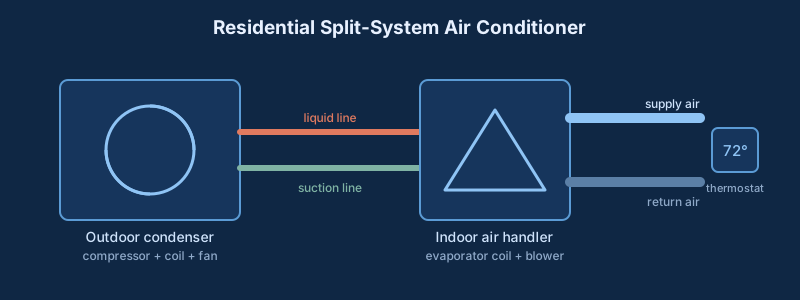
Short cycling is when the air conditioner turns on, runs for only a brief time, shuts off, and then restarts again far more often than it should. A healthy system runs in longer, steadier cycles that pull heat and humidity out of the home; short, frequent bursts leave the house warm and sticky and put heavy wear on the compressor. The causes fall into a few groups: airflow problems like a dirty filter or a frozen coil, refrigerant problems from a leak, a thermostat that is faulty or badly placed, an oversized system that satisfies the thermostat too quickly, or a safety control shutting the unit down on high pressure or overload. Because several of these overlap, short cycling is best treated as a symptom to trace rather than a single fix.
Common causes, most likely first
- Oversized system — A unit that is too large for the space cools the air near the thermostat very quickly and shuts off before removing humidity or evenly cooling the home, producing many short cycles.
- Dirty air filter or restricted airflow — A clogged filter or blocked returns reduce airflow, which can trip safety limits or freeze the coil and force the system to cut off early and often.
- Frozen evaporator coil — Ice on the coil blocks airflow and disrupts normal operation, so the system may run briefly and shut down repeatedly until the coil is thawed and the cause corrected.
- Low refrigerant from a leak — A low charge changes system pressures and can trip the low-pressure or overload controls, cutting cycles short. Because refrigerant is not consumed, this points to a leak a technician must find.
- Thermostat fault or poor placement — A thermostat located in direct sun, near a supply vent, or over a heat source reads the wrong temperature and cycles the system too quickly; a failing thermostat can do the same.
- Tripping on high pressure or compressor overload — A dirty condenser coil, failing fan, or electrical problem can push pressures or motor temperature past a safety limit, so the control shuts the compressor off and it restarts once it cools or resets.
What to check, in order
- Set the thermostat to COOL and the fan to AUTO, then lower the setpoint several degrees and time how long the system runs before it shuts off so you can describe the cycle length.
- Check that the thermostat is not in direct sunlight, next to a supply vent, or above a lamp or other heat source, since a bad location causes false rapid cycling.
- Inspect the air filter and replace it if it is dirty or clogged, because restricted airflow is a frequent short-cycling trigger.
- Look at the indoor coil and refrigerant lines for frost or ice; if present, switch the system off and let it fully thaw before running again.
- Confirm the outdoor condenser fan is spinning and the coil fins are clear of grass, leaves, and dirt, then gently rinse the fins with a garden hose on a low setting.
- Make sure supply and return vents are open and unobstructed so the system is not fighting restricted airflow.
- If the system still runs in very short bursts after these checks, note the pattern and treat it as a professional diagnosis rather than repeatedly resetting it.
What the numbers should read
| Reading | Normal range |
|---|---|
| Run-cycle length and cycles per hour | steady cycles that run long enough to remove heat and humidity; many brief cycles per hour indicate a control, airflow, refrigerant, or sizing problem |
| Refrigerant charge using superheat and subcooling | readings within the manufacturer's target band; values outside it point to an undercharge from a leak, an overcharge, or a metering fault that trips the safety controls |
| High-side and low-side refrigerant pressures | pressures consistent with the outdoor temperature and charge; abnormally high or low readings trip the high-pressure or low-pressure controls that cut cycles short |
| Static pressure across the air handler | within the blower's design external static rating (residential systems are commonly designed around 0.5 in. w.c.); high static from filters or ducts starves airflow and shortens cycles |
| Compressor and fan-motor amp draw | matches the nameplate rated load amps; high draw can trip the compressor overload and stop it early |
Ranges are general and vary by equipment; confirm against the unit’s own documentation before acting on them.
When to stop and call a licensed technician
If short cycling continues after you have replaced the filter, cleared the outdoor unit, opened the vents, and ruled out a bad thermostat location, stop and call a licensed HVAC technician. Anything involving refrigerant pressures, a suspected leak, the contactor, or the compressor's start and run capacitors is not DIY work: refrigerant handling legally requires EPA Section 608 certification, and capacitors hold a dangerous charge even after the power is off. Repeated tripping on a safety control is the system protecting itself and needs professional diagnosis, not repeated resets.
In Tampa Bay specifically
In Florida's long cooling season the system runs for many months straight, so short cycling here does more than annoy: brief cycles fail to wring humidity out of the air, leaving the home clammy even when the thermostat reads cool. The same heavy runtime loads filters and condenser coils quickly, and a coil caked with Florida dust and pollen is a common reason a system trips on high pressure and cuts its cycles short.
How a licensed technician diagnoses it
The technician starts by watching the system cycle and timing how long it runs, because the pattern narrows the cause. They rule out the simple items first: thermostat location and calibration, filter condition, and whether the coil is frozen. Next they check airflow by measuring static pressure across the air handler, since a starved system trips limits and cuts off early. They then connect gauges and read the refrigerant charge with superheat and subcooling, because both an undercharge from a leak and a restriction change pressures enough to trip the safety controls. They inspect the condenser coil and fan and measure compressor and fan amp draw to see whether the unit is tripping on high pressure or overload. Finally, if cycles are steady but simply too short, they evaluate whether the system is oversized for the space, which the earlier readings help confirm.
Preventing it in the first place
- Inspect the air filter every month during heavy cooling season and replace it when dirty, since restricted airflow is a common cause of short cycling (ENERGY STAR).
- Keep the outdoor condenser clear of grass, leaves, and vegetation and have its coil cleaned during maintenance so the system does not trip on high pressure (DOE).
- Keep return grilles and supply vents open and unobstructed so airflow across the coil stays adequate (DOE).
- Have a qualified contractor verify the refrigerant charge during seasonal maintenance, so a slow leak is caught before it starts tripping controls (ENERGY STAR).
- Make sure any replacement system is properly sized for the home, because an oversized unit is a built-in cause of short cycling.
Frequently asked
Is short cycling bad for my air conditioner?
Yes. The compressor draws its heaviest electrical load at startup, so a system that turns on and off many times an hour experiences far more wear than one running steady cycles. Frequent stops and starts add heat and stress that can shorten compressor life and raise energy use. Short cycles also fail to remove humidity, so the home feels clammy even at the set temperature. Because short cycling is usually a symptom of an airflow, refrigerant, control, or sizing problem, the goal is to find and fix that root cause rather than let the system keep hammering itself.
Can a dirty filter cause short cycling?
It can. A clogged filter restricts airflow across the evaporator coil, and that restriction can trip the system's safety limits or let the coil freeze, either of which makes the unit shut off early and restart repeatedly. Replacing a dirty filter is one of the first and safest things to check, and it is a normal part of routine maintenance. If cycles are still short after a fresh filter, the cause is likely elsewhere, such as the refrigerant charge, the condenser coil, the thermostat, or system sizing, and those need a closer look.
Could my thermostat be causing the rapid cycling?
Yes, in two ways. A thermostat placed in direct sunlight, right next to a supply vent, or above a heat source reads a temperature that is not representative of the room, so it satisfies and calls again too quickly. A thermostat that is failing or poorly calibrated can also send erratic signals. Moving a badly located thermostat or correcting its setup can resolve false short cycling. If the location is fine and the thermostat still cycles the system in very short bursts, the problem more likely sits in airflow, refrigerant, or a safety control on the equipment itself.
Why does my AC shut off after only a couple of minutes?
Very short cycles of just a minute or two often mean a safety control is stopping the compressor. A dirty condenser coil, a failing outdoor fan, a low refrigerant charge from a leak, or an electrical fault can push pressures or motor temperature past a limit, so the control cuts the compressor off and lets it restart once it cools. Because diagnosing this involves refrigerant pressures and electrical components that store a dangerous charge, it is not a safe DIY test. Repeated tripping is the system protecting itself and should be diagnosed by a licensed technician.
Talk to a licensed Blume technician
For federal efficiency ratings and rebate eligibility we point homeowners to ENERGY STAR heating & cooling rather than making those claims ourselves.
Call (727) 330-9131Related HVAC Guides
Browse all HVAC guides · find your city