
AC Fan Spinning But Not Cooling: What It Means
Tampa Bay, Florida · Blume Mechanical Service · FL CAC-1822618
Understanding ac fan spinning but not cooling
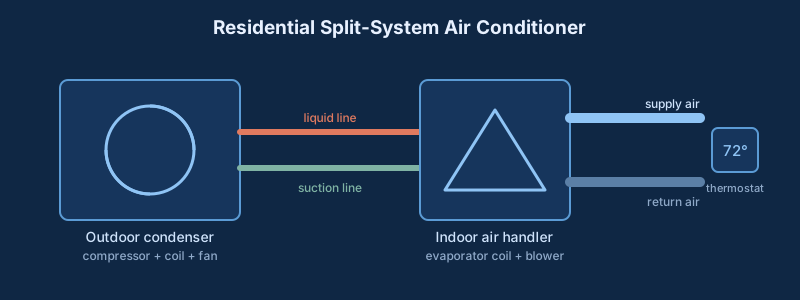
A spinning outdoor fan is one of the most misleading symptoms in home cooling. Homeowners see the fan on top of the outdoor unit turning and assume the whole system is working, but that fan and the compressor are two different parts. The fan only moves air across the outdoor coil; the compressor is the pump that actually circulates refrigerant and moves heat out of the house. On many systems the fan can keep running while the compressor is stalled, failed, or shut down by a bad capacitor, contactor, or control. When that happens the outdoor unit looks alive but no heat is being rejected, so the air indoors stays warm. Other reasons a fanning unit still can't cool include low refrigerant from a leak, a frozen indoor coil, or simply the thermostat fan set to ON.
Common causes, most likely first
- Compressor not running while the fan still turns — The outdoor fan motor and the compressor are separate. The fan can spin on its own while the compressor is off or has failed, so the unit looks like it is working but is not moving any heat, and the house stays warm.
- Failed start or run capacitor — A capacitor gives the compressor the jolt it needs to start. When it weakens or fails, the fan may still run but the compressor cannot start or keep running, which is a common reason a humming or fanning unit produces no cooling.
- Low refrigerant from a leak — If refrigerant is low, the compressor and fan can run but the system cannot absorb enough heat, so cooling is weak or absent. Because refrigerant is not consumed, a low charge means a leak that a certified technician must find and repair.
- Frozen indoor evaporator coil — Restricted airflow or low charge can freeze the indoor coil into a block of ice. The outdoor fan keeps spinning, but the iced coil blocks airflow and heat transfer, so vents deliver little or warm air.
- Contactor fault — The contactor is the switch that sends power to the compressor. If it fails to pull in or its contacts are pitted, the fan circuit may still energize while the compressor never gets power, producing a running-but-not-cooling condition.
- Thermostat fan set to ON — With the fan on ON, the indoor blower runs continuously even when cooling is not active, circulating room-temperature air that feels warm and can be mistaken for the system failing to cool.
What to check, in order
- At the thermostat, set the mode to COOL and the fan to AUTO, then lower the setpoint several degrees below room temperature.
- Stand near the outdoor unit and listen: a healthy unit has a low hum from the compressor in addition to the fan; if you hear only the fan and no compressor hum, that points to a compressor or capacitor issue.
- Place a hand near a supply vent indoors to feel whether the air is actually cold or just moving; moving air alone does not mean the system is cooling.
- Check the electrical panel for a tripped breaker serving the outdoor unit and reset it once if tripped.
- Replace the indoor air filter if it is dirty, since restricted airflow can freeze the indoor coil and stop cooling.
- Look at the indoor coil and refrigerant lines for ice or frost; if present, turn the system OFF and let it fully thaw before running again.
- Confirm supply and return vents are open and unobstructed so the system has the airflow it needs.
What the numbers should read
| Reading | Normal range |
|---|---|
| Compressor operation vs. fan operation | the compressor should run whenever the outdoor fan runs in a cooling call; a fan-only unit with a silent compressor is not rejecting heat |
| Supply-air temperature | air at the vents should feel distinctly cooler than the return air; moving air that is not cold indicates the system is not actually cooling |
| Air filter replacement interval | inspect monthly during heavy cooling and change at least every 3 months to avoid airflow restriction that can freeze the coil |
Ranges are general and vary by equipment; confirm against the unit’s own documentation before acting on them.
When to stop and call a licensed technician
If the fan spins but you hear no compressor hum, the air is not cold, or you suspect a capacitor, contactor, or compressor fault, stop DIY and call a licensed technician, because diagnosing and replacing those parts means working around high-voltage components inside the unit. Anything involving refrigerant, including a suspected leak, low charge, or a repeatedly freezing coil, must be handled by an EPA Section 608-certified technician, since refrigerant is regulated and low charge signals a leak that must be located and repaired rather than topped off.
In Tampa Bay specifically
Florida's heat pushes outdoor units to run for long stretches, and capacitors and contactors work hardest in sustained high temperatures, so a fan that keeps spinning while the compressor has quit is a failure pattern homeowners here run into during the hottest part of the season.
How a licensed technician diagnoses it
The technician's first move is to determine whether the compressor is actually running, because a spinning fan proves only that the fan motor works. They listen and check current draw at the outdoor unit to see if the compressor is energized and pulling load. If the compressor is silent, they inspect the start and run capacitor and the contactor, since a failed capacitor or a contactor that will not pull in is a frequent cause of a fan-only unit. They verify the compressor is receiving power and evaluate whether it is drawing correctly, is tripping on overload, or has failed. If the compressor runs but cooling is weak, they measure the temperature split across the coils and check the refrigerant charge using superheat and subcooling, which reveals an undercharge from a leak. Finally they inspect the indoor coil and filter for ice or restriction that would stop heat transfer.
Preventing it in the first place
- Schedule spring professional maintenance so the capacitor, contactor, and compressor operation are checked before the peak cooling season (DOE).
- Keep the outdoor condenser clear of leaves, grass, and vegetation so the unit can shed heat and the compressor is not forced to overwork (DOE).
- Replace the indoor filter on schedule so restricted airflow does not freeze the indoor coil and stop cooling (ENERGY STAR).
- Have a qualified contractor clean the condenser and evaporator coils during maintenance so the system rejects and absorbs heat efficiently (ENERGY STAR, DOE).
- Have refrigerant charge verified during a professional visit so a slow leak is caught before it disables cooling on a hot day (ENERGY STAR).
Frequently asked
The outdoor fan is spinning, so why isn't my house cooling?
The outdoor fan and the compressor are separate parts. The fan only moves air across the outdoor coil, while the compressor is the pump that actually circulates refrigerant and removes heat from your home. On many systems the fan can keep spinning while the compressor is stalled or shut down by a failed capacitor or contactor. When that happens the unit looks alive but rejects no heat, so the indoor air stays warm. A silent compressor, warm supply air, or a fan-only unit are signs to have a technician check the compressor and its electrical parts (DOE).
How can I tell if the compressor is running or just the fan?
Stand near the outdoor unit during a cooling call. A working system produces a steady low hum from the compressor in addition to the whoosh of the fan. If you hear only the fan with no deeper hum, the compressor may not be running. You can also feel a supply vent indoors: if the air is moving but not cold, the system is not actually cooling even though the fan spins. Diagnosing why the compressor is off means checking high-voltage components, which is a job for a licensed technician (DOE).
Could low refrigerant cause the fan to run without cooling?
Yes. When refrigerant is low, the fan and even the compressor can run while the system fails to absorb enough heat, so cooling is weak or absent and the indoor coil may frost over. Because refrigerant is not used up, a low charge means there is a leak somewhere in the system. Under EPA Section 608, handling refrigerant requires certification, so this is not a DIY top-off; a certified technician needs to find and repair the leak and then recharge the system correctly (EPA).
Is it safe to keep running the unit while the fan spins but it won't cool?
It is better to stop and investigate. If the compressor is trying to start against a failed capacitor, or the coil has frozen, continued running can stress the equipment further. Turn the system off, replace a dirty filter, and let any ice on the indoor coil fully thaw before restarting. If the fan still spins with no cold air and no compressor hum, leave it off and call a technician, since the fault is likely in the compressor circuit and involves high-voltage parts that are not safe to probe yourself (DOE).
Talk to a licensed Blume technician
For federal efficiency ratings and rebate eligibility we point homeowners to ENERGY STAR heating & cooling rather than making those claims ourselves.
Call (727) 330-9131Related HVAC Guides
Browse all HVAC guides · find your city