When a Broken Air Conditioner Is a True Emergency
Not every AC breakdown justifies an emergency call, but the calculation changes fast in Tampa Bay. Florida homes are built tight to hold conditioned air, which means they hold heat and humidity just as well once the system quits. Indoor conditions can turn genuinely unsafe well before the house feels like an oven, because heavy humidity keeps sweat from evaporating and takes away your body's main way of shedding heat. Whether you need same day air conditioning repair or can wait until tomorrow depends less on the equipment than on who is inside the building while it is down.
Call for same-day help without second-guessing
If anyone in the home is elderly, an infant, pregnant, or managing a heart, lung, or kidney condition, treat a summer no-cool as urgent, and the same goes for pets that cannot be moved somewhere cooler and for anyone whose medications impair heat regulation. For businesses the threshold is lower than most owners assume: employees working in the heat, customers walking out, refrigeration fighting a hot room, or electronics that depend on cool air to survive. In those situations, call (727) 330-9131 and say you have a no-cool emergency.
Situations that can usually wait
If the weather is mild, the house is holding a tolerable temperature, or a second system is covering part of the building, next-day scheduling is often the sensible choice. A system limping along but still cooling also buys time, with one caution: if it is short-cycling, tripping breakers, or making a mechanical noise you have not heard before, running it through the night can convert a modest repair into a compressor replacement. When in doubt, describe the symptoms over the phone and let the dispatcher help you judge.
Symptoms That Mean Shut the System Off Now
Some failures get more expensive, or more dangerous, with every minute of runtime. When you notice the warning signs below, turn the system off at the thermostat, and if anything electrical seems involved, at the breaker panel as well. Shutting down early is the cheapest thing you can do before a technician arrives.
Electrical warning signs
A burning or hot-plastic smell from the vents or the air handler closet, a breaker that trips more than once, or an outdoor unit that hums but will not start are all signals to cut power and leave it off. One breaker reset is a reasonable test; repeated resets feed a fault, which is how a shorted wire becomes scorched wiring or worse. Tell the dispatcher exactly what you smelled or heard, because it changes what the technician brings to the door.
Ice on the refrigerant lines or indoor coil
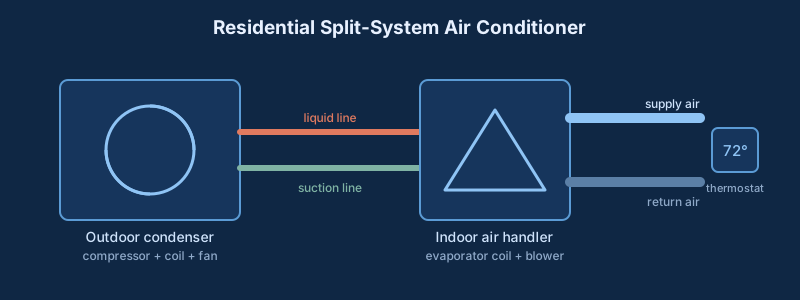
Ice on the copper lines outside or frost on the indoor coil points to an airflow or refrigerant problem, and running a frozen system puts the compressor, the most expensive component in the machine, at risk. Switch the thermostat from cool to off, set the fan to on so warm air can thaw the coil, and put towels down, because a thawing coil sheds real water. Do not chip at the ice.
Water where it should not be
A wet ceiling under an attic air handler, water pooling around an indoor unit, or an overflowing drain pan usually traces back to a clogged condensate line. In Florida humidity your system pulls a remarkable amount of water out of the air every day it runs, and all of it has to drain somewhere. Shut the system off to stop producing new condensate and move anything vulnerable out from under the drip, because water damage often costs more than the air conditioning repair itself.
What You Can Safely Check Before Help Arrives
A fair share of no-cool calls resolve with checks a homeowner can make in a few minutes, none of which require tools or opening equipment. Running through them before you call also gives the dispatcher better information.
Thermostat, breaker, filter, disconnect
Confirm the thermostat is set to cool with a setpoint below room temperature, and replace its batteries if the display looks blank or faded. Check the electrical panel for a tripped breaker labeled for the condenser or air handler and reset it once only. Pull the air filter; one clogged badly enough to bow under the airflow can freeze a coil or trip a safety switch by itself. Finally, make sure the outdoor disconnect beside the condenser was not left off after yard work or a recent service visit.
What not to attempt
Leave the equipment panels closed. Air conditioners carry capacitors that hold a dangerous charge even with power off, and refrigerant handling legally requires certification, so neither is a homeowner job. Skip internet advice about bypassing float switches or jumpering contactors; safety switches usually trip for a reason, and defeating one just relocates the failure to a more expensive part.
Keeping the House Livable While You Wait
Once you have booked a repair, your job is slowing the heat gain. Close blinds and curtains on sun-facing windows, and skip the oven, the dryer, and long hot showers, since each dumps heat and moisture into air the house can no longer remove. Run ceiling and portable fans in occupied rooms only; fans cool people through evaporation, not rooms, so a fan spinning in an empty room accomplishes nothing. Gather anyone vulnerable, pets included, into the shadiest room and keep water going. If indoor conditions get ahead of you, an errand somewhere air-conditioned is a legitimate strategy. In our humidity, mugginess usually becomes intolerable before temperature alone would, so do not judge safety by the thermostat reading.
How Same-Day Dispatch Works at Blume
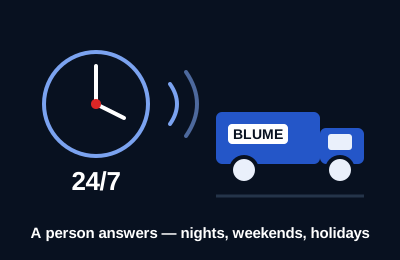
Blume Mechanical Service has been in the climate business since 2009, and the dispatch process reflects what years of Florida summers teach. A person answers the 24/7 dispatch line at (727) 330-9131, holidays included, and same-day response is available for no-cool calls, based on location and technician availability. From our headquarters in Belleair Bluffs we serve Pinellas and Hillsborough County, including Tampa, Clearwater, St. Petersburg, Largo, Brandon, Dunedin, Palm Harbor, and Seminole.
What to have ready when you call
The visit goes smoother if you can share the brand name on the outdoor unit or air handler, what the system is doing, when it started, whether any breakers tripped, and anything you smelled, heard, or saw. We service all major brands, including Carrier, Trane, Lennox, Rheem, Goodman, Daikin, York, and Bryant, and knowing the equipment in advance helps the technician arrive prepared instead of making a second trip for parts. Mention gate codes, dogs in the yard, or awkward attic access too; small details keep an urgent visit moving.
Licensed, insured, and verifiable
Emergencies attract unlicensed operators, especially after storms. Blume holds Florida license CAC-1822618 and is fully insured, and you can verify both through the Florida DBPR before we ever ring your doorbell. The technicians who show up are experienced, an industry credential earned by examination.
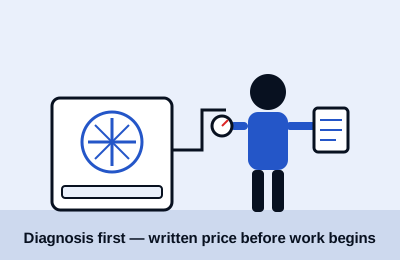
An emergency is exactly when a homeowner is easiest to overcharge, which is why our rule does not bend for urgency: you receive written upfront pricing, and you approve it before any work begins. Diagnosis first, then the price on paper, then your decision, in that order, even at night or on a holiday.
When repair stops making sense
Sometimes the honest answer on an urgent call is that the repair is not worth making. Our rule of thumb is simple: when a repair on aging equipment runs more than half the cost of a new system, replacement usually wins the math. That conversation comes up often with older units running R-22 refrigerant, which has been phased out, making refrigerant repairs on those systems increasingly impractical. Florida compounds the problem, because the cooling season runs most of the year and salt air near the coast corrodes coils and cabinets faster than inland climates would. A technician standing in front of your system can put both numbers on paper before you commit to either path.
After the Emergency: Breaking the Cycle
Most breakdowns telegraph themselves for weeks through weak airflow, longer run times, or ice that appeared and melted away, and they still land as emergencies because nobody was watching. Our maintenance plans exist to change that, with two tune-ups a year timed around Florida's long cooling season, priority scheduling when something does go wrong, discounted repairs, and a documented service history for each unit, so repair-versus-replace decisions rest on records instead of memory. If today's call was your first with us, the tune-up that follows it is the cheapest insurance against the next one.