Why HVAC Emergency Repair Looks Different in Tampa Bay
Most of the country gives an air conditioner a long off-season to rest. Tampa Bay does not. Here, cooling systems carry a real load for the bulk of the year, and even our mild winters ask the heat pump to reverse and work. That near-constant runtime is the single biggest reason HVAC emergencies happen here, and it shapes how we approach HVAC emergency repair. A compressor that would spend winters resting in a four-season climate accumulates its wear faster on the Gulf Coast, and the failure, when it comes, tends to arrive during the exact stretch of summer when you can least afford it.
Humidity Is Half of What Your System Does
In Florida, an air conditioner is as much a dehumidifier as it is a cooling machine. Every hour it runs, it pulls moisture out of the air and sends it down the condensate drain. When the system quits, you lose both jobs at once. The temperature climbs, but the humidity climbs with it, and a muggy house turns uncomfortable, then unhealthy, in short order — damp indoor air feeds mold and dust mites and makes sleep miserable. That is why a no-cool call in Clearwater or Brandon carries more urgency than the same call would in a dry climate. The clock on your home starts the moment the system stops.
Salt Air Is Quietly Working Against Your Equipment
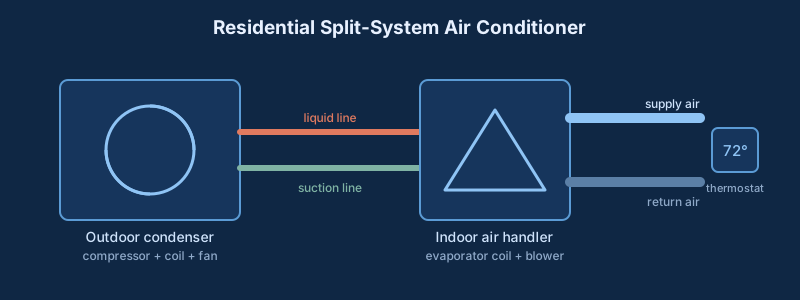
If you live near the water in Pinellas County — Belleair, Dunedin, St Petersburg, the beach communities — your outdoor condenser spends its whole life in salt-laden air. Salt accelerates corrosion on coil fins, electrical terminals, and fasteners, and corrosion is a common ancestor of emergency failures: a contactor that pits and sticks, a coil that develops a refrigerant leak years before it should. None of this is visible from your kitchen. It shows up on a summer afternoon when the unit hums but nothing cold reaches the vents, and at that point it is an emergency repair instead of a line item on a maintenance report.
What Counts as a True HVAC Emergency Here
Not every hiccup justifies an emergency call, and we will tell you honestly when a problem can wait for a regular appointment. But Florida's climate shortens the list of things that can safely wait. Three situations should put you on the phone right away.
No Cooling in Summer Heat
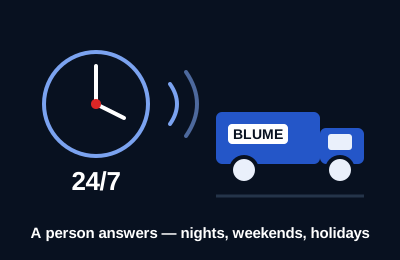
A dead air conditioner in July is more than a comfort problem in Tampa Bay; for infants, older adults, and anyone with heart or lung trouble, it is a health problem. A Florida house heats up quickly once cooling stops, because heat is stored in the slab, the walls, and the humid air itself. If your system won't cool during a hot stretch, call. Same-day response is available for no-cool calls, based on location and technician availability, and a person answers the 24/7 dispatch line, holidays included.
Water Where Water Shouldn't Be
Because Florida systems wring so much moisture from the air, the condensate side of your equipment handles a surprising amount of water. A clogged drain line or a rusted pan can overflow into a ceiling, a closet, or the air handler cabinet. Spreading stains on drywall, a wet spot near the indoor unit, or a system that keeps shutting itself off — often a float switch doing its job — all mean drainage has failed. Shut the system down and call; water damage compounds by the hour.
Burning Smells, Tripped Breakers, and Hissing
An electrical burning smell, a breaker that trips again when the unit restarts, or hissing near the refrigerant lines are shut-it-down-now situations. Repeated breaker resets can turn a failed capacitor or a shorted compressor winding into a fire hazard, and escaping refrigerant is both a system-killer and nothing you want to breathe in a closed room. Turn the unit off at the thermostat and the breaker, and let a technician see it live.
What to Do While You Wait
A few minutes of smart triage protects your equipment and sometimes shortens the repair. Check that the thermostat is set to cool and its batteries are fresh. Pull the air filter — a saturated, collapsed filter can freeze a coil solid. If you see ice on the refrigerant lines, switch cooling off and the fan to on so the coil thaws before the technician arrives; a frozen system can't be diagnosed. Close the blinds on the sunny side of the house and run ceiling fans to buy some comfort. What not to do: no hardware-store refrigerant kits, no opening electrical disconnects or handling capacitors, and no repeatedly resetting a breaker that keeps tripping. Those shortcuts turn repairable problems into replacements.
How an Emergency Call With Blume Actually Works
When you call (727) 330-9131, a person answers the 24/7 dispatch line, holidays included. Dispatch takes the details, and same-day response is available for no-cool calls, based on location and technician availability. The technician who arrives is experienced and ready to work on whatever sits on your pad, because Tampa Bay side yards hold every brand there is.
Written Pricing Before Any Work Begins
An emergency is exactly when a homeowner is easiest to oversell. Our answer is procedural rather than promotional: after diagnosis you receive written upfront pricing, and you approve it before any work begins. If a less expensive repair honestly solves the problem, that option is on the paper too. Nothing starts until you have said yes to a number you have seen.
Every Major Brand, One Standard of Repair
We service Carrier, Trane, Lennox, Rheem, Goodman, Daikin, York, and Bryant equipment. Brand matters less than climate here: a Trane in Palm Harbor and a Goodman in Seminole tend to fail in the same Florida ways — worn capacitors, pitted contactors, clogged condensate lines, and refrigerant leaks in coils that have spent years breathing salt air. Our diagnosis follows the failure, not the logo.
When Emergency Repair Turns Into a Replacement Conversation
Sometimes the honest outcome of an emergency call is not a repair quote. Our rule of thumb is plain math: when a repair would cost more than half the price of a new system and the equipment is already aging, replacement usually wins. You see both numbers in writing and you decide. A breakdown is a bad moment to be pressured, so we don't.
The R-22 Problem on Older Systems
If your system is old enough to run on R-22 refrigerant, a leak changes the math sharply. R-22 has been phased out, so recharging an R-22 system after a coil leak is patching a boat the industry no longer makes planks for. A minor electrical repair on an R-22 unit can still make sense; a refrigerant-circuit repair usually doesn't, and we will say so plainly.
A Florida Year Is a Long Year for a Machine
The age on a data plate understates the age of a Florida machine. A system that cools from spring through fall, and dehumidifies through the shoulder seasons in between, logs far more compressor hours per calendar year than the same unit would up north. When we weigh aging equipment in the repair-versus-replace decision, we mean runtime and condition, not just the install date — and Tampa Bay runtime is relentless.
The Cheapest Emergency Is the One That Never Happens
Most HVAC emergencies trace back to wear that was visible months earlier: a weakening capacitor, a drain line sliming shut, a coil slowly losing its fight with corrosion. In a climate with no off-season, small problems never get a quiet winter to sit harmlessly. They either get found on a maintenance visit, or they get found on the hottest day of the year.
What a Maintenance Plan Changes
Our maintenance plans include two tune-ups a year, priority scheduling when something does go wrong, discounted repairs, and a documented service history for every unit. That history earns its keep during an emergency: a technician who can see what was measured at the last visit diagnoses faster and replaces fewer parts on speculation. For coastal homes especially, twice-a-year eyes on the condenser is the most practical corrosion strategy there is.
Emergency HVAC Repair Across Pinellas and Hillsborough Counties
Blume Mechanical Service, LLC has been in the climate business since 2009 — long enough to have seen refrigerant standards come and go, along with every kind of Gulf Coast summer. We are headquartered in Belleair Bluffs and run emergency HVAC repair calls throughout Pinellas and Hillsborough counties, including Tampa, Clearwater, St Petersburg, Largo, Brandon, Dunedin, Palm Harbor, Seminole, and the surrounding communities. We hold Florida license #CAC-1822618, verifiable through the Florida DBPR, and we are fully insured. When the air goes out, call (727) 330-9131. A person will answer, whatever the hour and whatever the holiday.